
Game review
One More Delve Review
6 / 10
- Developer
- ATVR
- Publisher
- ATVR
- Released
- 27 April 2026
- Platforms
- ["Windows"]
- Genre
- RPG
A VR-Only Dungeon Crawler Built Around Weight
One More Delve is a physics-based, VR-only dungeon crawler from solo developer ATVR: up to three players descend randomized dungeons together, fighting with one- and two-handed swords, axes, bows, shields, and spells, looting new gear between runs, and regrouping in a social hub server to craft with whatever materials they've gathered. It's not a hybrid title with a flat-screen mode bolted on — the Steam listing marks it "VR Only," so anyone without a headset can rule it out immediately, which is worth stating plainly before anything else. It began life in Early Access on April 27, 2026, and reached a 1.0 release on July 23, 2026, currently priced around $13 at a standing 40% discount, with a "Mostly Positive" rating across roughly 40 reviews.
The Core Hook: Physics That Reviewers Actually Feel
The most consistent praise in the review corpus is about how combat feels rather than what it does on paper — several reviewers single out weapon weight and interactable environments as the game's strongest asset. One wrote that "your sword actually can rest on your body instead of just phasing through," another called the melee "satisfying using any weapons including the magic abilities," and a third specifically praised the atmosphere of "old stone structures overgrown with greenery with warm dim lighting from the torches." That's a meaningful compliment for physics-driven VR melee specifically, a subgenre where janky hit detection or weightless-feeling swings routinely sink otherwise solid games — and it suggests ATVR got the fundamentals of the genre's hardest problem largely right, for at least a portion of the player base. Combat lands with a stylized, comic-book-style blood-spatter effect on every solid hit, worth flagging for anyone sensitive to stage gore even in a cartoonish rather than realistic style.
But Not Everyone's Physics Agree
Set against that praise is a detailed, highly-voted negative review reporting the opposite experience: "the physics are very bad too, often my sword would go undetected through an opponent," alongside a complaint that the game is "a Quest game slightly enhanced for PCVR" with "low-poly models and extremely low-res textures... everywhere." A second negative account describes blocking and swinging as "a chore" due to unrealistically heavy-feeling character physics. Both are substantive, specific technical complaints rather than vague dismissals, and they point toward a real split in experience depending on hardware — Quest-native players and PCVR players describing meaningfully different builds of the same game. Anyone considering this on a high-end PCVR rig in particular should weigh that specific complaint before buying, since it's echoed rather than a one-off.
Loot, Builds, and a Progression Layer Reviewers Call Thin For Now
The store page frames build variety as a pillar — swords, axes, bows, shields, and spells combining into different playstyles, with looted gear driving progression between social-hub visits. In practice, reviewers who engaged with it deeply describe the current build as an excellent foundation rather than a finished system: one wrote "an excellent base for an amazing game... but the replayability isn't as rewarding as it should be," specifically wanting more levels, better run endings, and eventually a loot-based marketplace. Another, reviewing shortly after the Early Access launch, called content "limited as it's in early access" while still recommending it "especially at this price point." Notably, Steam lists no achievements at all for this game — an unusual omission for a loot-and-progression RPG, and one that leaves completionists with nothing structured to chase beyond the gear grind itself.
A Solo Developer, and a Corpus That Grades Accordingly
A distinctive pattern across this review set is how explicitly reviewers account for the game being built by one person. Multiple reviews open with a disclaimer to that effect — "this is a solo dev game and I do take it into account," "please be patient and don't be hating for the smallest things... it's also being developed by one person" — and several say outright that their recommendation is "adjusted to the lower price" as a result. That context is worth passing on rather than erasing: it explains why a game with real, reviewer-documented technical inconsistency still lands at "Mostly Positive" rather than lower, and it's a legitimate factor for a prospective buyer's own expectations, even if it isn't a factor Wanderer's own scoring treats as a mitigating circumstance in itself.
Co-op and the Social Hub
The three-player co-op and social hub between dungeon runs are core to the pitch, though the review sample skews toward solo impressions — one reviewer explicitly noted testing mostly solo despite the game being "mainly meant for co-op." The reviews that do mention multiplayer are positive about it, describing a smooth pickup session with "a very nice group" and calling out cross-platform play (Quest and PCVR players sharing sessions) as a real strength, though the same cross-platform range that enables that also appears to be the root of the visual-fidelity complaints above.
Verdict
One More Delve is a promising, sometimes genuinely satisfying VR dungeon crawler undercut by exactly the kind of inconsistency you'd expect from a solo developer's first year out of Early Access: physics and combat weight that land well for a majority of reviewers but demonstrably fail for others, a loot-and-build system that's more scaffolding than finished house, and zero Steam achievements to anchor long-term goals. None of that is invented or speculative — it comes directly from a review corpus that is unusually candid about the game's rough edges even while recommending it. For VR owners specifically chasing physics-driven melee at a low price who are willing to meet a young, still-growing solo project partway, it's a reasonable pick; for PCVR players chasing visual polish, or anyone wanting a fully realized progression loop today, the caution flags in its own reviews are worth taking seriously.
Screenshots
-
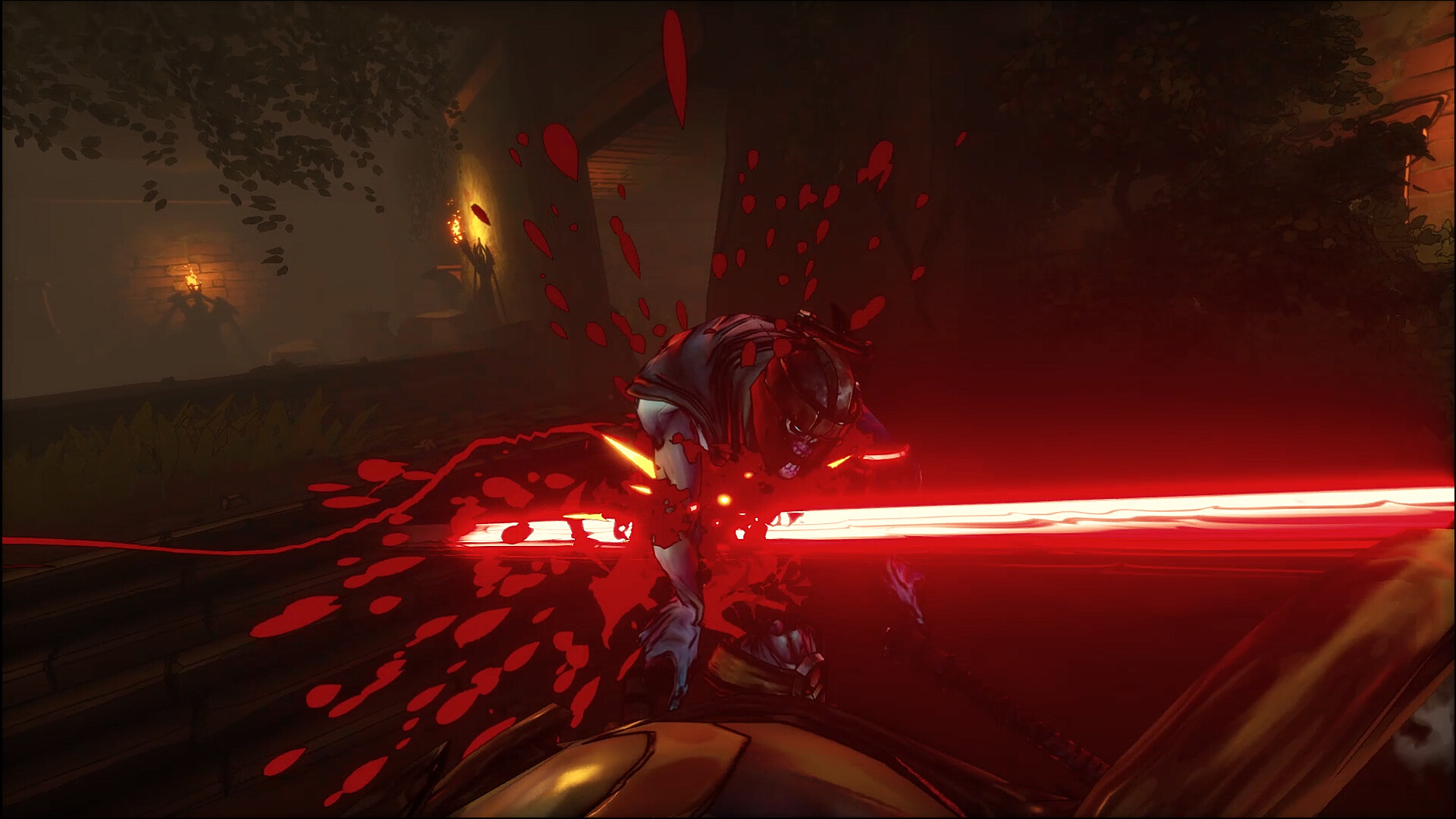
Melee combat close-up — the physics-driven hit ATVR's players praise mostImage: ATVR via Steam -
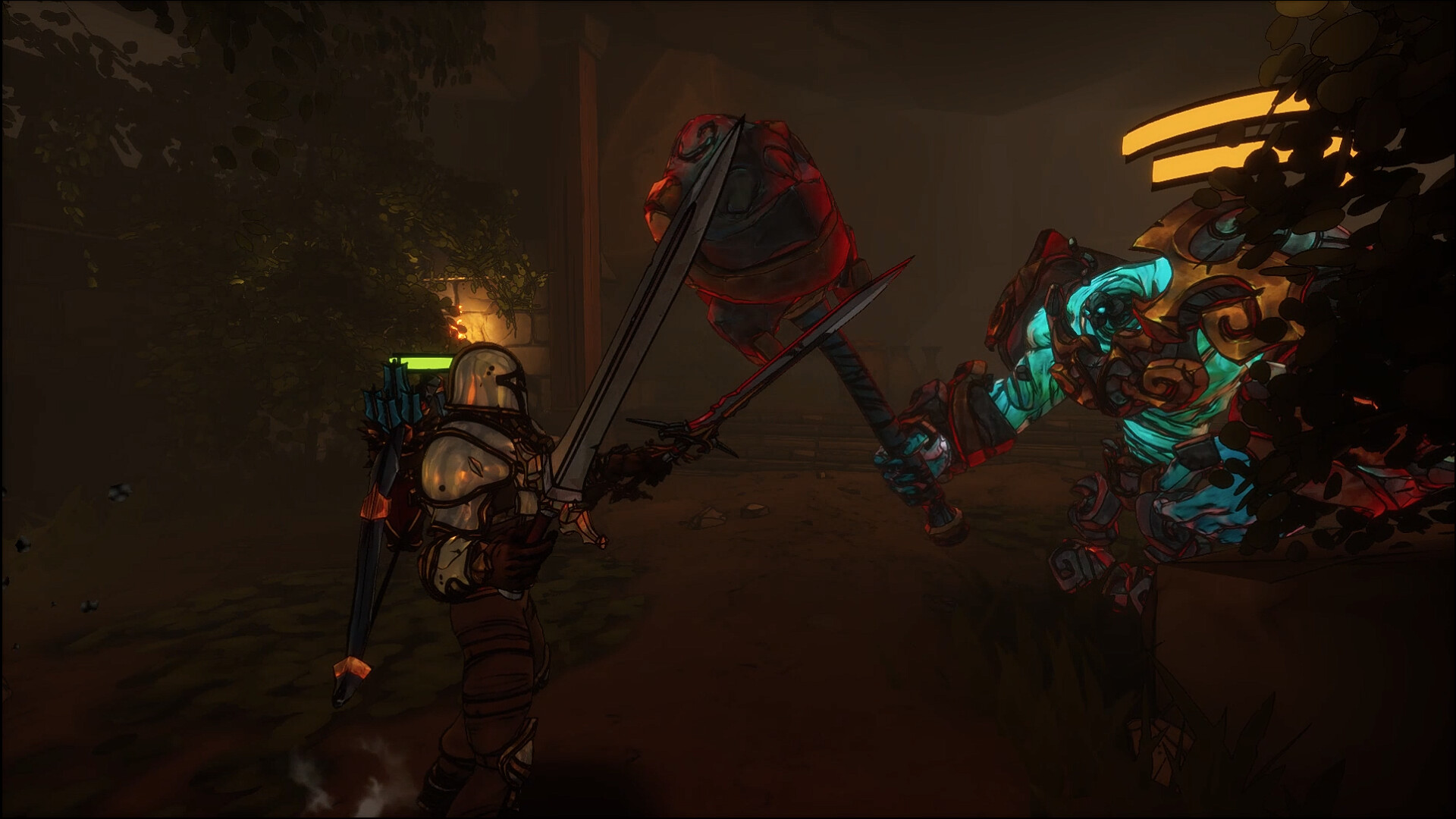
Dual-wielding swords against one of the dungeon's elemental enemiesImage: ATVR via Steam -
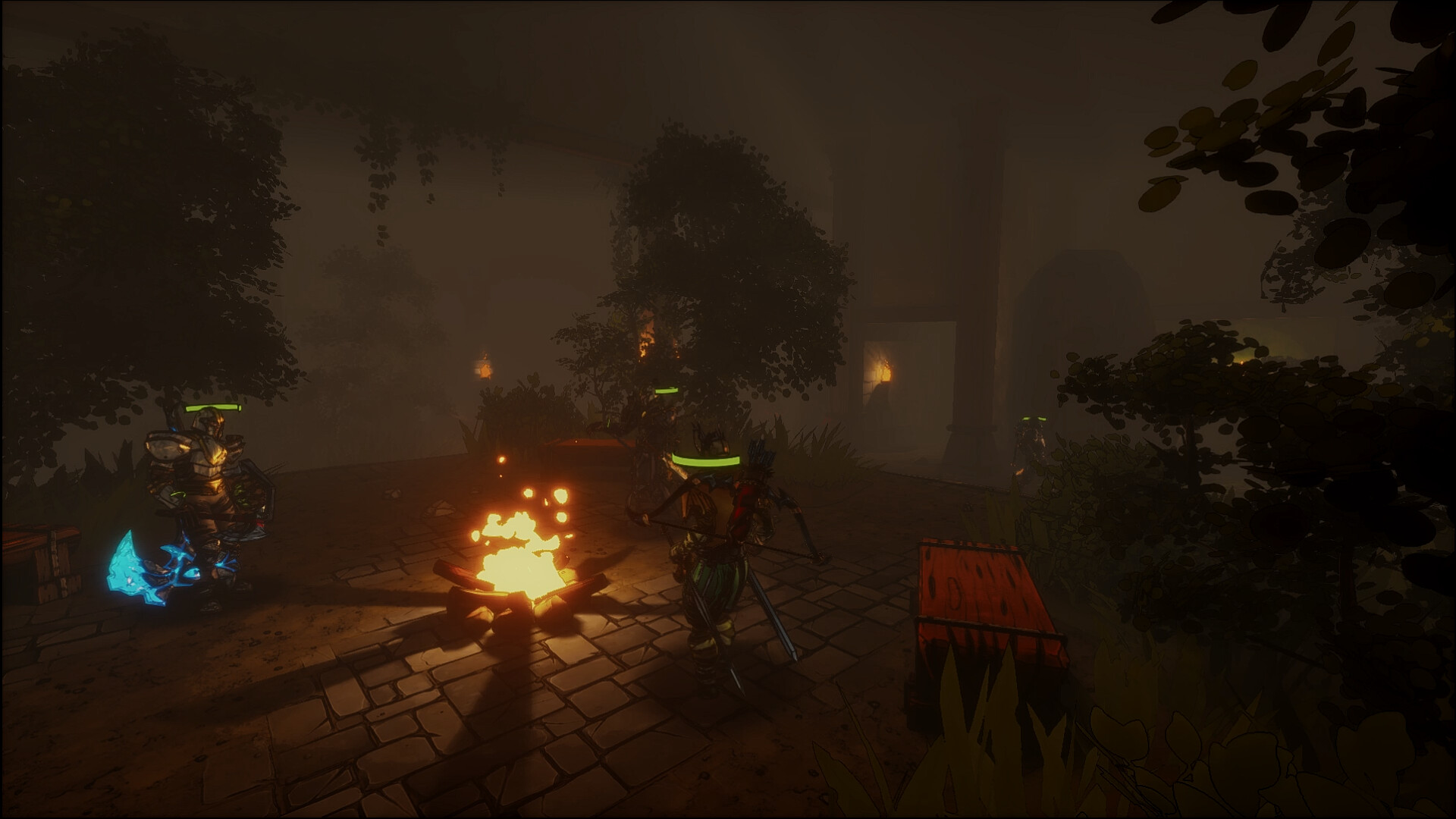
A three-player co-op party regrouping around a checkpoint fire mid-delveImage: ATVR via Steam