Game review
NONEWORLD
7 / 10
- Developer
- Millie Snowfall
- Publisher
- Millie Snowfall
- Released
- 21 June 2026
- Platforms
- Windows
- Genre
- Action, Adventure, Indie, RPG, Strategy
- Monetisation
- paid
- Players
- false
The short version
Biggest strengths
- A striking, consistently-praised monochrome art direction paired with an original score that multiple reviewers called the game's standout element, with specific tracks name-checked as personal favorites
- A genuinely mysterious, Alice in Wonderland-inspired narrative that reveals itself gradually through exploration rather than exposition, with an unusually confident sense of authorial voice for a solo debut
- A memorable, well-realized cast anchored by an omnipresent Cheshire Cat companion, with reviewers praising both the game's humor and its tonal contrast between cute character design and an unsettling world
Biggest weaknesses
- A short runtime of roughly 3.5 to 5 hours built around only around ten combat encounters, meaning players unlock the full party-synergy system just as the game is ending, without room to actually use it
- Several irreversible progression points that force players into the next area upon entry with no warning, causing multiple reviewers to accidentally miss content on their first playthrough
- Environment and room design several reviewers found visually similar and light on distinct landmarks, falling short of genre touchstones that reward exploratory curiosity
Who it's for: Fans of short, atmosphere-driven RPG Maker JRPGs in the vein of OMORI, who prioritize mood, music, and mystery over deep, fully-developed combat systems
Our recommendation: recommended
7 / 10
NONEWORLD released on Steam on June 21, 2026, an $8.99 debut RPG Maker JRPG from solo developer, artist, and musician Millie Snowfall. Players take on the role of Princess Quartz, who wakes with fragmented memories inside a dark castle, accompanied only by a mysterious, omnipresent Cheshire Cat, and must piece together both her past and a path home across a compact, striking monochrome world. Its 13-review English pool is unanimously Positive, and the reviews describe a confidently personal, atmosphere-first debut whose combat systems don't quite get the room to fully deliver on their own ambition.
Reviewers consistently framed the game as carrying an unusually strong individual voice for a first project. One reviewer, writing for outlet Noisy Pixel, described the experience as feeling "like a conversation had directly with Millie herself, as the unique sense of earnestness, humor, and mystery seemed to effortlessly pour out of her hand-crafted world," comparing the intimacy of a single-developer project to "paging through a sketchbook full of unique drawings that lack just the right amount of polish." Several reviewers preemptively addressed the game's most obvious point of comparison, OMORI, with one writing "I think a lot of people might look at this game and go 'oh this is just copying OMORI right?' Not really? For starters this is way shorter... there's definitely more emphasis on black and white color assets rather than full color," and adding that the story "isn't really spelled out and by the end of it you'll probably be left with more questions than answers."
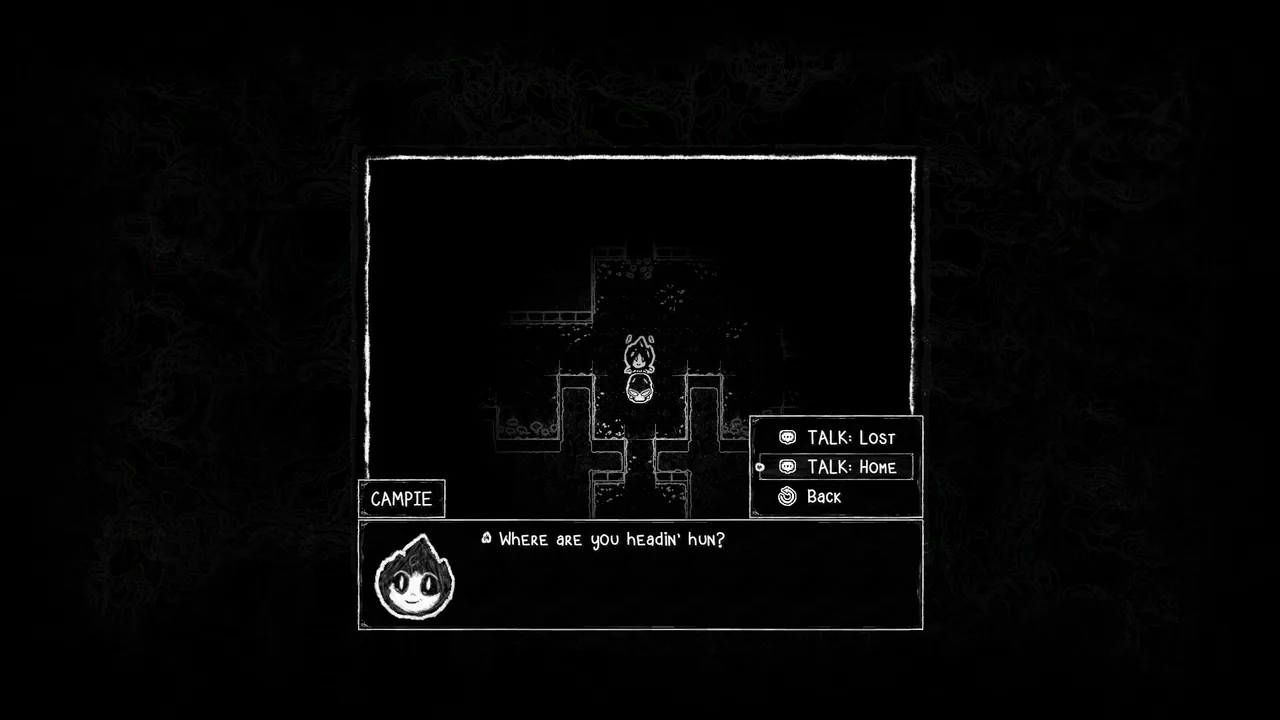
Atmosphere and music draw the pool's most unified, specific praise. One reviewer wrote "the feeling of 'there is something wrong here' saturates everything, including your character," calling the memory-recovery narrative something that "makes me feel like I'm living through a mystery novel." Multiple reviewers singled out the soundtrack directly, with one naming specific tracks: "the songs for CloudSmasher and Mayday are on my daily playlists," while another said simply "the music especially really strongly characterise the world's mood and is just generally very well done." The Cheshire Cat companion drew particular affection, with one reviewer describing its "slightly mischievous 'bad smile'" as feeling like it's "saying to us, 'I know something you don't,'" capturing the tonal blend of cute character design against an eerie, mysterious backdrop that several reviewers called the game's defining contrast.
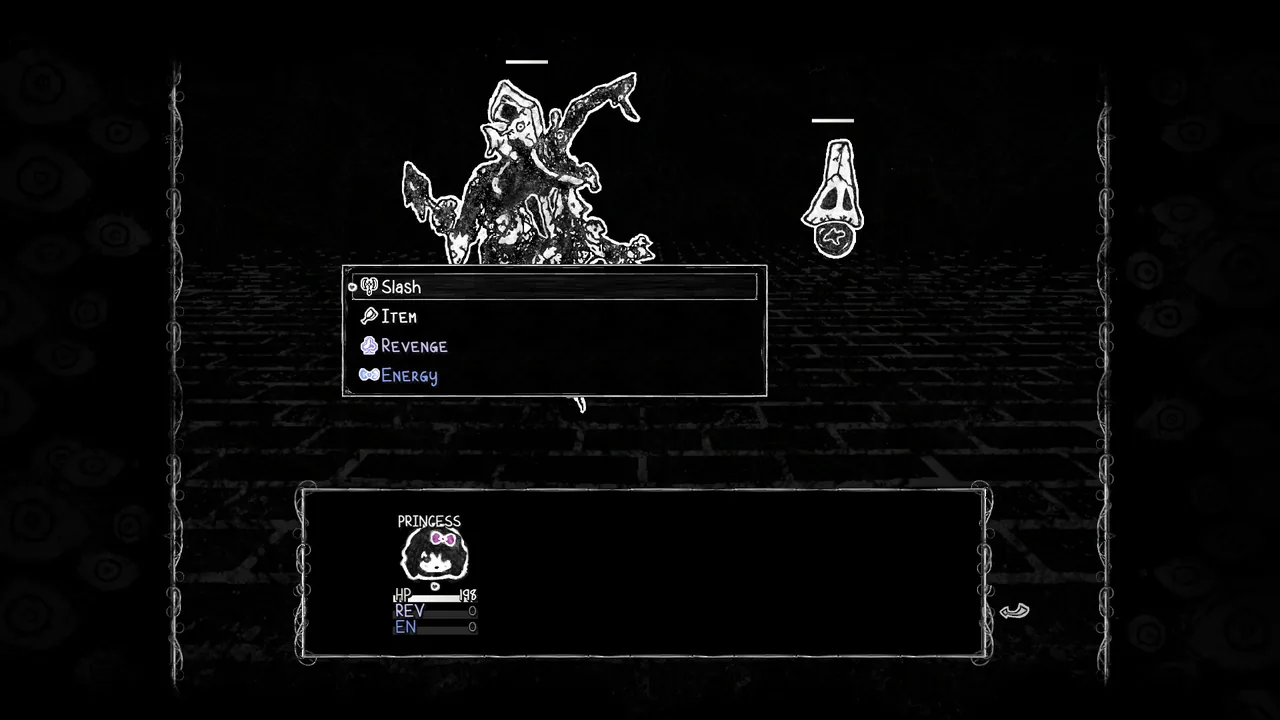
The pool's most substantive, corroborated complaint concerns the pacing of the game's combat systems against its short overall length. One reviewer, who received a review copy, laid out the problem in detail: "a small JRPG with about ~3.5 hours of content on normal difficulty, I think there were only around 10 battles including a few boss fights... you went through the trouble of creating a fully functional party based/synergy based strategy, and then you only have like 3 fights left when you have access to everything." A second reviewer independently confirmed the same structural issue, writing "there aren't very many combat encounters in the game, with 2 bosses and a few normal and elite encounters. It doesn't give you much time to get comfortable with how each character's abilities work with each other, to find synergies, etc." That two separate reviewers landed on the identical critique, down to the same rough encounter count, makes it a credible design gap rather than one player's impatience, even though both reviewers were careful to note they still enjoyed the narrative-focused experience overall.
A second recurring complaint concerns irreversible progression: one reviewer detailed "several times where you're forced to go to the next area as soon as you enter a certain room, with no way to go back," adding that "there's no real way to know you're entering said room until its too late, so I've missed a couple things by accidentally progressing down the correct path." A separate reviewer echoed this independently, citing "the inability to backtrack in some areas causing you to miss content" as a real flaw alongside "some minor spelling errors." A smaller but repeated usability gripe concerns the display: one reviewer noted the game "could definitely use an auto run or larger playing window," while another, more positive overall, still flagged "you can't increase the screen size to fill up the monitor when playing" as their one real complaint.
It's worth noting the environment design itself drew some of the pool's only mixed reception. The Noisy Pixel review, otherwise glowing, was the most direct on this point, arguing that compared to "immersive JRPG games and more specifically, Earthbound type games... the locations need some personality instead of just having square rooms and roads," a critique the reviewer felt kept exploration from being as rewarding as the narrative deserved.
For players wary of combat difficulty specifically, the game's tiered difficulty options are worth flagging as a genuine accessibility strength. One reviewer explicitly recommended newcomers "choose the 'Easy' option" if they're "not into RPG Battles" and just want "an exploration / story experience," while noting that "some of the battles can be a bit difficult on the normal setting." Another reviewer who doesn't "usually play action RPGs" still found the combat "easy to learn and not too hard" on their chosen difficulty, suggesting the tiering genuinely works as intended for letting players self-select their preferred balance between story and challenge rather than being a token option in name only.
Taken as a whole, NONEWORLD is a confidently made, atmosphere-and-story-first debut that succeeds at what it clearly prioritizes: a striking visual identity, a genuinely memorable score, and a mysterious, well-paced narrative anchored by a strong central relationship with its Cheshire Cat companion. Its combat systems and world design are the honest weak points, with two independent reviewers converging on the same complaint about underused party synergy, but at under $9 for a tight three-to-five-hour experience, this is a fair recommendation for JRPG fans who prioritize mood and music over deep tactical combat.
Pros and cons
Pros
- A striking, consistently-praised monochrome art direction paired with an original score that multiple reviewers called the game's standout element, with specific tracks name-checked as personal favorites
- A genuinely mysterious, Alice in Wonderland-inspired narrative that reveals itself gradually through exploration rather than exposition, with an unusually confident sense of authorial voice for a solo debut
- A memorable, well-realized cast anchored by an omnipresent Cheshire Cat companion, with reviewers praising both the game's humor and its tonal contrast between cute character design and an unsettling world
- Multiple difficulty options that let players tune the combat challenge to their preference, from a story-focused easy mode to a genuinely demanding normal setting
Cons
- A short runtime of roughly 3.5 to 5 hours built around only around ten combat encounters, meaning players unlock the full party-synergy system just as the game is ending, without room to actually use it
- Several irreversible progression points that force players into the next area upon entry with no warning, causing multiple reviewers to accidentally miss content on their first playthrough
- Environment and room design several reviewers found visually similar and light on distinct landmarks, falling short of genre touchstones that reward exploratory curiosity
- No option to enlarge the play window or fill the monitor, a presentation limitation flagged independently by more than one reviewer as a real, if minor, usability gap
Screenshots
-
NONEWORLDImage: Millie Snowfall via Steam -
NONEWORLDImage: Millie Snowfall via Steam -
NONEWORLDImage: Millie Snowfall via Steam