Game review
No Rest for the Wicked
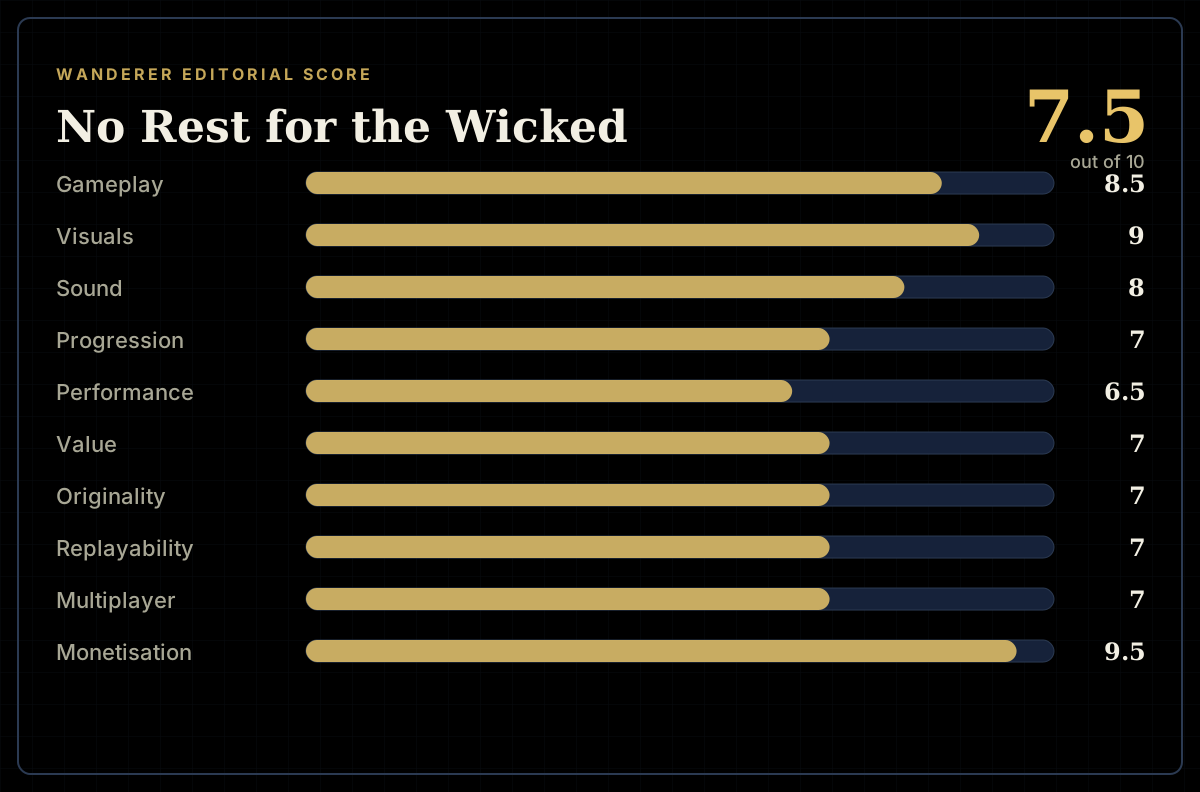
7.5 / 10
- Developer
- Moon Studios GmbH
- Publisher
- Moon Studios GmbH (self-published since March 2025; Private Division published the 2024 Early Access launch)
- Released
- 18 April 2024
- Platforms
- Windows (Steam Early Access); PlayStation 5 planned alongside the October 2026 1.0 release; Xbox Series X|S and Nintendo Switch 2 to follow, dates unconfirmed
- Genre
- Action RPG
- Monetisation
- Premium, one-off purchase; no microtransactions, with the developer stating that will remain true at 1.0
- Players
- Online co-op for up to four players; live since the "Together" update on 22 January 2026, with crossplay and cross-save promised at 1.0
The short version
No Rest for the Wicked launched into Early Access on 18 April 2024 as a strikingly good-looking, precisely animated souls-like with far less game around it than its price implied. More than two years and several major free updates later — The Crucible, The Breach, The Breach Refined, and finally proper co-op with January 2026's "Together" update — that gap has closed considerably. What hasn't changed is the reason to care about it in the first place: combat that treats every swing as a real commitment, and hand-painted presentation that still looks like nothing else in the genre.
It is still, as of this review, an unfinished game sold at a finished game's price, with 1.0 not landing until October 2026 and a recent Steam review trend that sits noticeably below the all-time figure. Whether that's worth NZ$59.95 today depends heavily on how much you value buying in early versus simply waiting three months.
Biggest strengths
- Melee combat rewards commitment and reading enemy tells rather than button-mashing, with Realm Tiers letting you dial the challenge up once the base fights feel manageable
- Hand-painted art direction from the Ori team gives every region a distinct, painterly identity that photorealistic souls-likes don't attempt
- Three major free content passes since launch — The Crucible, The Breach, and The Breach Refined — have visibly closed the content gap that defined early reviews
Biggest weaknesses
- Real four-player co-op only went fully live on 22 January 2026, meaning the multiplayer half of the pitch is roughly six months old as of this review, not two years
- NZ$59.95 is full retail pricing for a product that is, by definition, still not finished — 1.0 doesn't land until October 2026
- Recent 30-day Steam sentiment (79% Mostly Positive) trails the 87% Very Positive all-time score, and no single clean explanation for the gap is available from official sources
Who it's for: Souls-like players who want their combat isometric rather than third-person, anyone who liked what Moon Studios did visually with the Ori games and wants to see it applied to melee combat, and Early Access buyers who don't mind riding out the last few months of a two-and-a-half-year development cycle.
Our recommendation: A genuinely defensible buy at NZ$59.95 if you want in before October, but there is no real cost to waiting — 1.0 is three months out, it adds PlayStation 5 and crossplay, and it removes the single biggest risk in this review, which is that some of what's described here is still Early Access in progress rather than a finished, locked-down game.
7.5 / 10
Moon Studios built its reputation on two platformers where every frame of animation looked hand finished and every jump felt exactly as forgiving or unforgiving as it needed to. No Rest for the Wicked is the studio's attempt to carry that same discipline into an isometric action RPG with souls-like combat, and on a pure moment-to-moment level it mostly succeeds — swinging a weapon in this game has a weight and a consequence that few isometric ARPGs bother chasing. The complicating factor is timing. This is a game that has been reviewed, discussed and judged twice: once at its 18 April 2024 Early Access launch, when the combat's quality was obvious but the amount of game wrapped around it clearly wasn't, and again now, more than two years and several substantial free updates later, with a dated full release finally on the calendar for October 2026. This review is written from where things stand today, not from launch — but launch is unavoidably part of the story, because so much of what makes the current build worth discussing is what Moon Studios chose to add, fix, and eventually deliver in the gap between the two.
What two-plus years of Early Access actually bought
It's easy for "the developer kept updating it" to be a hollow claim in Early Access marketing. Here it's backed by a specific, checkable sequence: The Crucible arrived in July 2024, months after launch, adding the game's first real repeatable endgame structure. The Breach followed in April 2025, described by Moon Studios at the time as the biggest content update the game had received, adding new zones, enemies and bosses. The Breach Refined landed two months later in June 2025, tightening and rebalancing what The Breach had introduced rather than moving straight on to the next big addition. That's a materially different cadence from a studio padding out a roadmap with cosmetic drops — it's closer to a team building the game's back half in public, in full view of players who paid full price to watch it happen.
The number Moon Studios itself puts on the current state of the game, as part of its June 2026 1.0 announcement, is roughly 100 hours of total content at full release, more than 60 of which were added after Early Access launched. Read that the way it's meant to be read: whatever proportion of the game existed on day one, the majority of what's playable today was built during Early Access, in response to the community that stuck around for it. That's the strongest argument for taking this game seriously as an Early Access success story rather than a cautionary one — and it's also, unavoidably, an admission that the version that launched in April 2024 was a fraction of what exists now.
Combat that still does the heaviest lifting
None of that content expansion would matter if the underlying fighting weren't good, and it is. Every weapon class carries real weight and commitment — heavy attacks lock you into an animation you have to respect, dodges have a genuine window rather than a generous one, and enemies telegraph clearly enough that losing a fight reads as a reading mistake rather than an unfair one. Difficulty is adjustable through Realm Tiers, which let you scale the challenge up once the base encounters stop testing you, rather than forcing everyone through one fixed difficulty curve. It's the part of the pitch that was never really in question — even the roughest early impressions of this game tended to agree the swordplay worked. What's changed since is the build variety around it: Moon Studios' own framing for 1.0 is that the class system has been reworked so that "two players using the exact same weapon will play nothing alike," which if it holds up is a genuine answer to the common isometric-ARPG problem of every build converging on the same optimal rotation once players work out the math.
Sacrament: a town worth investing in, not just passing through
The hub town, Sacrament, is where the game's souls-like combat meets something closer to a light life-sim layer, and it's one of the clearer signs of what two years of development time bought. You can purchase and furnish property, farm and forage for ingredients, and cook meals that restore health and grant temporary stat buffs rather than treating food as a flavour item. None of this is deep in the way a dedicated crafting or farming game is deep, and it isn't trying to be — its job is to give Sacrament a reason to feel like a place you're building up rather than a menu screen with NPC sprites standing in front of shop interfaces, and it does that job well. Weapon and armour crafting sits alongside it, letting you enchant gear with runes and gems rather than relying purely on drops, which gives the itemisation loop a second axis beyond "did a better number fall out of that chest."
Co-op finally exists, and it's newer than you'd think
Here's the detail that's easy to miss if you're only looking at the current Steam store page, which lists co-op as a standing feature: real, live four-player online co-op is a genuinely recent addition. A co-op open beta playtest ran in December 2025, and the feature only fully launched — with a free weekend and a 40% discount to mark the occasion — as "3… 2… 1… Together!" on 22 January 2026. That means for roughly the first twenty months of this game's Early Access life, the multiplayer half of its original pitch either wasn't playable or wasn't reliable enough to launch outside a beta. As of this review, live co-op has been in players' hands for about six months, not the two-plus years the game's overall Early Access run might suggest. That's not a condemnation — shipping multiplayer correctly rather than rushing it out alongside a buggy solo launch is a defensible call — but it does mean anyone weighing this purchase specifically for the co-op experience is evaluating a much younger feature than the rest of the game around it, and the persistent-realm structure promised for 1.0, where private worlds keep evolving between sessions with crossplay and cross-save layered on top, is still ahead rather than already proven out.
The Crucible and what "endgame" means here
Once the main story content is cleared, The Crucible is the structure that's meant to keep you playing — a repeatable dungeon built around escalating floors, bounties and challenges rather than a single fixed run. It's a sensible shape for an Early Access endgame: legible, replayable, and easy to keep adding to without redesigning the whole loop each time. Daily and weekly bounties sit alongside it for players who want a shorter session with a defined goal. What it isn't yet is a deep seasonal system in the Path of Exile or Last Epoch sense — there's no league mechanic reinventing the loop every few months, just a solid repeatable structure that the base combat is strong enough to carry for a reasonable stretch before it starts to feel familiar.
Presentation and sound remain the clearest selling point
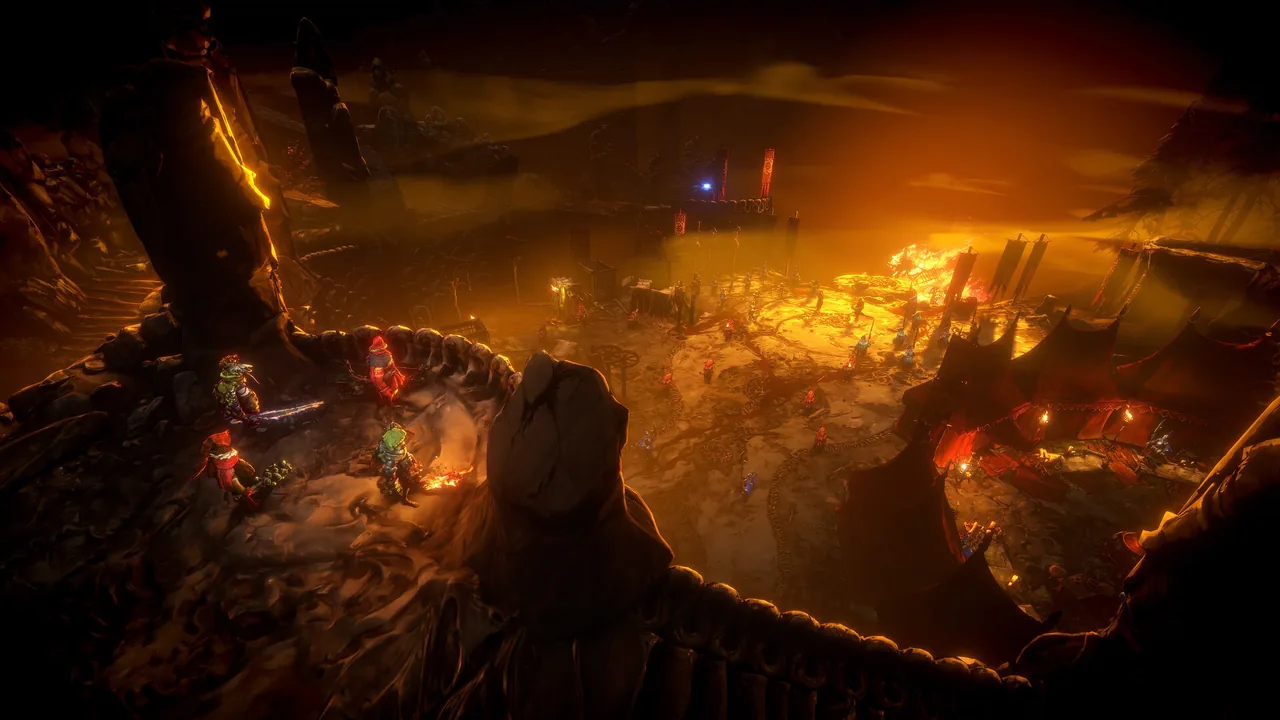
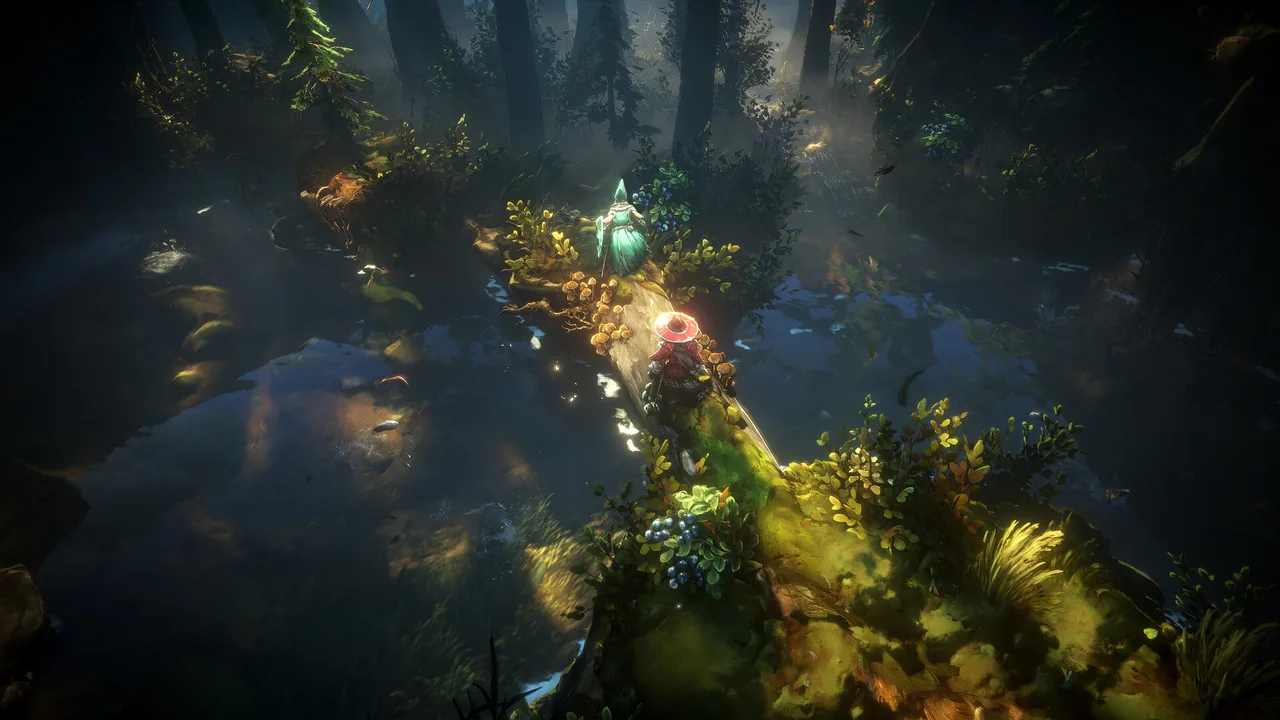
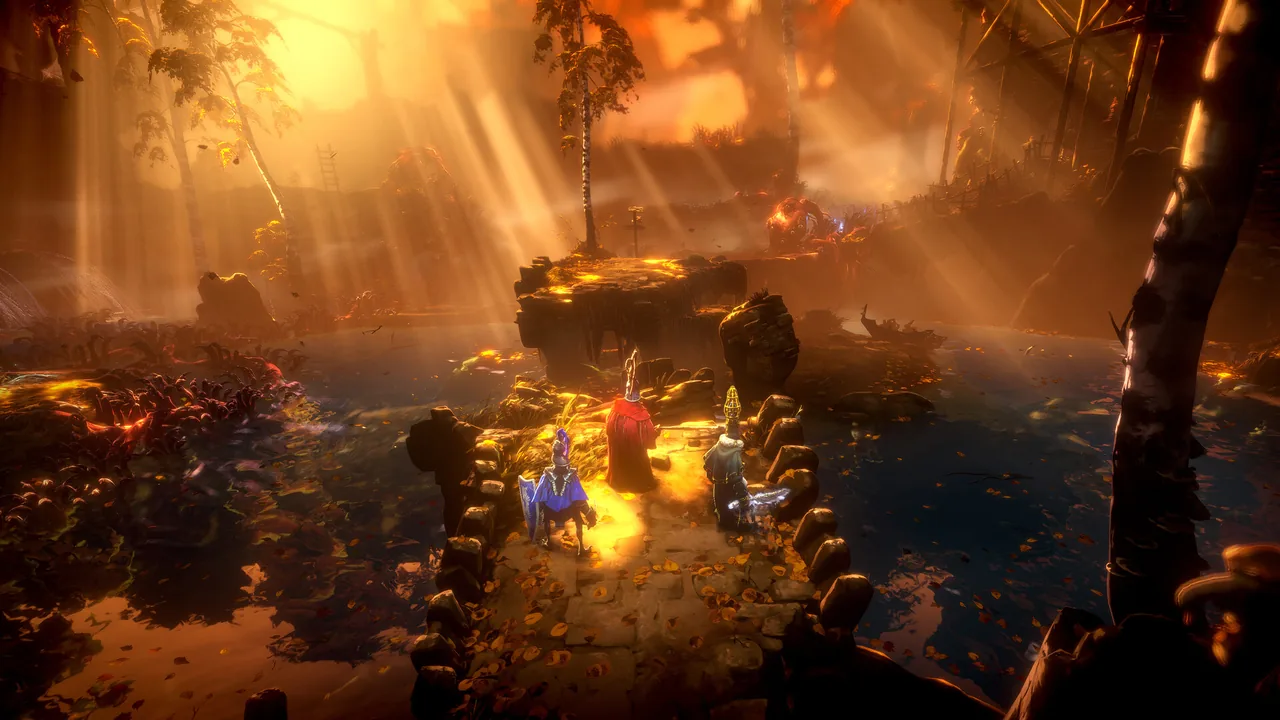
Whatever reservations apply to the game's pacing or its price at this stage of development, the audiovisual side isn't one of them. The hand-painted regions of Isola Sacra look like nothing else currently selling itself as a souls-like — painterly light, texture and colour work standing in for the genre's usual grim photorealism — and it's a look that's held up consistently across every major update rather than degrading as new content got bolted on. The score, composed by Gareth Coker, who scored both Ori games, does real atmospheric work without leaning on the same motifs that made those soundtracks distinctive; this sounds like its own game rather than an Ori reskin.
Performance and the honest technical caveats
The game runs on a customised build of Unity, and ambitious hand-painted lighting on a heavily modified engine is a combination that has historically been a source of stutter and frame-pacing complaints in games built this way, independent of any specific issue unique to this build. Moon Studios has shipped regular patches throughout Early Access — the "Together Hotfix 9" patch in April 2026, addressing a save-rollback issue, is one recent example of the studio actively maintaining stability rather than letting bugs accumulate. That's a good sign of ongoing support, but it's also a reminder that a game still receiving numbered hotfixes for save-corruption issues in its third year of Early Access hasn't finished settling. Check current benchmarks against your own hardware rather than assuming two years of patches means the performance conversation is closed — it's improved, not necessarily resolved.
Price, the Founder's Pack, and what buying today actually gets you
At NZ$59.95 with no discount active as of 30 July 2026, this sits at full-retail pricing for a game that, by its own developer's admission, won't be finished for another three months. There was a real incentive to buy earlier: a Founder's Pack, including an exclusive hideout, a unique weapon, a cosmetic tag and access to the pre-1.0 Test Realm beta, was available to anyone who owned or purchased the game before its window closed on 10 July 2026 — twenty days before this review. Buying today means paying the same price as those early supporters without any of that bonus, which is worth knowing plainly rather than discovering after the fact. Two million copies sold as of early July 2026, up from 1.7 million just in April, at least confirms the commercial side of this Early Access run has been a genuine success regardless of how any individual buyer weighs the timing.
The more interesting story behind the price tag is who's collecting it. Private Division, Take-Two Interactive's publishing label, backed the original 2024 Early Access launch; Moon Studios bought back full publishing rights in March 2025 and has self-published the game ever since. Combined with the standing no-microtransactions commitment on a game that would be an easy candidate for a cosmetic shop, it paints a picture of a studio that wanted direct control over how this game gets finished and sold, and has been willing to spend money to get it.
Final verdict
No Rest for the Wicked is a better, fuller, more honest product today than the one that launched in April 2024, and the gap between those two versions is documented rather than assumed — three named content updates, a genuinely new co-op mode, a town worth investing in, and a dated 1.0 release that finally puts an end point on the Early Access period. The combat that made this game worth watching in the first place hasn't just held up, it's had two years to get sharper, and the hand-painted presentation remains the clearest reason to care about this over its more conventional genre neighbours.
What keeps this from scoring higher is exactly what keeps any Early Access game from scoring higher this close to release: it's still not finished, it's priced as though it is, one of its headline features has only actually existed for about six months, and the most recent month of Steam sentiment is measurably softer than the long-run average without a clean official explanation for why. Seven and a half reflects a genuinely strong, still-improving game rather than a finished one — worth buying now if getting in before October matters to you, and just as reasonable to wait three months for, at which point most of the caveats in this review stop applying.
Price, release status and Steam figures checked 30 July 2026.
If what you actually want is a world that keeps growing without an Early Access price tag at all, Wanderer has been free throughout its own development.
Pros and cons
Pros
- Melee combat rewards commitment and reading enemy tells rather than button-mashing, with Realm Tiers letting you dial the challenge up once the base fights feel manageable
- Hand-painted art direction from the Ori team gives every region a distinct, painterly identity that photorealistic souls-likes don't attempt
- Three major free content passes since launch — The Crucible, The Breach, and The Breach Refined — have visibly closed the content gap that defined early reviews
- No microtransactions of any kind, on a premium Early Access title, with the developer explicitly committing to keep it that way at 1.0
- Sacrament gives you an actual settlement to invest in — property, furnishing, farming and cooking — rather than a menu screen dressed up as a hub
Cons
- Real four-player co-op only went fully live on 22 January 2026, meaning the multiplayer half of the pitch is roughly six months old as of this review, not two years
- NZ$59.95 is full retail pricing for a product that is, by definition, still not finished — 1.0 doesn't land until October 2026
- Recent 30-day Steam sentiment (79% Mostly Positive) trails the 87% Very Positive all-time score, and no single clean explanation for the gap is available from official sources
- The Founder's Pack bonus for early buyers closed on 10 July 2026, so anyone purchasing now gets the base game only, at the same price early adopters paid for more
- PlayStation 5 support isn't live yet and Xbox Series X|S and Nintendo Switch 2 versions have no confirmed date at all
Screenshots
-
No Rest for the WickedImage: Moon Studios GmbH via Steam -
No Rest for the WickedImage: Moon Studios GmbH via Steam -
No Rest for the WickedImage: Moon Studios GmbH via Steam -
How the review scores each part of the gameWanderer Editorial -
The short versionWanderer Editorial