
Game review
Nightmarena
4.9 / 10
- Developer
- Colo Coko
- Publisher
- Psychronic Games
- Released
- 10 March 2026
- Platforms
- Windows
- Genre
- Action
- Monetisation
- Premium
- Players
- Single-player only
The short version
Nightmarena is a $5.99 fighting game built in RPG Maker from developer Colo Coko and publisher Psychronic Games, released 10 March 2026, sending a karate-practicing protagonist through a series of turn-based arena battles that demand Punch-Out-style timed dodging on top of standard RPG resource management. This review draws on a sample of 16 lifetime reviews, Positive with 15 positive against 1 negative, and reads the full sample in detail, including one unusually long and detailed critical review. Most reviewers describe combat that genuinely demands attention and rewards pattern-reading, while the sample's most detailed voice lays out a specific, credible case that the telegraphing, controls, and economy underneath that combat remain rough.
Biggest strengths
- This review's sample was consistent in describing combat that genuinely demands sustained attention, with one reviewer noting 'the core gameplay is surprisingly good, you need to be paying attention at all times,' since enemies will chain unfamiliar attacks or vary familiar ones by elevation without warning
- This review's sample repeatedly praised specific, creative enemy designs, and this review checked the sample's own detailed critical review and found it independently agreed on this point even while criticizing much else, specifically citing 'a priest whose attacks can heal Gerald if you dodge into them, or a tribesman whose attacks are easy to block but who has lit a rhythmic fire totem behind Gerald forcing you to choose whether to burn yourself or take the hit'
- This review's sample repeatedly praised the game's music and old-school arcade atmosphere, with one reviewer noting the background music 'perfectly captures that classic, old-school 90s arcade feel,' and appreciating that the game 'mercifully doesn't blast your eardrums at 100% volume when you boot it up'
Biggest weaknesses
- This review's sample's single detailed critical review made a specific, credible technical case against the combat itself, noting the game runs on 'hard-coded timing rather than interaction' with 'no hitboxes,' meaning attacks are learned through 'rote memorisation and recital rather than the kind of intuition and instinct' the reviewer felt genre touchstones like Punch-Out allow for
- This review's sample's detailed critical review raised a specific interface complaint that this review considers a real design flaw regardless of overall enjoyment: there is 'no grace period or confirmation required when selecting an action,' meaning a single misread input, such as attempting to heal without enough MP, forfeits the player's entire turn
- This review's sample's detailed critical review laid out a specific, itemized balance complaint about the game's Roguelite progression economy, noting an optional superboss offers less reward than safer alternative farming, and that skipping past the first floor is possible but oddly restricted to that floor alone, concluding plainly 'it's simply not very well thought out'
Who it's for: Players drawn specifically to demanding, pattern-reading combat in the Punch-Out or Dark Souls mold who are willing to tolerate real jank and an engine ill-suited to the genre in exchange for creative enemy design and a short, intense run structure.
Our recommendation: A cautious recommendation for players specifically seeking that kind of demanding combat, but this review takes its own sample's detailed critical account seriously enough to flag real, specific technical and balance problems rather than smoothing them over.
4.9 / 10
Duck, dodge, and counter your way through a formless tower of monsters: Nightmarena is a $5.99 fighting game built in RPG Maker from developer Colo Coko and publisher Psychronic Games, released 10 March 2026. This review draws on a sample of 16 lifetime reviews, Positive with 15 positive against 1 negative, and reads the full sample in detail, including one unusually long and detailed critical review.
Combat that demands your full attention
This review's sample was consistent in describing combat that genuinely rewards sustained focus. One reviewer summarized it directly: "the core gameplay is surprisingly good, you need to be paying attention at all times," since enemies chain unfamiliar attacks or subtly vary familiar ones by elevation without warning. Another reviewer, writing on launch day, described the loop as "insanely addictive... you fail, laugh, dive right back in, and suddenly it's 12 AM," praising a difficulty that "always feels fair and motivating rather than frustrating."
Genuinely creative enemy design, even its harshest critic agrees
This review's sample repeatedly praised specific, inventive enemy designs, and notably, this review checked the sample's own detailed critical review and found it independently reached the same conclusion even while criticizing much of the rest of the game. That reviewer specifically cited "a priest whose attacks can heal Gerald if you dodge into them, or a tribesman whose attacks are easy to block but who has lit a rhythmic fire totem behind Gerald forcing you to choose whether to burn yourself or take the hit."
A 90s arcade atmosphere reviewers responded to
This review's sample repeatedly praised the game's music and presentation, with one reviewer noting the soundtrack "perfectly captures that classic, old-school 90s arcade feel," and appreciating a small but real courtesy: the game "mercifully doesn't blast your eardrums at 100% volume when you boot it up." Another reviewer praised the unusual structure itself, noting "there are no maps, no exploration and no levelling up or collecting gear — just pure combat with a refreshingly new twist."
A detailed dissent worth taking seriously
Set against that praise, this review's sample included one unusually long, structured critical review that laid out a specific, credible technical case against the combat's foundations. That reviewer explained the game runs on "hard-coded timing rather than interaction," with "no hitboxes," meaning attacks must be learned through "rote memorisation and recital rather than the kind of intuition and instinct" genre touchstones like Punch-Out allow for. This review treats that account as a serious, substantiated critique rather than a simple pan, not least because the same reviewer closed by writing "glad I bought it though."
A specific interface flaw with real consequences
That same detailed review raised a concrete interface complaint this review considers a genuine design flaw independent of overall enjoyment: there is "no grace period or confirmation required when selecting an action," so a single misread input, such as attempting to heal without enough MP, forfeits the player's entire turn and leaves them to simply absorb the next attack. A separate, shorter critical review echoed a related frustration, flagging a broken status menu where "text doesn't line up with the info box."
A progression economy its own detailed critic called "not very well thought out"
The sample's detailed critical review also laid out a specific, itemized complaint about the game's Roguelite progression economy: an optional superboss offers less reward than safer, repeatable farming elsewhere, and the ability to skip past the opening floor exists but is, in that reviewer's words, "bafflingly" restricted to that floor alone. This review reads that as a concrete balance problem rather than a matter of taste, concluding in the critical reviewer's own words, "it's simply not very well thought out."
Barely any accessibility support
This review checked the store's own category data directly and found only a single, partial flag: "Partial Controller Support," with no difficulty options, no telegraphing adjustments, and no other accommodations listed anywhere. For a game whose entire combat system depends on reading and reacting to precisely-timed visual cues, several of which this review's sample's own detailed critic says are poorly conveyed even for attentive players, this review considers that gap a real and specific concern.
A short, run-based structure that splits the sample on value
This review checked playtime data across the full sample and found a wide spread, from as little as 6 minutes for a quick first impression up to 6.2 hours for the most committed player, with a median around 1.25 hours. One reviewer explicitly weighed that shortness against the price and came away satisfied, noting "since the game is quite short, it doesn't outstay its welcome," while the sample's detailed critical review reached the opposite framing, arguing the game's release window overlapping a major roguelite sequel "really demonstrates how important design nouse and balance tuning is to an experience with this kind of gameplay loop." This review reads that split as consistent with the rest of the sample: reviewers broadly agree on what the game is trying to do, and disagree specifically on whether its current execution earns the asking price.
Verdict
Nightmarena has real ideas worth taking seriously: a genre-blend most of this review's sample found genuinely absorbing, creative individual enemy designs, and a soundtrack that lands its retro-arcade target. But this review's single detailed critical account, corroborated in smaller pieces by other reviewers' complaints about bugs and rough animation, makes a specific and credible case that the combat's underlying telegraphing, its unforgiving input system, and its progression economy are still unfinished. This review recommends it cautiously, to players specifically seeking demanding, pattern-reading combat who are willing to meet the game's jank partway, and not as an easy, uncomplicated pick.
Pros and cons
Pros
- This review's sample was consistent in describing combat that genuinely demands sustained attention, with one reviewer noting 'the core gameplay is surprisingly good, you need to be paying attention at all times,' since enemies will chain unfamiliar attacks or vary familiar ones by elevation without warning
- This review's sample repeatedly praised specific, creative enemy designs, and this review checked the sample's own detailed critical review and found it independently agreed on this point even while criticizing much else, specifically citing 'a priest whose attacks can heal Gerald if you dodge into them, or a tribesman whose attacks are easy to block but who has lit a rhythmic fire totem behind Gerald forcing you to choose whether to burn yourself or take the hit'
- This review's sample repeatedly praised the game's music and old-school arcade atmosphere, with one reviewer noting the background music 'perfectly captures that classic, old-school 90s arcade feel,' and appreciating that the game 'mercifully doesn't blast your eardrums at 100% volume when you boot it up'
- This review's sample included multiple reviewers praising the genre-blend concept itself as a refreshing departure from typical RPG Maker fare, with one noting 'there are no maps, no exploration and no levelling up or collecting gear — just pure combat with a refreshingly new twist'
Cons
- This review's sample's single detailed critical review made a specific, credible technical case against the combat itself, noting the game runs on 'hard-coded timing rather than interaction' with 'no hitboxes,' meaning attacks are learned through 'rote memorisation and recital rather than the kind of intuition and instinct' the reviewer felt genre touchstones like Punch-Out allow for
- This review's sample's detailed critical review raised a specific interface complaint that this review considers a real design flaw regardless of overall enjoyment: there is 'no grace period or confirmation required when selecting an action,' meaning a single misread input, such as attempting to heal without enough MP, forfeits the player's entire turn
- This review's sample's detailed critical review laid out a specific, itemized balance complaint about the game's Roguelite progression economy, noting an optional superboss offers less reward than safer alternative farming, and that skipping past the first floor is possible but oddly restricted to that floor alone, concluding plainly 'it's simply not very well thought out'
- This review's sample included a separate, shorter critical account echoing some of the same concerns, describing the game as 'rough' despite 'creative' enemy variety, specifically wishing 'the animations were smoother,' and another reviewer flagging a broken status menu where 'text doesn't line up with the info box'
Screenshots
-
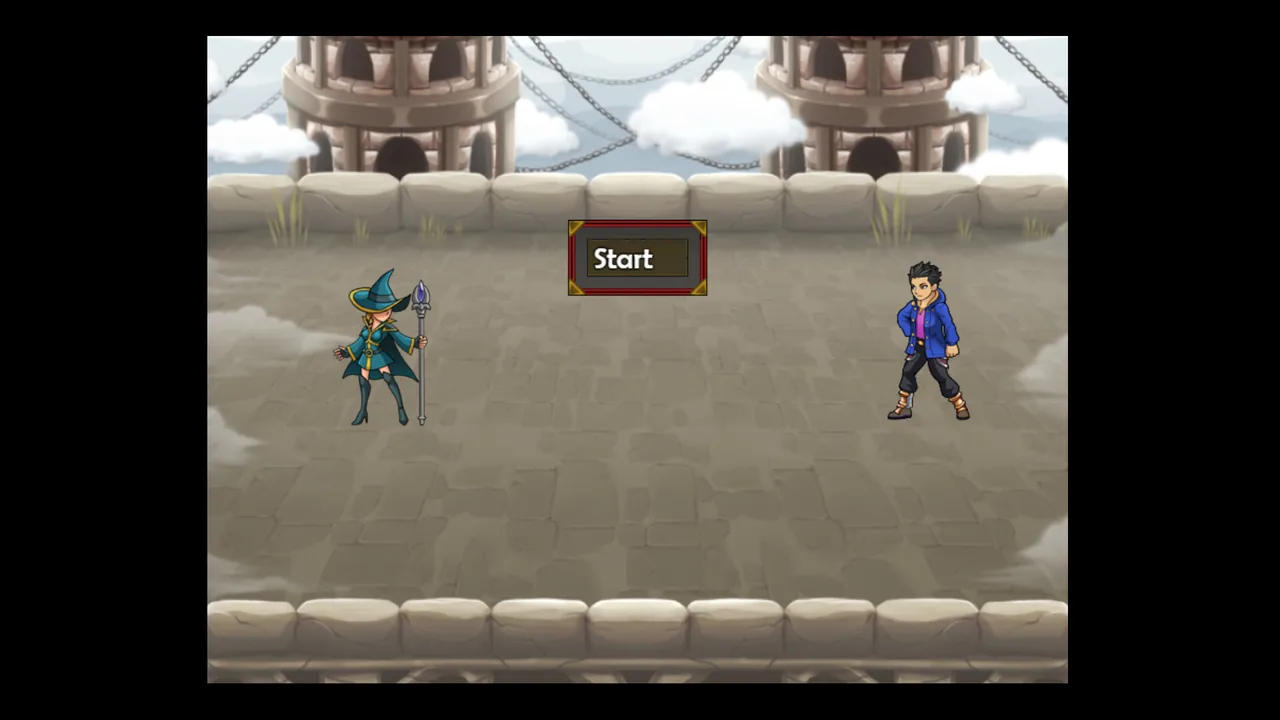
NightmarenaImage: Psychronic Games via Steam -
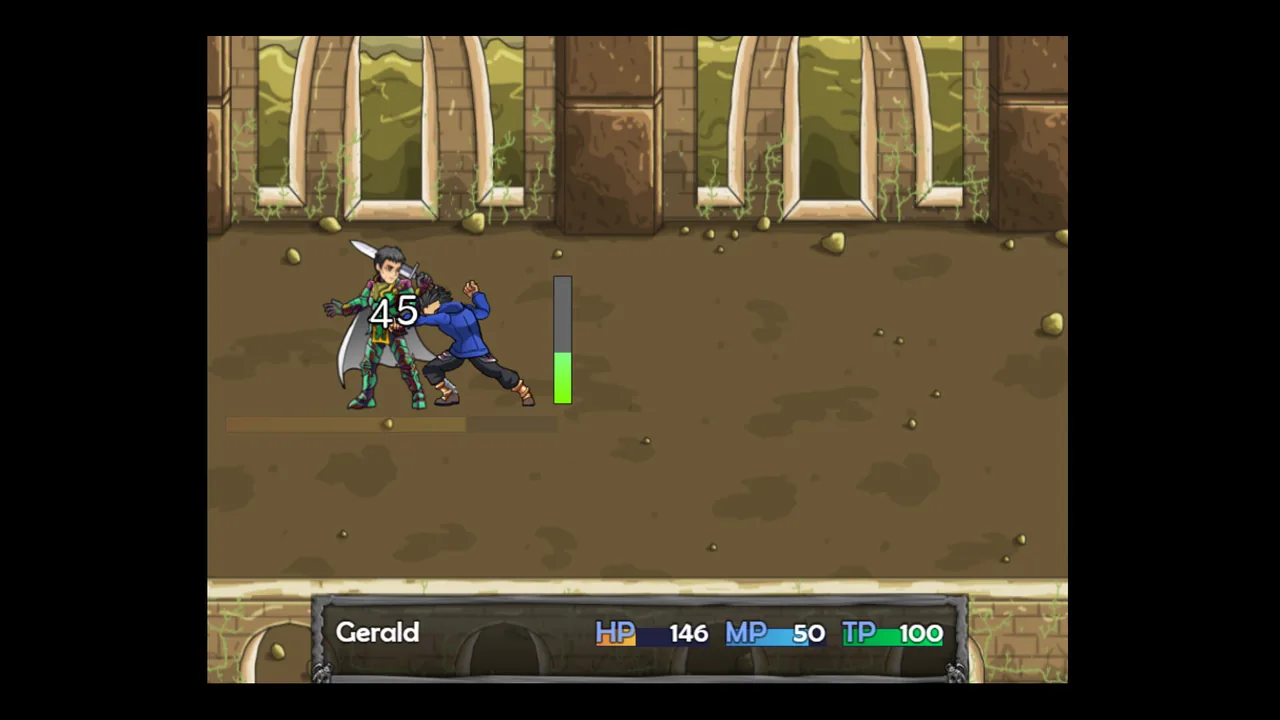
NightmarenaImage: Psychronic Games via Steam -
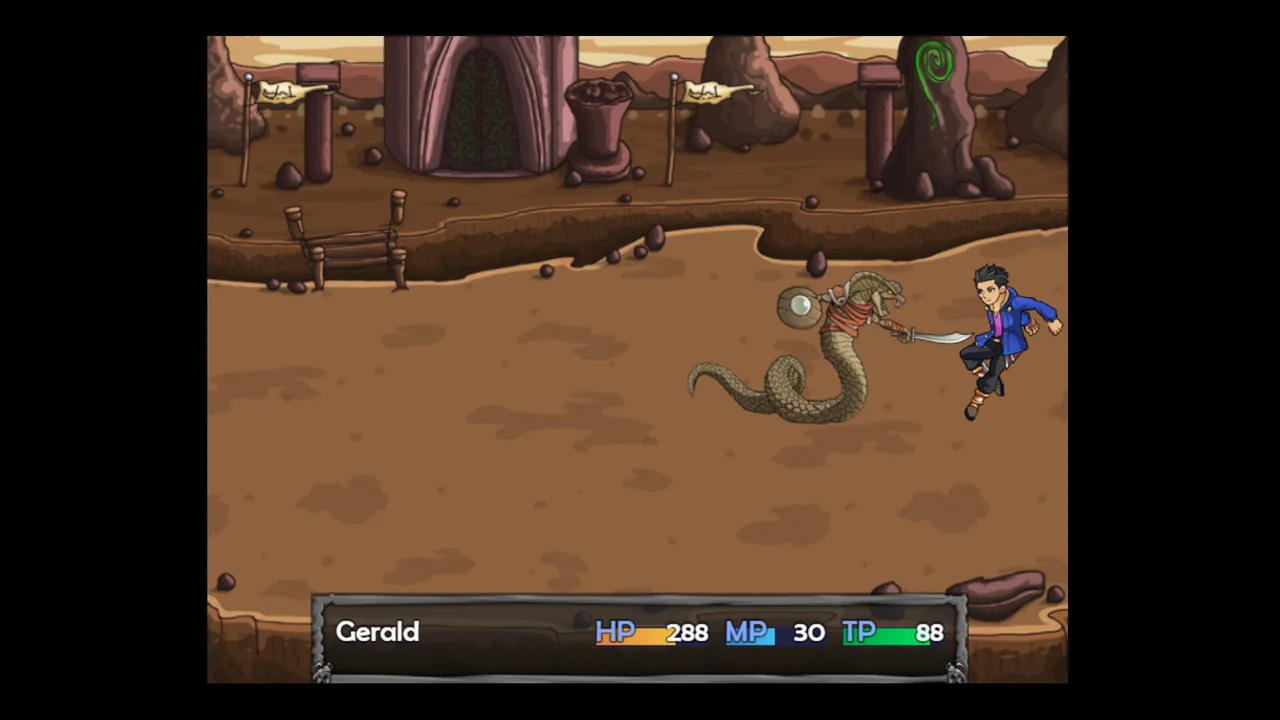
NightmarenaImage: Psychronic Games via Steam