Game review
Dark Fairy Tale: Dreamland Survivors
6 / 10
- Developer
- BINGOBELL
- Publisher
- BINGOBELL, BeStarsGames
- Released
- 19 June 2025
- Platforms
- Windows
- Genre
- Action, Adventure, Indie, RPG
- Monetisation
- paid
- Players
- false
The short version
Biggest strengths
- A genuinely distinctive, unsettling storybook art style that multiple reviewers, including several with complaints elsewhere, singled out as a real strength
- A deep build system built around Tarot cards and consumable or hoardable Dream Eggs that offers meaningfully different character classes and playstyles
- Fully playable one-handed by design, a specific and consistently confirmed accessibility feature rather than a marketing claim
Biggest weaknesses
- A widely and independently corroborated complaint that the auto-attack direction system fights the player rather than supporting deliberate build choices, described across multiple reviewers as 'backwards,' 'obnoxious,' and lacking real control
- A separately corroborated balance complaint, both around the core Nightmare Mark risk/reward mechanic that punishes leveling up and around weapon variety more broadly, that persists into some of the pool's most recent reviews rather than being a fixed launch-window issue
- A confusing, text-heavy onboarding experience flagged by more than one reviewer as a barrier before the actual mechanics click
Who it's for: Bullet-heaven fans who want a striking, dark fairy-tale aesthetic and a build system with real depth, and who can tolerate an attack-direction system that resists rather than rewards fine control
Our recommendation: mixed
6 / 10
Dark Fairy Tale: Dreamland Survivors launched on Steam on June 19, 2025, a $2.99 one-handed bullet-heaven roguelike from developer BINGOBELL, published alongside BeStarsGames, that casts players as a nightmare-warped Pinocchio slaying distorted storybook monsters across endless waves. A modest but genuinely useful 41-review English pool sits at Mostly Positive, 30 to 11, and reading through it turns up a game whose real strengths, a striking visual identity and a genuinely deep build system, sit alongside a specific, repeatedly corroborated frustration with how the moment-to-moment combat actually controls.
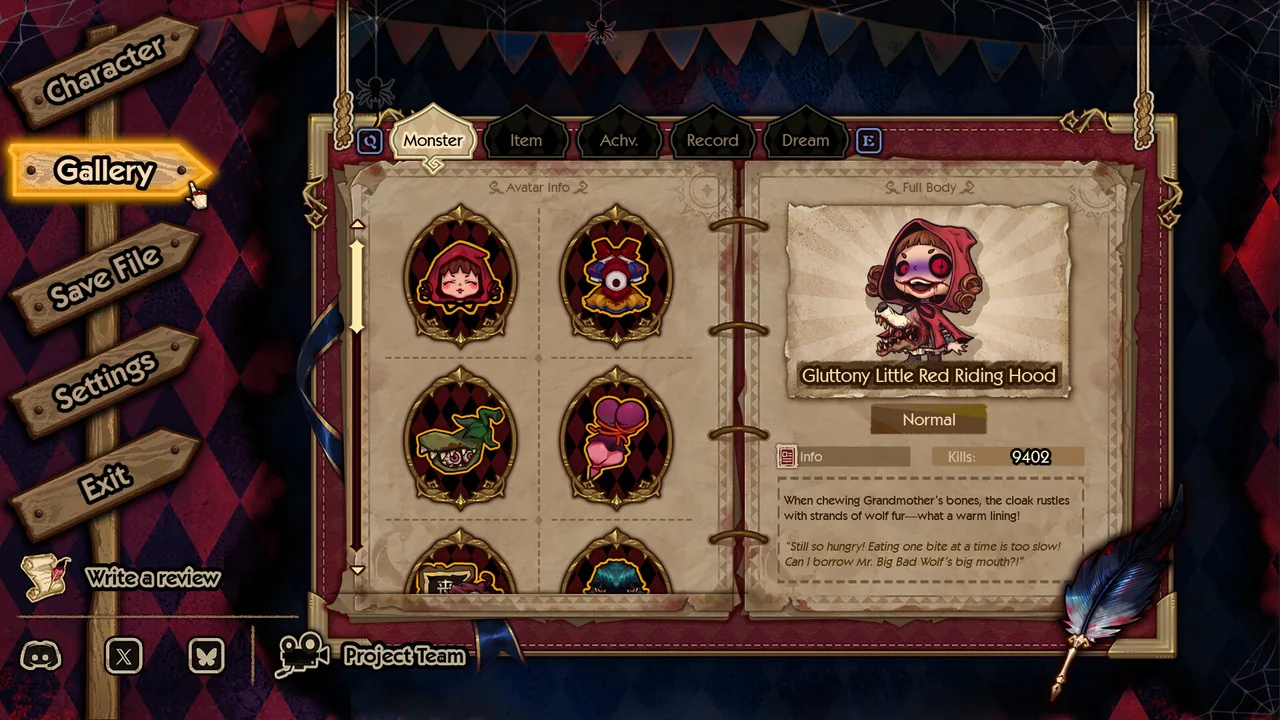
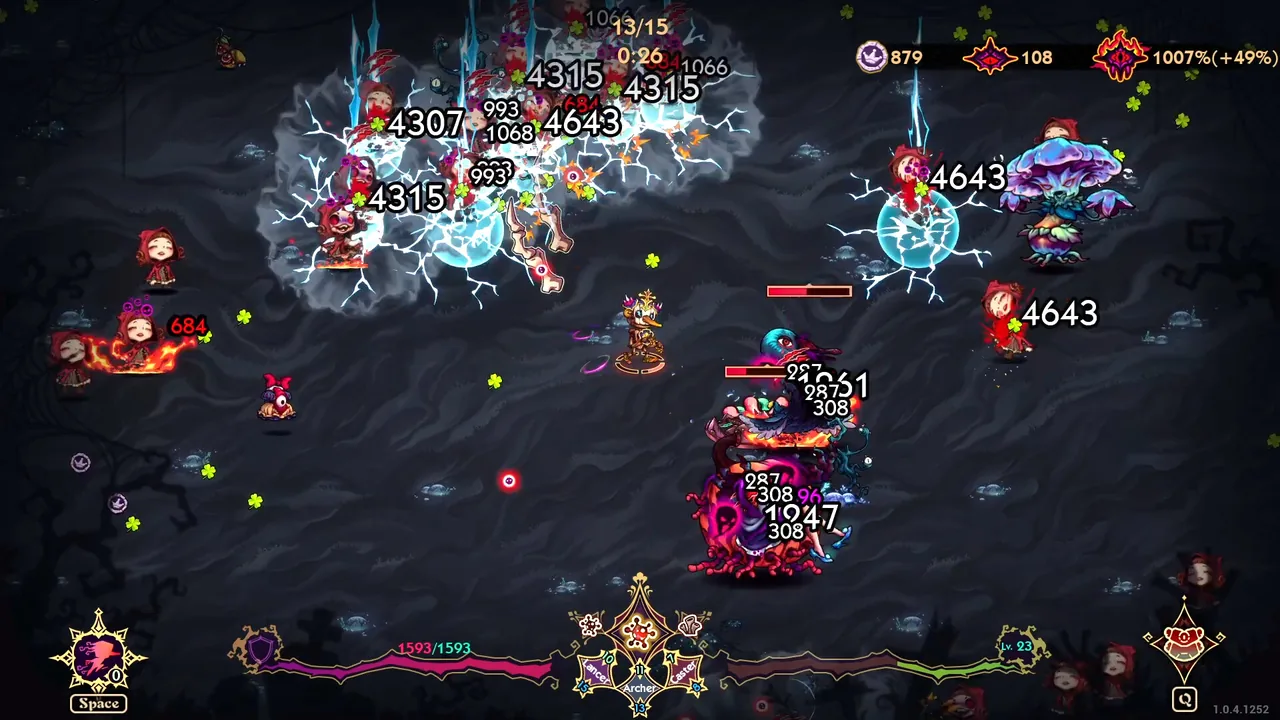
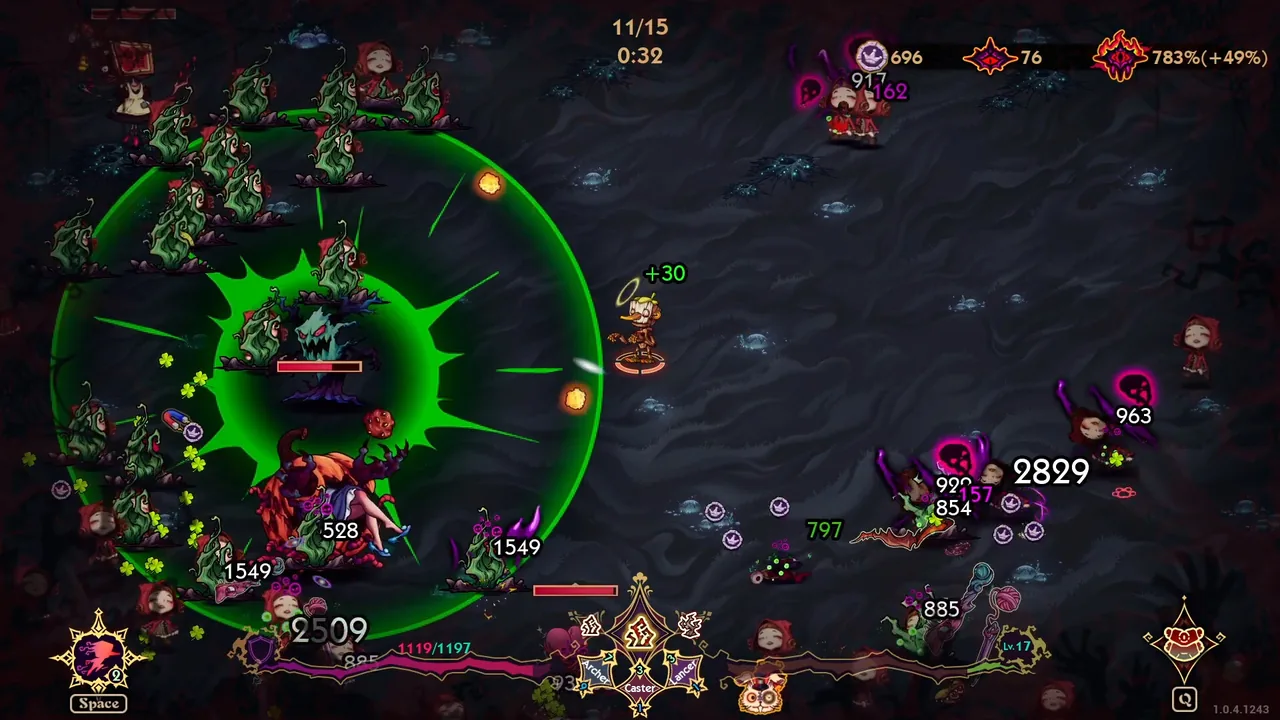
The art direction earns consistent, specific praise across the pool, including from reviewers who go on to list real complaints elsewhere. One wrote that they "do like the art style... that and the soundtrack. It has a rather creepy doll from hell vibe," while a separate reviewer called the whole thing "a beautiful piece of art," crediting "the nods to different fairy tales" as a source of real charm. That this praise recurs from reviewers with otherwise mixed feelings about the mechanics suggests it's a genuine, not merely surface-level, strength. The build system built around Tarot cards and Dream Eggs, items that can be consumed immediately for stat boosts or hoarded for stronger delayed effects, was also repeatedly singled out for its depth, with one reviewer writing "there are so MANY DIFFERENT WAYS TO BUILD... it can seem like a lot initially to look at but trust the process."
Set against that, the pool's most consistently corroborated complaint concerns how attacking actually feels to control. One detailed critical reviewer wrote plainly that "the way your attacks work is just so backwards and you barely have any control over how you are going to attack," while a separate reviewer independently described "trying to maintain the desired attack pattern" as "obnoxious, especially when the only options deviate from your direction and even ruin your build." A third reviewer, reporting a poor first impression that led to an immediate refund, described the default weapon as slow to kill and the aiming as inconsistent, with "the projectile just go right by the enemy being aimed at blatantly." That three separate reviewers, describing different specific playtime lengths and different specific moments of frustration, converge on the same underlying complaint, that the automated attack direction resists rather than rewards careful build planning, makes this a well-sourced structural weakness rather than a matter of taste.
A second, related complaint concerns the game's core risk/reward balancing. The Nightmare Mark system, meant to let players trade risk for permanent progression by consuming eggs that simultaneously strengthen enemies in the current run, drew a detailed complaint from one reviewer who called it "a frustrating mechanic... you're also making enemies stronger, and as a result, the stat gains you get are essentially canceled out," adding that the effect becomes "amplified exponentially" in the game's Endless Mode. That specific frustration with balance recurs in blunter terms elsewhere in the pool, including in one of the more recent reviews in the sample, from September 2026, which states flatly that "the weapons are extremely limited, level up choices are terrible." Notably, this balance complaint doesn't read as a launch-window issue that's since been resolved: it appears in reviews spanning from the game's early access period through its most recent entries in the sample, suggesting it remains a live frustration rather than a fixed one. One reviewer from earlier in 2026 went further, reporting that a post-launch update had made the game "a more generic experience," explicitly walking back an earlier positive recommendation, a signal worth weighing given how few English reviews exist to counterbalance it.
A third, smaller but recurring complaint concerns onboarding: more than one reviewer described being confronted with "at least a dozen tutorial screens with lots to read" in the first five minutes, with one quoting another reviewer's identical framing approvingly before adding their own refund. A couple of reviewers also found the specific mechanic of manually "eating" eggs for stat boosts needlessly fiddly rather than intuitive, though this same system draws real praise elsewhere in the pool from players who came to appreciate its risk/reward texture once understood.
It's also worth noting the general shape of the genre comparison reviewers reach for most often: Vampire Survivors and Brotato. Several reviewers who came in as fans of that broader bullet-heaven wave described Dreamland Survivors as a fresh, differently-flavored entry rather than a clone, with one writing that the "dark tone" and the Tarot-card special stages "definitely add to it" relative to genre benchmarks. Those same reviewers, though, were often the ones most bothered by the attack-direction complaints above, precisely because they had a clear sense of how the genre's controls usually feel when they do work, and found this entry's automated aiming a step backward by comparison rather than a stylistic variation. A couple of reviewers also asked for straightforward additions the game currently lacks: achievements to chase beyond unlocking Tarot cards, and more variety in level backgrounds and music for players grinding toward full completion, both reasonable requests for a roguelike whose main draw for committed players is repeat runs.
Technical reports were mostly minor and isolated rather than corroborated in volume, though one reviewer described getting stuck on a zoomed-in title screen unable to reach settings to fix it, and a separate reviewer reported single-digit frame rates during a specific early swarm encounter. Neither complaint recurred elsewhere in the sample, so they read as isolated rather than systemic, unlike the attack-direction and balance issues above.
Dark Fairy Tale: Dreamland Survivors is a cheap, visually distinctive entry in an extremely crowded genre, and its Mostly Positive standing reflects real, specific things it does well: the art, the soundtrack, and a build system with genuine depth once its systems click. But the attack-direction and balance complaints recur too consistently, and too recently, across too many independent reviewers to dismiss as one-off frustration, and they sit at the core of what a bullet-heaven roguelike needs to get right. Recommended primarily to genre veterans specifically curious about its build variety and willing to fight through a rough, uncontrollable-feeling combat loop to get there.
Pros and cons
Pros
- A genuinely distinctive, unsettling storybook art style that multiple reviewers, including several with complaints elsewhere, singled out as a real strength
- A deep build system built around Tarot cards and consumable or hoardable Dream Eggs that offers meaningfully different character classes and playstyles
- Fully playable one-handed by design, a specific and consistently confirmed accessibility feature rather than a marketing claim
- Cheap at $2.99, with reviewers reporting dozens of hours invested chasing full unlocks and endless-mode progress
Cons
- A widely and independently corroborated complaint that the auto-attack direction system fights the player rather than supporting deliberate build choices, described across multiple reviewers as 'backwards,' 'obnoxious,' and lacking real control
- A separately corroborated balance complaint, both around the core Nightmare Mark risk/reward mechanic that punishes leveling up and around weapon variety more broadly, that persists into some of the pool's most recent reviews rather than being a fixed launch-window issue
- A confusing, text-heavy onboarding experience flagged by more than one reviewer as a barrier before the actual mechanics click
- At least one recent review reports that a post-launch update made the game feel more 'generic,' walking back an earlier recommendation, a signal worth weighing against the otherwise Mostly Positive aggregate
Screenshots
-
Dark Fairy Tale: Dreamland SurvivorsImage: BINGOBELL via Steam -
Dark Fairy Tale: Dreamland SurvivorsImage: BINGOBELL via Steam -
Dark Fairy Tale: Dreamland SurvivorsImage: BINGOBELL via Steam