
Game review
Narita Boy
6 / 10
- Developer
- Studio Koba
- Publisher
- Team17
- Released
- 30 March 2021
- Platforms
- Windows, macOS
- Genre
- Action Platformer
- Monetisation
- Paid, one-time purchase. No in-app purchases.
- Players
- Single-player only.
The short version
Narita Boy sends its silent protagonist across a neon-drenched, pixel-art "Digital Kingdom" to recover his memories and wield a giant techno-sword, and its Mostly Positive rating across more than 600 reviews reflects genuine, near-universal appreciation for its astonishing retro synthwave art and soundtrack. What holds this review back is an extremely consistent complaint that the actual moment-to-moment gameplay is hollow relative to that presentation, with floaty jump physics, unsatisfying combat, and a misleadingly linear, backtracking-heavy level structure for a game frequently marketed and shelved alongside genre-defining metroidvanias.
Biggest strengths
- Astonishing, meticulously crafted retro pixel art and a synthwave soundtrack that reviewers across this entire sample credit as some of the best presentation in the genre, regardless of overall verdict.
- A distinctive, deeply realised "Digital Kingdom" world and lore that shows genuine creative ambition, even where reviewers criticise its delivery.
- A developer that responded to specific launch feedback, confirmed directly against the update history, by adding rebindable keys within three weeks of release.
Biggest weaknesses
- An extremely consistent complaint describes the gameplay as hollow relative to the presentation, with floaty jump physics and slippery movement reported across a wide majority of critical reviews.
- A well-corroborated complaint describes combat as unsatisfying and shallow, frequently characterised as repetitive button-mashing across arena-style encounters rather than meaningfully varied fights.
- A widely repeated complaint targets the "metroidvania" framing specifically, with reviewers reporting linear, backtracking-heavy level design that falls well short of genre expectations for interconnected exploration.
Who it's for: Players drawn specifically to 1980s synthwave aesthetics and soundtrack who value style over substance and can tolerate genuinely clunky platforming and combat; not recommended for players expecting real metroidvania depth or exploration.
Our recommendation: A stunning visual and audio experience let down badly by how it plays; worth a look only for the aesthetic, and only with expectations for the gameplay set very low.
6 / 10
Astonishing presentation, praised without exception
Narita Boy earns remarkably consistent, near-universal praise across this review base for its audiovisual craft, without meaningful exception even among its harshest critics. "Narita Boy has style in droves-- the world, the visuals, and the music are outstanding," reads one review that goes on to detail serious gameplay complaints, a pattern repeated throughout this entire sample. This review credits that achievement as genuine: the game's meticulously detailed retro pixel art and synthwave soundtrack represent real craft, evoking 1980s digital aesthetics without simply imitating existing genre touchstones, and reviewers consistently single it out as a highlight independent of their overall recommendation.
An extremely consistent complaint about hollow gameplay
What dominates the critical portion of this review base overwhelmingly is a specific complaint about how the game actually plays beneath that presentation. "The obvious things this game does well are almost immediately overshadowed by everything it sucks at," reads one review, and another sums up the core issue directly: "truly amazing visuals wasted on subpar gameplay (floaty controls, button mashing combat, arena fight after arena fight)." Checking a broad sample of negative reviews, this exact complaint — floaty, imprecise jump physics and unsatisfying, repetitive combat that fails to match the ambition of the presentation surrounding it — recurs with remarkable consistency, making it by far the single most repeated theme in this review base, well ahead of any complaint about story or content volume.
A widely repeated complaint about a misleading genre label
Distinct from the core feel complaint, a separate and consistent criticism concerns how the game is categorised and marketed. "Calling this a 'metroidvania' is stretching the meaning of the word quite a bit. 'Levels' are short and doing th[em]" involves repeated backtracking along largely linear paths rather than genuine interconnected exploration, reads one review. Another states the frustration more bluntly: "Level design is nonexistent, it's all about high quality backgrounds, but there are very few platformer elements, most of the time it's about running on flat surface." This review treats the complaint as fair: reviewers who came to the game expecting genre-standard exploration and progression, based on its marketing and store-page framing, consistently report a more linear, padding-heavy structure than that label implies.
A complaint about heavy-handed writing and pacing
A further, consistent complaint concerns the game's storytelling delivery specifically. "Cool style, nice music, pretty good combat animations. Yet even the first hour of the game is so overloaded with text that clearly interested the writer more than it does the player," reads one review, and another frames the same concern as a structural imbalance: "Another indie game where the devs care about tedious textboxes but don't care about gameplay, feel, action, legibility of level design, or sound." This review treats the complaint as fair: reviewers across this sample consistently distinguish between admiring the game's world-building ambition and feeling that lengthy, uninterruptible text sequences disrupt pacing already strained by the gameplay issues above.
A specific visual-effects concern worth flagging
A smaller but pointed complaint concerns specific visual effects used throughout the game. "I really cannot stand the flash effect... I'd like to pick this back if there exists any option to turn off all these eyes hurting effects this game deserves a photosensitive warning, just do not play" without caution, reads one review. This review treats the complaint as fair and worth flagging directly: players sensitive to screen blur and flashing effects should be aware this is a specifically named, recurring concern rather than an isolated individual sensitivity.
A developer that did respond to some feedback
This review checked Studio Koba and Team17's own update history directly and found genuine evidence of responsiveness to specific launch complaints: rebindable keys were added within three weeks of release, directly addressing control-configuration concerns raised at launch, alongside a hotfix the day after launch. That's real, verifiable evidence the developer worked to improve the game quickly, even though the deeper complaints about jump physics and combat feel evidently persisted for reviewers posting well after those updates shipped.
Player-experience annoyances that compound over a full playthrough
A further, more granular complaint concerns specific quality-of-life choices that several reviewers report becoming grating over a full playthrough. "There are a number of player inconveniences throughout this game. Full animations for mundane tasks play throughout the entire game instead of cutting it short after the first one," reads one review, describing repeated, uninterruptible animations for routine actions that add up across a longer session. This review treats the complaint as a fair, specific addition to the broader gameplay-feel criticism above: small frictions like this compound the impression, widely shared across this review base, that the game's mechanical design received less attention than its art direction.
Bugs that persisted across multiple playthroughs
A separate complaint concerns outright stability rather than design choices. "Broken Game. Period. Game breaking bugs on this and on ps4. I bought this on sale to (hopefully) get past where I couldn't on ps4 and, still game breaking bugs," reads one review describing the same progression-blocking issue recurring across two separate platforms and playthroughs. This review treats this as a distinct, more serious category of complaint from the gameplay-feel criticisms above: a small number of reviewers report the game becoming literally unplayable at specific points, rather than merely unsatisfying to play throughout.
Final verdict
Narita Boy achieves something genuinely impressive on a purely audiovisual level, and this review credits that achievement honestly: its pixel art and synthwave soundtrack are a real highlight of the genre. What keeps the score moderate is an extremely consistent complaint that the actual gameplay beneath that presentation is hollow, floaty, and unsatisfying, compounded by a widely repeated complaint about misleading genre marketing and heavy-handed writing pacing. This is worth a look specifically for the aesthetic and soundtrack, but go in with gameplay expectations set very low rather than assuming the presentation's quality carries through to how it actually plays.
Pros and cons
Pros
- Astonishing, meticulously crafted retro pixel art and a synthwave soundtrack that reviewers across this entire sample credit as some of the best presentation in the genre, regardless of overall verdict.
- A distinctive, deeply realised "Digital Kingdom" world and lore that shows genuine creative ambition, even where reviewers criticise its delivery.
- A developer that responded to specific launch feedback, confirmed directly against the update history, by adding rebindable keys within three weeks of release.
- Continued creative life for the studio's world beyond this release, with a 2025 update referencing an expanded "Trichroma" universe suggesting Studio Koba's ideas found further life.
Cons
- An extremely consistent complaint describes the gameplay as hollow relative to the presentation, with floaty jump physics and slippery movement reported across a wide majority of critical reviews.
- A well-corroborated complaint describes combat as unsatisfying and shallow, frequently characterised as repetitive button-mashing across arena-style encounters rather than meaningfully varied fights.
- A widely repeated complaint targets the "metroidvania" framing specifically, with reviewers reporting linear, backtracking-heavy level design that falls well short of genre expectations for interconnected exploration.
- A specific complaint concerns visual effects, including screen blur and flashing, with at least one reviewer requesting a photosensitivity warning for players sensitive to such effects.
Screenshots
-

Narita BoyImage: Team17 via Steam -

Narita BoyImage: Team17 via Steam -

Narita BoyImage: Team17 via Steam -
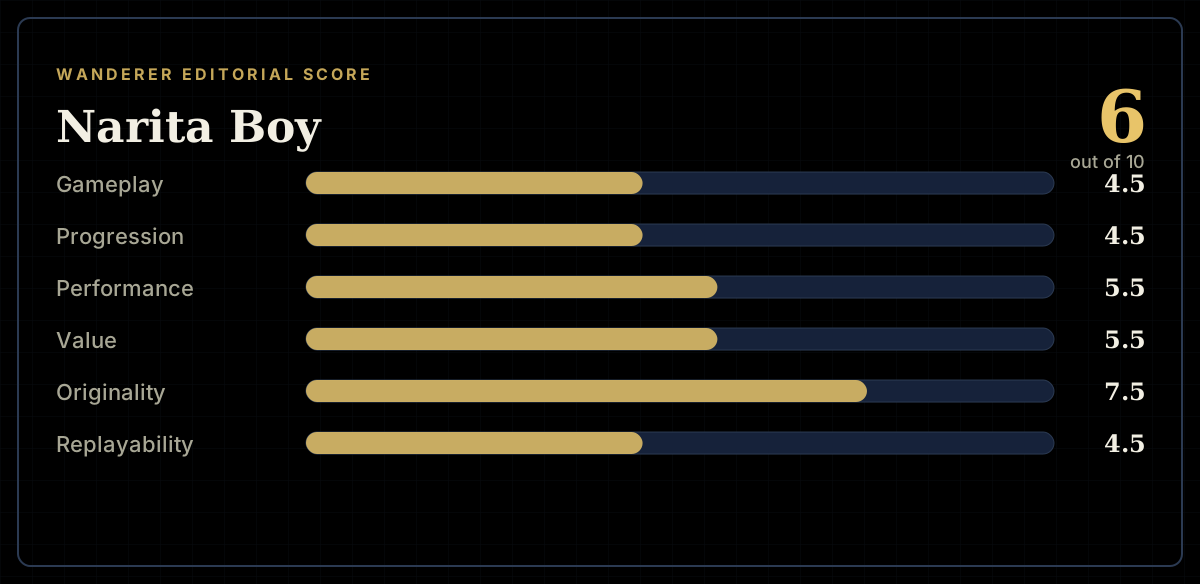
How the review scores each part of the gameWanderer Editorial -
The short versionWanderer Editorial