Game review
Mysteries of Old Tokyo
7 / 10
- Developer
- Bolerosoft
- Publisher
- Bolerosoft
- Released
- 14 May 2026
- Platforms
- Windows, Linux
- Genre
- Adventure
- Monetisation
- Paid, one-time purchase.
- Players
- Single-player only.
The short version
Mysteries of Old Tokyo is a 90s-style deduction adventure from solo developer Bolerosoft, sending players to research a collection of 1930s Tokyo postcards, uncovering the history of locations lost to time and a wandering cast of spirits along the way. Its Positive rating across a small but entirely unanimous English review sample reflects genuine, repeated praise for its passion for Japanese history and distinctive puzzle design, with this review finding a fair complaint that its central deduction mechanic can feel too simple and repetitive for players used to harder genre entries.
Biggest strengths
- Widely and unanimously praised for its genuine passion for and depth of research into Japanese and Tokyo history, with several reviewers describing it as a gamified encyclopedia they learned real facts from.
- Praised as a distinctive, novel take on the deduction genre, drawing comparisons to Golden Idol and old CD-ROM encyclopedias while carving out its own identity.
- Praised for its charming retro 90s presentation and dedicated, responsive solo developer, with one reviewer specifically noting quick, friendly support for a minor bug.
Biggest weaknesses
- A fair complaint reports the core puzzle mechanic can feel too simple and repetitive over a long runtime for players seeking a harder deduction challenge.
- A fair complaint reports the full release removed a stamina system present in the earlier demo, which at least one reviewer felt added welcome friction to city traversal.
- A specific complaint reports minor Steam Deck display issues with certain location-name symbols and text, though the game otherwise runs well on the platform.
Who it's for: History-curious puzzle fans who enjoyed Return of the Obra Dinn or Golden Idol-style deduction and want something gentler and more research-driven; players seeking consistently escalating puzzle difficulty may find the loop too easy after the opening hours.
Our recommendation: A charming, deeply researched deduction game that succeeds as much as an interactive history lesson as a puzzler, best suited to players who value atmosphere and discovery over a mounting challenge.
7 / 10
A genuine, researched passion for Japanese history
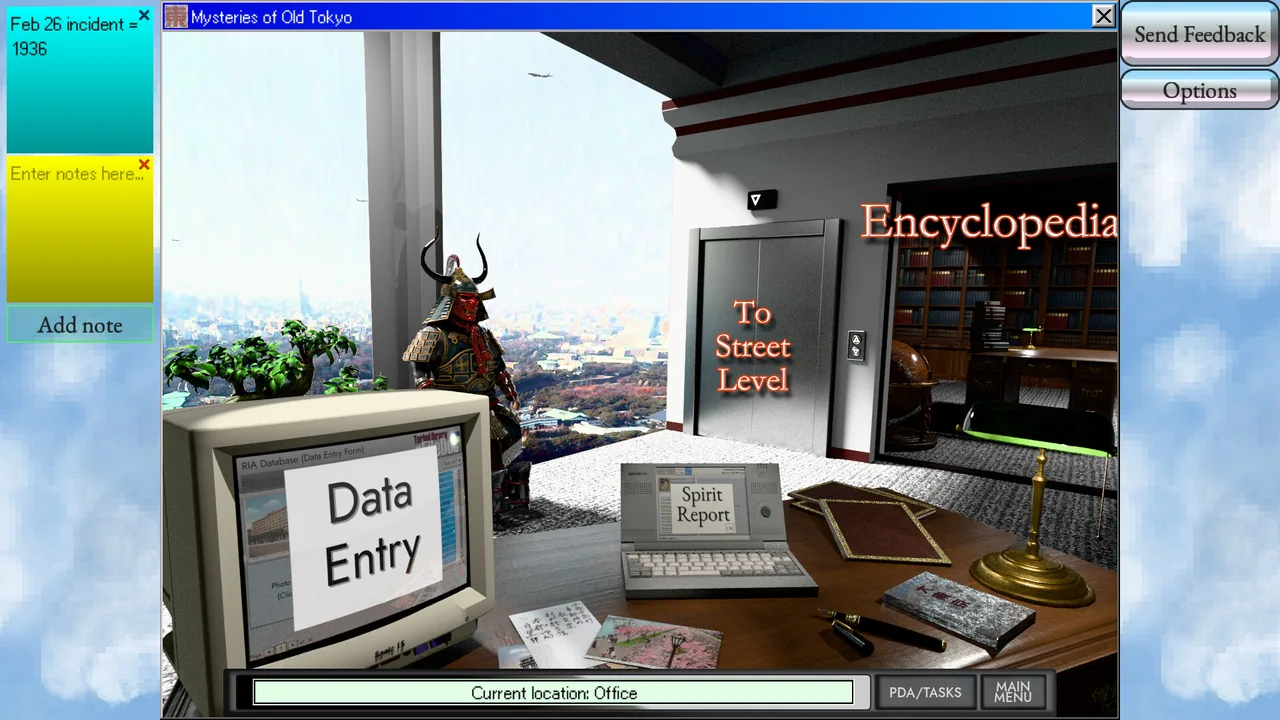
Mysteries of Old Tokyo earns its Positive rating first through unanimous, specific praise for the depth of its historical research. "The text you read clearly comes from someone who is passionate about Japanese history and is willing to get into some of its more divisive aspects. I was surprised to see a decent overview on Mishima Yukio's life for example," reads one detailed review. A separate reviewer, who lived in Japan and studies its history, confirms the accuracy from a position of real expertise: "I just happen to be a historian who lived in Japan so I was able to move a bit faster than others might as I didn't actually need to read everything to complete various entries." A third simply calls it "an incredibly charming puzzle game that combines a love for windows 95, CD-Rom encyclopedias, history, postcards, geography, ghosts and of course Tokyo." This review treats that praise as fair and central: a reviewer with genuine subject-matter expertise vouching for the game's accuracy is a strong signal that its educational content is more than surface-level dressing.
A distinctive, well-regarded take on the deduction genre
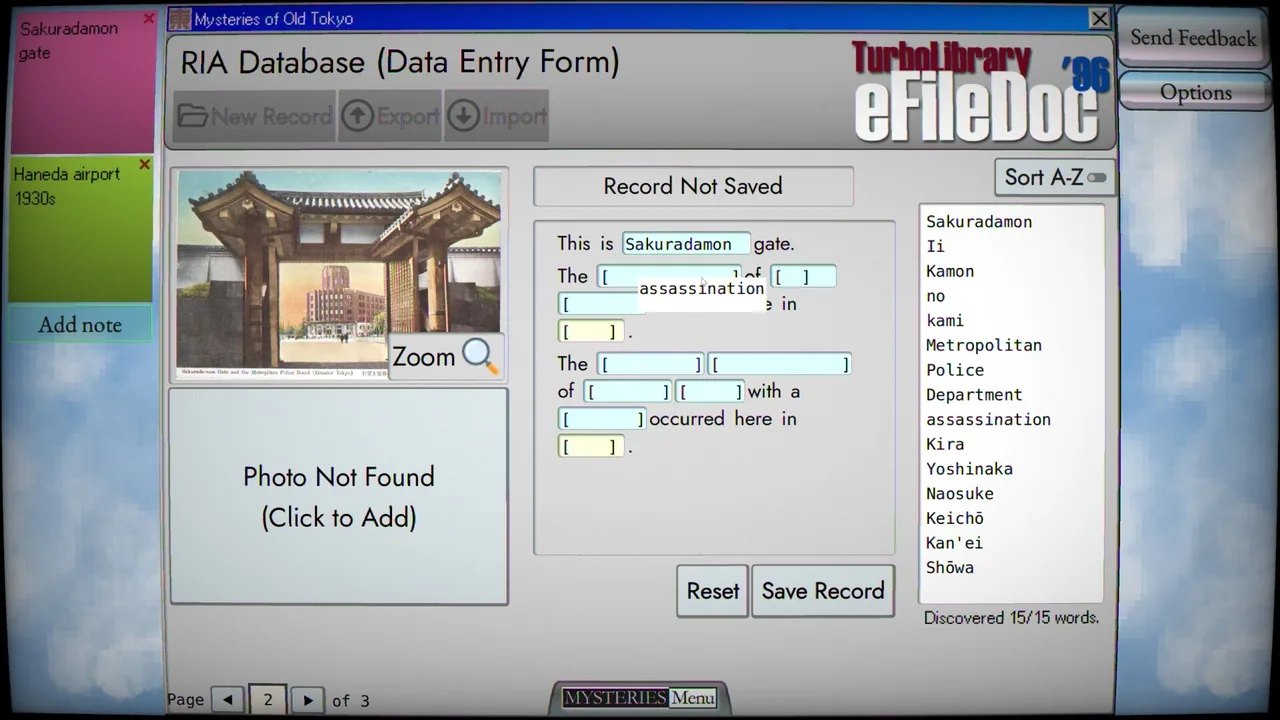
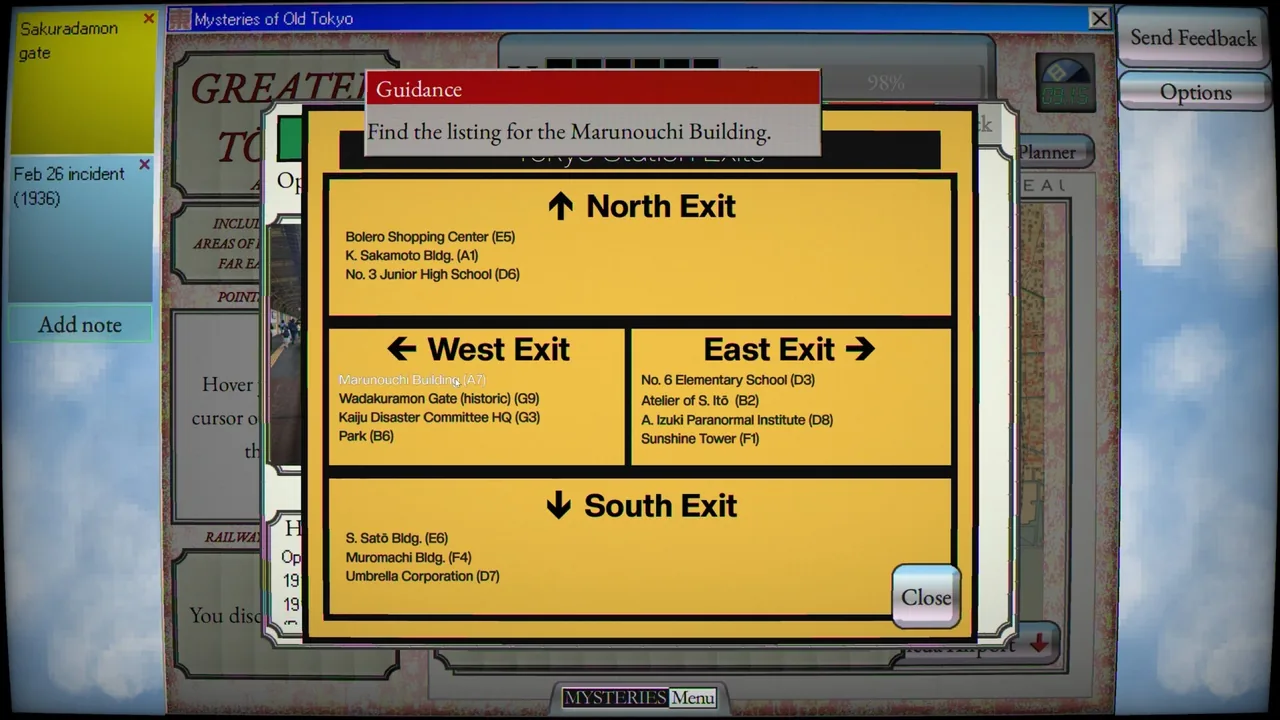
Beyond its historical content, this review found reviewers praising the specific mechanical identity the game builds around that research. "This is a gamified Microsoft Encarta or a Cosmology of Kyoto-like, and it's great," reads one review. A separate reviewer draws a more contemporary comparison: "The gameplay resembles that of the game 'Golden Idol'. You travel around the city in search of POI postcards; then you read and analyze a lot to find keywords that fit the missing sentences in the data entries." A third asks the question directly: "Is this a new genre? I don't know but I like it." This review treats those comparisons as fair: reviewers reaching for genuinely distinctive touchstones, rather than describing it as a clone of any single existing game, points to real originality in how its research and deduction loop is structured.
Real emotional investment in a disappearing city
This review also found reviewers describing an unexpectedly personal, emotional connection to the game's subject matter. "I found myself sad about the demolition and disappearances of buildings and places I hadn't even heard of before playing the game, and I became deeply invested," reads one detailed review of a player who had previously enjoyed the demo. A separate reviewer, reflecting on the completed game and its solo developer, writes: "'Welcome to the Old Tokyo' is a love letter addressed to the city itself. To its turbulent history, its complex development, and its habit of being reborn and rebuilt every few decades. It's clear that the developer loves this city and its spirit, and wanted to share that feeling with us." This review treats that emotional response as fair to credit directly: for an ostensibly educational puzzle game to leave reviewers genuinely moved by the fate of real, lost places is a meaningful achievement.
A fair complaint about simple, repetitive puzzle design
Set against that praise, this review found a fair complaint from at least one more puzzle-focused reviewer that the core mechanic doesn't escalate enough. "I do think the puzzles are too simple for my taste, and the gameplay loop can be too repetitive," reads one otherwise very positive review from a reviewer who still praised the game's writing and research highly. A separate reviewer frames the same observation more gently: "The mechanics could've been harder, but maybe the difficulty will escalate with my progression." This review treats that complaint as fair: even within an entirely positive sample, reviewers who specifically engage with deduction games as a genre are the ones flagging that the challenge curve stays relatively flat, a genuine structural note rather than a personal taste mismatch.
A fair complaint about a removed demo feature
Beyond difficulty, this review found a fair, specific complaint about a mechanic cut between the demo and full release. "I did play the demo version of the game and it did used to have a stamina system involved and I wish that was still in the game just to make you think about your travel around the city a little bit more," reads one detailed review, from a reviewer who otherwise praised the game's harder late-game puzzles. This review treats that complaint as fair and narrow: a single removed system that one engaged player specifically missed is a legitimate, if minor, regression rather than a core flaw.
A specific complaint about minor Steam Deck display issues
This review also found a specific, narrow technical complaint from a reviewer who otherwise praised the game highly. "There seems to be some symbol/text issues on the Steam Deck for some location names but it works great on the Deck otherwise," reads that review. This review treats that complaint as fair but minor: an isolated display quirk affecting specific location names on one platform, reported by a player who still recommended the game without reservation, points to modest, fixable polish gaps rather than a fundamental compatibility problem.
A fair, split complaint about runtime length
This review also found a genuine split among reviewers over how substantial the campaign actually is. "Some might find it a little short (the plot + optional content took me a little over six hours) but the pacing was good and I was satisfied at the end," reads one review. A separate reviewer who engaged more thoroughly reports a longer experience: "Would recommend, you'll get around 10 hours of cozy and education out of this one." This review treats that split as fair to report plainly: value here appears to hinge on how completely a given player engages with the game's optional research content, a distinction this review's own value score accounts for.
Achievement data confirms a substantial, steadily completed campaign
This review's own check of Steam's global achievement data shows 99.3% of players starting the tutorial, with a steady, chapter-by-chapter drop-off across eleven weekly milestones down to 21.9% completing the main story and 18.1% clearing every piece of optional content for full completion. That curve corroborates reviewer accounts directly: the game is built as a long, sequential campaign rather than a short vignette, and a meaningful fifth of its audience sees the entire thing through, including its most dedicated optional trivia.
Final verdict
Mysteries of Old Tokyo succeeds as a genuinely distinctive, deeply researched deduction game that earns real, unanimous praise for its passion and accuracy as a piece of interactive history. Its clearest weakness is a fair complaint that its central puzzle mechanic stays too simple and repetitive for players wanting an escalating challenge, compounded by a fair, narrower complaint about a removed demo feature and minor Steam Deck display issues. For history-curious puzzle fans drawn to Golden Idol-style deduction who value atmosphere and discovery over mounting difficulty, this is a genuine recommendation; players chasing a harder puzzle curve throughout should adjust expectations.
Pros and cons
Pros
- Widely and unanimously praised for its genuine passion for and depth of research into Japanese and Tokyo history, with several reviewers describing it as a gamified encyclopedia they learned real facts from.
- Praised as a distinctive, novel take on the deduction genre, drawing comparisons to Golden Idol and old CD-ROM encyclopedias while carving out its own identity.
- Praised for its charming retro 90s presentation and dedicated, responsive solo developer, with one reviewer specifically noting quick, friendly support for a minor bug.
- This review's own check of achievement data shows a steady, chapter-by-chapter completion curve consistent with reviewer accounts of a substantial, multi-hour campaign that a meaningful share of players see through to the end.
Cons
- A fair complaint reports the core puzzle mechanic can feel too simple and repetitive over a long runtime for players seeking a harder deduction challenge.
- A fair complaint reports the full release removed a stamina system present in the earlier demo, which at least one reviewer felt added welcome friction to city traversal.
- A specific complaint reports minor Steam Deck display issues with certain location-name symbols and text, though the game otherwise runs well on the platform.
- A fair, split complaint reports some reviewers found the roughly six-hour main campaign a touch short, even as others reported ten or more hours of content depending on how thoroughly they engaged with it.
Screenshots
-
Mysteries of Old TokyoImage: Bolerosoft via Steam -
Mysteries of Old TokyoImage: Bolerosoft via Steam -
Mysteries of Old TokyoImage: Bolerosoft via Steam -
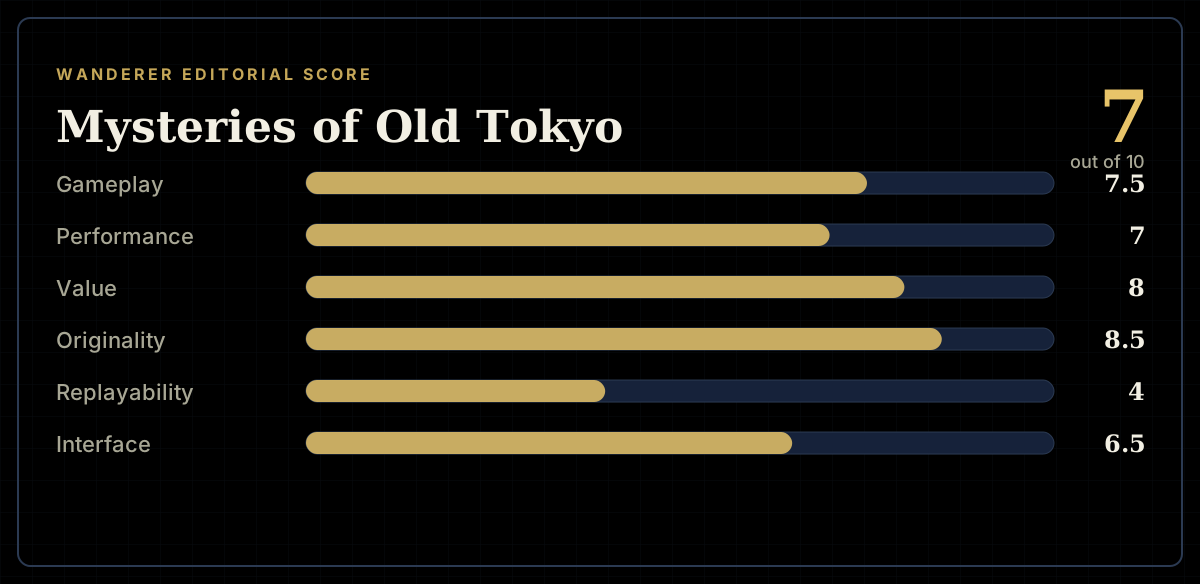
How the review scores each part of the gameWanderer Editorial -
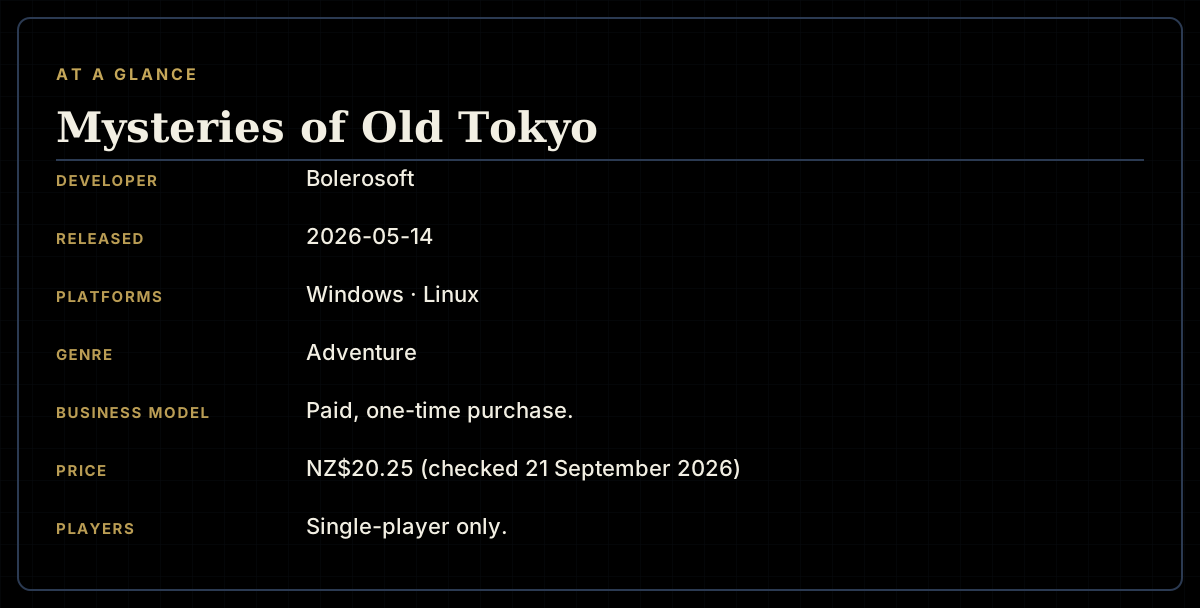
The specs at a glanceWanderer Editorial -
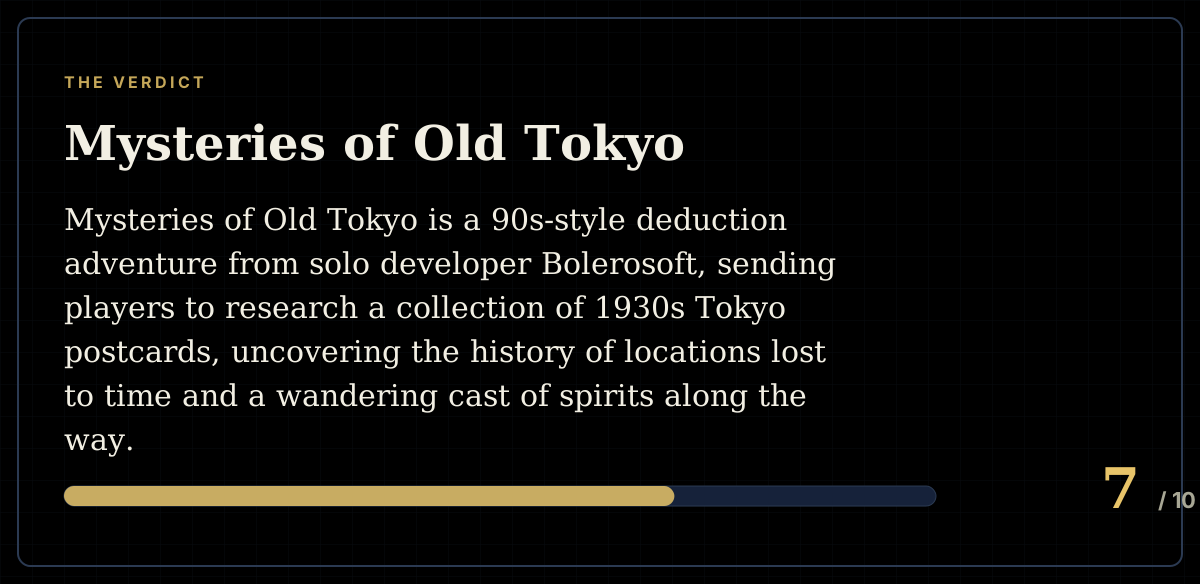
The short versionWanderer Editorial