Game review
Mushroom Nook
6.5 / 10
- Developer
- HyperstasisGaming
- Publisher
- HyperstasisGaming
- Released
- 11 March 2026
- Platforms
- Windows
- Genre
- Idle / Simulation
- Monetisation
- Premium (one-time purchase)
- Players
- false
The short version
Mushroom Nook is a gentle, well-observed desktop-companion idler that turns mushroom collecting into a genuinely soothing pastime — nearly two hundred species to discover, each growing through its own life stages and reacting when touched, all set to a soft, well-liked soundtrack. Its biggest problem isn't its pace or its depth, both of which reviewers embrace, but its interface: a real and repeated pattern of players getting stuck on basic actions with no in-game explanation. A patient, curious player will get past that quickly and find a lot to like underneath; a less patient one may bounce off before they do.
Biggest strengths
- Charming, expressive pixel art with distinct personality across nearly 200 mushroom species
- Genuinely relaxing pace, well suited to running in the background while working or studying
- Deep, satisfying collection and decoration systems that reward long-term play without pressure
Biggest weaknesses
- Interface is a consistent source of confusion, with several basic actions (storing items, understanding settings, using shortcuts) left unexplained
- Onboarding does not clearly teach core systems, leaving new players to experiment blindly
- Limited mechanical depth compared to larger simulation or management games, by design
Who it's for: Fans of cosy desktop companions and collection games who don't mind a bit of early trial and error to learn an unlabelled interface, and anyone who wants a calm, low-pressure game to keep running in the background.
Our recommendation: Recommended for cosy-game and collection-game fans who can tolerate an unclear opening few hours — the relaxing core loop and collection depth are worth pushing through the confusing UI for.
6.5 / 10
What Is Mushroom Nook?
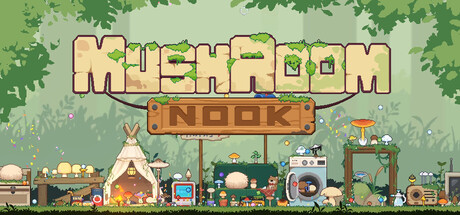
Mushroom Nook is a cosy desktop-companion idle game from solo studio HyperstasisGaming, built around collecting, growing, and decorating with mushrooms that spawn on a small on-screen plot as players go about their day. Rather than demanding active management, it rewards periodic check-ins: mushrooms grow through several life stages when watered, react with small animations when clicked, and can be arranged alongside furniture and ornaments to build a personalised little sanctuary that sits on the desktop. Released 11 March 2026 at a budget-friendly NZ$7.39, it has found a genuinely devoted audience — 98% positive across 391 reviews — many of whom report well over 100 hours logged in a game with no combat, no fail states, and no urgency whatsoever.
The collection hook is the clear engine of the whole experience: nearly 200 distinct mushroom species are available to find and grow, each with its own look and, in some cases, unique behaviours, and the developer has stated an intention to keep adding more over time.
A Collection Loop That Actually Rewards Patience
What distinguishes Mushroom Nook from the wider field of desktop idlers is how deliberately it resists urgency. Mushrooms take time to grow through their life stages rather than appearing instantly, and one reviewer specifically praises the decision that spore income isn't tied to a mushroom's rarity — meaning players can decorate with whichever species they find prettiest without sacrificing their in-game economy, a small design choice that several players single out as unusually considerate. The interactivity extends the appeal further: mushrooms respond with small animations when touched, and some rarer varieties reportedly have unique behaviours that reward continued collecting with pleasant surprises rather than mechanical escalation.
One particularly detailed review lays out why this restraint works: the game is "intentionally simple," functioning "more like an interactive desktop companion than a conventional idle game," with its cultivation system "transforming simple waiting into a pleasant routine." That reviewer also notes the developer's stated approach to asset creation — the mushrooms, decorations, environments, and sound effects were handcrafted by the small team, with AI tools used only in a limited supporting capacity for translation, programming assistance, and reference material, a disclosure the developer makes directly on the store page. It's a detail some players clearly value as evidence of the game's consistent, handmade artistic identity.
The Interface Is a Real and Recurring Problem
Set against that warmth is a genuinely consistent complaint running through the review sample: the game explains almost nothing about how to use its own systems. One detailed critical review lists a string of specific, concrete confusions rather than vague frustration — how to put away a watering can (right- click, left-click, and middle-click all failed to work as expected), why the same item icon appears in three different places in the inventory, what a lock button in the options menu does, what "trigger once" means for an atmosphere effect that then behaved as if set to loop continuously, and why on-screen shortcut icons can't simply be clicked rather than requiring the full menu to be opened first. None of these are complaints about the underlying design being bad; they're about the game failing to tell players how its own design works.
A second, less critical but still recommending review makes essentially the same point at 168 hours in: "it's not user friendly... even something simple like buying a mushroom wasn't straightforward," while still praising the art and overall vibe. A third reviewer, ultimately recommending the game at over 80 hours, separately asks for "a little more of an informative manual, especially for some UI aspects," even while calling it one of the more adorable idlers they've played. This pattern — genuine affection for the game paired with real, specific friction navigating it — repeats often enough across the sample, across players with very different playtime totals, to be treated as a structural weakness in the game's onboarding rather than isolated bad luck or a single confused player.
A Developer Who Is Visibly Listening
To Mushroom Nook's credit, the review sample shows a developer actively present in the conversation: several reviews, including some of the more detailed critical ones, carry a "developer has responded" marker, and at least one player's follow-up edit confirms a specific concern was addressed directly — an ambient rain effect removed in an update was reportedly restored after a player asked about it, with the reviewer updating their review afterward to say the issue was resolved. That kind of responsiveness doesn't fix the onboarding problem on its own, but it's a meaningfully positive signal for a small, actively maintained project, and several reviewers explicitly look forward to future content and quality- of-life updates rather than treating current rough edges as permanent.
Final Verdict
Mushroom Nook succeeds at exactly what it sets out to do — a calm, charming, deeply collectible desktop companion that rewards patience rather than demanding attention — and its nearly 200-species mushroom collection, thoughtful economy design, and evident developer care make a strong case for the asking price. What holds it back from an easy, unreserved recommendation is a genuinely underexplained interface that leaves new players guessing at basic actions during their first few hours, a problem echoed too often across the review sample to dismiss as a one-off complaint. For cosy-game fans willing to push through that early confusion, or simply look up a guide, there's a lot of gentle, well-crafted charm waiting on the other side.
Pros and cons
Pros
- Charming, expressive pixel art with distinct personality across nearly 200 mushroom species
- Genuinely relaxing pace, well suited to running in the background while working or studying
- Deep, satisfying collection and decoration systems that reward long-term play without pressure
- Developer is visibly active in the review section, responding to and addressing specific complaints
Cons
- Interface is a consistent source of confusion, with several basic actions (storing items, understanding settings, using shortcuts) left unexplained
- Onboarding does not clearly teach core systems, leaving new players to experiment blindly
- Limited mechanical depth compared to larger simulation or management games, by design
- A previously available ambient feature was removed in an update and only restored after player complaints
Screenshots
-
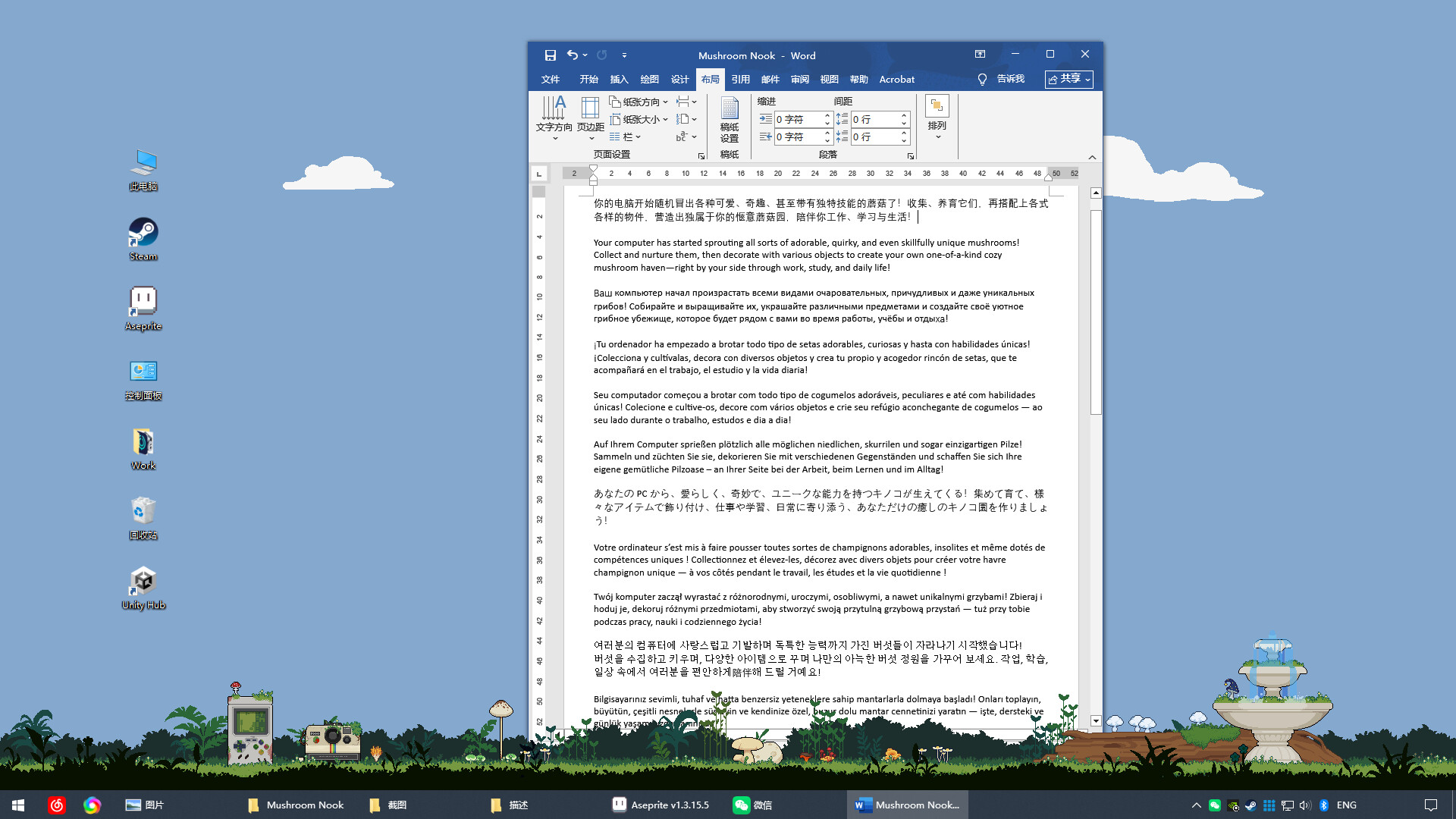
The game's pitch, translated into multiple languages, over a glimpse of a fully decorated sanctuaryHyperstasisGaming -

A fully decorated nook overlaid on the desktop, set against a shifting day-night skyHyperstasisGaming -
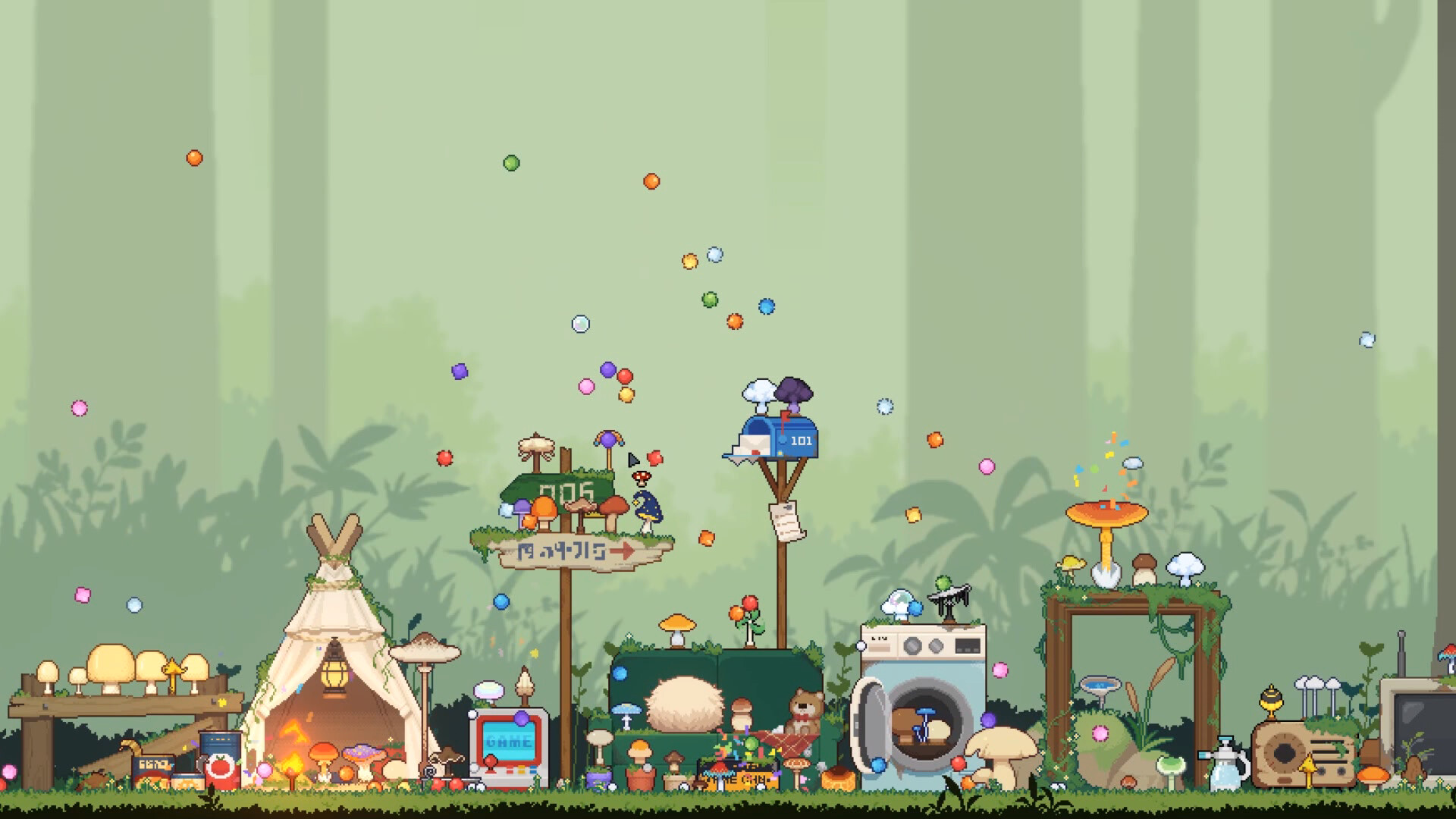
A closer look at the furniture and mushroom variety available to collect and arrangeHyperstasisGaming -
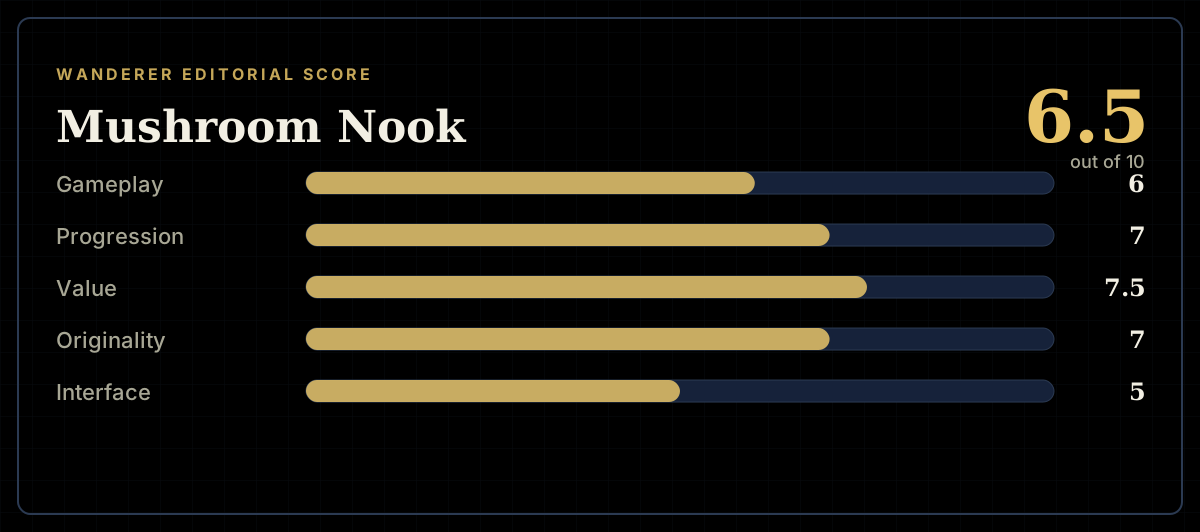
How the review scores each part of the gameWanderer Editorial -
The short versionWanderer Editorial