
Game review
The Elder Scrolls III: Morrowind
7.5 / 10
- Developer
- Bethesda Game Studios
- Publisher
- Bethesda Softworks
- Released
- 1 May 2002
- Platforms
- Windows
- Genre
- Open-World Fantasy RPG
- Monetisation
- Paid, one-time purchase, bundling the Tribunal and Bloodmoon expansions. No in-app purchases.
- Players
- Single-player only.
The short version
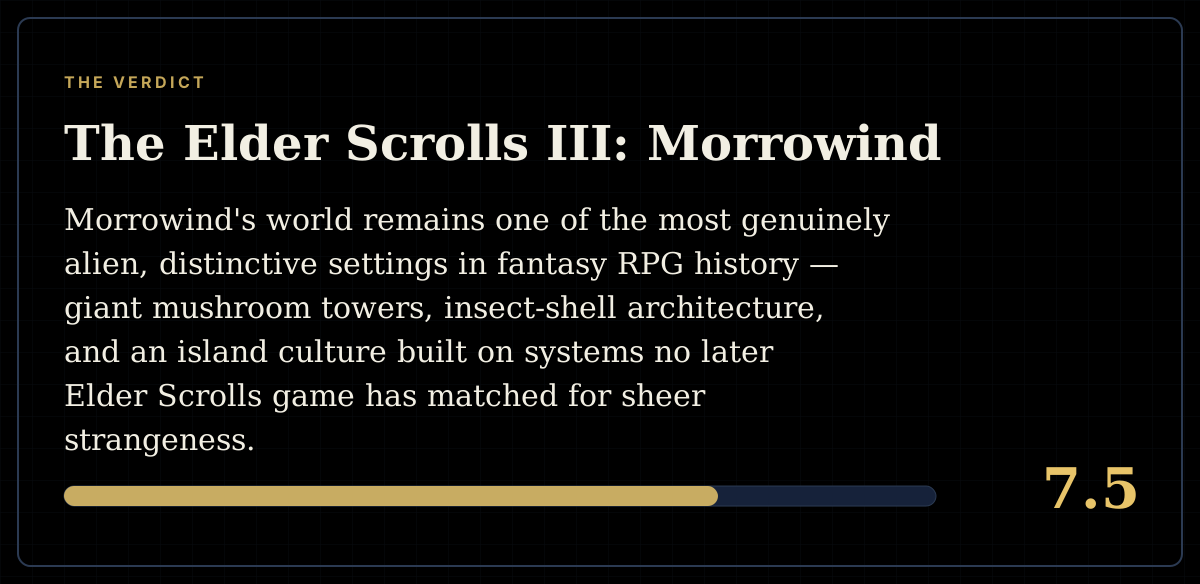
Morrowind's world remains one of the most genuinely alien, distinctive settings in fantasy RPG history — giant mushroom towers, insect-shell architecture, and an island culture built on systems no later Elder Scrolls game has matched for sheer strangeness. That world is why more than 22,000 reviews rate it Overwhelmingly Positive. What the review sample argues about openly, including among reviewers who clearly love the game, is whether its 2002-era systems — a real chance to whiff a sword swing that visibly connects, journal entries instead of quest markers, and a stat-grinding leveling system — have aged into part of the identity or into a genuine barrier for players who didn't grow up with them.
Biggest strengths
- One of the most distinctive, alien fantasy settings in RPG history, built around genuinely strange architecture, culture and creature design rather than familiar high-fantasy tropes.
- Deep character-build freedom, letting players specialise into combinations later Elder Scrolls games streamlined away.
- The Game of the Year Edition bundles both major expansions, Tribunal and Bloodmoon, adding substantial additional content for one price.
Biggest weaknesses
- Combat includes a real, visible chance to miss an attack even when a weapon clearly connects, a specific mechanic multiple reviewers say undermines the feel of combat for players used to more modern systems.
- Quests are tracked only through written journal entries rather than markers or waypoints, which several reviewers describe as a genuine barrier to entry rather than just an old-fashioned charm.
- A skill-use-based leveling system that requires understanding specific, non-obvious rules to level efficiently, which more than one reviewer calls actively counterintuitive.
Who it's for: Fantasy RPG fans specifically drawn to atmosphere, world design and genuine mechanical strangeness over modern convenience, with patience for a rougher, less guided opening than later Bethesda RPGs offer.
Our recommendation: A genre landmark worth experiencing, but go in aware its core systems are deliberately, unapologetically old-school rather than a smoothed-over classic.
7.5 / 10
A setting nothing else in the genre has matched
Morrowind's reputation rests first and most durably on its world. The store page's description is almost understated by comparison to what's actually inside it — "an epic, open-ended single-player RPG, Morrowind allows you to create and play any kind of character imaginable" — but the official screenshot shows exactly why this setting still stands apart more than two decades later: a red-armoured Dunmer figure standing before towering, organic-looking stone architecture with arched, insect-shell-like windows, under a dusky orange sky. Vvardenfell's giant mushroom towers, alien flora, and a culture built on ash storms and religious caste systems remain genuinely unlike anything else in mainstream fantasy RPG design, before or since. A 2015 review captures the broader significance well: describing Morrowind as the game "touted to a cult-classic status" precisely because "ever more casual sequels with ever more cut aspects" followed it, framing the original as a high-water mark for ambition that its own successors, Oblivion and Skyrim, deliberately traded away for accessibility.
The debate its own fans keep having with each other
What makes this review more useful than a simple nostalgia piece is that the review sample doesn't present a unified front on whether Morrowind's specific mechanics have aged well — reviewers who clearly respect the game argue both sides of this question directly with each other. "Without mods," reads a detailed 2019 review, listing reasons it can't recommend the game to someone who "didn't grow up with this game," specifically citing the combat's miss-chance system and journal-based quest tracking as genuine friction rather than charming period detail. A 2024 review breaks the same complaint down mechanically: "Spells will fail. You will miss a lot even with decent weapon skill," describing an early game that's "bland and difficult, no sugarcoating it." Another 2024 review adds a second specific complaint about the leveling system itself: "the leveling requiring successes to increase a skill is just stupid to me," describing how easy it is to level inefficiently without understanding rules the game never clearly explains. Set against all of this, other reviewers from the same broad period argue the opposite — that these systems are exactly what separates Morrowind from its own sequels, and that smoothing them away would cost the game its identity rather than improve it. Both positions come from people who've clearly spent real time with the game, and this review doesn't think either side is wrong so much as describing a genuine, unresolved tension in how a 2002 design reads to a 2026 audience.
A smaller, real technical undertone
Distinct from the systems debate, a smaller share of the review sample raises straightforward stability concerns with the unmodified Steam release. A December 2023 review states bluntly: "the steam release of this game" is "a broken, buggy unplayable mess," describing multiple patches and mods installed before achieving a stable state. A February 2026 review reports discovering "a new game breaking glitch with the base game" on repeat playthroughs, missing the reliability of an older Xbox version. This complaint is real but notably less universal than the systems-design debate above — most of the review sample doesn't mention stability at all — and it's worth flagging honestly as a minority but genuine risk rather than either ignoring it or treating it as the dominant story the way this review's KOTOR coverage found for that specific game.
What the expansions actually add
It's worth being specific about what this particular Steam listing includes, since the Game of the Year Edition bundling matters for value in a way a bare base-game purchase wouldn't. The store page confirms this package folds in both Tribunal, which adds a substantial new city-based expansion area with its own storyline, and Bloodmoon, which adds an entirely separate frozen island region with a werewolf-focused narrative thread distinct from the main game's themes. Buying this single listing gets a meaningfully larger game than the 2002 original alone, at one price, which is a genuinely strong value proposition regardless of where a given reader lands on the systems-design debate above. The one specific carve-out the store page flags directly is the original Construction Set toolset, not included in this package — relevant mainly to players hoping to build their own content rather than install existing community mods, which remain freely available regardless.
A note on approaching it for the first time in 2026
For a reader weighing whether their first Morrowind playthrough should be this unmodified Steam release or a community-patched version, the review sample offers a reasonably clear, practical answer even amid its broader disagreements: nobody in the sample argues against using at least basic stability and quality-of-life patches, even reviewers who are otherwise purist about preserving the original design's friction. The disagreement is specifically about gameplay-altering mods — markers, rebalanced combat, modern UI conveniences — not about whether to fix bugs. A first-time player in 2026 loses nothing by applying the widely-documented, non-gameplay-altering community patches before starting, and can then make their own informed decision about the deeper systems debate once the game is actually running reliably, rather than mistaking a technical problem for a design one.
Final verdict
Morrowind's world design remains genuinely unmatched in the genre, and that alone justifies its enduring reputation and this review's score. What keeps the recommendation qualified rather than unconditional is being honest about a real, ongoing disagreement among the game's own fans over whether its specific 2002-era systems have aged into charm or into a real barrier — both are legitimate readings supported by detailed, thoughtful reviews on each side. A prospective player should go in expecting deliberate, unsmoothed friction in combat, questing and leveling, and decide for themselves, as this game's own community clearly still is, whether that friction is the point or the problem.
Pros and cons
Pros
- One of the most distinctive, alien fantasy settings in RPG history, built around genuinely strange architecture, culture and creature design rather than familiar high-fantasy tropes.
- Deep character-build freedom, letting players specialise into combinations later Elder Scrolls games streamlined away.
- The Game of the Year Edition bundles both major expansions, Tribunal and Bloodmoon, adding substantial additional content for one price.
- A large, dedicated modding community has kept the game genuinely playable and extensible decades after release.
Cons
- Combat includes a real, visible chance to miss an attack even when a weapon clearly connects, a specific mechanic multiple reviewers say undermines the feel of combat for players used to more modern systems.
- Quests are tracked only through written journal entries rather than markers or waypoints, which several reviewers describe as a genuine barrier to entry rather than just an old-fashioned charm.
- A skill-use-based leveling system that requires understanding specific, non-obvious rules to level efficiently, which more than one reviewer calls actively counterintuitive.
- A smaller but real minority of reviews report bugs and instability on the unmodified base release, recommending community patches even for players not otherwise interested in mods.
Screenshots
-

The Elder Scrolls III: Morrowind® Game of the Year EditionImage: Bethesda Softworks via Steam -

The Elder Scrolls III: Morrowind® Game of the Year EditionImage: Bethesda Softworks via Steam -

The Elder Scrolls III: Morrowind® Game of the Year EditionImage: Bethesda Softworks via Steam -
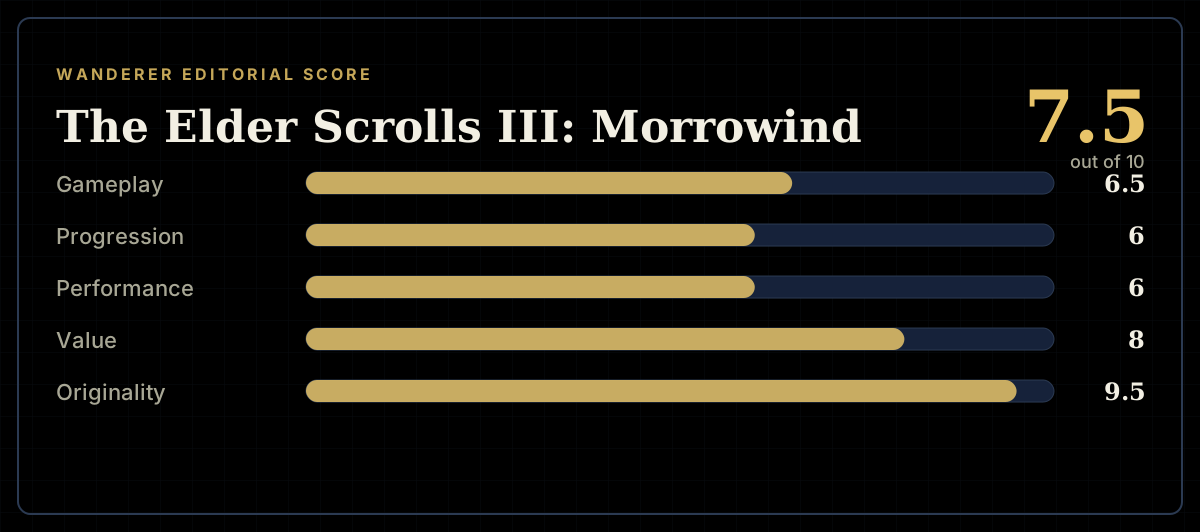
How the review scores each part of the gameWanderer Editorial -
The short versionWanderer Editorial