Game review
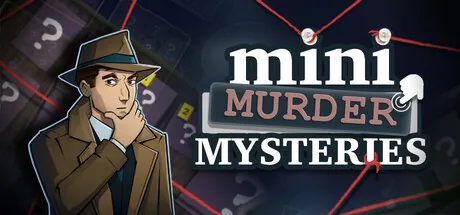
Mini Murder Mysteries
7 / 10
- Developer
- BUNKWORKS
- Publisher
- BUNKWORKS
- Released
- 23 June 2026
- Platforms
- Windows
- Genre
- Indie, Puzzle
- Monetisation
- paid
- Players
- false
The short version
Biggest strengths
- Nine tightly-designed, self-contained whodunit cases that reward careful reading and logical cross-referencing of evidence
- A forgiving hint system that reviewers say never punishes trial-and-error or looking things up
- A drag-and-drop deduction board that makes assembling and reconsidering theories genuinely satisfying to interact with
Biggest weaknesses
- A very short overall runtime, with multiple reviewers reporting full 100% completion in under two hours
- Evidence is entirely pre-assembled and handed to the player upfront, with no exploration, investigation, or interaction beyond reasoning about what's already provided
- At least one detailed critical reviewer found the individual mysteries not challenging or interesting enough to stay engaging purely on their own logic
Who it's for: Deduction-puzzle fans who love The Case of the Golden Idol, Return of the Obra Dinn, or The Roottrees are Dead, and want a short, focused, evidence-board whodunit experience without a long time commitment
Our recommendation: recommended
7 / 10
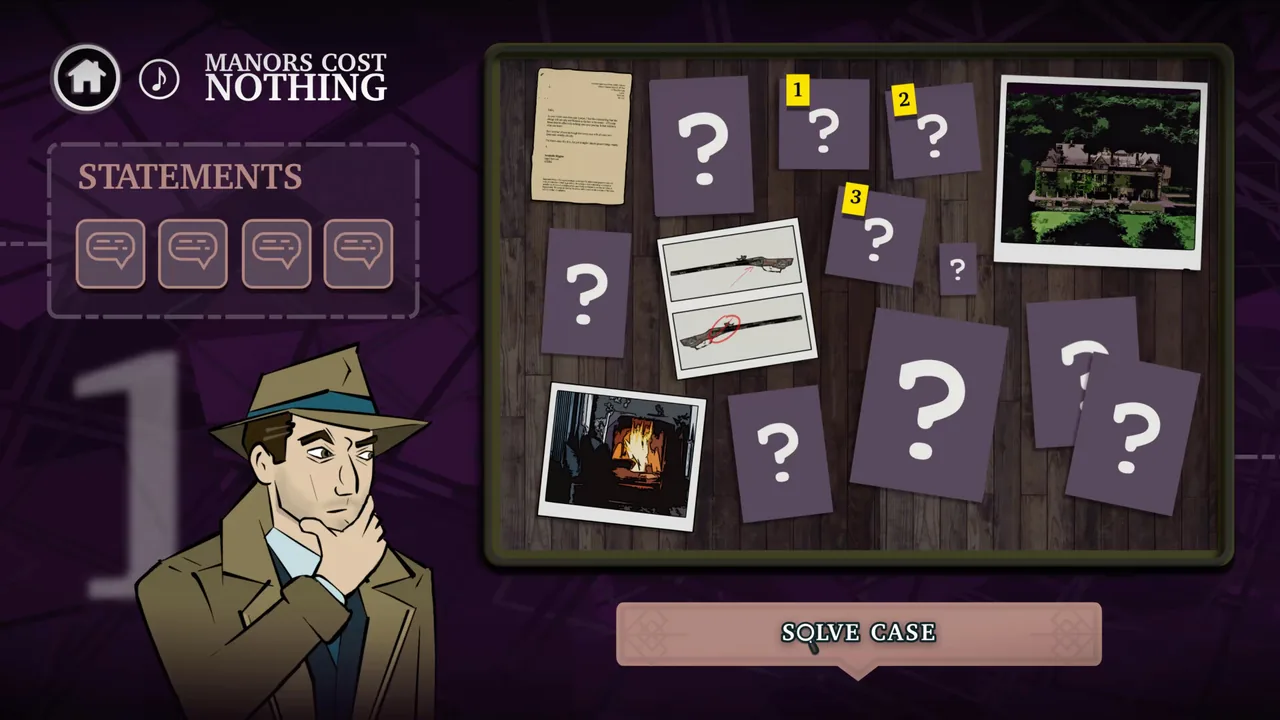
A detective game built entirely around the evidence board
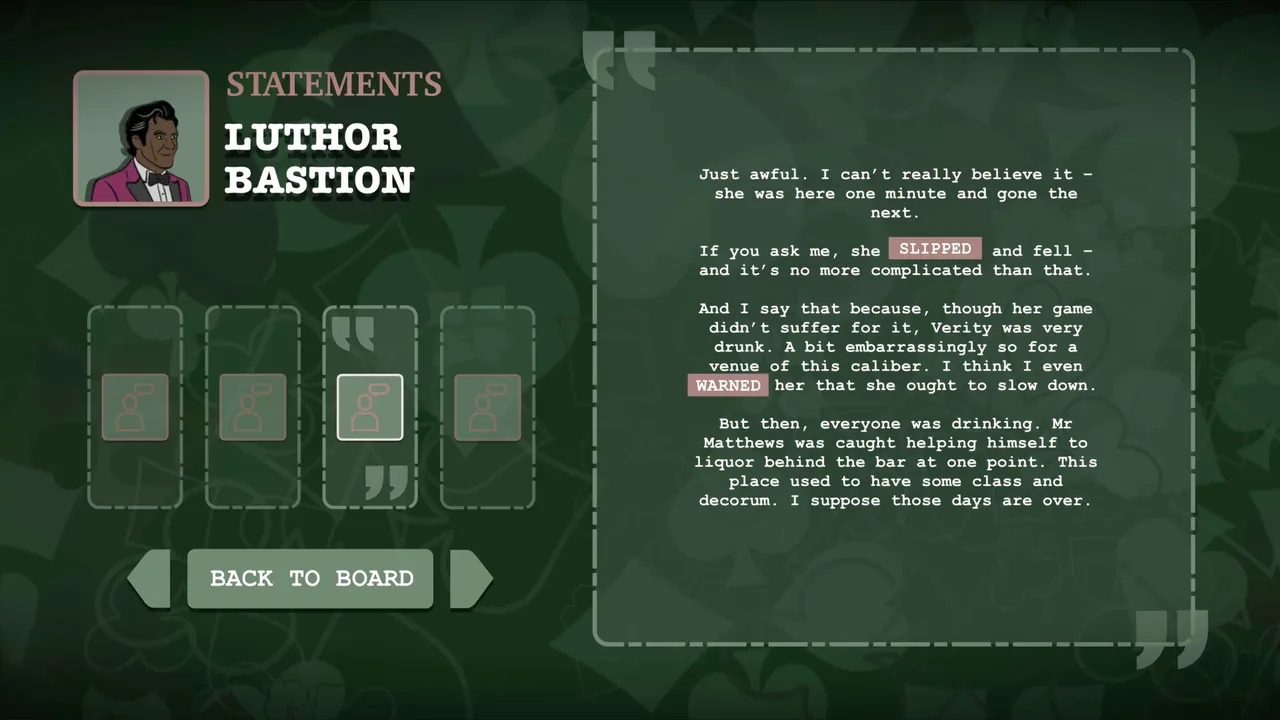
Mini Murder Mysteries strips detective fiction down to its most cerebral component: no crime scenes to walk through, no dialogue trees to unlock, just a stack of documents, witness statements, and physical evidence for each of nine cases, laid out for the player to interrogate through pure reasoning. One detailed reviewer described the design precisely: it "avoids action-heavy detective mechanics in favor of something closer to sitting in front of an investigator's evidence board," where "the player is given a collection of documents, statements, objects, and reports, then asked to determine what actually happened." That's a narrower, more focused proposition than most detective games attempt, and reviewers consistently responded well to how cleanly it executes that single idea.
Comparisons to the genre's biggest names, and reviewers mean it as praise
Nearly every substantial review reaches for the same comparisons: Return of the Obra Dinn, The Case of the Golden Idol, The Roottrees are Dead. One reviewer who named all three as personal favorites wrote simply, "that's exactly what I got! Fun cases with some smart twists/red herrings, too." Another situated it more precisely within that lineage: "the gameplay is similar to The Case of the Golden Idol, but a little less complex," while praising a hint system that "does not punish you for using it or for good ol' trial and error." A third reviewer called it "more of a bitesize romp than genre-defining titles like Obra Dinn and Golden Idol," a framing that's less a criticism than an honest description of scope: this is a smaller, more approachable entry in a genre that can otherwise demand a lot of patience.
A deduction board that's satisfying to actually use
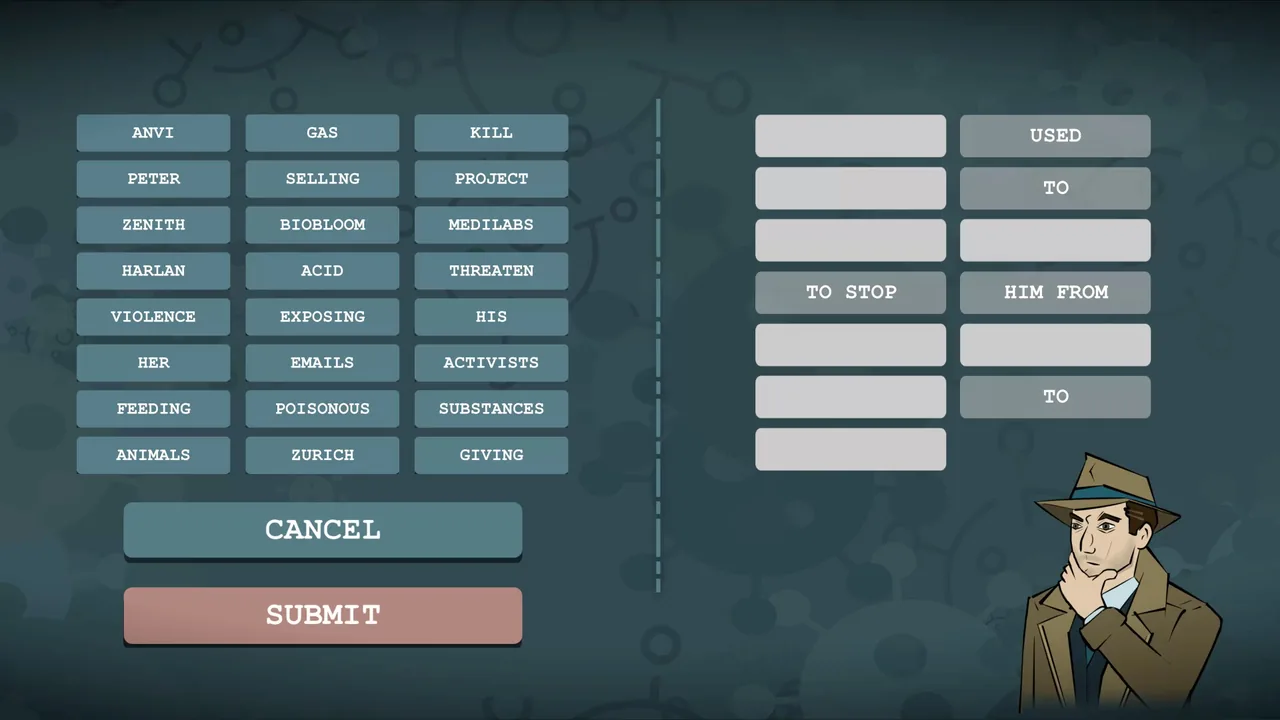
Beyond the writing and case design, reviewers specifically praised the interface for assembling conclusions. One wrote that "the deduction-board style case solving is great," describing "multiple suggestions to be thought about, discussed and suggested, using the drag drop style of completion, before having to submit your conclusion," which they found genuinely helpful given some cases posed "a bit of a challenge." That same reviewer played cooperatively with a partner, each case taking around 30 minutes, a nice signal that the deduction format lends itself naturally to shared, out-loud reasoning even though the game is built as a single-player experience.
Short, and reviewers are split on whether that's a problem
The most consistent, corroborated criticism is runtime. One reviewer noted the game "can be 100%'d in a little under two hours," and multiple others echoed a similarly brief total playtime across the nine cases. Whether that's a dealbreaker depends heavily on what a given player wants: most reviewers treated the short length as appropriately matched to the low asking price and the bite-sized format the title advertises, but at least one more critical reviewer found the brevity compounded by a deeper concern, writing that "the mysteries were [not] interesting or challenging enough to be engaging on their own," and specifically missing "the part where you explore and find all the evidence yourself," rather than simply being handed a complete evidence set from the start.
An honest disclosure about the artwork that reviewers noticed and appreciated
Given the game's low price point, at least one reviewer went in specifically wary that the artwork might be AI-generated, a reasonable concern for a budget indie title. What they found instead was reassuring: "I was really happy to see a Youtube vid from the creator talking about how he decided not to use AI art in the game and opted to use Photoshop filters on stock images instead, and he walks through the process of exactly how he made the images." That's a first-party, developer-documented account of the art pipeline rather than a rumor or reviewer speculation, and it's worth noting plainly as a point in the developer's favor given how often budget-priced indie games draw exactly that kind of suspicion without any such disclosure to settle it.
A tone debate worth knowing about before buying
Marketing copy for the game leans on cozy, approachable framing, but not every reviewer agrees that's the right descriptor for what's actually inside. One pushed back directly: "I don't think you're doing the game any favours by describing it as 'cozy' since that is neither the vibe of the game nor should it be," comparing the actual mystery-solving feel to "a mix between golden idol and the roottrees are dead" rather than anything gentle or low-stakes. That same reviewer still landed positive overall, calling the cases "logic puzzles which [are] at a nice level of difficulty" and expressing hope the developer expands the format further, but the framing mismatch is worth flagging for anyone picking this up expecting something softer than a genuine, sharply-written murder mystery.
Verdict
Mini Murder Mysteries is a well-crafted, tightly scoped entry in the evidence-board deduction genre popularized by Return of the Obra Dinn and The Case of the Golden Idol, with nine logical, satisfyingly interconnected cases and a drag-and-drop deduction interface reviewers genuinely enjoyed using. Its main limitation is scope rather than execution: a runtime most players will finish in under two hours, entirely pre-assembled evidence with no investigative legwork of your own, and marketing framing that at least one reviewer felt oversold the "cozy" angle. Worth the low asking price for genre fans who want a focused, well-written puzzle fix without a long time commitment; those hoping for a longer campaign or genuine on-the-ground investigation mechanics should treat this as a smaller-scope taste of the format rather than a full-course entry.
Pros and cons
Pros
- Nine tightly-designed, self-contained whodunit cases that reward careful reading and logical cross-referencing of evidence
- A forgiving hint system that reviewers say never punishes trial-and-error or looking things up
- A drag-and-drop deduction board that makes assembling and reconsidering theories genuinely satisfying to interact with
- The developer publicly documented and disclosed exactly how the game's stock-photo-based artwork was made using Photoshop, rather than generative AI, which reviewers specifically praised
Cons
- A very short overall runtime, with multiple reviewers reporting full 100% completion in under two hours
- Evidence is entirely pre-assembled and handed to the player upfront, with no exploration, investigation, or interaction beyond reasoning about what's already provided
- At least one detailed critical reviewer found the individual mysteries not challenging or interesting enough to stay engaging purely on their own logic
- Marketed with a "cozy" framing that at least one reviewer felt actively undersells and mismatches the game's actual tone
Screenshots
-
Mini Murder MysteriesImage: BUNKWORKS via Steam -
Mini Murder MysteriesImage: BUNKWORKS via Steam -
Mini Murder MysteriesImage: BUNKWORKS via Steam