Game review
Mimic Party Review
4.9 / 10
- Developer
- FoliesAPP
- Publisher
- FoliesAPP
- Released
- 27 August 2026
- Platforms
- ["Windows"]
- Genre
- Casual
A Genuinely Fresh Party-Game Hook: Shout at Your Friends, Simultaneously
Mimic Party's pitch is simple and, on paper, pretty clever: up to five players sit in a shared voice lobby, hear a sound clip, and get one shot to imitate it out loud, all at once, with no turn order to slow things down. A scoring system judges everyone's attempt on pitch and rhythm, and a spinning wheel decides who walks away with a bonus and whose take gets turned into a fart sound effect for the table's amusement. It's a format built entirely around the reactions of the people playing it rather than any single-player content, and the review pool is remarkably consistent on one point regardless of overall verdict: played with an existing group of friends over voice chat, the base idea genuinely lands. Reviewers describe laughing until they lost their voice, calling sessions "absolute cinema," and repeatedly noting that the fun comes less from the game's own systems than from watching people flail at recreating a sound cue in real time.
That premise is also close to unique in the current party-game landscape. Most competitors in this space — Jackbox-style trivia and drawing games, or lip-sync and karaoke titles — still rely on turns, typed answers, or pre-recorded audio rather than live, simultaneous vocal mimicry judged in the moment. Even reviewers who otherwise dislike the game credit the hook itself as inventive; the criticism, almost without exception, lands on the execution rather than the concept.
The Core Problem: A Scoring System Players Don't Trust
The single most repeated complaint across the review pool, by a wide margin, is that the scoring system does not reliably measure what it claims to measure. Multiple reviewers describe scenarios where a friend who barely made a sound — one account describes someone sneezing into the microphone — scored close to perfect, while a player who nailed the pitch and rhythm of the actual clip scored zero, sometimes repeatedly across several rounds in the same session. One reviewer summarizes the frustration bluntly: "Even the trailer shows a person repeating a sound perfectly, while AI gives 0 points." Another separately flags a specific technical culprit worth taking at face value regardless of the scoring dispute — a roughly one-second recording latency, meaning the game only starts capturing a player's voice after the moment it's supposed to be judging has already begun. A handful of reviewers use more measured language, describing the scoring as "pretty misleading" or simply "in terrible state" while still recommending the game overall for the social experience around it.
This isn't a minor gripe buried in a handful of outlier reviews — it shows up constantly, from one-line dismissals to detailed multi-paragraph breakdowns, and it directly undermines the one mechanical hook the entire game is built around. A party game can survive plenty of rough edges if the core loop works; Mimic Party's central problem is that the loop itself, for a large share of its audience, doesn't feel like it's actually doing its job.
"AI Slop" Accusations, Thin Content, and Small Rooms
A distinct and recurring thread through the negative reviews is a belief, stated explicitly and often, that Mimic Party's audio judging and possibly other assets were built using generative AI rather than more traditional, purpose-built systems — reviewers use the phrase "AI slop" often enough that it functions almost as shorthand within the review pool for the scoring complaints above. This is presented by reviewers as their own inference from the game's behavior (garbled non-English text, what they describe as inconsistent or "vibe-coded" feeling systems) rather than anything the developer has confirmed, and it should be read as a reported player impression of the product rather than a confirmed fact about how it was built. One more even-handed review pushes back directly on this framing, writing "I have no reason to believe this game is made by AI, but, the game exists, has fantastic workshop support, and currently has an active, funny playerbase" — a useful reminder that the review pool's "Mixed" rating reflects a real split in both experience and interpretation, not a unanimous verdict dressed up as one.
Beyond the AI debate, content depth draws its own complaints. Sound packs are described as cycling through a limited rotation — one reviewer estimates 20 to 70 sounds per pack — meaning the same clips repeat within a single extended session, and lobbies are capped at five players, a limit several reviewers explicitly ask to see raised. Steam Workshop support is present and gets a positive mention from at least one reviewer, suggesting a path toward community-made content that could address the repetition complaint over time, though it isn't yet doing so at a scale reviewers have widely noticed.
Where It Shines: Friends, Chaos, and a Viral Launch
Mimic Party's launch trajectory tells its own story: the developer's news posts track a jump from 5,000 wishlists five days before launch to 30,000 at release, followed by milestone posts for 50,000 and then 100,000 copies sold within roughly two weeks — the kind of rapid, social-media-driven growth ("It looked fun on instagram," as one reviewer put it) that suggests the concept itself is doing a lot of marketing work on its own. That popularity is visible in the review pool's demographics too: a wide spread of languages and a large number of very short, enthusiastic reviews sit alongside the detailed critical ones, consistent with a game that spread through group chats and Discord servers rather than traditional press coverage.
Server and matchmaking design is a smaller but recurring friction point for that same international audience — one reviewer specifically asks for servers to be split by spoken language rather than by geographic region, describing frustration at landing in predominantly French-speaking lobbies as an English speaker grouped in by continent instead. Bugs beyond the scoring system round out the technical complaints: reports of multiplayer simply failing to connect for some players, microphones not being picked up at all in the pre-round lobby before working (poorly) once a round starts, and no Family Sharing support, which one reviewer flags as a direct dent in the game's five-friends value proposition.
Verdict
Mimic Party has one of the more genuinely original hooks to hit the party-game shelf on Steam this year, and when it works — which, by the review pool's own account, is often enough to produce real, memorable laughter with friends — it delivers exactly the kind of low-stakes social chaos it's aiming for. But "when it works" is doing a lot of load-bearing in that sentence: a scoring system a large portion of its own audience doesn't trust, a one-second recording lag, thin sound-pack variety, and a five-player room cap all chip away at a concept that deserved a more polished foundation. Worth a look for a group of friends looking for something to laugh at rather than compete seriously in, but go in expecting jank, not a finished product.
Screenshots
-
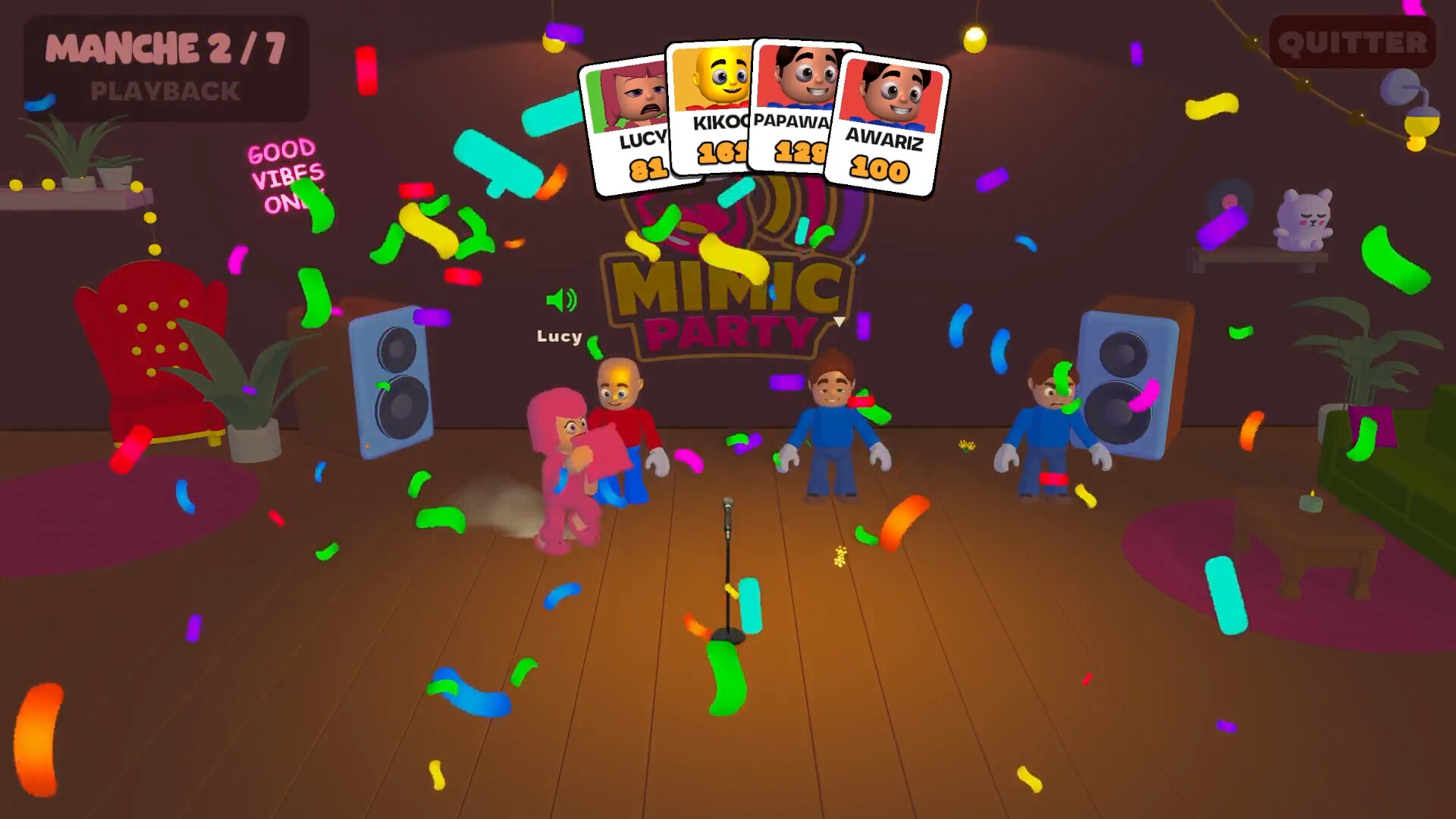
Round results fly in as confetti after each simultaneous mimicry round, showing every player's score at onceImage: FoliesAPP via Steam -
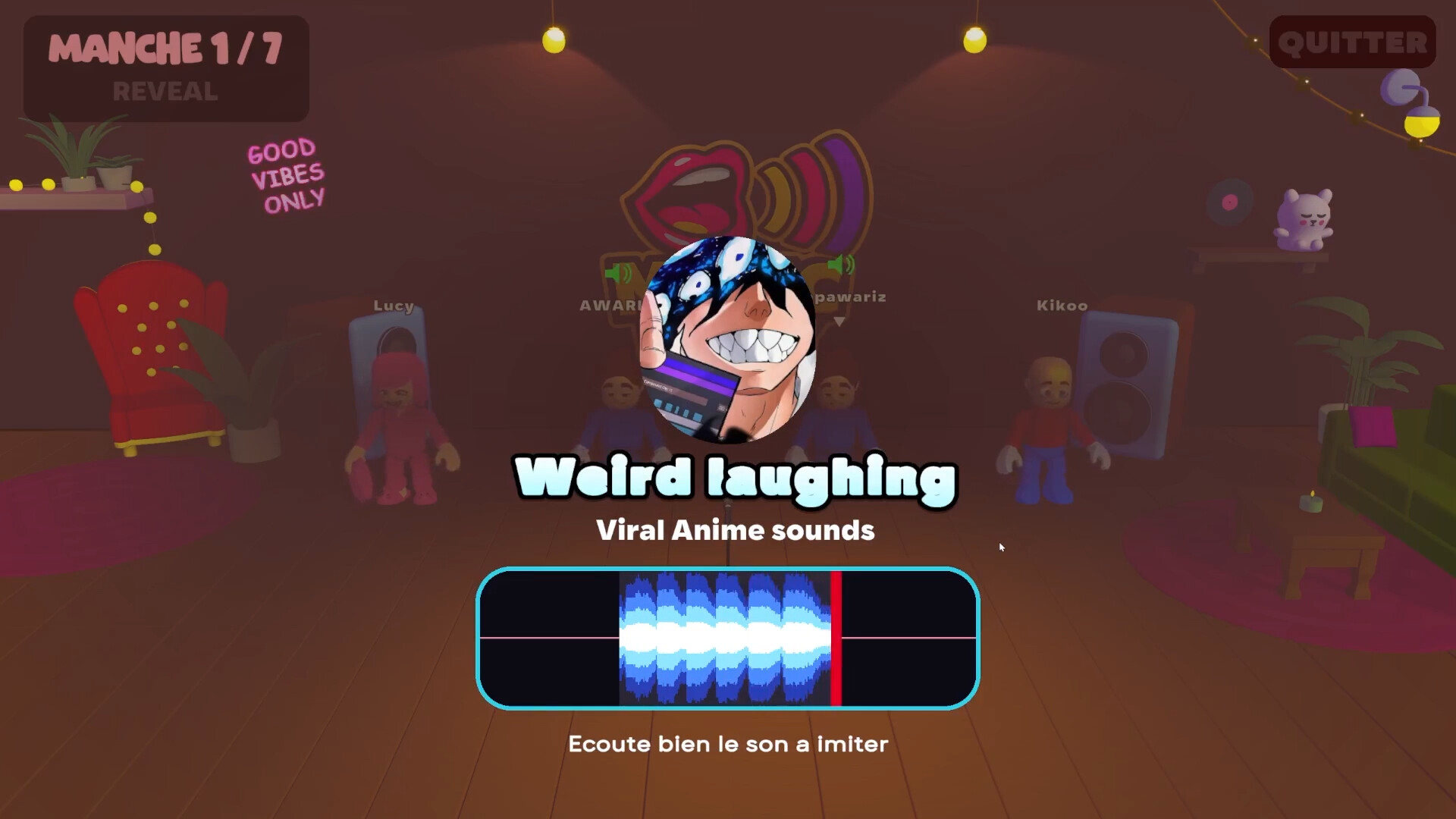
A round begins by revealing the sound clip everyone has to imitate, drawn from packs like this "Viral Anime Sounds" setImage: FoliesAPP via Steam -
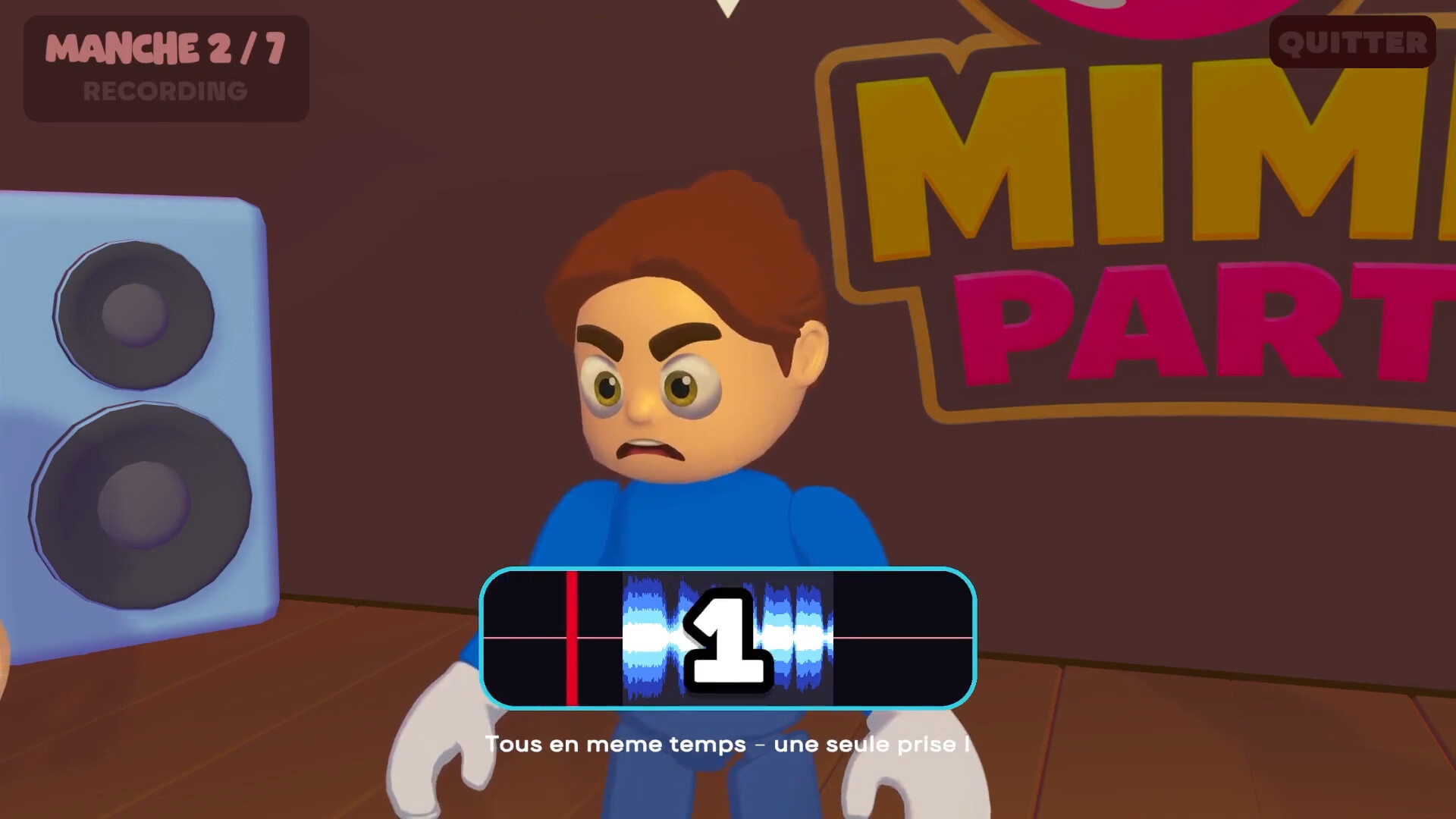
The one-shot recording moment: every player performs at the same time, no retakesImage: FoliesAPP via Steam