Game review
Dawson Oaks Trailer Park Review
7 / 10
- Developer
- Striped Panda Studios
- Publisher
- Striped Panda Studios
- Released
- 17 September 2026
- Platforms
- ["Windows"]
- Genre
- Simulation
Crime, Snitching, and Proximity Chat in a Trailer Park
Dawson Oaks Trailer Park is a proximity-voice-chat social deduction game that swaps the sci-fi spaceship trappings of the genre's biggest hits for a comedic, down-on-its-luck American trailer park. Most players take on one of eleven "Suspect" roles — Drug Dealer, Junkie, Moonshine Cook, Creep, Scrapper, Pyromaniac, Gambler, Thief, Drunk, Prankster, Hobo — each with a role-specific "urge" they need to secretly satisfy to stay sane, while a Supervisor watches the park, gathers information, and calls the police before things spiral. Hidden among the Suspects is a Snitch, quietly working against their own side from within. Built and published by Striped Panda Studios and priced at $8.99, it's a lighter, more overtly comedic take on the deduction-and-betrayal formula popularized by games like Among Us and Town of Salem, leaning hard into trailer-park stereotypes and crude humor rather than the mystery-thriller tone some of its genre peers reach for.
A Very Positive but Mixed-Signal Launch
Dawson Oaks Trailer Park launched to 62 reviews, 53 of them positive, landing it in Steam's "Very Positive" bracket at roughly 85% approval. Forty-seven of the sixty-two reviews are in English, a solid majority that gives this review a reasonably representative slice of the early audience's reaction. The reception is genuinely warm on balance, but it's also unusually candid about the game's rough opening days: several reviewers explicitly frame their praise around what the game could become with updates rather than a flawless launch, and both of the recurring criticisms below appear in a meaningful share of the negative reviews rather than being isolated complaints. As with any brand-new multiplayer-only release, the picture here is also a snapshot of launch week specifically, and server population and matchmaking experience are the parts of that snapshot most likely to shift quickly in either direction.
A Loop That Clicks Hard With a Group of Friends
The reviews are consistent that the core loop works, and works well, once you have people to play it with. One reviewer who "wasn't expecting much" from a game that had mostly circulated through streamer clips called it "fun as hell... far exceeded my expectations," while another calls it "an absolutely brilliant social deduction game." Several reviewers describe genuinely large time investments already, including one logging over 1,290 minutes of playtime and another past 430 minutes, both still recommending it — a strong signal for a launch-week multiplayer title. The comedic trailer-park framing is a specific draw rather than a neutral backdrop: reviewers describe it as "hillbilly simulator" and joke about the game's crude, self-aware sense of humor, with the eleven distinct Suspect roles and their secret "urges" giving each round a different rhythm depending on who's assigned what. One reviewer put it simply: "definitely good with friends. would absolutely recommend," a sentiment echoed across most of the sampled positive reviews — this is consistently described as a game that's best experienced with an assembled group rather than solo queue, closer in spirit to a party game than a competitive ranked experience.
Empty Public Lobbies, Rough Keybinds, and Launch Crashes
The negative reviews and even several of the positive ones converge on the same two or three specific problems rather than a broad, scattered list. The most frequently repeated complaint is an empty or unreliable public server browser at launch: one reviewer wrote "public lobbies are terrible out the gate... without your own group of people, the game's impossible," and another reported no public games available at all despite having enjoyed an earlier playtest demo "with a big group of friends." A second cluster of complaints targets the default control scheme, with one reviewer calling the keybinds "terrible" — locked to left and right arrow keys with no clear alternative since the mouse buttons are already used for other actions — a usability rough edge for a game that otherwise leans on fast, readable interactions. A smaller number of reviewers report technical issues outright, including at least one describing a lobby-start crash occurring "every time," and one describing the UI as "WILD" and the audio as "kinda rough" during the tutorial. One reviewer also flagged toxic behavior from other players in a public lobby, a reminder that proximity-voice-chat social deduction games are only as pleasant as the specific group of strangers you land with, and that a fresh launch community can be an inconsistent place to meet people before moderation tools and a settled playerbase mature.
Verdict
Dawson Oaks Trailer Park lands as a genuinely funny, well-received spin on the proximity-chat social deduction genre, built around a strong core loop of secret roles, hidden urges, and a comedic trailer-park setting that reviewers who've played it with friends are enthusiastic about. Its problems are concentrated and fixable rather than fundamental: a public matchmaking experience that multiple reviewers describe as thin or unreliable at launch, an awkward default control scheme built around arrow keys, and scattered reports of crashes and rough audio during the tutorial. At $8.99, it's an easy recommendation if you're bringing your own group of players into a lobby, and a more cautious one if you're planning to rely on public matchmaking to fill out a game — worth watching over its first few post-launch patches either way, since most of what's holding back a stronger reception here sits in the realm of things a developer can realistically improve rather than a broken core concept.
Screenshots
-
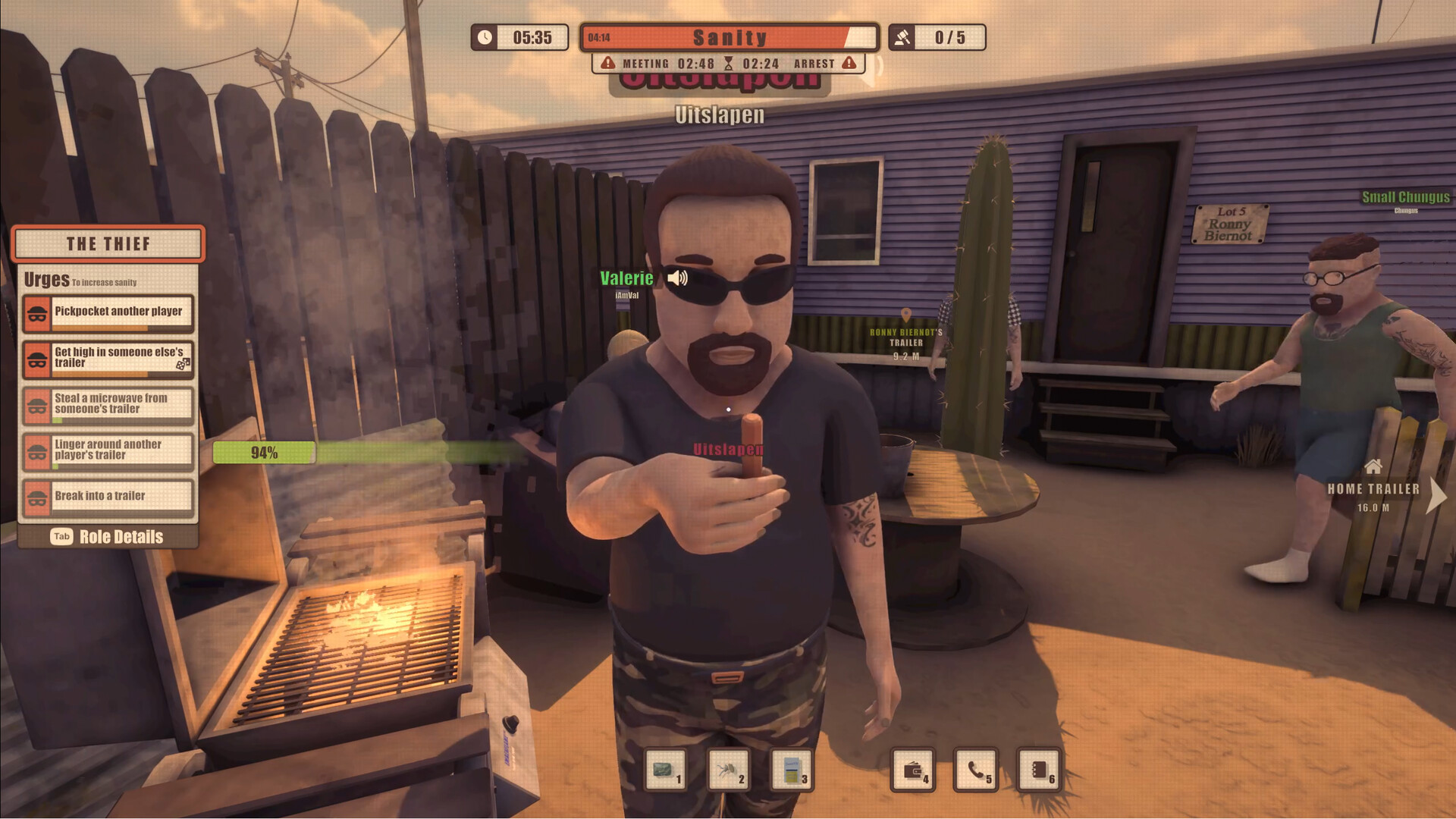
The Thief's urge list and sanity meter, part of the on-screen HUD suspects manage while trying not to look obviousImage: Striped Panda Studios via Steam -
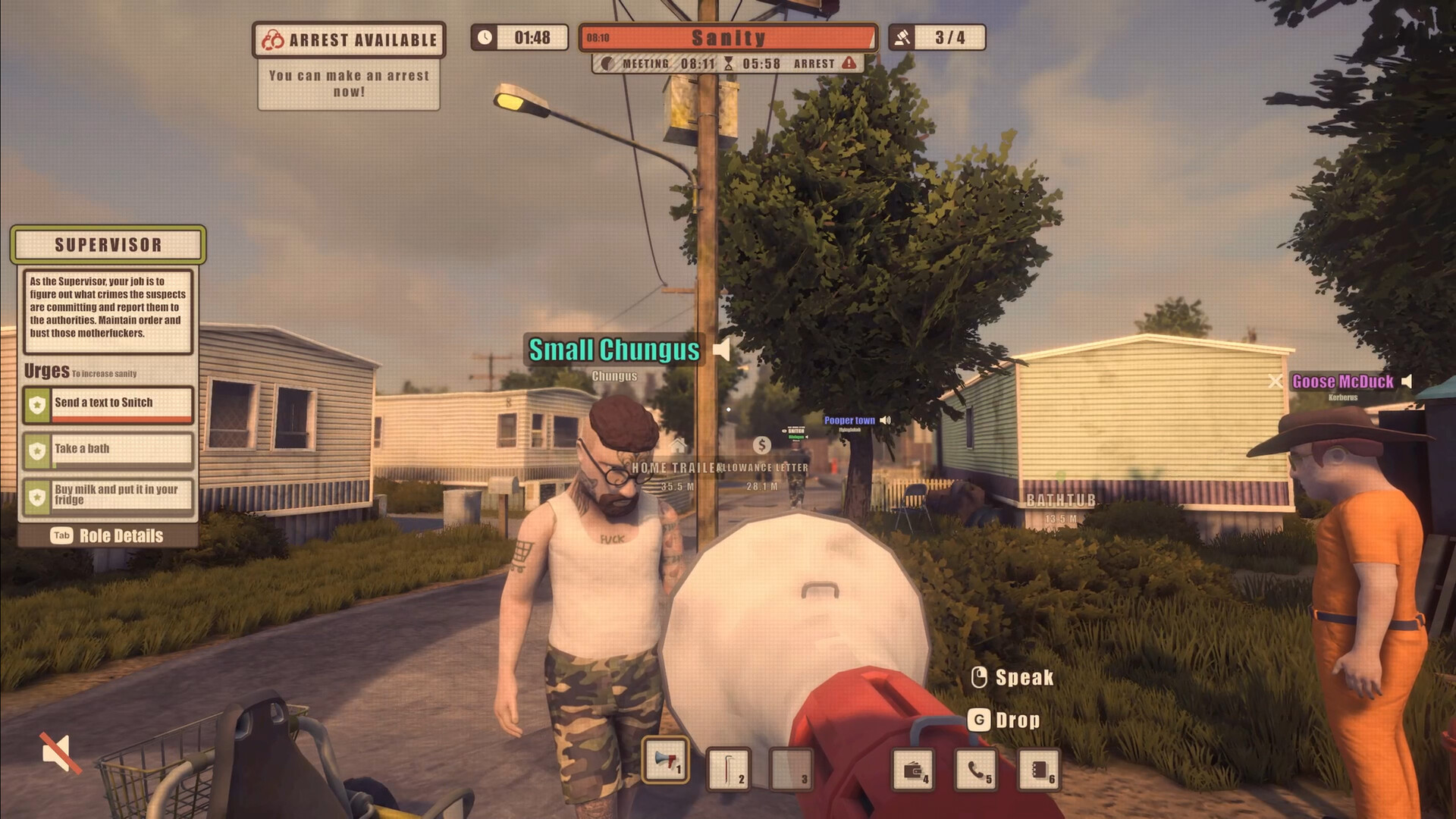
Patrolling as the Supervisor, tasked with spotting suspects' crimes and making arrests before time runs outImage: Striped Panda Studios via Steam -
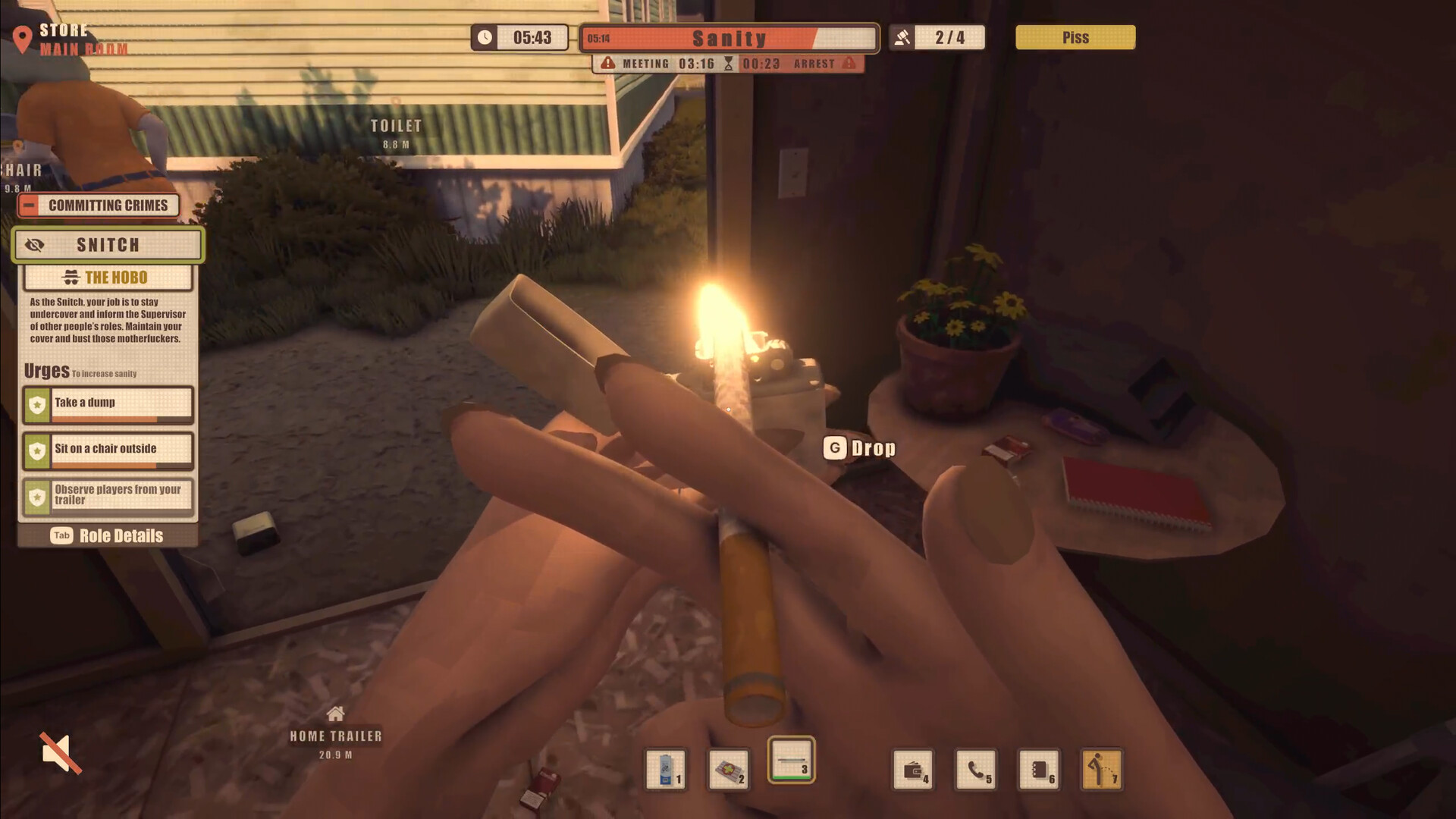
Playing the hidden Snitch, secretly reporting on other suspects while maintaining cover inside The Hobo's roleImage: Striped Panda Studios via Steam