
Game review
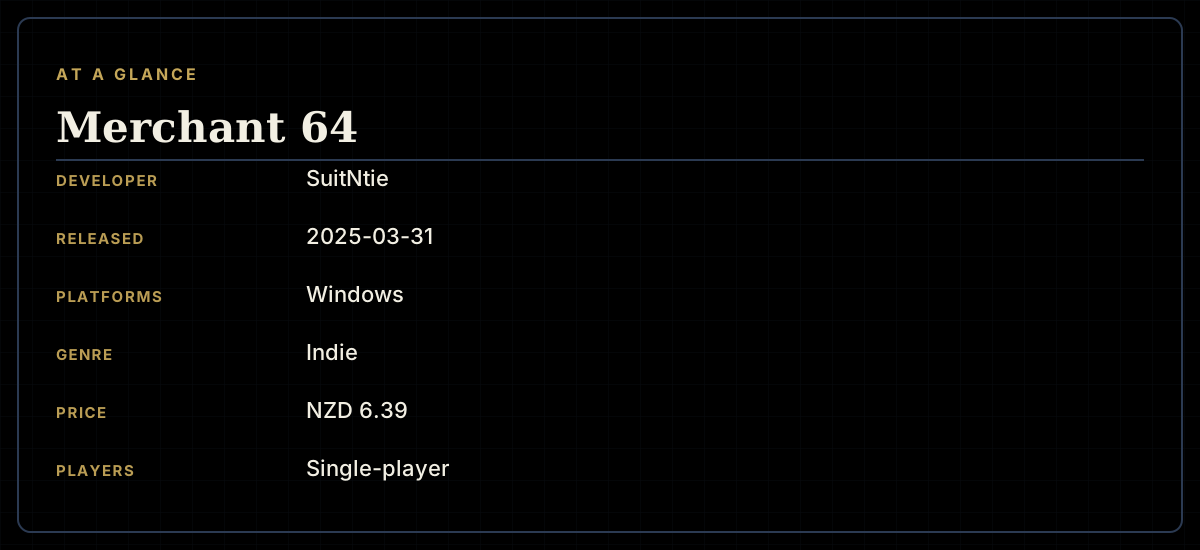
Merchant 64
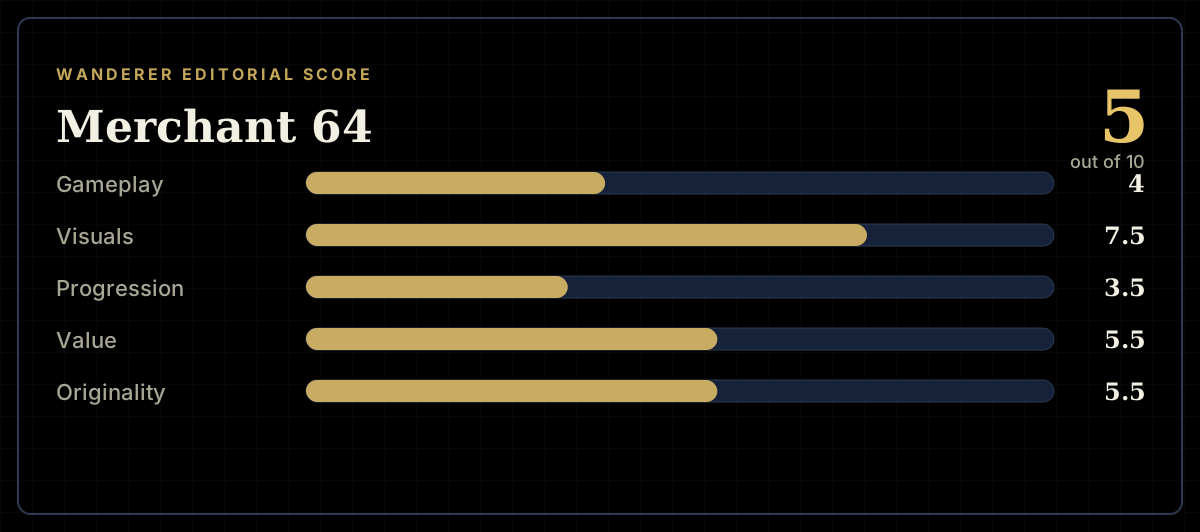
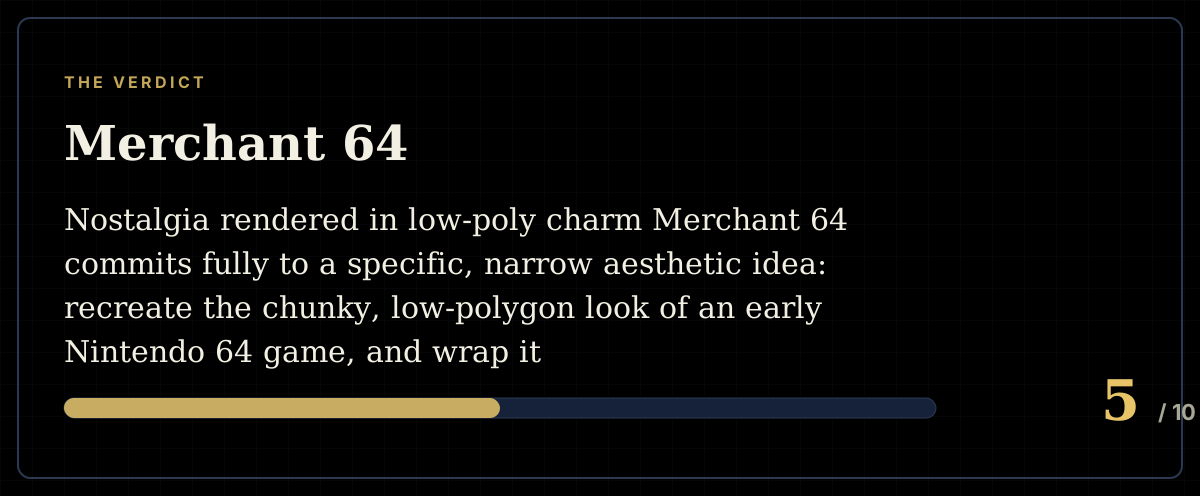
5 / 10
- Developer
- SuitNtie
- Publisher
- SuitNtie
- Released
- 31 March 2025
- Platforms
- Windows
- Genre
- Indie
- Players
- Single-player
The short version
Biggest strengths
- A genuinely distinctive, chunky N64-era polygon art style that draws sincere, specific praise across nearly the entire review spectrum
- A relaxing, low-stakes buy-low-sell-high loop that a real share of buyers say scratches a specific, quiet itch precisely because of how uncomplicated it is
- A wide achievement spread (90.1% down to 9.5% across 22 achievements) suggests more structural content exists than the "nothing burger" complaints might imply
Biggest weaknesses
- An extremely minimal core loop — walking between two or three small towns checking prices on a handful of generic goods — that a large share of reviewers describe as repetitive within the first hour
- Reported broken or unpurchasable cosmetic upgrades, with multiple items (a paintbrush, shoes, a mask) not functioning correctly for some players
- A sleep-on-the-street mechanic penalizes players by stealing a significant portion of carried money, a punishing design choice some reviewers find disproportionate to the game's otherwise gentle tone
5 / 10
Nostalgia rendered in low-poly charm
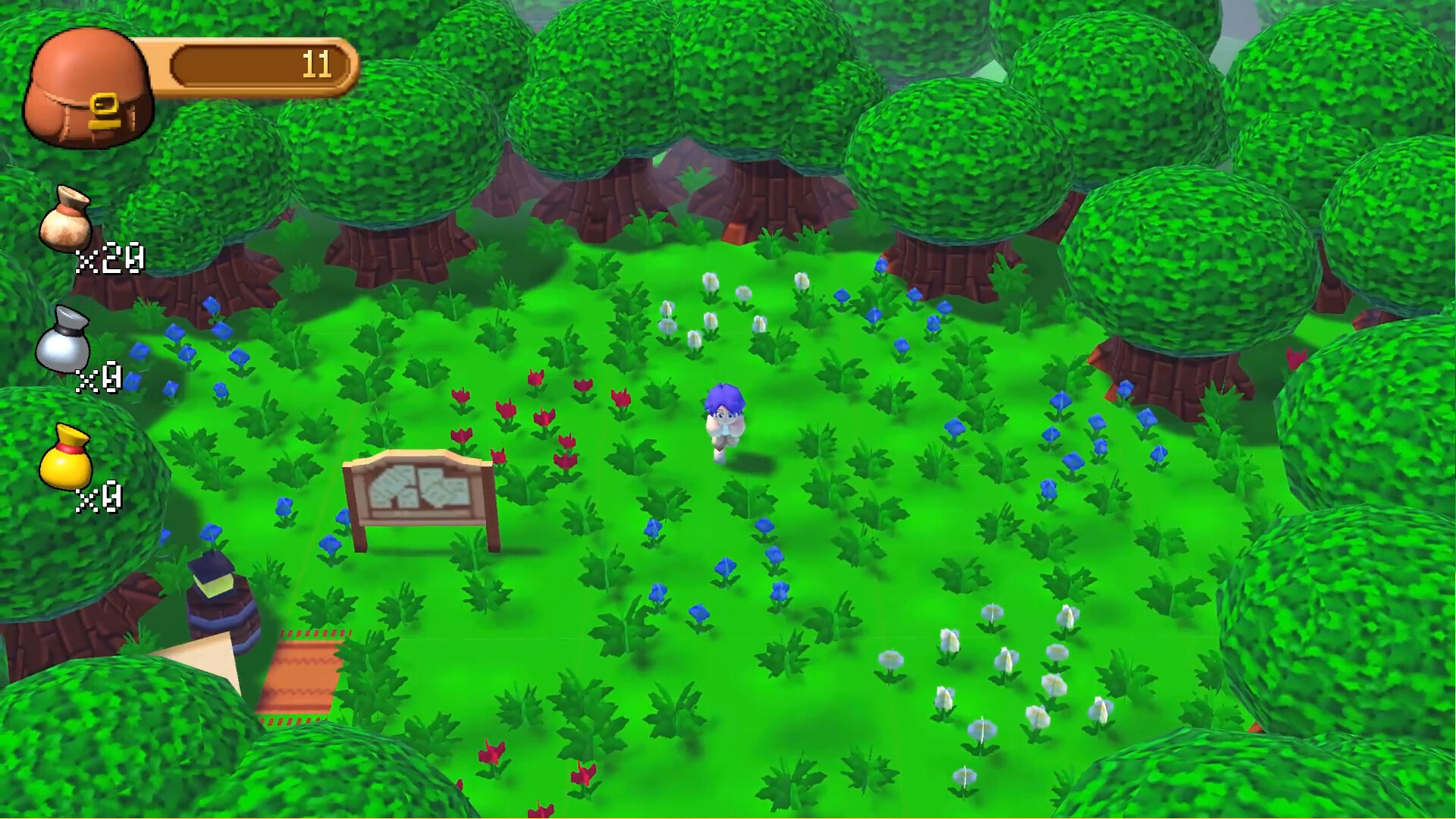
Merchant 64 commits fully to a specific, narrow aesthetic idea: recreate the chunky, low-polygon look of an early Nintendo 64 game, and wrap it around the simplest possible trading loop — buy goods cheap, carry them somewhere they're worth more, sell, repeat. The art style is, by wide and consistent agreement, the game's clear success. "In an ongoing effort to play and complete every game based on the N64 that I could get my grubby mitts on, Merchant 64 seemed right up my alley. A cozy little simulator about buying goods at the best prices and selling for a higher profit? A chunky polygon art style reminiscent of the earliest games," one reviewer writes, capturing exactly the specific nostalgic appeal the game is built around. A separate reviewer frames the same appreciation more simply: "I initially wishlisted Merchant 64 for the art style alone because I absolutely love how this game looks."
For a real slice of the audience, that aesthetic pull is enough on its own, especially given the low asking price. "For less than $6 I honestly can't be as mad at this game as I think others who might've expected more are," one reviewer notes, and a more pointed defender pushes back directly against the harsher reviews: "negative reviews are due to people with no whimsy in their heart and no appreciation of smaller game experiences. Not everything has to be a 550-hour branching questline MMO life sim. It's a five-dollar game."
A loop with almost nothing underneath the vibes
Set against that aesthetic appreciation is an unusually consistent, often quite pointed critical consensus about how little the game actually asks of, or offers, the player. "Imagine playing Animal Crossing, but the only thing you can do is buy and sell turnips. Welcome to Merchant 64," one of the most-upvoted reviews opens, going on to call the gameplay loop "kind of lame and repetitive" with dialogue that's similarly limited. A separate, detailed review makes a sharper comparison: "this is like a cookie clicker game if there was no strategy or addictive nature whatsoever and those things were instead replaced with tedium... sell generic no-name 'junk' items, then go to the one other town."
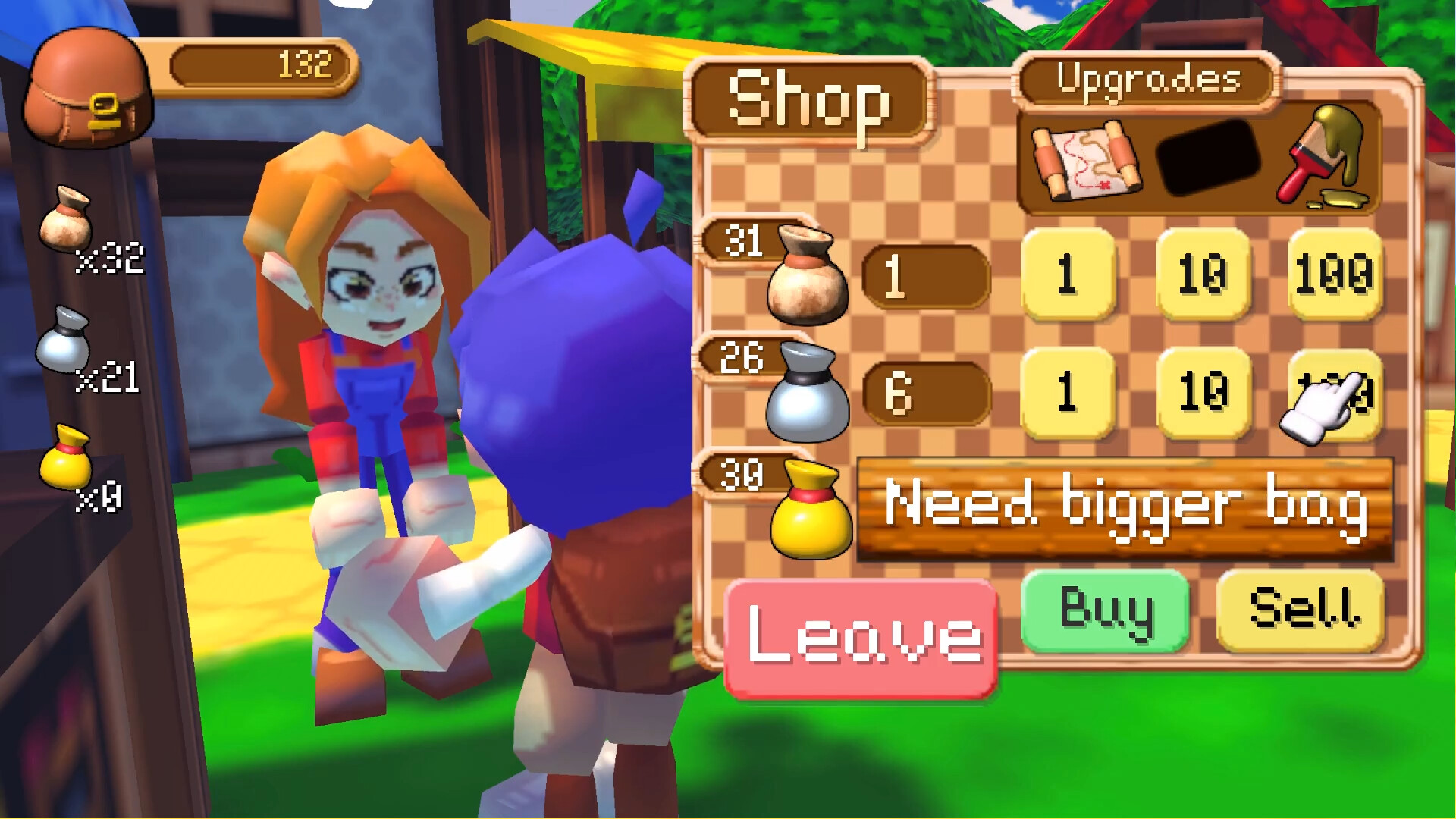
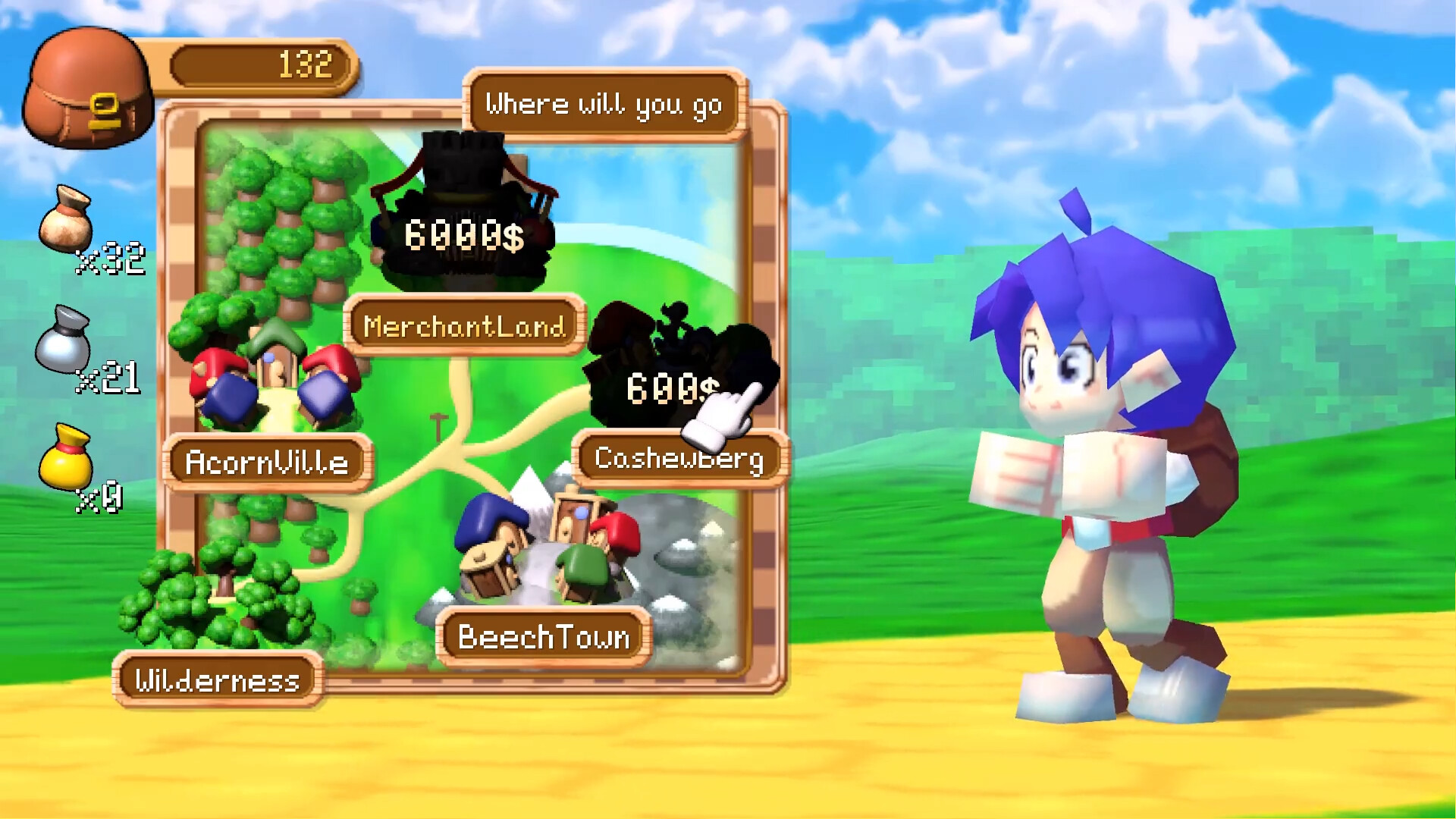
A more measured but equally critical review lays out the mechanical reality precisely: "You just walk from one (out of three) small town-map to another, back and forth, over and over, hundreds of times, just checking if the prices are at lowest or highest to buy/sell the three goods. That is all. There are no other maps besides a little 'wilderness' circle and no other [systems]." That's a specific, verifiable description of the game's actual scope rather than a subjective dismissal, and it's echoed independently by multiple other reviewers describing the same three-town, few-good structure without embellishment in either direction.
Bugs and design choices that undercut the cozy tone
Beyond the thinness of the core loop, several reviewers report specific functional problems. "The upgrades like the paintbrush and shoes seem to not work properly a lot. The game wouldn't allow me to buy the mask upgrade," one reviewer writes, describing cosmetic progression items failing outright rather than simply being unexciting. A separate, sharper complaint concerns a punitive mechanic that sits awkwardly against the game's gentle presentation: sleeping on the street when a day runs out costs the player roughly a fifth of their carried money to theft, a design choice one detailed reviewer specifically calls out as unexpectedly harsh — "it seems like thieves will steal around 20%" — for a game otherwise built around low-stakes, relaxing play.
The game's headline replayability feature draws its own specific skepticism: "the so-called 'multiple endings' especially leave a sour taste," one reviewer writes, arguing that new items and towns "do not change the gameplay loop in meaningful or interesting ways," making the promise of different endings feel more like a marketing bullet point than a genuine structural feature. A separate, more practical complaint concerns platform support: one Steam Deck player describes "confusing UI with very little visual feedback" making basic interactions difficult to parse on that specific hardware.
What the achievement spread suggests
The achievement data offers a useful counterweight to the bleakest "there's nothing here" readings. The curve runs a genuinely wide range, from 90.1% for an early milestone down to 9.5% for the hardest unlock across 22 total achievements — a spread that argues for more structural variety existing in the game than the flattest negative reviews suggest, even if that structure doesn't translate into meaningfully different moment-to-moment decisions along the way. That's consistent with several reviewers' own framing: the content is thin in terms of active decision-making, but there's more to formally complete than "walk and click" alone would suggest.
Where this leaves it
Merchant 64 succeeds completely at one thing — a specific, sincere, low-poly N64 aesthetic that a real audience finds genuinely charming — and offers very little beyond that single, simple pleasure. The core trading loop is as thin as its harshest critics describe, cosmetic upgrades are reported broken for some players, and the advertised multiple-endings hook doesn't appear to deliver meaningfully varied content. At its low price, that's a defensible trade for buyers drawn specifically to the visual style and looking for an hour or two of quiet, undemanding play; it's a poor fit for anyone expecting the trading-sim genre's usual depth of strategy or progression.
Pros and cons
Pros
- A genuinely distinctive, chunky N64-era polygon art style that draws sincere, specific praise across nearly the entire review spectrum
- A relaxing, low-stakes buy-low-sell-high loop that a real share of buyers say scratches a specific, quiet itch precisely because of how uncomplicated it is
- A wide achievement spread (90.1% down to 9.5% across 22 achievements) suggests more structural content exists than the "nothing burger" complaints might imply
- Cheap enough at its asking price that even harsh critics rarely call it an outright waste of money
Cons
- An extremely minimal core loop — walking between two or three small towns checking prices on a handful of generic goods — that a large share of reviewers describe as repetitive within the first hour
- Reported broken or unpurchasable cosmetic upgrades, with multiple items (a paintbrush, shoes, a mask) not functioning correctly for some players
- A sleep-on-the-street mechanic penalizes players by stealing a significant portion of carried money, a punishing design choice some reviewers find disproportionate to the game's otherwise gentle tone
- The game's advertised "multiple endings" are criticized by several reviewers as a hollow gimmick rather than meaningfully different content
- Specific usability complaints on Steam Deck, including a confusing interface with minimal visual feedback
Screenshots
-
Merchant 64Image: SuitNtie via Steam -
Merchant 64Image: SuitNtie via Steam -
Merchant 64Image: SuitNtie via Steam -
How the review scores each part of the gameWanderer Editorial -
At a glanceWanderer Editorial -
The short versionWanderer Editorial