Game review
Medieval Kingdom Wars
5.8 / 10
- Developer
- Reverie World Studios
- Publisher
- indie.io
- Released
- 3 January 2019
- Platforms
- Windows
- Genre
- Real-time strategy
- Monetisation
- Premium with paid DLC
- Players
- Online PvP and co-op skirmish for up to several players; campaign is single-player
The short version
Medieval Kingdom Wars still has one of the more interesting pitches in the RTS aisle: a living campaign map where the town you build becomes the castle you defend, wrapped around Total War-style field battles and sieges. Seven years on, the pitch is still better than the execution — the AI thinks in straight lines, the interface won't tell you what half your own buttons do, and the frame rate buckles the moment a siege gets large. It is also no longer a standalone curiosity: the same three-person team has since sold variations on this exact engine and campaign structure under at least three other names, which makes the asking price here a harder sell than the game alone deserves.
Genre diehards who already know they can look past jank for a good siege will still find one here, especially discounted and stacked with its cheap DLC. Anyone hoping for a polished Total War alternative should keep looking.
Biggest strengths
- Genuinely unusual fusion of real-time siege combat, town building and a persistent campaign map
- A dozen playable nations and over fifty starting lords give campaigns real variety on paper
- Three DLC packs (naval-heavy Greater World, King's Campaign in Royal Blood, and Zombie Mode) keep adding content years after launch
Biggest weaknesses
- Frame rate and stutter complaints follow the game from its 2019 launch straight through to its most recent reviews
- Battle AI mostly balls up its whole army and marches it at you, so tactics rarely matter once you know the trick
- Core interface still doesn't tell you what a building upgrade does, what an attack costs, or what a research unlock actually unlocks
Who it's for: Stronghold and early Total War veterans who can tolerate real jank for a genuinely different campaign structure, and who plan to buy on sale rather than at full price.
Our recommendation: Wait for a deep sale, and read the recent reviews before buying any of the studio's other titles under this system.
5.8 / 10
Introduction
Medieval Kingdom Wars has been on Steam since January 2019, but it is one of those indie strategy games that never really left early access in spirit. Reverie World Studios, a three-person team, built it as a fusion of three separate strategy traditions: the persistent world map and dynastic framing of a Paradox grand-strategy game, the town-under-siege combat of Stronghold, and the massed-battle presentation of Total War. Set during the opening years of the Hundred Years' War, it drops the player in as a minor noble serving one of a dozen or so European powers, with the stated goal of building up towns, raising armies and eventually claiming a kingdom's throne.
It is a genuinely uncommon combination on paper, and it is a large part of why the game has held onto a "Mostly Positive" rating across more than 1,200 Steam reviews years after release. The other part of that story, covered honestly below, is a long tail of reviews describing stutter, a weak battle AI and an interface that assumes you already know the game.
Gameplay
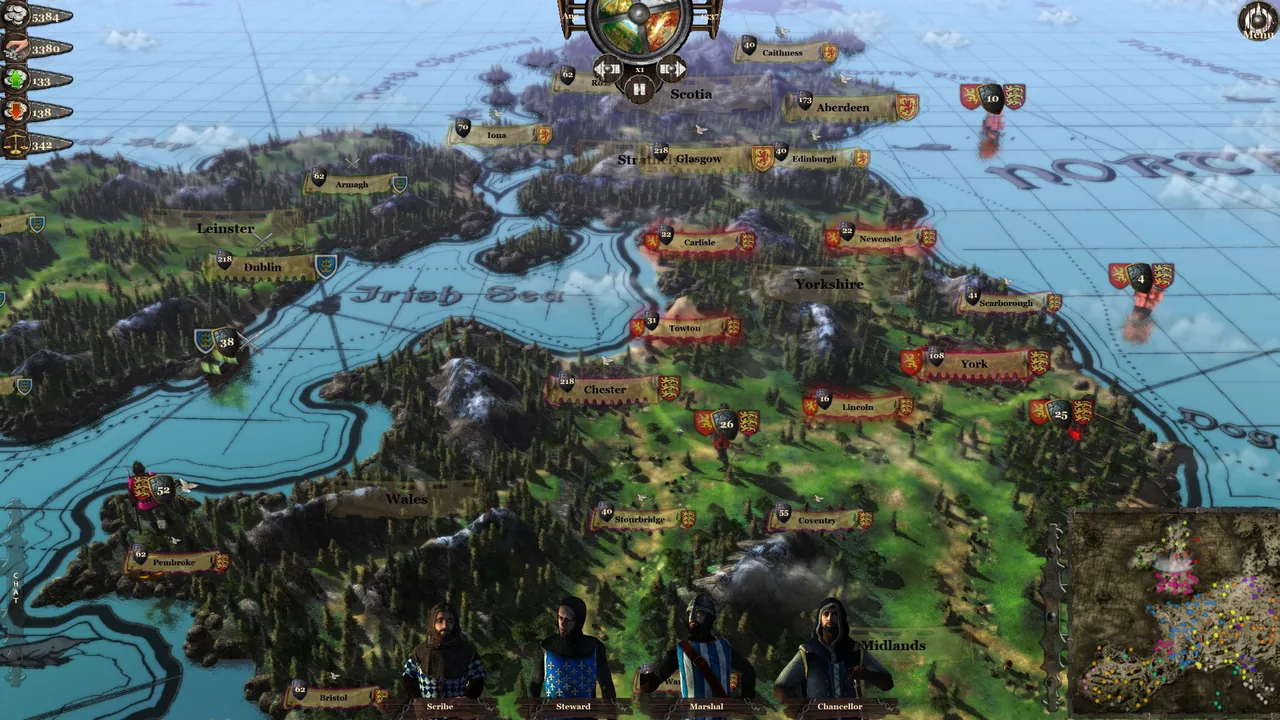
The structure is straightforward once explained, and that is itself part of the problem — very little of it is explained inside the game. You start as a lord attached to a kingdom, manage a handful of towns from a Stronghold-style build screen, and move armies around a real-time campaign map that pauses on command. When two forces meet, or when you lay siege to an enemy town, the game drops into a real-time tactical battle where you position units, work siege engines and either storm or hold a set of walls.
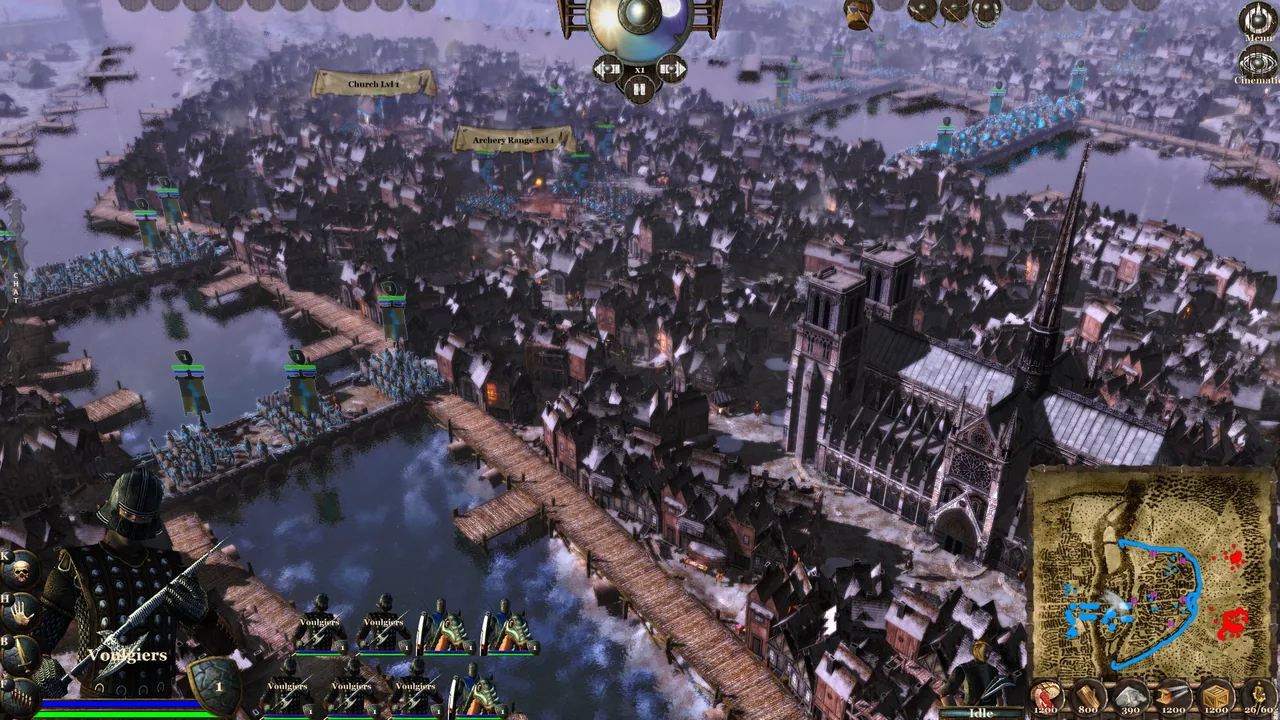
The idea of the town itself being the battlefield — the same buildings you spent an hour placing becoming cover, chokepoints and objectives when the enemy arrives — is the game's best feature, and reviewers who stick with it consistently cite it as the reason they kept playing. The problem is what happens once combat actually starts: Steam reviews describe the AI as functionally a single tactic, mass every unit into one group and walk it at the nearest target, with little use of flanking, terrain or unit counters on either side. Several long-time players report the reliable winning move on higher difficulties is simply to build the numerically biggest deathball and press attack, which flattens exactly the tactical depth the siege premise promises. Auto-resolve exists for players who tire of refighting the same fight, and more than one review describes the mid-game collapsing into a loop of march, auto-resolve, build, repeat.
Interface
This is where the game loses players who would otherwise be sold on the concept. A cluster of reviews, spread out over several years rather than clustered around one bad patch, describe the same specific gaps: building upgrades with no stated effect, attack orders with no visible cost before you commit, and a research tree that doesn't say what finishing a node actually unlocks. None of that is a difficulty complaint — it is a legibility one, and it is the kind of thing that turns "I don't understand this system" into "I assume this system is broken," which shows up repeatedly in the negative review column. Reverie has patched other issues over the years, but UI feedback of this kind is still being reported in reviews written years apart, which suggests it has never been a development priority.
Performance
Frame rate is the other recurring, load-bearing complaint. It shows up in reviews from the 2019 early-access period and it shows up in reviews from the last twelve months, describing stutter and slowdown that gets worse the larger a siege gets — precisely the moment the game most wants to impress you. For a three-person team this is understandable as a resourcing problem rather than a competence one, but it has had seven years to improve and, per the most recent player feedback, largely hasn't. Buyers on modest hardware should expect the frame rate to sag hardest exactly when a battle is at its biggest and most interesting.
Content, DLC and the studio's other games
Medieval Kingdom Wars has picked up three paid expansions since launch: Royal Blood (August
- adds a King's Campaign mode built around expanding a realm by inheritance and conquest;
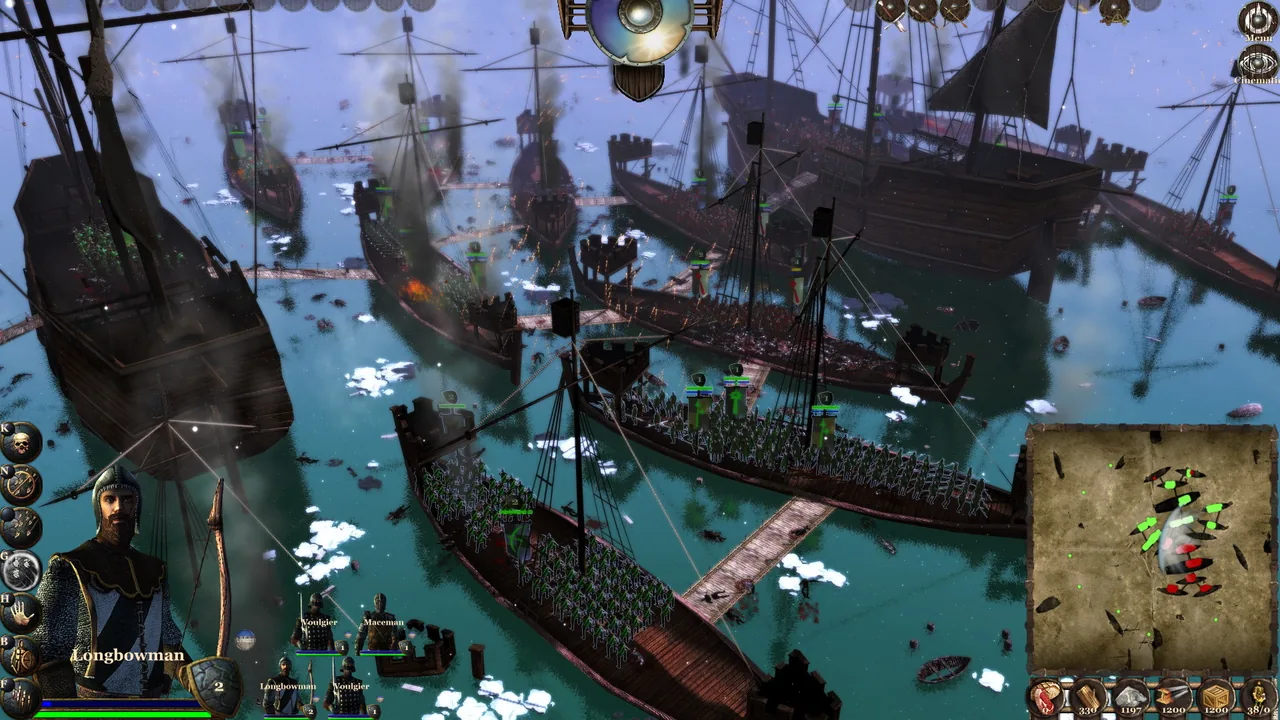
Greater World (September 2022) roughly doubles the playable kingdoms and triples the roster of starting lords, pulling in naval combat and Mediterranean geopolitics as the map grows; and Zombie Mode (May 2023) does exactly what it says, turning every battle — skirmish or campaign — into an infection scenario where the dead get back up. A separate soundtrack release rounds out the DLC list. None of the add-ons are expensive individually, and reviewers generally treat them as reasonable value rather than a cash grab in isolation.
The harder question for a 2026 buyer is that Reverie World Studios has, since this game's release, put out several more titles that read as close relatives of it: Renaissance Kingdom Wars moves the same core systems into the gunpowder era, and the studio has continued the pattern with further historically-themed strategy releases built on what looks like the same engine and campaign structure. Recent Steam reviews for this game are unusually preoccupied with that pattern, accusing the studio of re-releasing the same game under new names rather than substantially updating the original. Whether that reflects a genuinely under-resourced small team reusing what works, or something less generous, is a judgement call for the buyer — but it is relevant to anyone deciding whether to buy this specific title versus one of its siblings, and it was common enough in the current review pool to be worth flagging plainly rather than leaving out.
Multiplayer
Online skirmish supports PvP and co-op play, and the store page also lists trading cards, Steam Cloud saves and a level editor. Multiplayer is a minor part of the conversation around this game compared to its single-player campaign — most reviews, positive and negative, are written about the solo experience — which suggests a thin online population for a title this age. Players specifically shopping for a multiplayer medieval RTS should treat this as a secondary feature at best.
Verdict
Medieval Kingdom Wars earns its "Mostly Positive" rating honestly: the pitch of a persistent town that becomes your battlefield is a genuinely good idea, executed by a small team that Steam reviewers repeatedly describe as responsive and invested. But the same review pool has spent seven years flagging the same three problems — a battle AI with one tactic, an interface that withholds basic information, and a frame rate that sags under its own siege sequences — and none of them read as fixed. Layered on top of that is a newer, more pointed complaint: that this studio's format has since been resold, with light variation, under several other titles. None of that erases what works here, but it does mean the fair price for this specific game, on this specific system, is a deep discount rather than full price.
Pros and cons
Pros
- Genuinely unusual fusion of real-time siege combat, town building and a persistent campaign map
- A dozen playable nations and over fifty starting lords give campaigns real variety on paper
- Three DLC packs (naval-heavy Greater World, King's Campaign in Royal Blood, and Zombie Mode) keep adding content years after launch
- Small dev team with a reputation, per its own player base, for responding directly to bug reports and feature requests
Cons
- Frame rate and stutter complaints follow the game from its 2019 launch straight through to its most recent reviews
- Battle AI mostly balls up its whole army and marches it at you, so tactics rarely matter once you know the trick
- Core interface still doesn't tell you what a building upgrade does, what an attack costs, or what a research unlock actually unlocks
- The same studio has re-sold closely related campaign maps and systems under separate titles (Renaissance Kingdom Wars, Knights of the Crusades, City States: Medieval), which undercuts the value case for owning this one specifically
Screenshots
-
Medieval Kingdom WarsImage: indie.io via Steam -
Medieval Kingdom WarsImage: indie.io via Steam -
Medieval Kingdom WarsImage: indie.io via Steam -
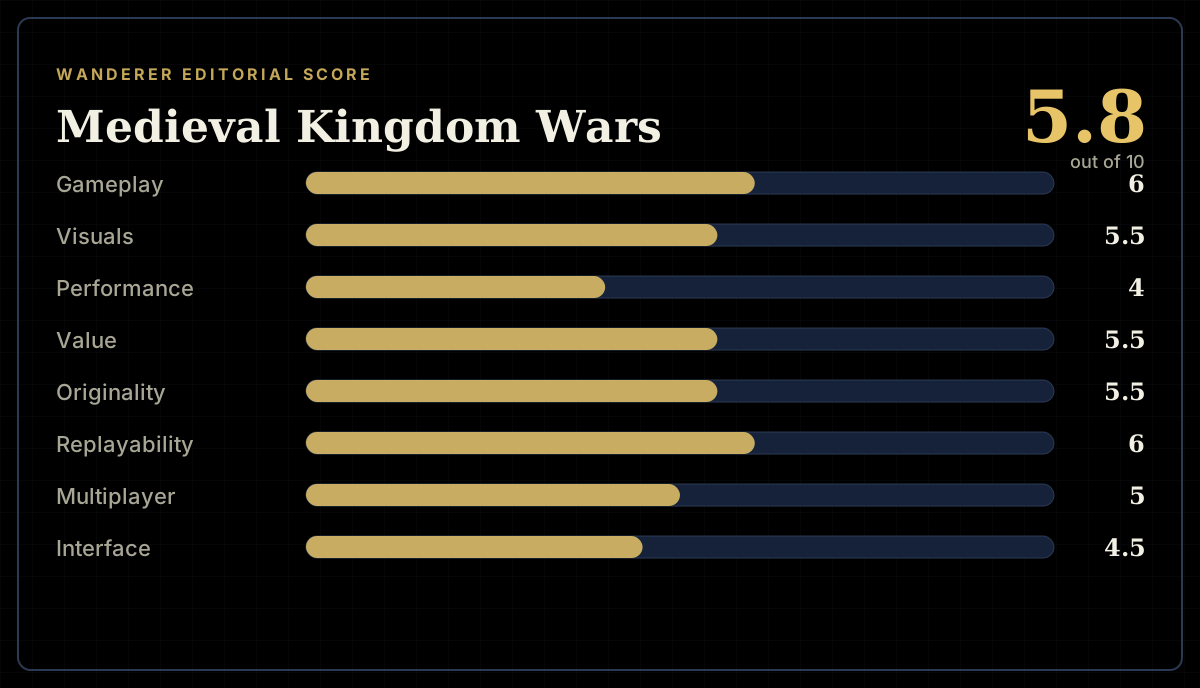
How the review scores each part of the gameWanderer Editorial -
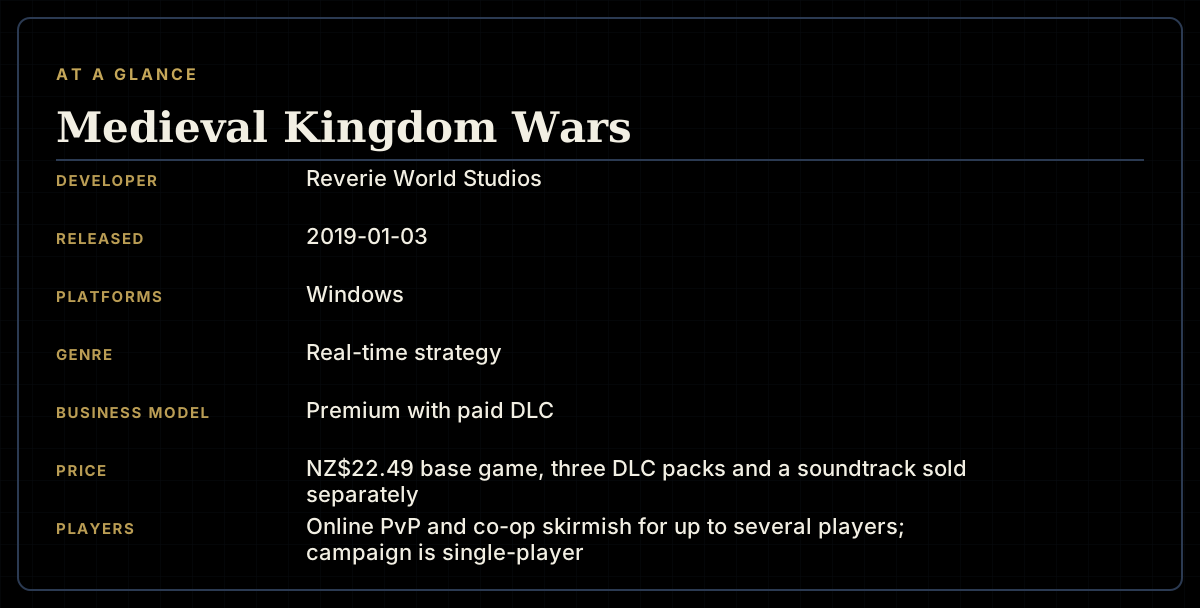
The game at a glanceWanderer Editorial -
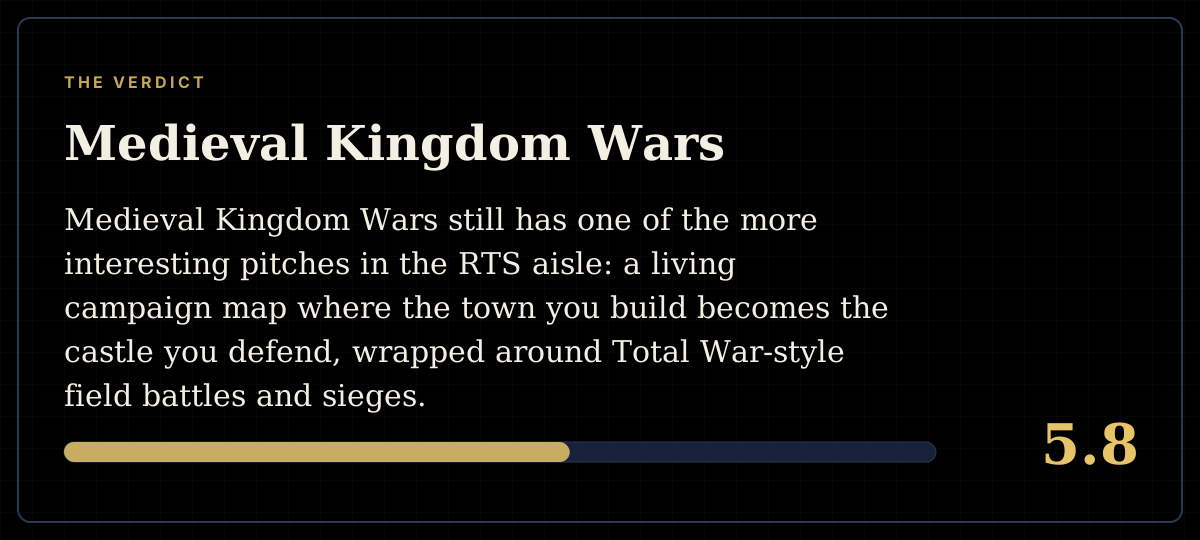
The short versionWanderer Editorial