Game review
Medieval Crafter: Blacksmith Review: A Satisfying Hammer, A Rocky Road to 1.0
4.7 / 10
- Developer
- Compact Core Games
- Publisher
- GameDev.ist, Gamersky Games
- Released
- 22 September 2025
- Platforms
- ["PC"]
- Genre
- Simulation
- Monetisation
- Paid
- Players
- false
The short version
Medieval Crafter: Blacksmith casts players as a dwarf blacksmith mining ore, smelting ingots and hammering weapons and armour to order, while a roster of hired heroes is sent off to dungeons for loot and materials. Developer Compact Core Games launched it into Early Access in September 2025 and has since moved it to a full release, and the 745-review sample tells a story of two overlapping games: a core smithing loop that a lot of players genuinely enjoy, sensory, tactile, "zen," and a much larger list of structural and technical complaints, static recipes with no meaningful skill influence, RNG-driven item rarity, an interface still shipping bugs like broken ultrawide support, and persistent, independently-recurring reviewer speculation that some of its character art and voice lines lean on AI-generated assets. It is currently sitting at 76% positive, a score this review's sample suggests is earned by real, if uneven, improvement rather than universal satisfaction.
Biggest strengths
- The core mining-smelting-hammering loop is repeatedly singled out as genuinely satisfying and relaxing, with several reviewers describing it as a 'zen' experience they return to specifically for the tactile forging minigame
- A reasonably generous scope for the price, with reviewers reporting 10 to 30-plus hours to reach the current content ceiling, and several noting it's fair value, especially discounted
- The hero-and-dungeon side loop, hiring adventurers, assigning them to quests, and receiving crafting materials and schematics in return, is called a fun complement to the crafting core by multiple reviewers
Biggest weaknesses
- Progression is widely described as shallow and static: recipes don't change with skill or materials, item rarity is largely RNG-driven regardless of forging precision, and reviewers report the hour-three experience is barely different from the hour-fifteen one
- A long list of interface and technical bugs recur across the sample, including broken ultrawide support, unusable menu buttons at certain resolutions, no in-game map or direction markers, and inventory stacking limits that force constant manual sorting
- Persistent, independently-raised reviewer criticism of visual and audio asset quality, including inconsistent character models and speculation, not confirmed, that some voice lines and NPC portraits may be AI-generated, which several reviewers cite as a production-quality red flag
Who it's for: Cozy-sim and crafting-game fans who enjoy a slow, repetitive hammering loop and can tolerate a still-rough interface and shallow long-term progression.
Our recommendation: Cautiously recommended for fans of relaxed crafting sims, best bought on sale given the game's continuing rough edges.
4.7 / 10
Medieval Crafter: Blacksmith puts players behind the anvil as a dwarf who inherits the local smithy, mining ore from a multi-level mine, smelting it into ingots, and hammering out weapons and armour to fill customer orders, all while a small roster of hired heroes can be dispatched into dungeons to bring back materials and schematics. Developer Compact Core Games, published with GameDev.ist and Gamersky Games, launched the game into Early Access on 22 September 2025 and has since moved it to a full release. The 20-review English-language sample gathered for this piece, spanning both the top-rated and most-recent review queues and covering everything from the game's rockiest Early Access months through to its most recent full-release feedback, paints a picture of a genuinely enjoyable core activity wrapped in a game that, even post-launch, still shows the scars of an unusually bumpy development.
The Hammer Itself Is the Best Part
Across almost every review in the sample, positive or not, one thing draws consistent praise: the actual act of smithing. Reviewers describe gathering ore, pouring molten metal into a mould, heating it, and hammering it into shape with a keyboard-and-mouse control scheme that several call "awesome" and genuinely satisfying to repeat. One reviewer, inspired to buy the game after reading a blacksmith-themed manga, calls it simply "This. Game. Is. It!!" after finishing their first session. Another, further along at 36 hours, describes it as "a zen game" that captures "all the fun parts of grinding," while a third calls the minigame "fun" specifically because the sweet-spot timing is randomised each time rather than memorised. A longer, more critical review still concedes the smithing minigame is "the only 'fun' part" of the whole experience. This is the throughline that keeps the sample from being purely negative: whatever else is wrong with the game, the moment-to-moment act of forging a weapon lands for a meaningful share of the people who tried it.
A Long, Rocky Early Access Stretch
The bulk of the sample, however, comes from reviews explicitly marked as written during Early Access, and it documents a genuinely difficult development period. One detailed critical review from December 2025, scoring the game 2 out of 10 across a long structured breakdown, catalogues broken quest triggers that permanently soft-locked a hero, a silver mine that never spawned any silver, sleep that didn't actually save the game despite claiming to, and NPCs that spawn T-posed in the town square. Another reviewer, writing in September 2025 shortly after launch, reports the same broken-quest problem independently, unable to progress because a completed dungeon wasn't registering, alongside night cycles that got stuck and left them unable to do anything but exit the game. A third, from April 2026, still finds "unfinished and half-implemented features" late into the Early Access period, interactable-looking objects that do nothing, quest markers that never appear despite the quest log updating, and concludes plainly that "this is not a 1.0, not even close." Taken together, the sample suggests a long Early Access period where basic stability and content completeness lagged well behind the core mechanic's promise.
Visuals and Assets Draw Persistent Criticism, Including AI Speculation
A second recurring complaint across the sample, distinct from bugs, concerns the quality and consistency of the game's art and audio assets. Multiple reviewers independently describe the character models as looking dated, "PS2-era" in one reviewer's words, with inconsistent art direction that one detailed review attributes to what looks like unedited asset-store purchases, right down to forged weapon parts with visibly missing textures at their connection points. That same review is unsparing about the voice work too, calling the dwarf protagonist's barks "random and out of place" and guessing the developers "bought a generic dwarf voice pack" without tailoring it to the game. More pointedly, at least two separate reviewers, writing months apart, independently raise the possibility that some of the game's NPC portraits and voice lines may have been generated using AI tools, one flatly stating they don't have confirmation this happened but that "you'll see exactly what I mean" if you play it, the other calling out inconsistent character art that "doesn't even try to match what the actual model looks like." Neither the developer nor Steam's storefront disclosures confirm AI-generated content is used, but the fact that the suspicion surfaces unprompted, from unconnected reviewers, in the context of criticising asset quality, is worth noting as part of the game's ongoing reputation problem.
A Progression Loop That Reviewers Repeatedly Call Shallow
Where the sample is most consistent is in its assessment of long-term progression. One reviewer with nearly 30 hours logged writes that "crafting an iron sword is no different than crafting an endgame moon sword," with no new mechanics introduced as materials get rarer. Another, who put in over 17 hours, notes there's "no way I've seen to affect stats or rarity of the items you craft" beyond a passive perk, so output quality comes down largely to material RNG rather than player skill, and static recipes mean higher-quality materials can't be substituted into low-tier items to improve them. A third reviewer flags a related oddity: forging a legendary-grade component and then assembling it can still downgrade the finished item to common or rare quality, a result they call nonsensical given the effort involved. On the hero-management side, one reviewer notes that a hero's class is largely cosmetic, and that mission success comes down to a hard 90% cap that only rises to 95% when a hero's individual perks happen to match, an outcome several reviewers describe as more luck than meaningful strategy. The Arena mode draws a specific complaint too, that opponents scale to match a player's own hero strength regardless of the chosen difficulty tier, making it possible to lose even with endgame gear.
Post-Launch Reviews Suggest a Steadier, Still-Imperfect Game
The most recent reviews in the sample, written well after the game's move to full release, no longer carry the Early Access tag and read as a more even split than the earlier flood of bug reports. Several are straightforwardly positive: one from mid-2026 calls it "a simple game for my simple mind" that scratches a post-work hammering itch, another says it "gets the blacksmithing sim experience almost perfect," praising the variety of minigames and schematics and the game's pacing, while wishing for more content once materials are maxed out. But real technical complaints persist even at this stage: one reviewer reports broken ultrawide monitor support that leaves the UI unusable, another can't press menu buttons at all on a 1440p widescreen setup, and a third spent half an hour unable to find the Hall of Heroes because the game offers no map and no directional guidance. A longer, more measured September 2026 review sums up the current state fairly well, calling the smithing minigame "the only 'fun' part" while describing the surrounding systems, commission management, adventurer assignment, resource balance, as shallow and under-developed compared to genre peers, landing on a 3-out-of-10 score despite acknowledging the core hook works.
Value and Final Verdict
At around NZ$17.49 full price, and frequently discounted, Medieval Crafter: Blacksmith sits in reasonable territory for the ten-to-thirty-plus hours reviewers report getting out of it, and more than one reviewer explicitly frames it as worth a purchase on sale even while flagging the same problems as everyone else. What holds this game back from a stronger recommendation isn't the core idea, the hammering loop clearly works, drawing consistent praise across a year of reviews spanning a difficult Early Access period and a full release that hasn't fully shaken off its old problems. It's the surrounding structure: static, unrewarding progression, an interface that still ships basic bugs like broken ultrawide support and missing map guidance, and a persistent cloud of criticism around asset quality that includes unconfirmed but recurring AI speculation from unrelated reviewers. For genre fans specifically drawn to the sensory appeal of forging weapons by hand, this is worth a look, ideally at a discount and with expectations set for a game still working through the consequences of a rocky development.
Pros and cons
Pros
- The core mining-smelting-hammering loop is repeatedly singled out as genuinely satisfying and relaxing, with several reviewers describing it as a 'zen' experience they return to specifically for the tactile forging minigame
- A reasonably generous scope for the price, with reviewers reporting 10 to 30-plus hours to reach the current content ceiling, and several noting it's fair value, especially discounted
- The hero-and-dungeon side loop, hiring adventurers, assigning them to quests, and receiving crafting materials and schematics in return, is called a fun complement to the crafting core by multiple reviewers
Cons
- Progression is widely described as shallow and static: recipes don't change with skill or materials, item rarity is largely RNG-driven regardless of forging precision, and reviewers report the hour-three experience is barely different from the hour-fifteen one
- A long list of interface and technical bugs recur across the sample, including broken ultrawide support, unusable menu buttons at certain resolutions, no in-game map or direction markers, and inventory stacking limits that force constant manual sorting
- Persistent, independently-raised reviewer criticism of visual and audio asset quality, including inconsistent character models and speculation, not confirmed, that some voice lines and NPC portraits may be AI-generated, which several reviewers cite as a production-quality red flag
Screenshots
-
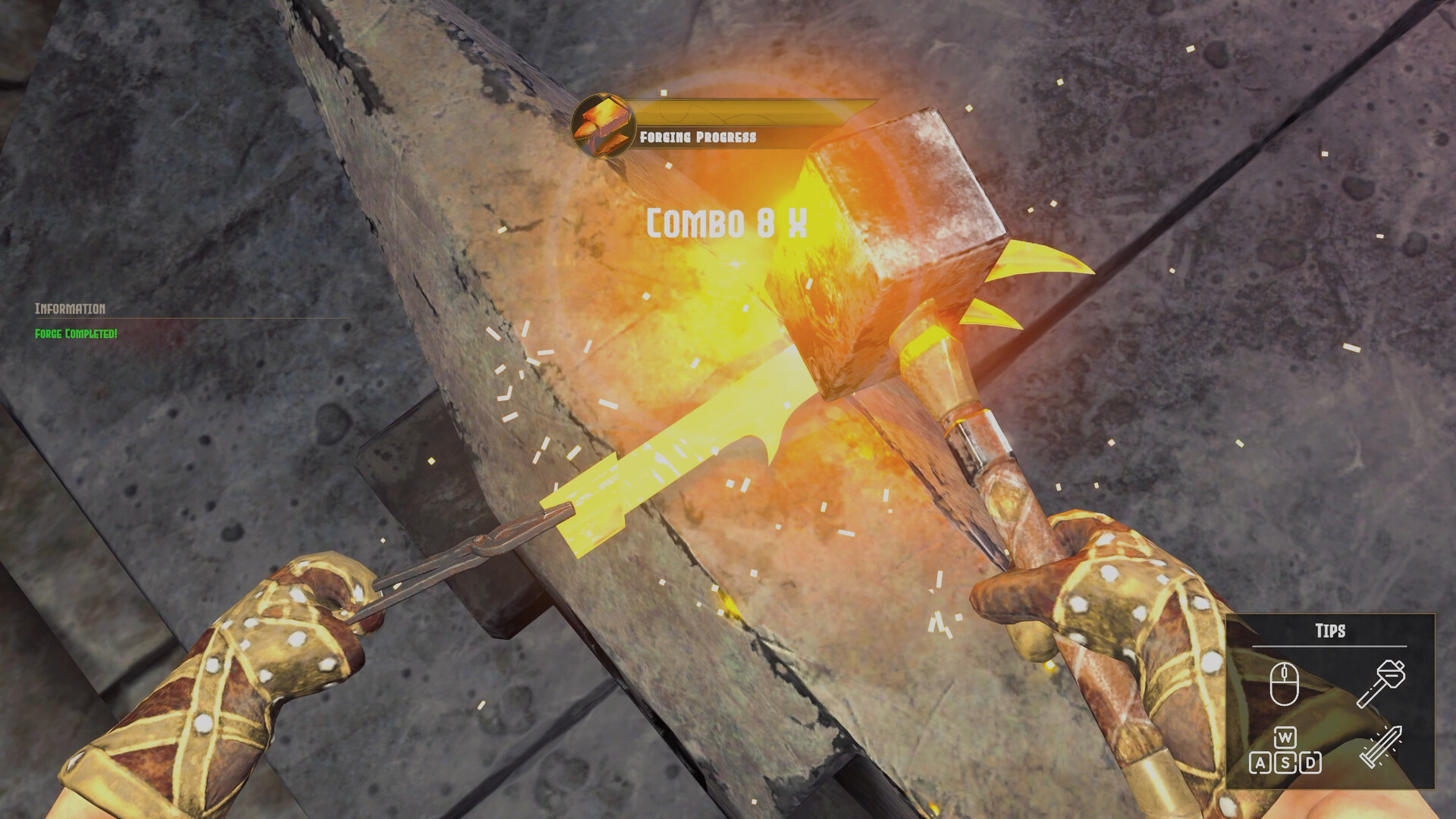
The hammering minigame, the part of the game reviewers praise most consistentlyGameDev.ist -
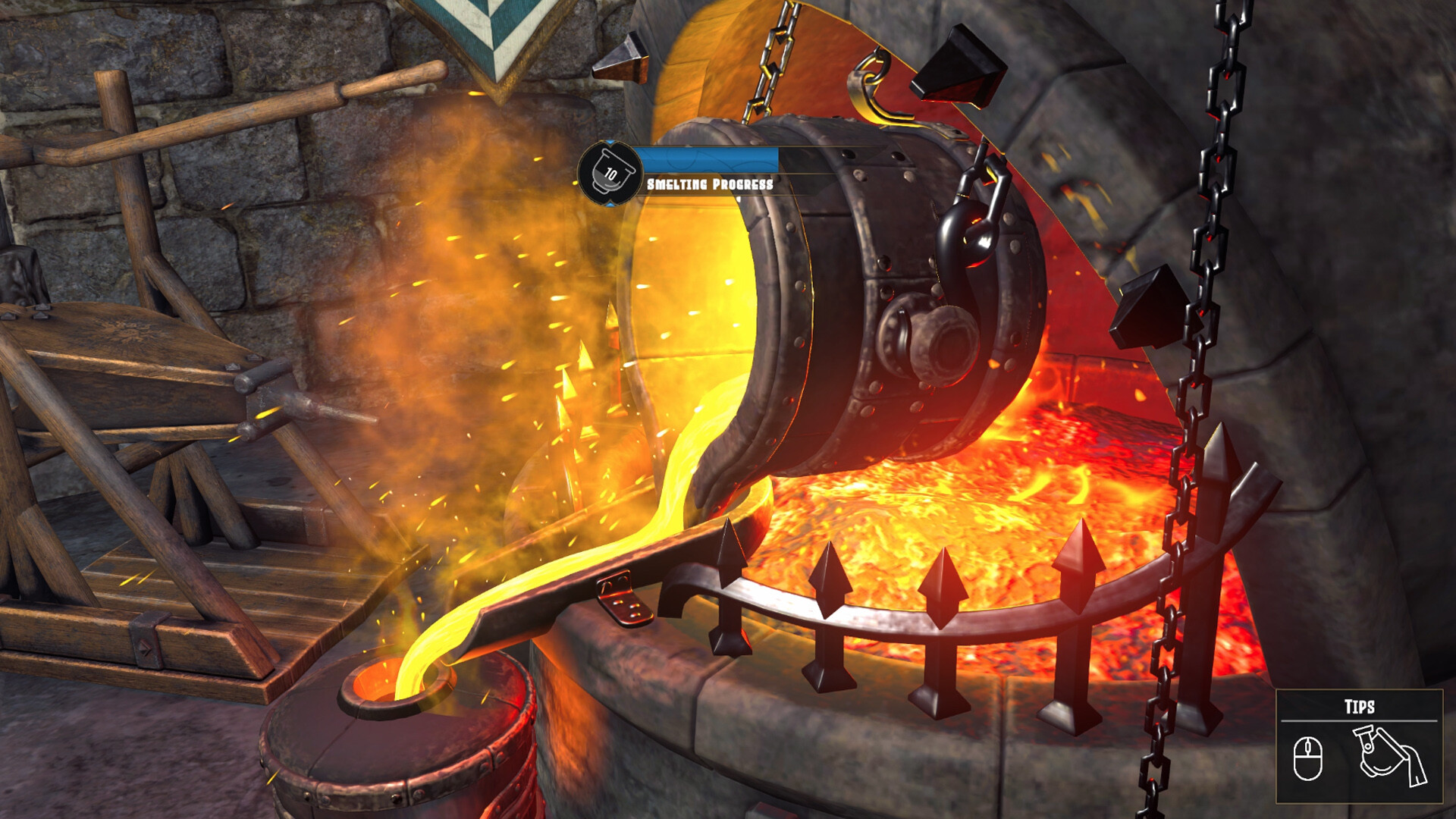
Smelting ore into ingots at the forge before it can be shapedGameDev.ist -
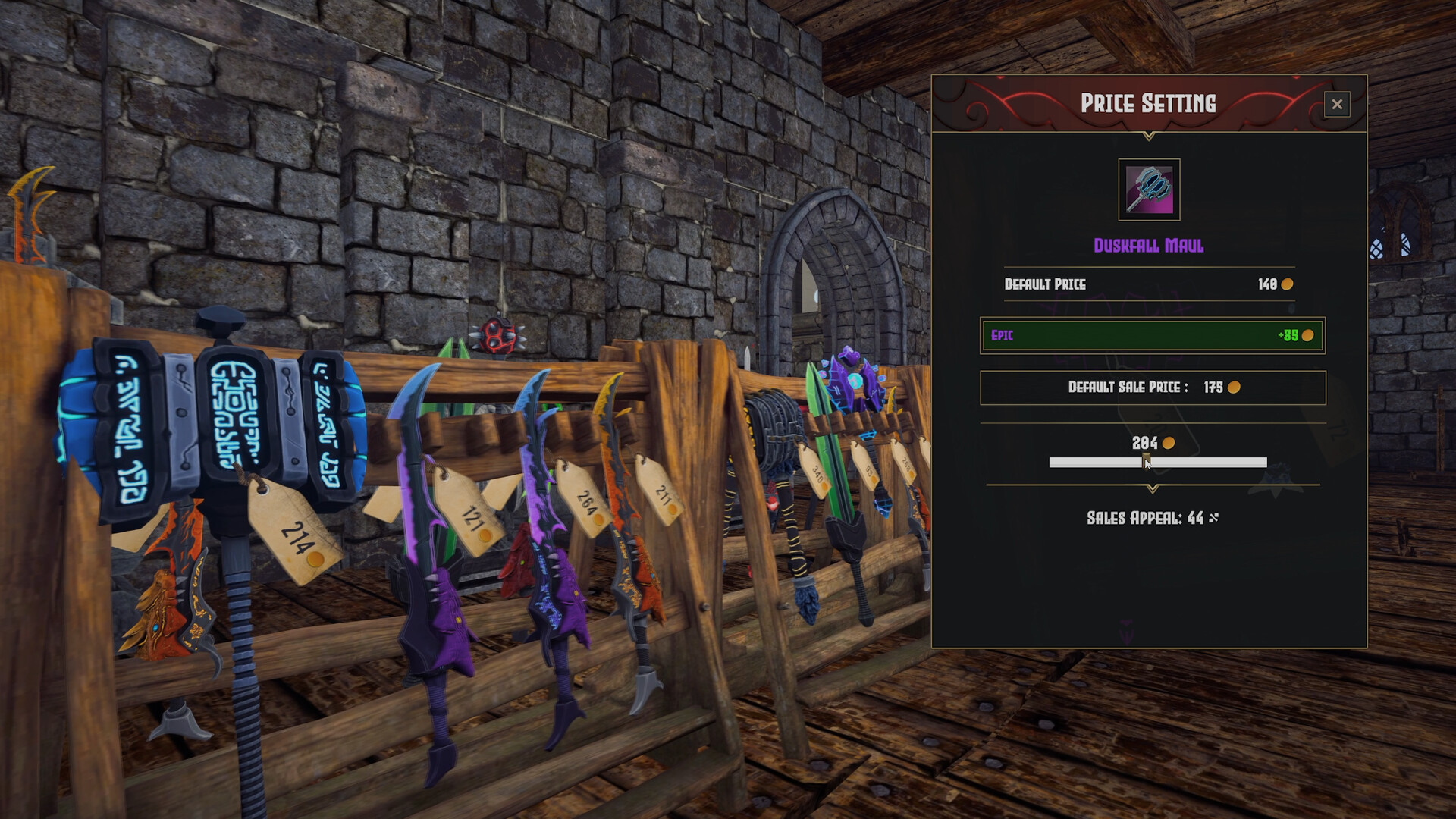
Setting sale prices for crafted weapons on the shop's display rackGameDev.ist -
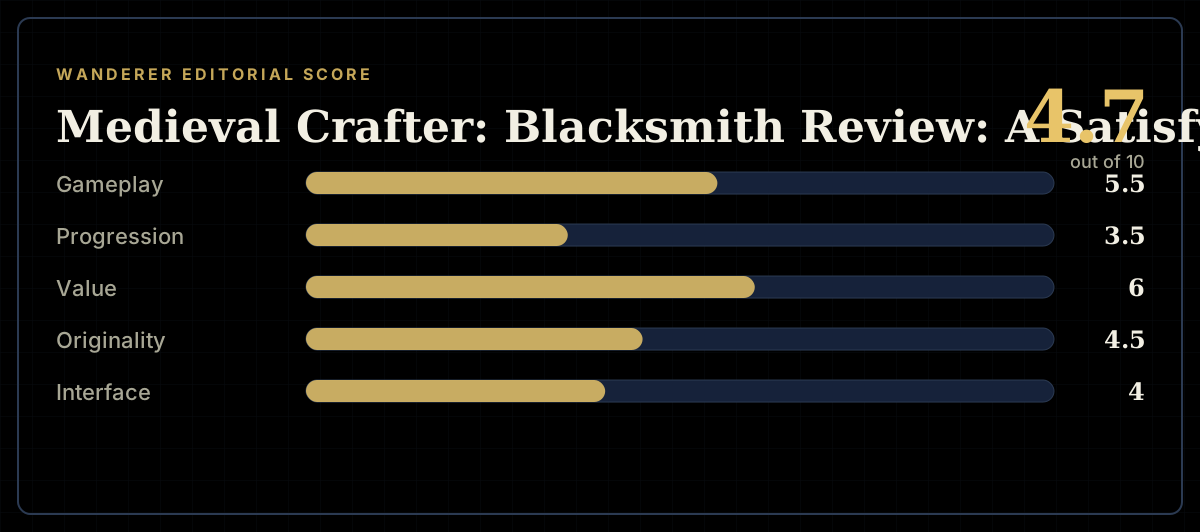
How the review scores each part of the gameWanderer Editorial -
The short versionWanderer Editorial