
Game review
Match: Isekai Journey
6 / 10
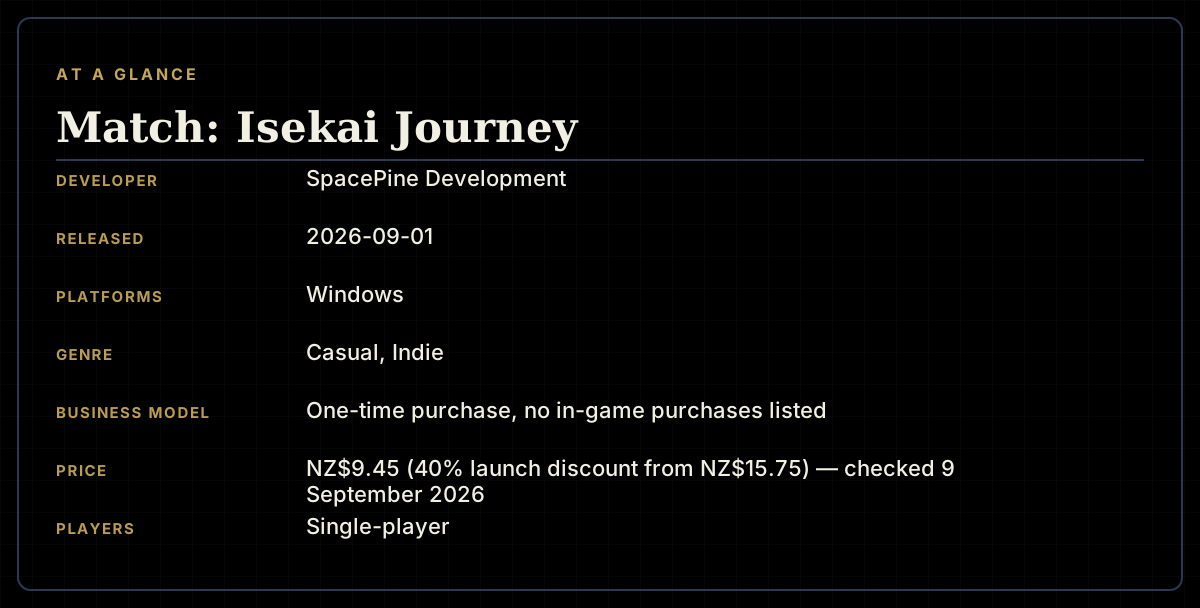
- Developer
- SpacePine Development
- Publisher
- SpacePine Development
- Released
- 1 September 2026
- Platforms
- Windows
- Genre
- Casual, Indie
- Monetisation
- One-time purchase, no in-game purchases listed
- Players
- Single-player
The short version
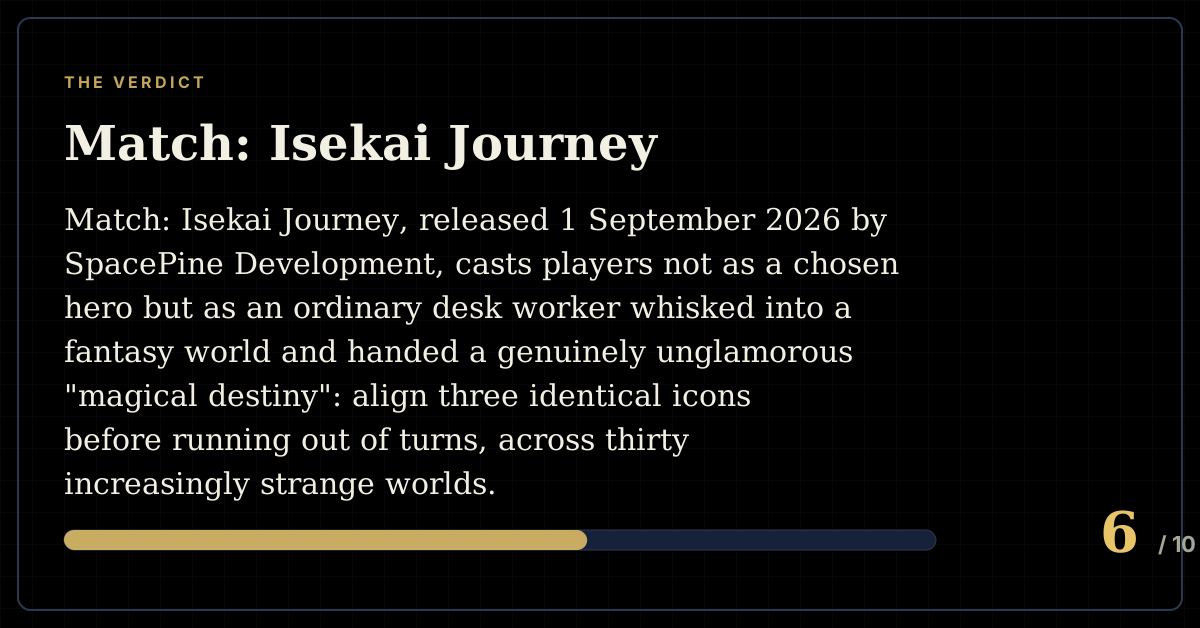
Match: Isekai Journey, released 1 September 2026 by SpacePine Development, casts players not as a chosen hero but as an ordinary desk worker whisked into a fantasy world and handed a genuinely unglamorous "magical destiny": align three identical icons before running out of turns, across thirty increasingly strange worlds. It sits in early, entirely favourable standing with a small sample split across English and Russian reviews, and reading through both language pools reveals honest, modest praise for a game that neither reviewers nor, seemingly, the developer itself pretend is reinventing the genre. Reviewers consistently describe clean, frustration-free match-3 mechanics, with one detailed Russian-language reviewer specifically praising a departure from strict adjacent-tile swapping in favour of dragging any matching element across the board, provided the resulting match is valid. Multiple reviewers separately praise the game's dark, self-aware comic writing, describing genuine amusement at its subversion of typical power-fantasy isekai tropes in favour of grid-based tedium as the protagonist's actual "destiny." Set against that praise, this review found reviewers themselves openly acknowledging the underlying mechanics are familiar and, at times, "banal," and multiple reviewers separately describe the game as easy, with at least one detailed reviewer noting achievements exist specifically for losing, since doing so is otherwise a genuine rarity across the thirty available levels.
Biggest strengths
- The core match-3 mechanics draw consistent praise for feeling clean and frustration-free, with at least one detailed reviewer specifically praising a flexible dragging system that doesn't require matching tiles to be strictly adjacent
- Writing and tone draw specific, repeated praise, with reviewers describing genuine amusement at the game's dark, self-aware subversion of typical isekai power-fantasy tropes in favour of grid-based bureaucratic tedium as the protagonist's actual fate
- The game offers a substantial thirty levels and thirty-seven distinct achievements for a low asking price, which multiple reviewers specifically credit as solid value for a short, casual puzzle experience
Biggest weaknesses
- Multiple reviewers, including in their own words, describe the underlying match-3 mechanics as familiar and, at times, "banal," acknowledging directly that the genre itself offers little that's genuinely new here beyond the battle-damage framing layered on top
- Reviewers consistently describe the game as easy, with at least one detailed reviewer noting achievements exist specifically for losing a level, since doing so is otherwise a genuine rarity across the available content
- Limited move counts are the primary source of tension the game offers, and reviewers don't describe much beyond that single mechanical hook sustaining challenge across all thirty levels
Who it's for: Casual match-3 fans looking for a short, cheap, comedically self-aware puzzle game rather than a mechanically ambitious or genuinely challenging one.
Our recommendation: Worth it at this price for match-3 fans who appreciate genre-aware humour; temper expectations for mechanical depth or real difficulty.
6 / 10
Introduction
Match: Isekai Journey, released 1 September 2026 by SpacePine Development, casts players not as a chosen hero but as an ordinary desk worker whisked into a fantasy world and handed a genuinely unglamorous "magical destiny": align three identical icons before running out of turns, across thirty increasingly strange worlds. It sits in early, entirely favourable standing with a small sample split across English and Russian reviews, and reading through both language pools reveals honest, modest praise for a game that neither reviewers nor, seemingly, the developer itself pretend is reinventing the genre.
Clean, unfussy mechanics
The clearest, most consistent praise across this sample concerns basic mechanical polish. Reviewers describe the core match-3 loop as clean and frustration-free, and at least one detailed Russian-language reviewer specifically praises a flexible dragging system: rather than being restricted to swapping strictly adjacent tiles as in many genre touchstones, players can drag any element across the board so long as the resulting arrangement produces a valid match, enabling genuine chain reactions within the game's limited move budget. That's a small but genuinely specific design detail distinguishing this from a purely generic match-3 clone.
A self-aware parody that lands
Beyond mechanics, this review found specific, repeated praise for the game's writing and tone. Reviewers describe genuine amusement at the game's dark, self-aware subversion of typical isekai power-fantasy tropes, casting the protagonist not as a legendary sword-wielding hero but as someone stuck clearing puzzle grids while the surrounding world falls apart. At least one reviewer specifically praises this framing for keeping them "on their toes" through dark comic writing layered over otherwise straightforward puzzle gameplay.
Reviewers themselves call it familiar
Set against that praise, this review found reviewers openly and directly acknowledging the underlying mechanics offer little that's genuinely new. At least one detailed Russian-language reviewer specifically describes the format as "already banal," a match-3 formula with a battle system attached, while still crediting it as a simple, unpretentious experience free of frustrating friction. This review reads that combination, honest acknowledgment of genre familiarity paired with genuine appreciation for clean execution and comedic framing, as a meaningfully different and more credible kind of praise than uncomplicated enthusiasm would represent.
Consistently described as easy
A separate, recurring theme across this sample concerns difficulty. Reviewers consistently describe the game as easy, with at least one detailed reviewer specifically noting that achievements exist for losing a level, since doing so is otherwise a genuine rarity across the available content. This review reads that detail as telling: a puzzle game whose developer felt the need to reward failure specifically because success is the default outcome suggests genuinely modest overall challenge throughout the thirty-level campaign.
A single mechanical hook, without much escalation
This review found no detailed reviewer describing meaningful build variety, power-up depth, or escalating mechanical complexity across the level roster beyond the core limited-move constraint. That's a specific, notable gap for a game spanning thirty distinct levels, and it suggests the experience relies on its comedic writing and level-to-level thematic variety to sustain interest rather than genuinely deepening mechanics as it progresses.
A small sample, read with appropriate caution
With only around a dozen total reviews across English and Russian, all of them positive but consistently modest in tone rather than effusive, this review treats its own conclusions as an early, provisional snapshot. The specificity reviewers bring, precise mechanical observations, honest acknowledgment of genre familiarity, specific praise for particular comedic beats, reads as genuine, considered engagement rather than reflexive positivity, even given how few voices are currently represented.
Why modest praise still counts as praise
It's worth being direct about how this review weighs a sample where nobody is raving, but nobody is disappointed either. Unlike unanimous samples elsewhere in this lane's research where reviewers describe being blown away or unexpectedly moved, this sample's tone stays consistently measured: reviewers call the game "nice," "quite easy," "a classic match-3 with a twist." That consistency of modest, unexaggerated language across independent reviewers actually reads as more credible than uniformly effusive praise would, since it suggests reviewers are describing their genuine, calibrated experience rather than performing enthusiasm. A game that honestly delivers a small, well-executed idea and gets rewarded with small, honest praise in return is arguably behaving exactly as it should, and this review's own moderate score reflects that same calibration rather than either inflating a modest achievement or unfairly punishing a game for not attempting more than it promises.
What separates this from a shallow, harshly-scored game
It's worth directly addressing why this review doesn't apply the harsher treatment this lane reserves for genuinely shallow, poorly-executed releases, despite the mechanical simplicity documented above. The distinction is specific: a shallow game that overpromises, or that executes its one idea poorly, earns a harsh score under this lane's standards. Match: Isekai Journey does neither — it explicitly frames itself through its own marketing as a small, self-aware joke about isekai tropes rather than an ambitious puzzle-strategy hybrid, and reviewers confirm the mechanics that are present work cleanly rather than being broken or frustrating. A short, honest, competently-executed small idea is a meaningfully different thing from a shallow, poorly-executed release wearing a bigger game's marketing, and this review's moderate-but-not-harsh score reflects that specific distinction directly.
Final Verdict
Match: Isekai Journey succeeds at being exactly what it honestly presents itself as: a clean, unpretentious match-3 puzzler carried by genuinely funny, self-aware writing rather than mechanical ambition. Reviewers across this review's small research sample consistently credit it with clean execution and real comedic charm, while just as consistently and honestly acknowledging its underlying puzzle mechanics are familiar and its difficulty modest throughout. Worth it at this price for match-3 fans who appreciate genre-aware humour over genuine challenge or mechanical depth.
Pros and cons
Pros
- The core match-3 mechanics draw consistent praise for feeling clean and frustration-free, with at least one detailed reviewer specifically praising a flexible dragging system that doesn't require matching tiles to be strictly adjacent
- Writing and tone draw specific, repeated praise, with reviewers describing genuine amusement at the game's dark, self-aware subversion of typical isekai power-fantasy tropes in favour of grid-based bureaucratic tedium as the protagonist's actual fate
- The game offers a substantial thirty levels and thirty-seven distinct achievements for a low asking price, which multiple reviewers specifically credit as solid value for a short, casual puzzle experience
- Presentation draws some specific appreciation, with at least one reviewer praising fantasy-styled art direction that suits the game's parody premise well
Cons
- Multiple reviewers, including in their own words, describe the underlying match-3 mechanics as familiar and, at times, "banal," acknowledging directly that the genre itself offers little that's genuinely new here beyond the battle-damage framing layered on top
- Reviewers consistently describe the game as easy, with at least one detailed reviewer noting achievements exist specifically for losing a level, since doing so is otherwise a genuine rarity across the available content
- Limited move counts are the primary source of tension the game offers, and reviewers don't describe much beyond that single mechanical hook sustaining challenge across all thirty levels
- This review found no detailed reviewer describing meaningful build variety, power-up depth, or escalating mechanical complexity across the level roster, suggesting a genuinely simple, single-mechanic structure throughout
- With a sample of only around a dozen reviews across two languages, all of them positive but modestly so, this review is cautious about treating this early, small reception as fully representative
Screenshots
-
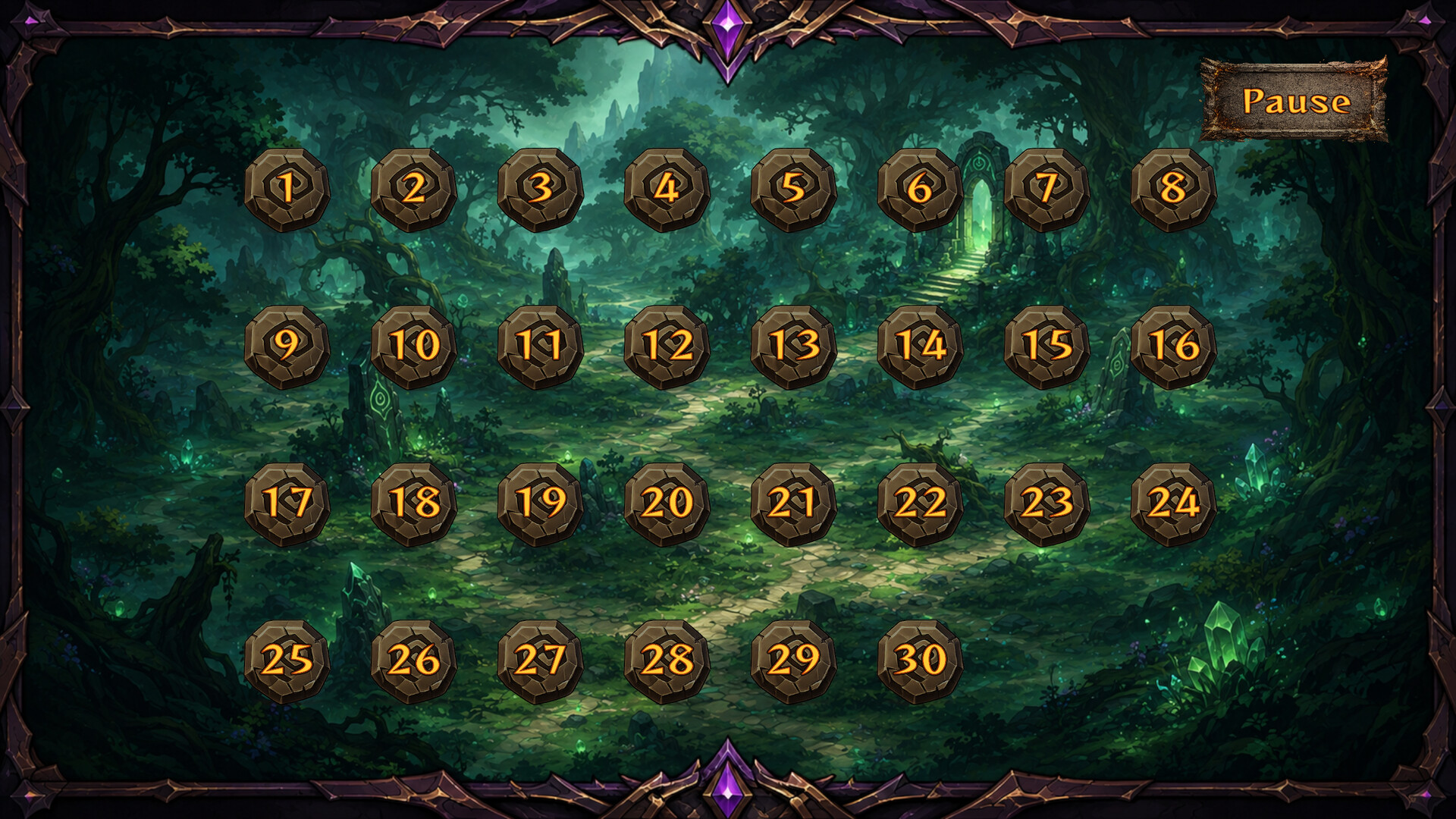
Match Isekai JourneyImage: SpacePine Development via Steam -
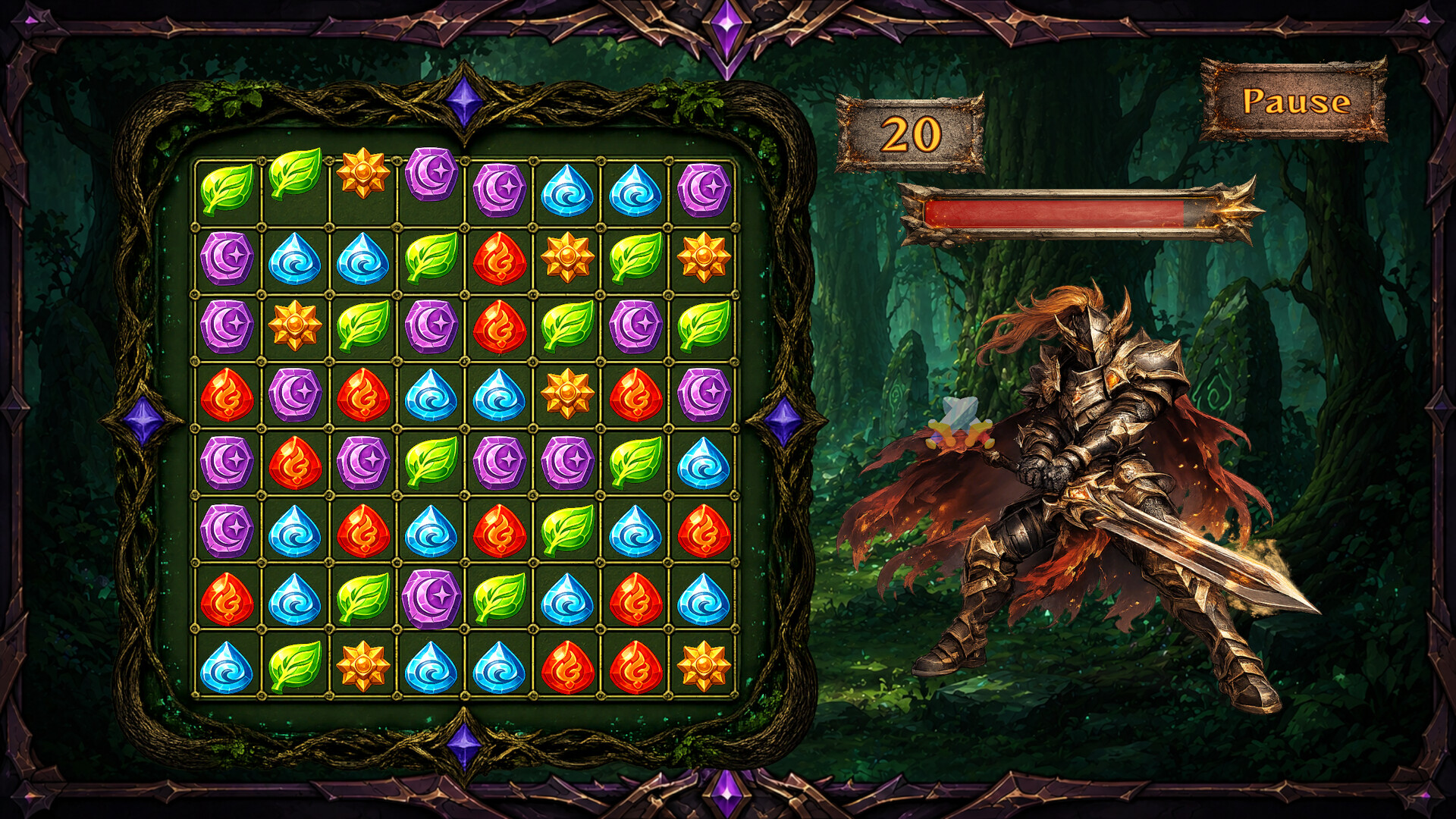
Match Isekai JourneyImage: SpacePine Development via Steam -
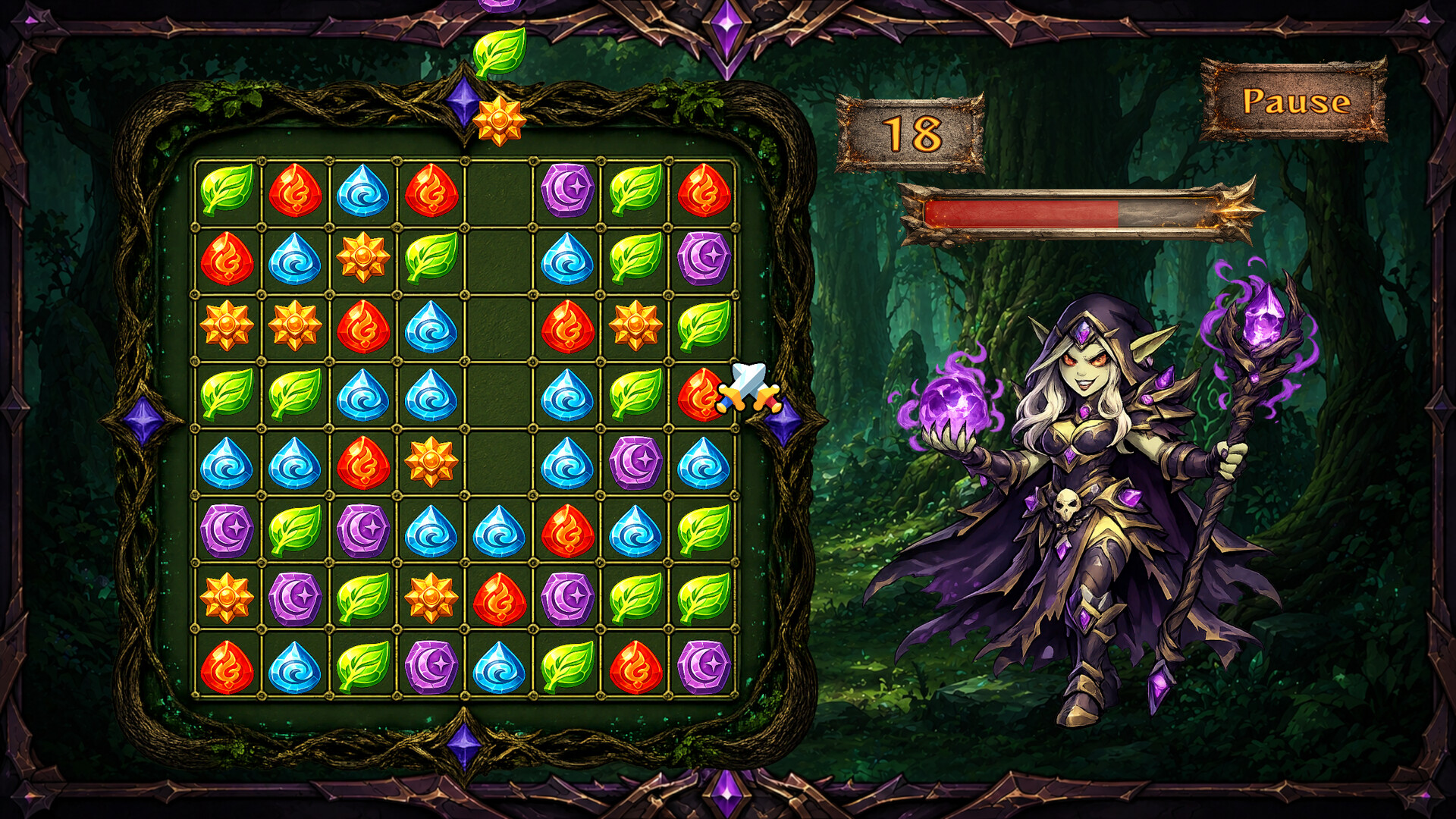
Match Isekai JourneyImage: SpacePine Development via Steam -
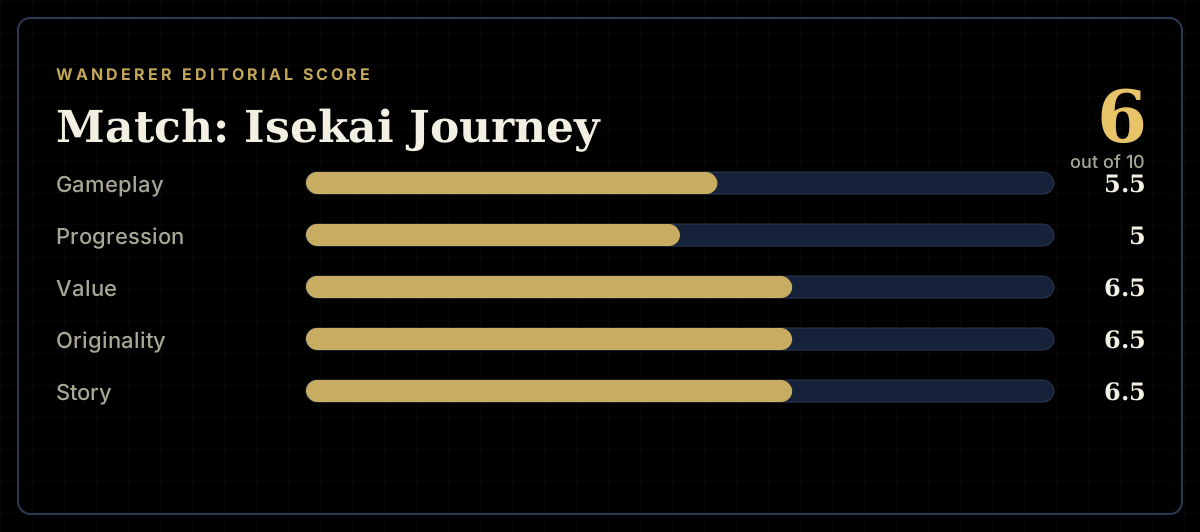
How the review scores each part of the gameWanderer Editorial -
The essentials at a glanceWanderer Editorial -
The short versionWanderer Editorial