Game review
Lou's Lagoon Review
5.6 / 10
- Developer
- Tiny Roar
- Publisher
- Megabit Publishing
- Released
- 27 August 2026
- Platforms
- ["Windows"]
- Genre
- Adventure
A Storm, a Missing Uncle, and a Seaplane Full of Nostalgia
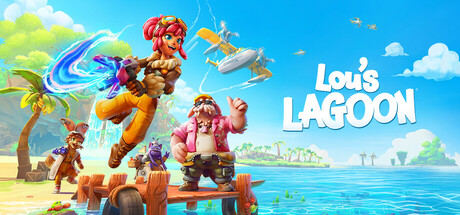
A storm has torn through a tropical archipelago, and Uncle Lou — the local delivery pilot — has flown off to investigate and vanished. Lou's Lagoon casts players as the one left to pick up the pieces: fixing up Lou's old seaplane, flying between storm-battered islands, gathering resources, crafting tools and building parts, and helping a colorful cast of animal-like locals rebuild their homes while slowly uncovering what actually happened to Lou. Developer Tiny Roar spent roughly four years on the project, and reviewers repeatedly describe its central hook as a deliberate throwback to PS2-era 3D platformer-adventures — Spyro, Ty the Tasmanian Tiger, and Jak & Daxter come up again and again — filtered through the resource-gathering and crafting loop that's become standard in modern cozy games.
That combination lands well for a lot of players. The art direction draws consistent praise: bright, varied islands, expressive character designs, and dialogue that reviewers describe as genuinely funny in places. A world-building myth involving Light, Darkness, and their squabbling offspring gets singled out as a surprisingly charming piece of writing that pulls players toward the story's end. The core traversal loop — flying the seaplane between islands, digging up buried treasure, foraging, fishing, and light 3D platforming across each island's terrain — captures the exploratory, unhurried feel the developers were clearly chasing, and the game runs well even on modest hardware, including strong, consistent performance on Steam Deck.
The Swirler, Island Rebuilding, and a Cast Worth Getting to Know
The central gathering tool, a vacuum-like device most reviewers call "the Swirler" (officially the Resource Sucker), lets players suck up loose materials and shoot them back out to fix things, and it's cited often as a satisfying, tactile piece of the loop. Progress on any given island typically means completing requests for its residents, repairing structures, and unlocking new crafting recipes and gadget upgrades, which in turn open up new islands and areas to explore. A main story questline runs anywhere from roughly 11 to 20 hours depending on how thoroughly a player explores and sides-quests along the way, and several reviewers explicitly praise the game's light-touch approach to direction — it tells you the goal and largely lets you figure out how to get there, rather than holding your hand through every step.
Tiny Roar also comes in for real credit on developer responsiveness: multiple reviewers describe active communication on Discord, quick bug-report tools built directly into the game, and early post-launch patches already addressing some of the game's most common complaints (crafting speed and starting storage capacity among them) within the first couple of weeks. For players willing to look past the game's rough edges, that responsiveness is repeatedly cited as a reason for cautious optimism about where the game is headed.
Storage Is the Story: A Crafting Game With Nowhere to Put Anything
If there's one single issue that dominates Lou's Lagoon's review section, it's storage — or the near-total lack of it. Players start with a tiny personal inventory and a similarly cramped plane cargo hold, and despite a "storage" tab in the game's building system, several reviewers report that the shelves and crates it offers don't actually store anything; they're purely decorative. The practical result, described by reviewer after reviewer, is a constant cycle of selling nearly everything gathered just to keep exploring, then buying materials back from the same vendor at the same price to actually use them for crafting — a workaround that avoids losing money but adds tedious busywork to nearly every session. Layered on top of that is a crafting system where individual items can take minutes to produce and have to be collected from the machine one at a time rather than in a batch, which several reviewers single out as needless friction in a game that's supposed to be about relaxed, low-pressure progress.
The economy draws similar criticism: gadget and clothing upgrades are expensive relative to the money-making options available, and several reviewers describe grinding the same easily-farmed materials over and over just to afford the next unlock, which undercuts the "figure it out at your own pace" design the game is otherwise going for. A handful of reviewers also report an infinite-money exploit, which speaks to how loosely tuned the underlying economy still is at launch.
Progression Bugs, an Underwhelming Plane, and Platforming Some Didn't Sign Up For
Beyond the economy, the most serious complaints involve progression itself. Several reviewers report finishing the main story only to discover they'd been permanently locked out of side quests, achievements, or key NPCs because those characters or objectives vanished once the credits rolled — an issue serious enough that a few reviewers explicitly call the game "unfinished" or say it feels like it launched a full development cycle too early. Others describe getting stuck on world geometry, glitchy ladders, or quest markers that stubbornly point at objectives that are actually already complete. None of this is universal — many reviewers report a smooth, mostly bug-free run — but the pattern shows up often enough across the negative reviews to be a real risk rather than a fluke.
The seaplane, prominently featured in the game's marketing, is another sticking point. Rather than free, open-world flight, takeoff and landing play out as scripted button-press cutscenes, and once fast travel unlocks, several reviewers say there's little reason to fly manually at all beyond optional ring challenges. And while the game isn't marketed as a platformer, a number of islands require genuinely demanding jumping and climbing sequences; at least one reviewer with a disability that makes platforming difficult reports being unable to finish the story because of unexpected mandatory platforming sections, having been misled by a lighter, more forgiving demo.
Verdict
Lou's Lagoon has real charm to spare: a warm, nostalgic art style, a genuinely funny cast, a likeable central mystery, and a developer that's clearly listening and patching quickly. But it launched with a storage and economy system that actively works against the relaxed, cozy tone it's chasing, crafting times that turn simple tasks into waiting games, and enough reported progression-locking bugs that a meaningful slice of its audience couldn't finish it the way they wanted to. There's a genuinely lovely game buried in here, and Tiny Roar's rapid early patches suggest it may well get there — but right now, this is a title to watch from a distance for a patch or two rather than one to dive into at full price expecting a smooth ride.
Pros:
- Charming, nostalgic PS2-platformer-inspired art direction and character writing
- A genuinely engaging central mystery around Uncle Lou's disappearance
- The Swirler resource tool and island-rebuilding loop feel satisfying moment to moment
- Strong performance, including on Steam Deck, even at launch
- A responsive developer already patching major complaints within weeks of release
Cons:
- Severely limited inventory and plane storage turn exploring into constant selling and rebuying
- Crafting times and one-at-a-time item collection add tedious friction to nearly every task
- Some players report finishing the main story only to be locked out of side content and achievements
- The seaplane is mostly a scripted travel cutscene rather than the open flying experience implied in marketing
- Mandatory platforming sections surprised players expecting a gentler, more accessible cozy game
Screenshots
-
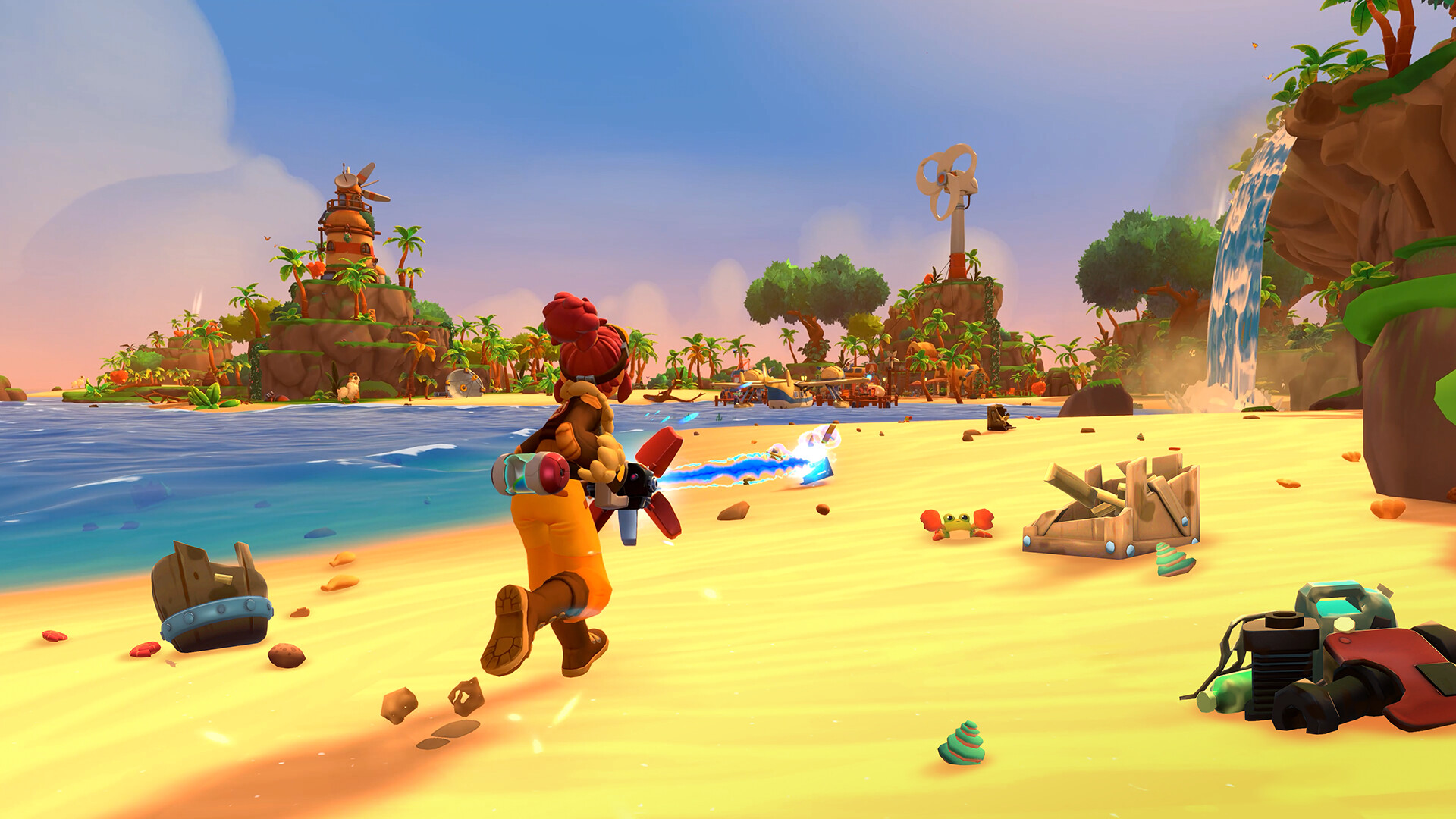
Gathering materials on a storm-battered island with the Resource SuckerImage: Tiny Roar -
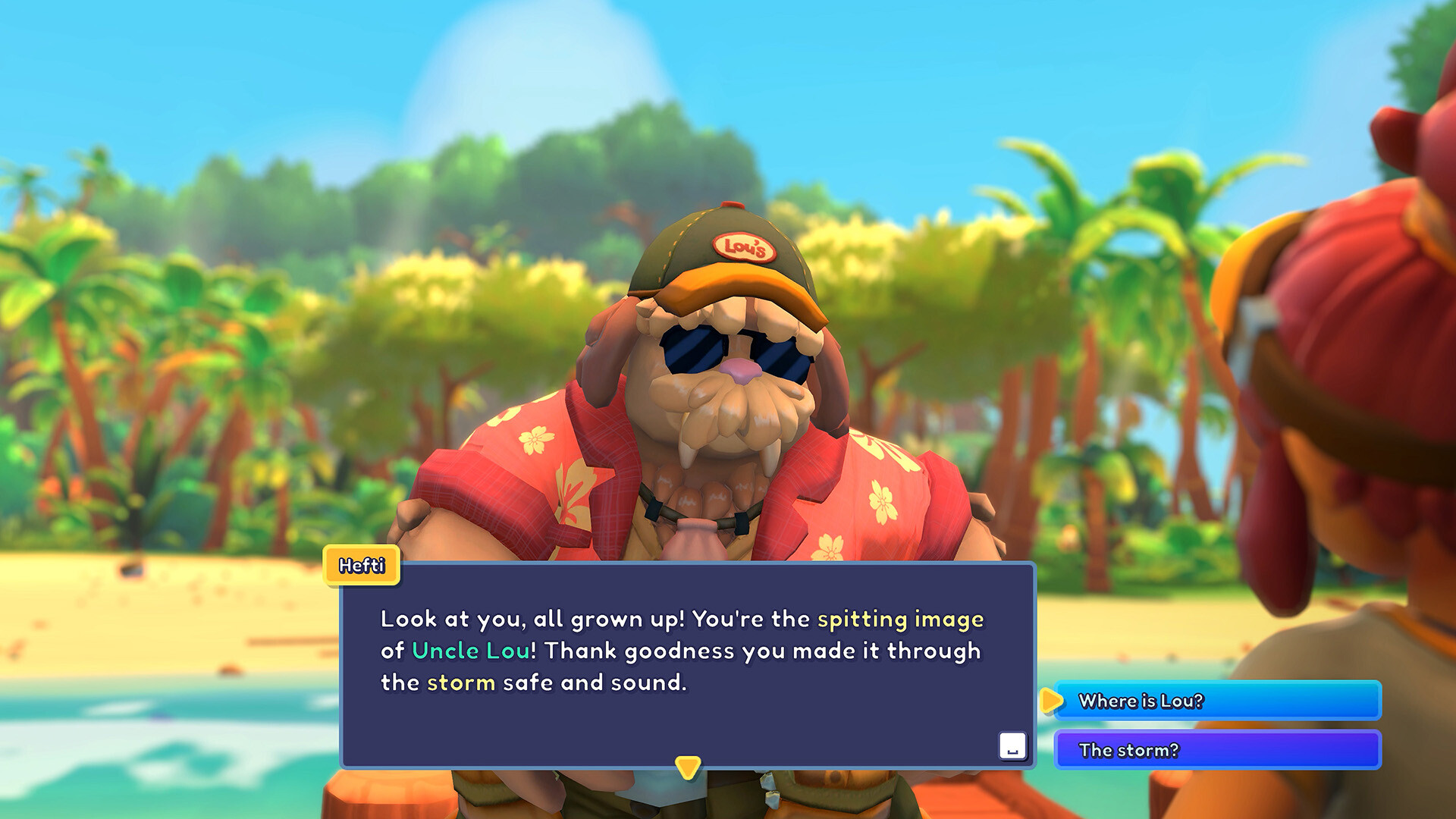
Hefti greets the player character, remarking on their resemblance to Uncle LouImage: Tiny Roar -
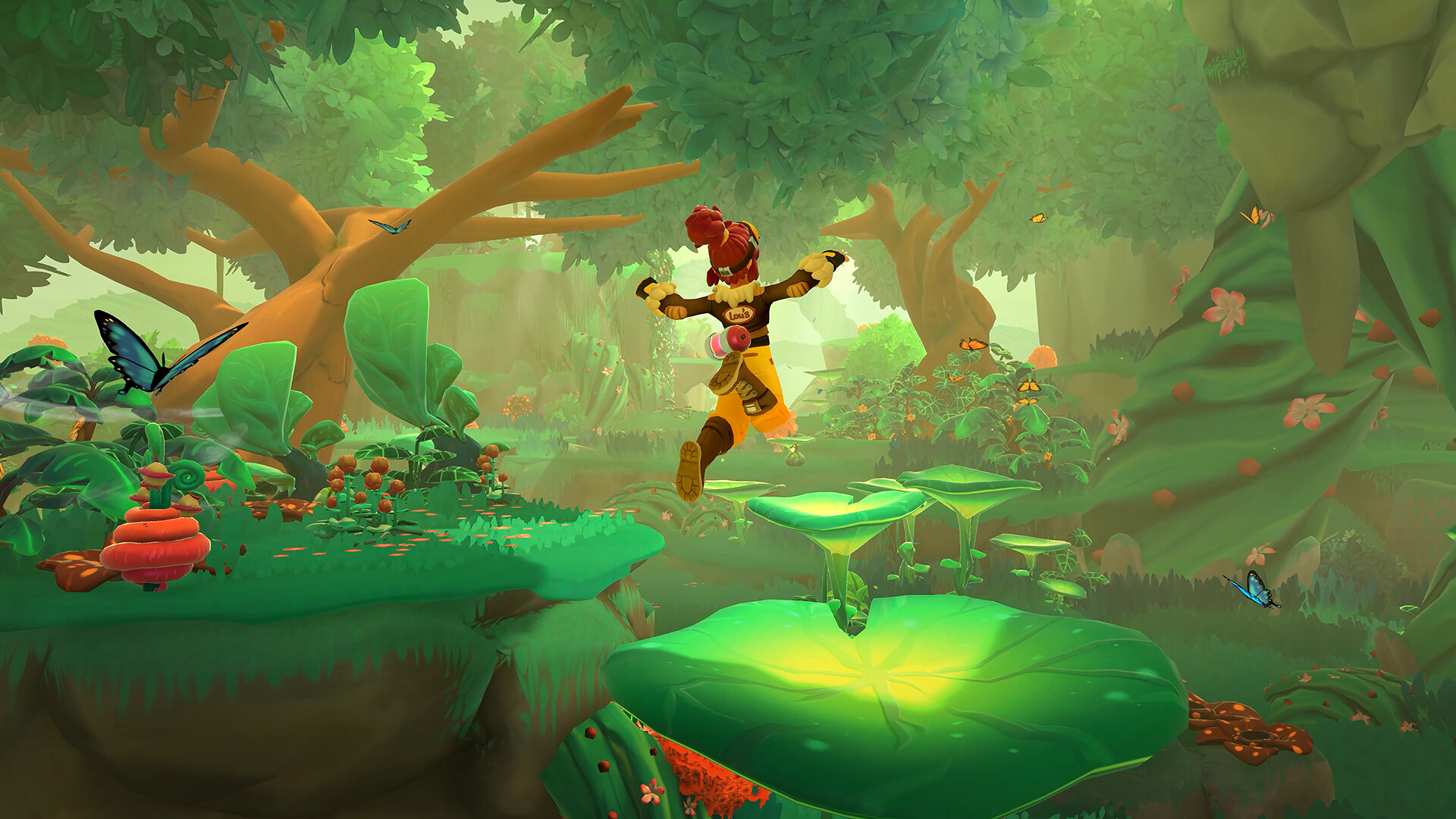
Platforming across a jungle island using lily pads and butterflies for scaleImage: Tiny Roar -
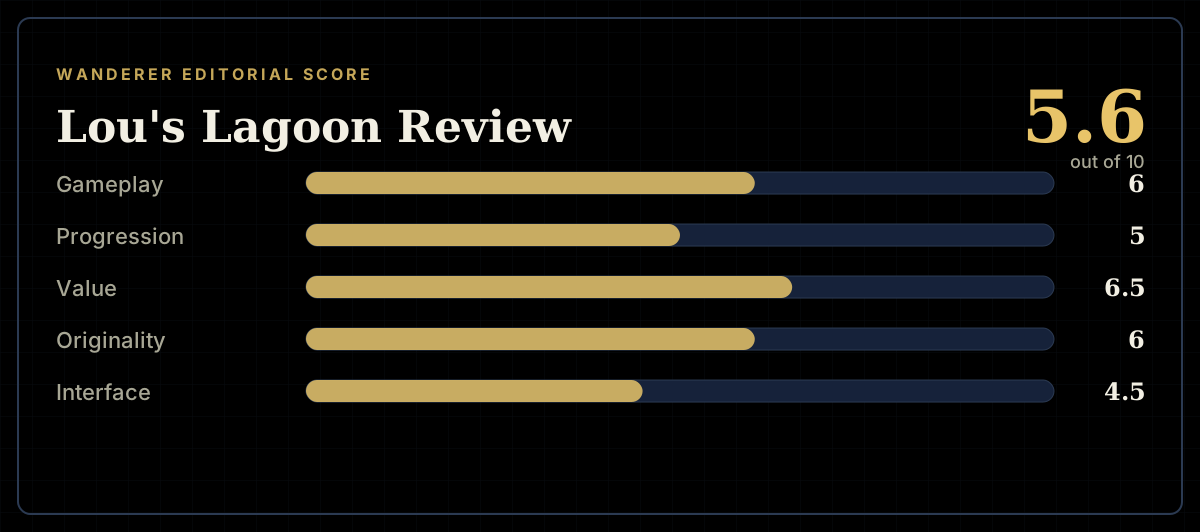
How the review scores each part of the gameWanderer Editorial -
The short versionWanderer Editorial