
Game review
Lost Wiki: Kozlovka
6 / 10
- Developer
- yattytheman
- Publisher
- yattytheman
- Released
- 20 March 2026
- Platforms
- Windows, Linux
- Genre
- Indie
- Monetisation
- One-time purchase
- Players
- Single-player
The short version
Lost Wiki: Kozlovka, released 20 March 2026 by solo developer yattytheman, casts the player as a 1990s journalist investigating a string of tragedies in a fictional Eastern European town using nothing but a small, redacted internal wiki. Its review sample is Mostly Positive and near unanimous on presentation, praising its dithered, CRT-styled retro computer aesthetic, its atmospheric folk-horror music, and a genuinely clever built-in flowchart for navigating the wiki's articles. Just as consistently, reviewers describe a mystery that's too small to sustain the format it borrows from The Case of the Golden Idol and The Roottrees Are Dead: most of the roughly twenty wiki pages are discovered within the first half, and the back half asks players to fill in fill-in-the-blank reports through elimination and educated guessing rather than genuine deduction from new evidence.
Biggest strengths
- Consistently praised presentation, dithered retro-computer visuals, a convincing CRT effect, period-appropriate sound design, and an atmospheric folk-horror soundtrack that reviewers repeatedly single out as excellent even in otherwise critical reviews
- A genuinely useful built-in flowchart that visually maps every wiki article and lets players jump directly to any page without hunting through links, praised by several reviewers as a quality-of-life feature they wish more games in the genre would adopt
- A self-contained folk-horror mystery with three distinct endings that most reviewers describe as satisfying and well-composed within its scope, even when they otherwise wanted more from the investigation itself
Biggest weaknesses
- The single most consistent complaint across the sample, in both positive and negative reviews, is that the wiki itself is too small, roughly twenty articles that most players have fully read by the game's midpoint, after which nothing new is added to investigate
- A large share of reviewers describe the second half of the game as trading genuine deduction for guesswork, filling in report blanks through process of elimination among a handful of obvious candidates rather than drawing real conclusions from freshly uncovered evidence
- Several reviewers who've played genre touchstones like The Case of the Golden Idol or Return of the Obra Dinn specifically note the lack of red herrings or unrelated articles means very little genuine detective work is required to reach the correct answer
Who it's for: Fans of short, atmospheric detective games who want a one-to-two-hour introduction to the fill-in-the-blank deduction genre, rather than players looking for the scale or challenge of Obra Dinn, Golden Idol, or The Roottrees Are Dead.
Our recommendation: A well-styled, well-composed short mystery that's honest about its own scope at its low price, but players expecting a deep, layered investigation should treat the review sample's near-universal "too short and too easy" verdict as an accurate preview rather than an outlier complaint.
6 / 10
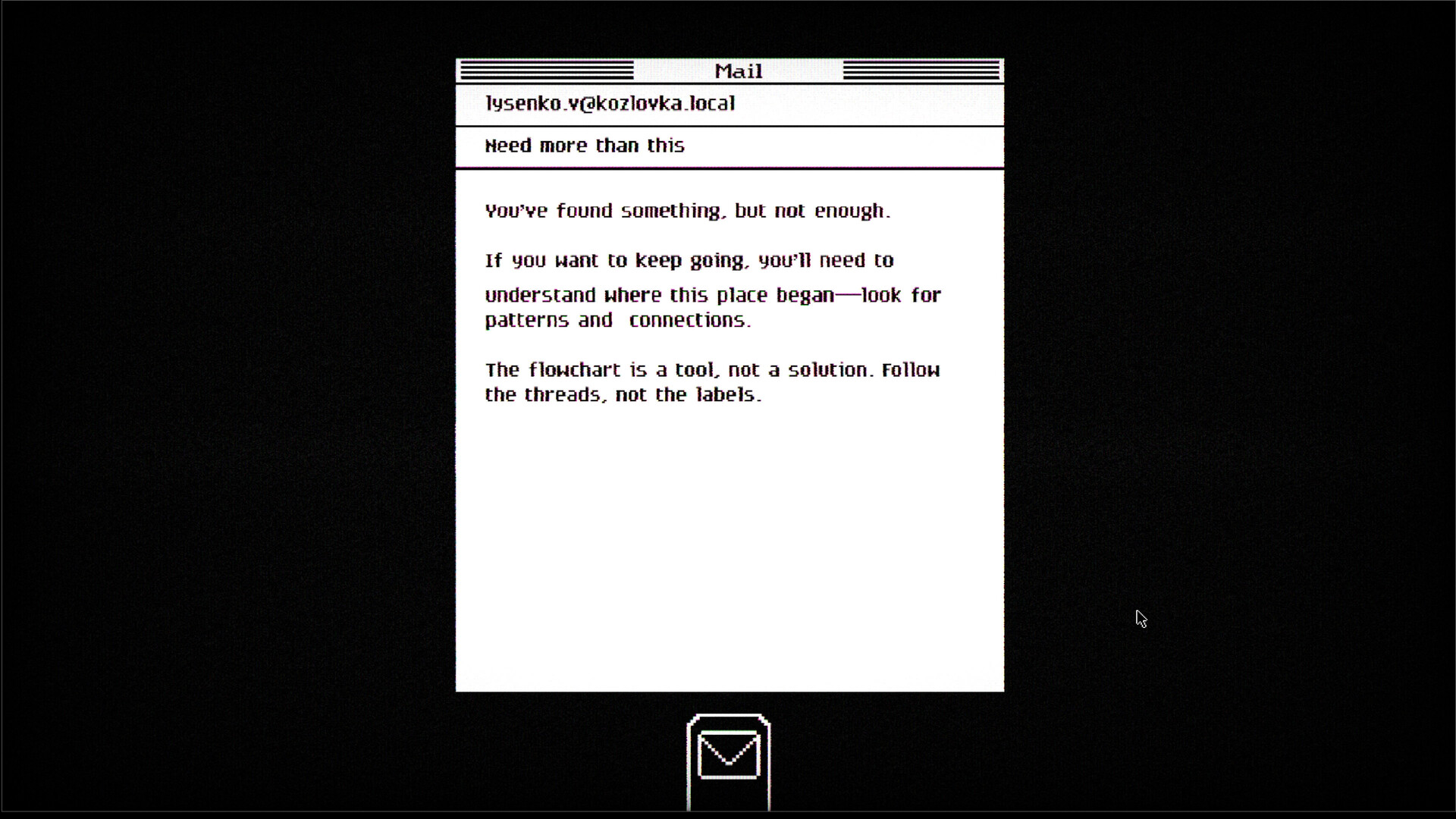
Lost Wiki: Kozlovka opens with a compelling hook: a mysterious client hires the player, a 1990s journalist, to investigate a string of tragedies in the small Eastern European town of Kozlovka, using nothing but a limited, redacted internal wiki and whatever photographs and correspondence come attached to it. Released 20 March 2026 by solo developer yattytheman, the game borrows its fill-in-the-blank deduction structure from genre touchstones like The Case of the Golden Idol and Return of the Obra Dinn, and its Mostly Positive review sample responds warmly to its atmosphere and premise. What the same sample is just as consistent about, in both recommending and non-recommending reviews alike, is that the mystery itself doesn't have nearly enough material to fill the shoes of the games it's clearly inspired by.
A convincing slice of 1990s internet
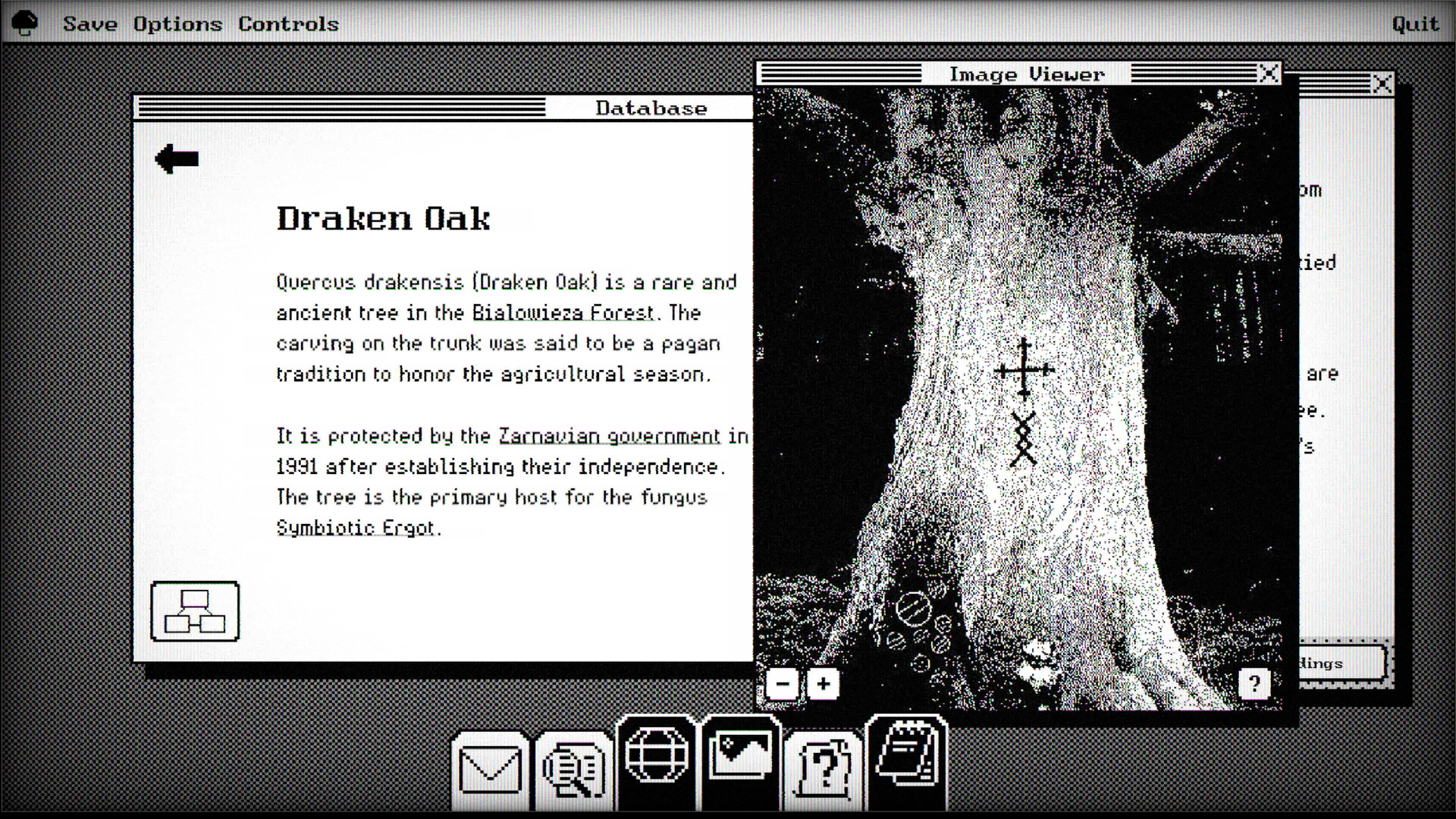
Almost every review in the sample, positive or negative, singles out the presentation as the game's strongest asset. The wiki interface is rendered with dithered, low-resolution imagery, a flickering CRT effect, and period-accurate loading delays that reviewers say genuinely sell the feeling of browsing an early, clunky internal network. The folk-horror soundtrack and sound design are described as atmospheric and well-judged throughout, and a built-in flowchart that maps every wiki article and lets players jump directly to any page they've discovered earns specific praise as a smart piece of interface design, several reviewers say they'd like to see more games in the genre adopt something similar rather than forcing players to click back through hyperlinks to find a page again.
A mystery that runs out of road
The trouble, according to a large and consistent share of the sample, is scale. The wiki contains roughly twenty articles in total, and most reviewers report having read all of them by the game's midpoint, well before the story concludes. From that point, several describe the experience shifting from genuine detective work into something closer to a memory test: matching names and places to report blanks using information they'd already gathered rather than uncovering anything new. One detailed review put it bluntly, noting that 80 percent of the information needed to solve the mystery is available from the very start, making the game's back half "painfully obvious" for anyone approaching it with genre experience.
Fill-in-the-blank without enough blanks to fill
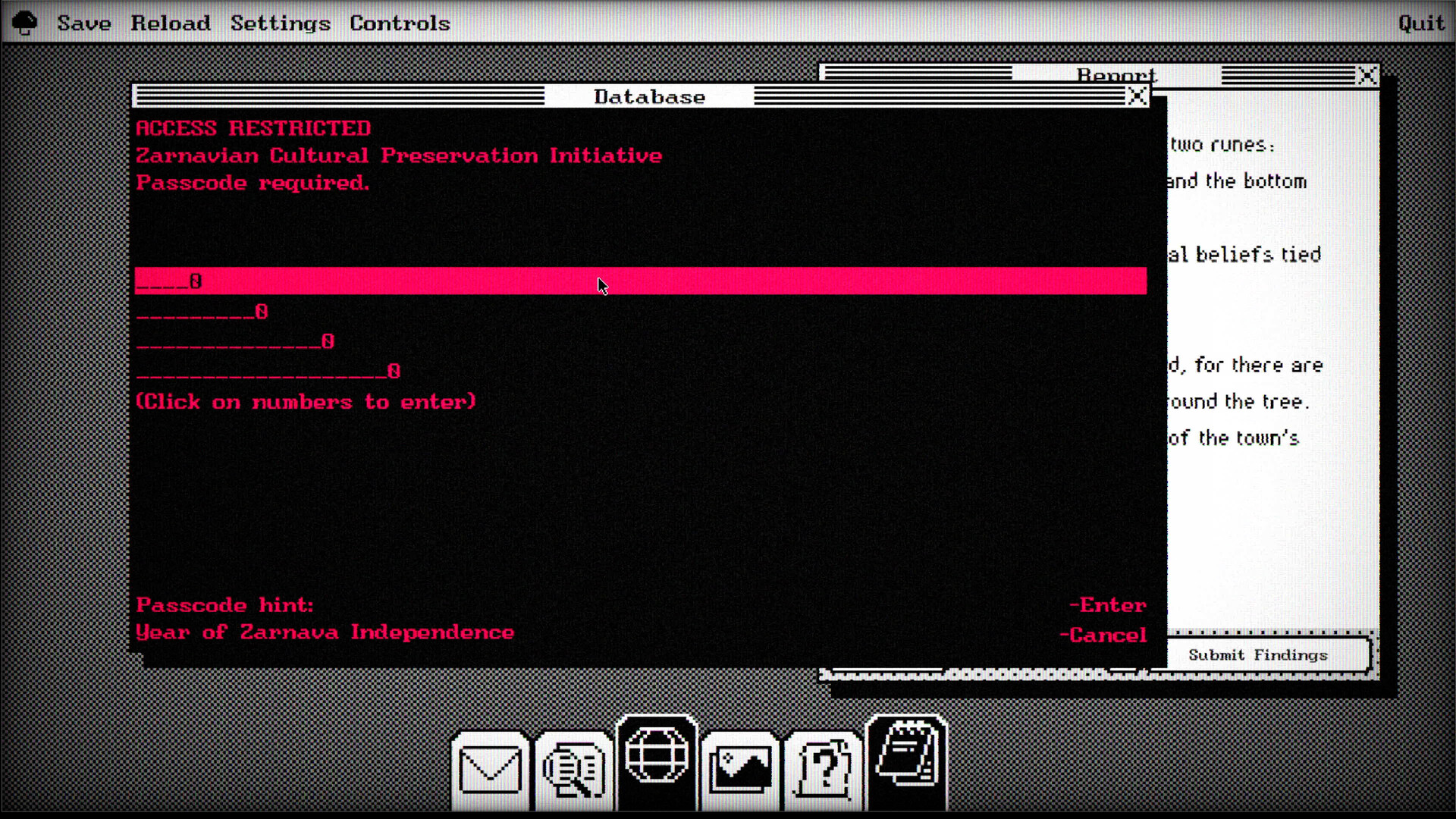
Reviewers familiar with the genre's bigger names are the most pointed about this specific shortfall. Multiple reviews compare the deduction system unfavourably to The Case of the Golden Idol, noting that where that series asks players to fill in nouns, verbs, and abstract concepts across genuinely obscure connections, Lost Wiki: Kozlovka's report blanks are almost always solvable by simple elimination among a small handful of named candidates. The near-total absence of red herrings or articles unrelated to the central mystery compounds this: with everything in the wiki directly relevant to the case, there's little need to weigh evidence against distractions, which several reviewers say removes much of the "aha" satisfaction the genre is built around.
A short, well-told story dressed as a bigger game
None of this criticism extends much to the writing itself. Most reviewers describe the underlying folk-horror story, involving a family, a set of unexplained tragedies, and a slow reveal of what's really been happening in Kozlovka, as genuinely well told within its scope, and the game's three distinct endings earn consistent praise as satisfying send-offs rather than arbitrary branches. The recurring frustration isn't with the story's quality but with its packaging: reviewers repeatedly say the game is marketed and structured like a Golden Idol-style deep investigation when what it actually delivers, at roughly one to three hours, is closer to a tightly written short story with some light interactive scaffolding around it.
Small but specific complaints worth knowing
A handful of more detailed reviews raise smaller issues that recur often enough to mention. Several note that re-checking a redacted section of an article replays the same slow unlock animation every time, which becomes tedious during the guess-heavy second half, and more than one wishes for an in-game notepad rather than being forced to revisit already-read pages to double check details. One detailed review also raises a more specific cultural criticism, that the game invents a fictional country for a story explicitly set in a real Belarusian national park while still referencing real countries like Russia, Germany, and the USSR elsewhere in its text, calling the choice an odd omission worth knowing about going in.
The demo problem
One specific complaint recurs often enough to deserve its own mention: several reviewers note that the free Steam demo covers a surprisingly large slice of the full game, with more than one review estimating that anyone who played it through has already seen roughly half to three-quarters of the total content before ever paying for the rest. For a game already criticized for running short on new material past its midpoint, that overlap compounds the problem rather than serving as a fair preview, since it means paying customers are effectively buying a continuation of something they may have already finished rather than a fresh mystery in its own right. It's worth factoring in either way, players who try the demo first should expect the paid unlock to extend rather than significantly expand what they've already played.
Final Verdict
Lost Wiki: Kozlovka is a confidently styled, well-composed short mystery let down by a wiki that simply isn't big enough for the investigative format it borrows. Its review sample is close to unanimous that the atmosphere, music, and central story concept are genuinely good, and just as consistent that the actual detective work runs dry well before the credits roll, turning what should be a satisfying slow burn into guesswork padded out to fill the runtime. At its modest price, most reviewers still land on a recommendation, treating it as a promising proof of concept for a developer they'd like to see attempt something bigger next. Go in expecting an atmospheric one-to-two-hour folk-horror short story rather than a deep detective puzzle, and it delivers exactly that.
Pros and cons
Pros
- Consistently praised presentation, dithered retro-computer visuals, a convincing CRT effect, period-appropriate sound design, and an atmospheric folk-horror soundtrack that reviewers repeatedly single out as excellent even in otherwise critical reviews
- A genuinely useful built-in flowchart that visually maps every wiki article and lets players jump directly to any page without hunting through links, praised by several reviewers as a quality-of-life feature they wish more games in the genre would adopt
- A self-contained folk-horror mystery with three distinct endings that most reviewers describe as satisfying and well-composed within its scope, even when they otherwise wanted more from the investigation itself
Cons
- The single most consistent complaint across the sample, in both positive and negative reviews, is that the wiki itself is too small, roughly twenty articles that most players have fully read by the game's midpoint, after which nothing new is added to investigate
- A large share of reviewers describe the second half of the game as trading genuine deduction for guesswork, filling in report blanks through process of elimination among a handful of obvious candidates rather than drawing real conclusions from freshly uncovered evidence
- Several reviewers who've played genre touchstones like The Case of the Golden Idol or Return of the Obra Dinn specifically note the lack of red herrings or unrelated articles means very little genuine detective work is required to reach the correct answer
- A handful of reviewers raise smaller but specific complaints worth noting: repetitive animations when re-checking redacted article sections, no in-game notepad forcing players to revisit pages they've already read, and one detailed review criticizing the choice to invent a fictional country for a story explicitly set in a real Belarusian national park
Screenshots
-
Lost Wiki: KozlovkaImage: yattytheman via Steam -
Lost Wiki: KozlovkaImage: yattytheman via Steam -
Lost Wiki: KozlovkaImage: yattytheman via Steam