
Game review
Let It Consume Review: A Satisfying Cult Sim That Ends Just as It Gets Going
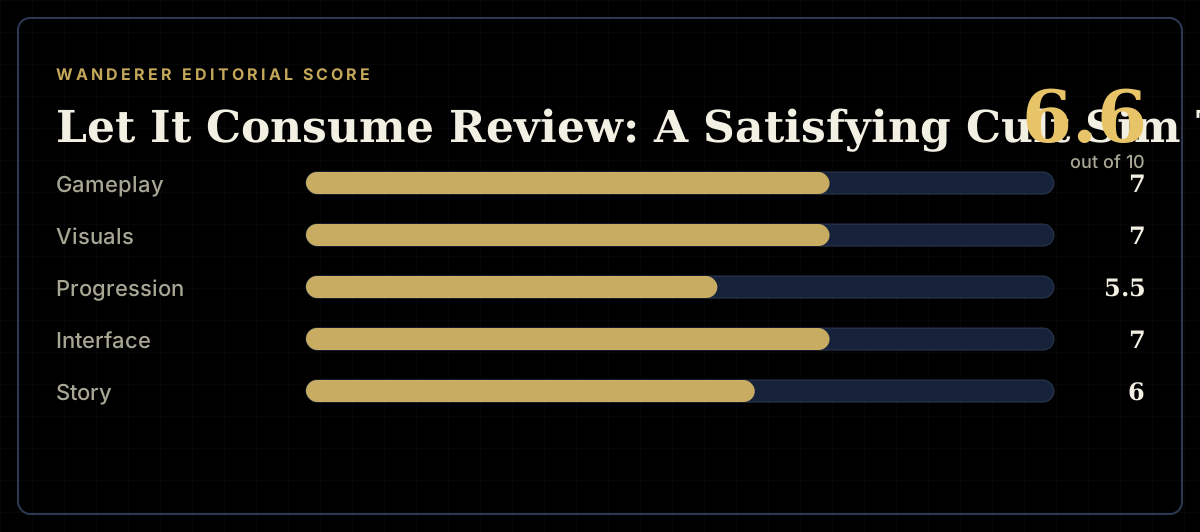
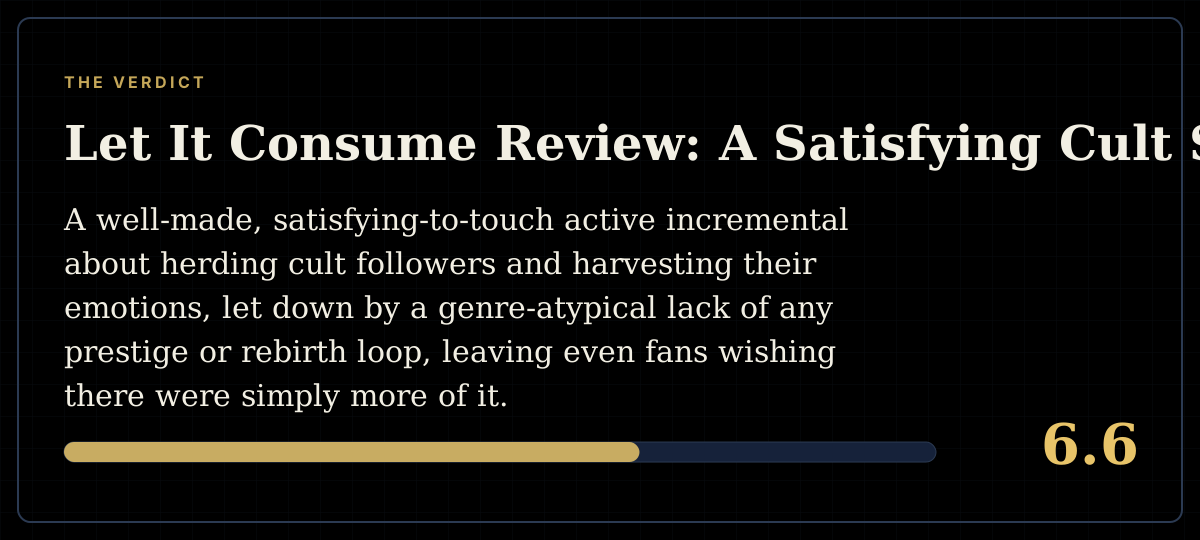
6.6 / 10
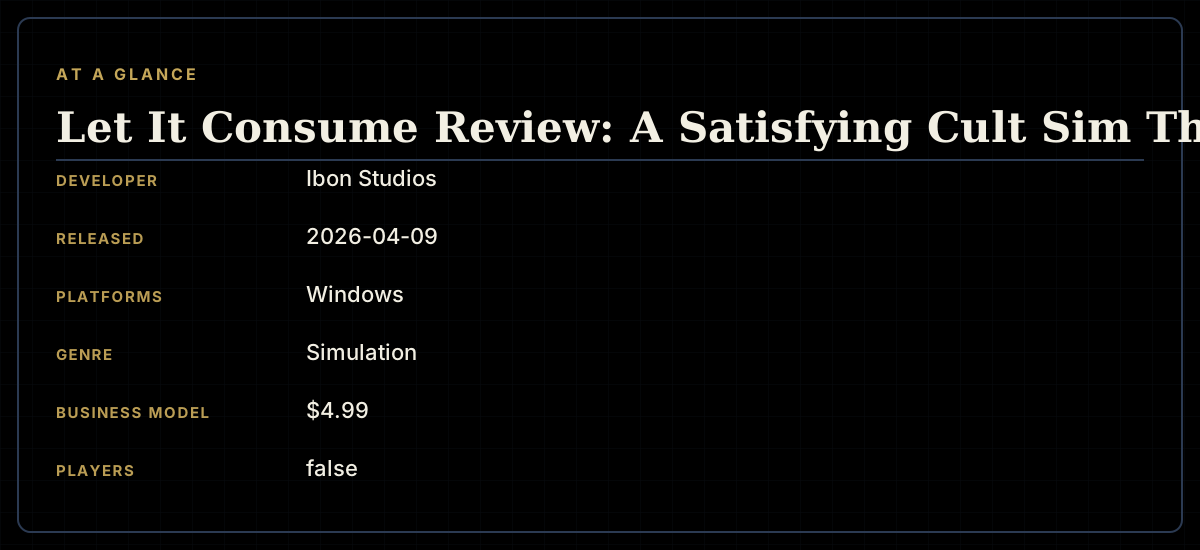
- Developer
- Ibon Studios
- Publisher
- Ibon Studios
- Released
- 9 April 2026
- Platforms
- Windows
- Genre
- Simulation
- Monetisation
- $4.99
- Players
- false
The short version
A well-made, satisfying-to-touch active incremental about herding cult followers and harvesting their emotions, let down by a genre-atypical lack of any prestige or rebirth loop, leaving even fans wishing there were simply more of it.
Biggest strengths
- A genuinely satisfying core loop: dragging a circle of influence across the screen to harvest belief, guilt, and fear from moving cult followers
- Strong presentation for the price — reviewers repeatedly single out the sound design and visual effects as punchy and satisfying
- Two distinct modes (a lower-pressure Story mode and a harder Challenge mode) that suit different kinds of incremental-genre players
Biggest weaknesses
- Very short — most reviewers report full completion, including all achievements, in 1.5 to 3 hours, which several call out directly as too little for the asking price
- No prestige or rebirth loop, a near-universal expectation in the incremental genre that its absence makes the game feel abruptly finished rather than deliberately concise
- Late-game spawn randomness draws specific criticism from genre veterans as an under-designed difficulty spike rather than a deliberate challenge
Who it's for: Incremental-genre fans, especially anyone who enjoys 'Nodebuster'-style mouse-drag harvesting loops, looking for a short session; not for anyone wanting a long-tail idle game with a rebirth loop to sink dozens of hours into.
Our recommendation: Buy it on sale, or if you specifically love the subgenre
6.6 / 10
Leading a cult, one drag of the mouse at a time
Let It Consume casts you as the head of a dark cult, using a mouse-controlled circle of influence to sweep across a scene full of wandering followers, harvesting their belief, guilt, or fear to fuel an ever-hungrier idol. It sits in the "active incremental" subgenre popularized by games like Nodebuster, where progress requires ongoing mouse movement rather than pure idle ticking, and multiple reviewers explicitly reference that lineage — one detailed Chinese-language review calls it, roughly translated, a "cult leader simulator," praising how the name captures the concept precisely.
A core loop that earns its praise
What consistently draws praise, across a genuinely wide range of languages in the review sample, is how good the moment-to-moment harvesting feels. Reviewers repeatedly single out the sound design and visual effects as "satisfying," and the escalating structure — a small circle catching a handful of slow followers early on, growing into a faster, wider harvesting operation with preacher-follower chain reactions later — gives the upgrade path real, felt progression within a single session. A Story mode keeps the pressure low and the pacing conventional, while a separate Challenge mode is aimed at players who want the format pushed harder, giving the small package some structural variety despite its short runtime.
The complaint everyone converges on
If there's one thing nearly every review in the sample agrees on, positive or negative, it's the length. One blunt review states they 100%-completed the game, hardcore mode included, in 1.8 hours, and argues bluntly that anything under two hours risks refunds regardless of quality. Others land in a similar range — 1.5 to 3 hours to see everything the game has to offer — and while several genuinely enjoyed that time, more than one explicitly said they wanted the experience to simply continue rather than end. That's a meaningfully different complaint than "this game is bad": it's closer to "this game is good enough that ending felt premature."
The missing piece genre fans wanted
The single most specific and well-argued critique in the sample comes from a self-described veteran of "Nodebuster clones," who lays out a detailed list of design gaps: spawn patterns that get punishingly RNG-dependent in the late game with no player tool to compensate, and — most importantly — no rebirth or prestige loop of any kind, a near-standard feature in the incremental genre that resets progress in exchange for permanent, escalating bonuses. Without it, the game has a hard ceiling rather than the open-ended "one more run" pull that defines the best examples of the genre, and at least one other reviewer explicitly asked for a mechanism (like a looping mouse-mover) to turn it into more of a true idler once the active phase is exhausted.
A handful of smaller frictions
Beyond the length and missing prestige loop, a few smaller complaints recur without dominating the conversation. Multiple reviewers mention a thin selection of background music tracks that loop and cut abruptly rather than transitioning smoothly, which becomes noticeable given how much of the game is spent staring at the same harvesting screen. A Japanese-language review notes the pacing "doesn't inflate" and that the challenge mode ends up feeling unnecessary rather than additive, a more lukewarm read on the same structural issue the genre-veteran review raises in more detail.
What the achievement data confirms
The global achievement percentages line up cleanly with the "very short, easily completed" read running through the reviews: most of the ten achievements sit in a tight 64-75% band, with only the dedicated "Completionist" achievement dropping to 51.7% and a specific late-game "Genocide" path achievement sitting lowest at 30.4%. That's the profile of a small, tightly scoped game where the large majority of buyers see almost everything it has to offer, rather than a long-tail experience where only a small fraction of players ever reach the end.
Real, if modest, developer follow-through
Steam's news feed for Let It Consume shows only five posts, but they're meaningfully targeted: a balancing patch that specifically fixed a broken Completionist achievement shortly after launch, a hotfix for AMD compatibility issues, and a later addition of Portuguese localization. That's not the kind of sustained content expansion that would address the length complaints reviewers keep raising, but it does show a developer responding to concrete, reported technical problems quickly rather than going silent after release.
Is $4.99 fair for under three hours
This is genuinely the crux of the review-base's disagreement, and it's worth taking both sides seriously rather than picking one. At $4.99 (often on sale for less), a well-made 1.5-to-3-hour experience with strong feel and presentation is not an unreasonable value proposition by the standards of plenty of short indie games — several reviewers explicitly say it's worth the asking price for what it is. But the incremental genre specifically trains its audience to expect a return trip, via a prestige loop, that simply isn't here, and that mismatch between genre expectations and what's delivered is the fairest reading of why so many reviews land as a qualified recommendation rather than an enthusiastic one.
Verdict
Let It Consume is a well-crafted, satisfying-to-play active incremental that nails its core cult-harvesting loop and presentation, undercut by a design choice that will bother genre veterans more than newcomers: there's no prestige or rebirth system to extend the experience past its two-or-so-hour ceiling. For casual players looking for a short, atmospheric diversion, that's a minor footnote; for the incremental-genre die-hards this game is clearly built to appeal to, it's the one thing standing between a good short game and a genuinely great long one.
Pros and cons
Pros
- A genuinely satisfying core loop: dragging a circle of influence across the screen to harvest belief, guilt, and fear from moving cult followers
- Strong presentation for the price — reviewers repeatedly single out the sound design and visual effects as punchy and satisfying
- Two distinct modes (a lower-pressure Story mode and a harder Challenge mode) that suit different kinds of incremental-genre players
- Real, if modest, post-launch support: a balancing patch that fixed a broken completionist achievement, an AMD compatibility hotfix, and an added Portuguese translation
Cons
- Very short — most reviewers report full completion, including all achievements, in 1.5 to 3 hours, which several call out directly as too little for the asking price
- No prestige or rebirth loop, a near-universal expectation in the incremental genre that its absence makes the game feel abruptly finished rather than deliberately concise
- Late-game spawn randomness draws specific criticism from genre veterans as an under-designed difficulty spike rather than a deliberate challenge
- A thin handful of repetitive background music tracks that loop abruptly without transitions, according to multiple reviewers
Screenshots
-
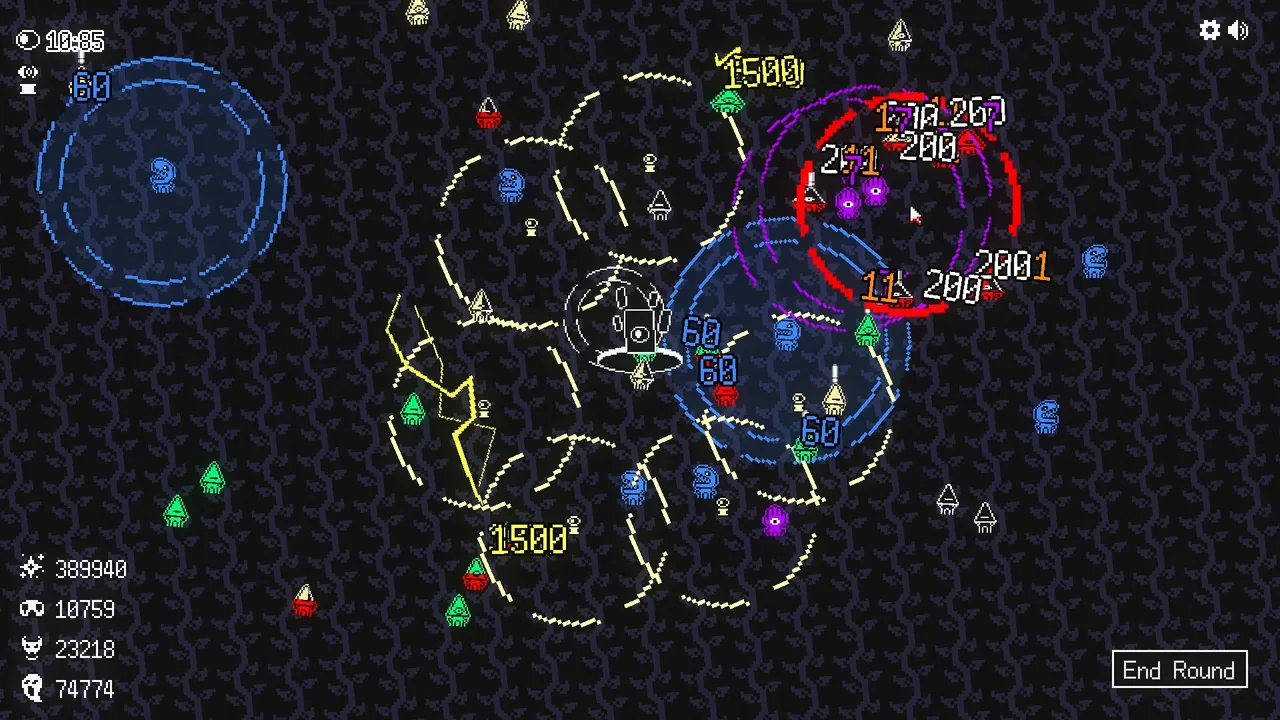
Image: Ibon Studios via Steam -
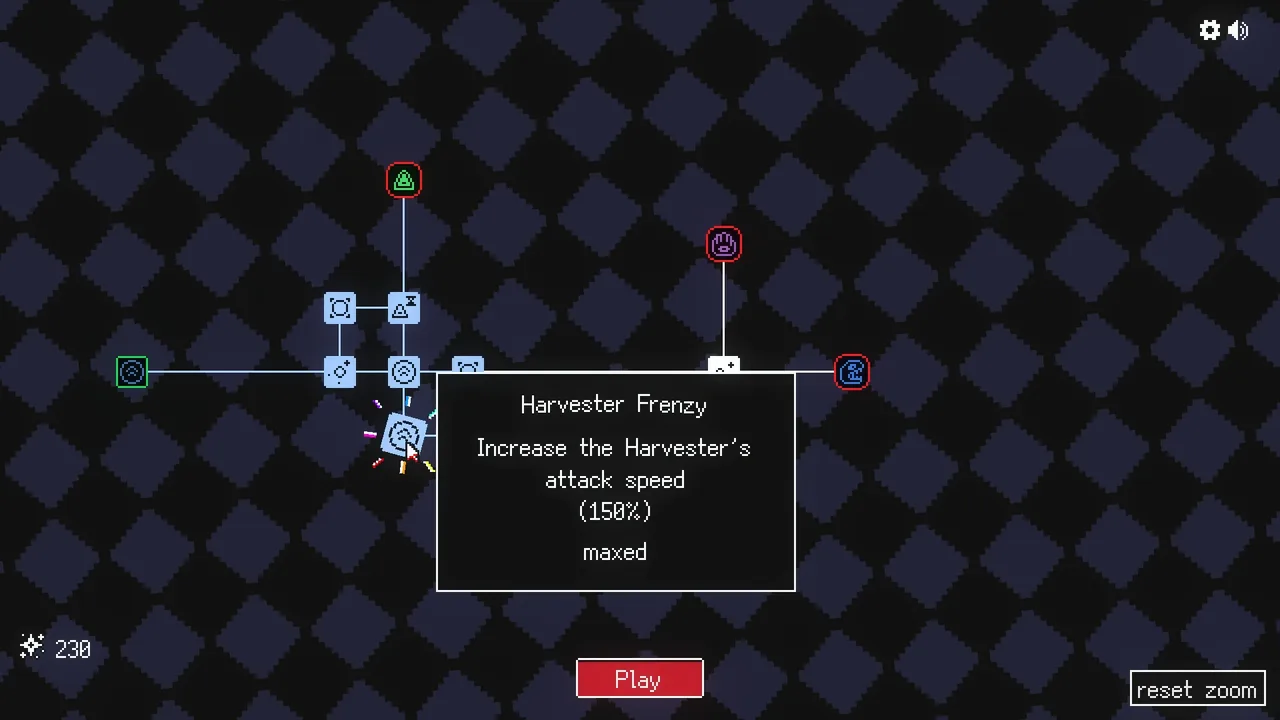
Image: Ibon Studios via Steam -
Image: Ibon Studios via Steam -
Wanderer Editorial -
Wanderer Editorial -
Wanderer Editorial