Game review
Kumoon: Ballistic Physics Puzzle
4.3 / 10
- Developer
- Lucky You Studio
- Publisher
- Lucky You Studio
- Released
- 10 November 2015
- Platforms
- Windows, Mac
- Genre
- Puzzle
- Monetisation
- One-time purchase. Full VR support is a separate paid DLC; the base game includes a 3-level SteamVR demo only.
- Players
- Single-player only
The short version
Kumoon: Ballistic Physics Puzzle has a hook worth admiring: a small orange robot ricochets balls off walls to light up boxes, mixing a shooting gallery with billiards, platforming and puzzle-scoring, built from the ground up for both a gamepad and a VR headset. That's a genuinely unusual combination for a 2015 indie title, and it's why a handful of longtime players — some tracing the name back to a 2005 original — still speak up for it.
Almost everyone else who has reviewed it describes the same set of problems. In VR, the robot's movement is tied to the direction it's facing rather than where the headset is looking, which multiple reviewers say causes motion sickness within seconds regardless of settings or frame rate. Outside VR, the complaints shift but don't improve: an unreliable jump button, floaty movement, and platforming sections stapled onto a game that's supposed to be about trick shots. Steam's own aggregate calls the result Mostly Negative, and it isn't a close call.
Biggest strengths
- A genuinely unusual hook — ricochet trick-shooting crossed with platforming and box-lighting puzzle-scoring, built for gamepad and VR from the start rather than bolted on afterward
- Structured difficulty curve: 3 tutorial levels feeding into 15 Easy, 15 Medium and 15 Hard levels, with a half-speed movement option for players sensitive to the default pace
- Cheap at NZ$3.59, with Steam Achievements and Trading Cards for the scoring/speedrun-minded minority the game does click with
Biggest weaknesses
- VR motion sickness is the single most repeated complaint in the review set — the robot's movement is tied to which way it's facing, not which way the headset is looking, and forcing the joystick to double as a look-control does not fix it; one reviewer reports nausea "after seconds" even at low settings and 90fps
- Controls outside VR draw nearly as many complaints: a jump button that "works when it feels like it," sluggish and floaty movement, and platforming sections multiple reviewers say have no business being forced into what's billed as a trick-shooting game
- The core ball-bounce mechanic itself is called imprecise, with the scoring system pushing players toward "awkward brute-forcing" of simple solutions rather than rewarding real puzzle solving, especially as later levels ramp up difficulty
Who it's for: Players specifically curious about ricochet-physics puzzle mechanics or the game's lineage back to a 2005 original of the same name — not anyone shopping for a comfortable VR showcase or a polished platformer.
Our recommendation: Skip it, including in VR. The concept is more interesting to read about than to play, and the reviews that do recommend it recommend it only "on sale" or "at best reasonable."
4.3 / 10
Introduction
Kumoon: Ballistic Physics Puzzle is an eleven-year-old indie curiosity from Lucky You Studio, released on Steam on 10 November 2015 and still, according to its own store page, "made for VR." The pitch: you play a small orange robot armed with a ball launcher, and each level's puzzle is solved by ricocheting balls off walls and floors to hit a set of boxes, lighting them up for points. The store page describes it as a mix of "a shooting-gallery with billiards, platforming and puzzle-solving," and, per a Steam reviewer who tracked the name back twenty years, the game is a spiritual successor to a 2005 title of the same name that played very differently — a side-on shooter starring a chicken with a revolver, shotgun and bazooka, disturbing red boxes into white ones. Whatever its lineage, this 2015 version is a first-person, freeform-movement puzzler built for a gamepad, built for VR, and — per Steam's own aggregate score of Mostly Negative across all 18 reviews it has ever received — built with problems that a decade hasn't fixed.
The trick-shot hook
There's a real idea here, and it's worth taking seriously before getting to why so few players recommend it. Firing a ball that bounces off multiple surfaces before it can reach and "solve" a cluster of boxes is a genuine physics puzzle, closer in spirit to billiards trick shots than to a conventional shooting gallery. The store page's own specs back up a real structure underneath it: 3 tutorial levels to learn the controls, 15 Easy levels, 15 Medium levels and 15 Hard levels, for 33 puzzle levels plus onboarding — a reasonably ambitious spread for a budget indie title. One Steam reviewer who liked it summed the appeal up plainly: "unique," even while adding that the puzzles "weren't very difficult at all" until the Hard tier turned merely long rather than genuinely testing. That's the shape of the positive case for Kumoon across the review set: a real, if thin, idea, executed at a scale that doesn't overstay its welcome for the players it works for.
Controls, movement and platforming
The trouble starts as soon as reviewers describe actually moving the robot. "The controls work when they feel like it, the core mechanic is utterly broken, the level design is a nightmare," reads one negative review; another calls the jump button unreliable and the movement "sluggish" with "horrible floating around." More than one reviewer specifically objects to how much of the game is platforming rather than trick-shooting — wall-climbing, gap-jumping and "surprise drops, deep pits, that sort of thing to get a feeling of vertigo," in the store page's own words — with one reviewer calling out "incredibly tedious maze levels" and levels that force awkward shots from slopes as evidence the level design works against the shooting mechanic it's supposedly built around. Even a reviewer who rates the game positively overall still describes the puzzles themselves as more tedious than difficult at the harder tiers. None of this reads as a difficulty complaint so much as a controls-and-design complaint: the mechanics that are supposed to make trick shots satisfying keep getting in their own way.
VR: the promised centerpiece
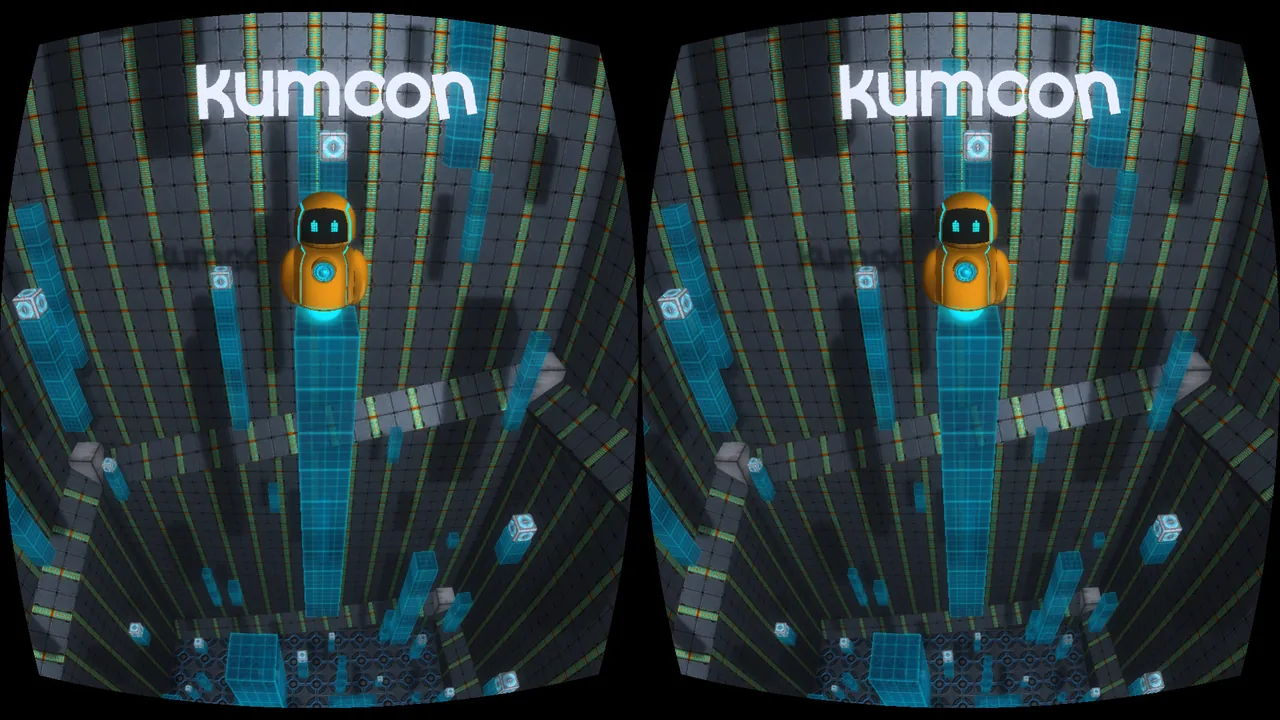
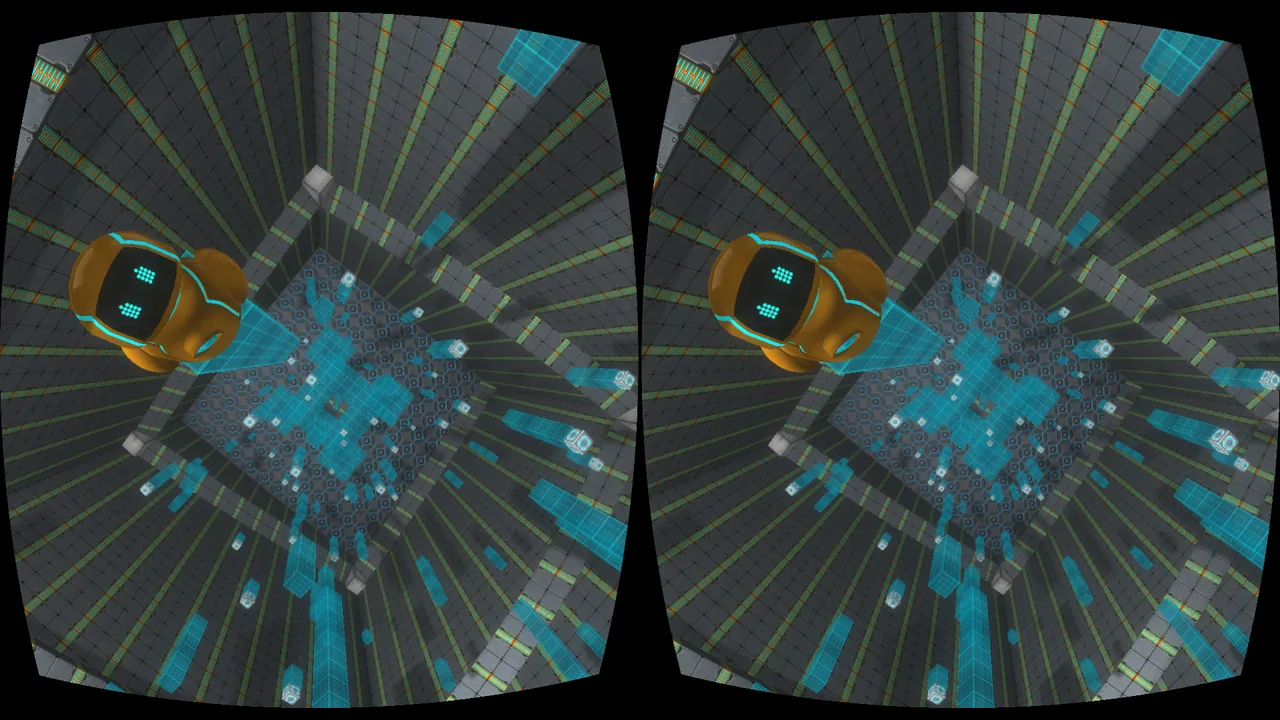
VR is where Kumoon markets itself hardest, and where its reviews turn most consistently negative. The store page frames VR as the point — "Made for VR," with a free SteamVR demo bundled into the base game and a separate paid "VR Expansion 01" DLC required to play the full 48-level campaign in headset. But nearly every review that mentions VR describes the same specific failure: the robot's movement is tied to the direction it's facing, not the direction the player's headset is looking, so pressing forward while looking left sends the player forward, not left. One reviewer calls it out in detail — "im even FORCED to use the joystick to look around, because while headtracking does work, the movements are tied to the direction the robot is facing" — and says the mismatch is disorienting enough that they had to look down at their own character's chest just to navigate. Others are blunter: "Motion sickness simulator!!," "makes you feel sick after seconds," "even on ultra low setting with 90 frames." One reviewer who initially threatened a refund walked it back after the developers explained their design reasoning, but stood by the core complaint that a forward-movement button divorced from look direction is "very disorienting" regardless of the justification. For a game that leads with VR as its distinguishing feature, a motion-sickness complaint recurring across reviewers with different hardware and settings is about as damning as review feedback gets.
Level design, length and scoring
Even setting VR aside, several non-VR reviews land on the same underlying issue: the scoring and level design don't reward the kind of precision the trick-shooting premise promises. One reviewer summarises the loop bluntly — "throw balls and bounce it on walls and have it hit crates to get points" — and argues the scoring mechanic "often forces awkward sort of brute-forcing [of] simple solutions," which becomes "incredibly tedious" as the game's later levels ramp up difficulty without ramping up genuine puzzle depth. Another calls it "more of a toy than a game," with an underlying mechanic that's "both too simple and too random for fun." On length, the picture is consistent rather than contested: a reviewer who completed the whole thing start to finish clocked "a little under three hours," calling the game "very short" even while rating it positively. The achievement names hint at a scoring structure built around thresholds per level — Threescore, Sixscore, Ninescore, Max Score — which suggests Kumoon wants a speedrunning, high-score-chasing afterlife once the campaign is done. The completion data below suggests almost nobody sticks around for it.
Reception
Steam's aggregate on Kumoon is unambiguous: Mostly Negative, 5 positive reviews against 13 negative out of 18 total — a small sample for an eleven-year-old game, but not a close one. Every negative review in that set was read for this piece, and the pattern holds across them: VR discomfort, unreliable jump and movement controls, and a bounce mechanic that reviewers describe as more frustrating than satisfying. The game's own achievement statistics tell a matching story about how far players actually get. Of everyone who's earned at least one achievement, 30.2% managed the Navigator achievement and 28.7% Sharpshooter — early-game milestones — but only 9.8% ever completed the Easy tier outright, 4.6% completed Medium, and just 3.4% completed Hard. The top-end achievements, Speedrunner Special and Max Score, sit at 3.8% and 3.1% respectively. That's a steep drop-off even by the standards of indie puzzle games, and it lines up with a review set that repeatedly describes bouncing off the game within the first half hour rather than settling in for the long haul.
Final verdict
Kumoon: Ballistic Physics Puzzle deserves some credit for trying something the puzzle genre rarely attempts: a ricochet-shooting, box-lighting mechanic built simultaneously for a gamepad and a VR headset, with a scoring system aimed at speedrunners and a lineage that traces back to a very different 2005 original of the same name. That idea lands, thinly, for a small minority of players who call it unique and worth a few dollars on sale. It does not land for the large majority who tried it: a VR mode that multiple independent reviewers describe as nausea-inducing within seconds because movement is tied to the robot's facing rather than the player's headset, and a set of ground-level controls — an unreliable jump, floaty movement, forced platforming — that draw nearly identical complaints from players who never put on a headset at all. Steam's own Mostly Negative aggregate and a steep achievement drop-off after the earliest milestones both point the same direction. At its low asking price this is a cheap curiosity for players specifically interested in the concept or its history; for anyone hoping for a comfortable, well-controlled VR puzzle game, there's little reason to look past the reviews already written about it.
Pros and cons
Pros
- A genuinely unusual hook — ricochet trick-shooting crossed with platforming and box-lighting puzzle-scoring, built for gamepad and VR from the start rather than bolted on afterward
- Structured difficulty curve: 3 tutorial levels feeding into 15 Easy, 15 Medium and 15 Hard levels, with a half-speed movement option for players sensitive to the default pace
- Cheap at NZ$3.59, with Steam Achievements and Trading Cards for the scoring/speedrun-minded minority the game does click with
- A small contingent of reviewers who remember a 2005 Kumoon treat this as a real, if simplified, continuation of that original rather than a cash-in on the name
Cons
- VR motion sickness is the single most repeated complaint in the review set — the robot's movement is tied to which way it's facing, not which way the headset is looking, and forcing the joystick to double as a look-control does not fix it; one reviewer reports nausea "after seconds" even at low settings and 90fps
- Controls outside VR draw nearly as many complaints: a jump button that "works when it feels like it," sluggish and floaty movement, and platforming sections multiple reviewers say have no business being forced into what's billed as a trick-shooting game
- The core ball-bounce mechanic itself is called imprecise, with the scoring system pushing players toward "awkward brute-forcing" of simple solutions rather than rewarding real puzzle solving, especially as later levels ramp up difficulty
- Full VR play is gated behind a separate paid DLC — the base game's SteamVR mode is a 3-level tutorial demo, not the whole 48-level campaign
- Steam's own aggregate reads Mostly Negative, 5 of 18 reviews positive, and the game's own achievement data backs it up: only 9.8% of players who earned any achievement ever finished the Easy tier, dropping to 4.6% for Medium and 3.4% for Hard
- Short even for players it works for — one reviewer who liked it finished the entire campaign in "a little under three hours"
Screenshots
-
Kumoon : Ballistic Physics PuzzleImage: Lucky You Studio via Steam -
Kumoon : Ballistic Physics PuzzleImage: Lucky You Studio via Steam -
Kumoon : Ballistic Physics PuzzleImage: Lucky You Studio via Steam -
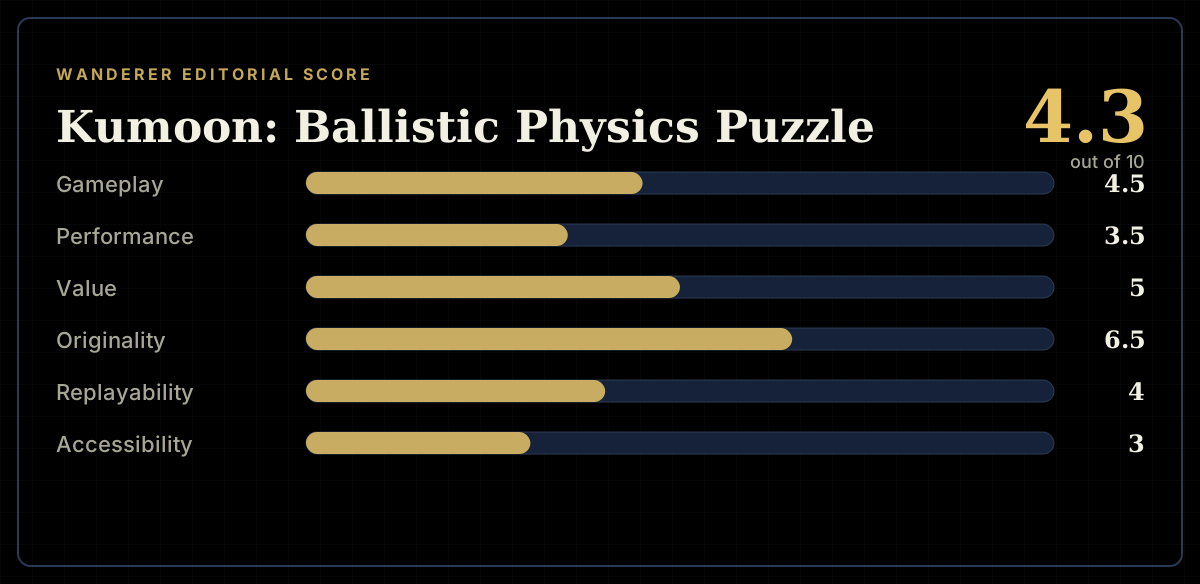
How the review scores each part of the gameWanderer Editorial -
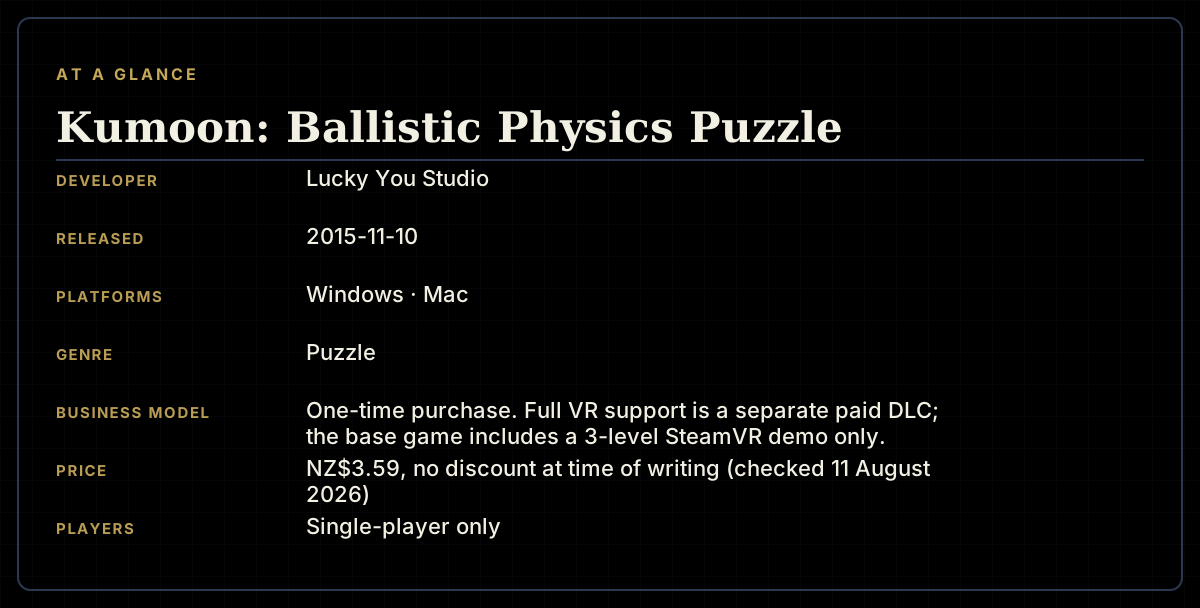
The essentials at a glanceWanderer Editorial -
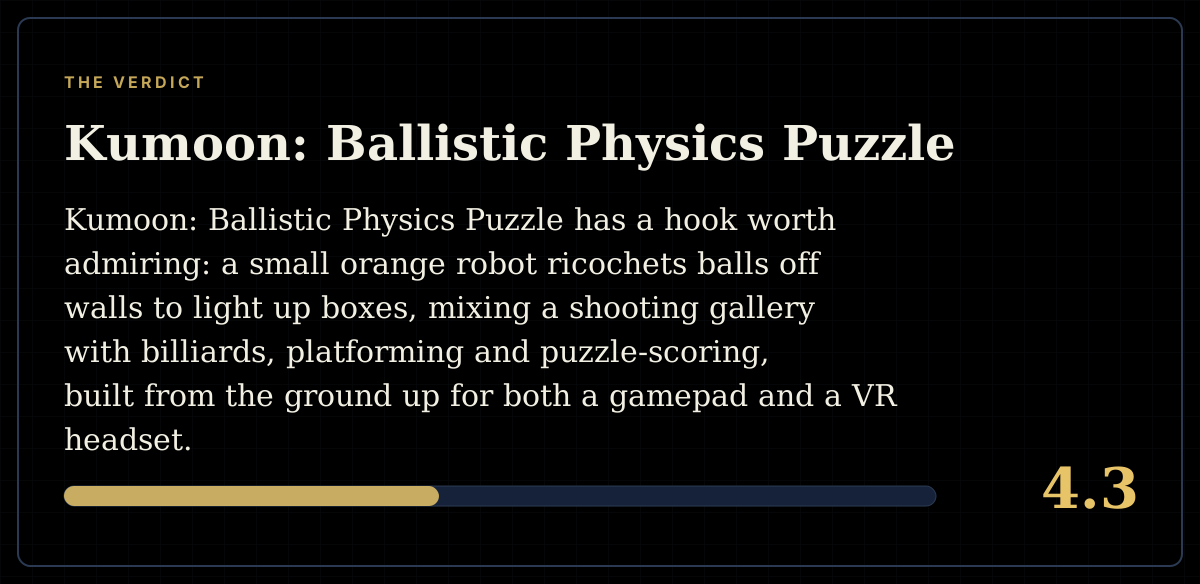
The short versionWanderer Editorial