Game review
Kiln
6.6 / 10
- Developer
- Double Fine Productions
- Publisher
- Double Fine Productions
- Released
- 23 April 2026
- Platforms
- [Windows]
- Genre
- Action
- Monetisation
- Paid
- Players
- Online PvP, cross-platform
The short version
Kiln's pottery wheel is a genuinely inventive hook wrapped around a bare-bones team brawler that never builds enough around it. Worth a look for the crafting alone, but the thin mode list and clunky friend- finding keep it from being a game you'll return to for long.
Biggest strengths
- The pottery-wheel crafting is a genuinely original hook, and the resulting pots visibly shape how a match plays
- Colourful, distinct art direction across its map roster
- Full controller support and a solid accessibility options list
Biggest weaknesses
- Only one competitive mode at launch, and it wears thin quickly
- Forced Microsoft account sign-in for online play makes grouping with Steam friends needlessly painful
- Small, level-gated toolkit at the start makes early matches feel more restrictive than creative
Who it's for: Players who like party-adjacent PvP with friends and don't mind a single game mode, and anyone curious what a pottery wheel looks like bolted onto a team brawler.
Our recommendation: Conditional Recommend
6.6 / 10
Sculpt First, Fight Second
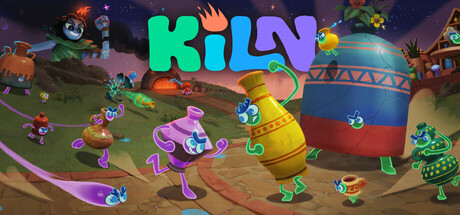
Kiln's premise is the kind of idea that sounds too strange to work until you see it in motion. Before every match, players sit at a pottery wheel and throw a pot: choosing its handle, spout, lid, and overall shape from a set of unlocked pieces. The size and geometry of that pot isn't just cosmetic — it determines your health pool, your water capacity, and which abilities you carry into the fight. A tall, narrow pot might hold more water for ranged attacks but crack easier under pressure; a squat, reinforced one trades range for survivability. It's a crafting system that actually feeds the combat loop rather than sitting beside it, and it's the strongest idea in the game by a wide margin.
Once you're in a match, that pot becomes your avatar in a 4v4 team brawler. Players scoop water, sling it at opponents, and work to extinguish the enemy team's kiln while defending their own — a structure that plays like a stripped-down MOBA with a ceramic skin. Health and water capacity are tied together, so every offensive swing is also a defensive risk: spend too much water attacking and you're left fragile when the enemy pushes back. It's a smart tension on paper, and reviewers who stuck with it past the first hour consistently praised how it rewards timing over raw aggression. The maps themselves back this up with genuine variety — different layouts force different approaches to the same basic objective, which does a lot of work to keep the format from feeling completely static.
One Mode, and It Shows
The trouble is that all of that inventive framing serves exactly one competitive mode, and it's the same objective every single match: destroy the enemy kiln. Several players who came in expecting a looser, more chaotic party game — something closer to what the pottery-wheel premise seems to promise — found themselves in a structured team-based brawler instead, and the mismatch between tone and mechanics is a recurring complaint. There's no free-for-all option, no smaller or larger team sizes, no mode built around pottery itself in the way completing a piece under time pressure or stealing materials might have been. The crafting concept and the combat concept exist in the same game without ever really touching, and after a dozen or so matches the repetition starts to show.
Progression compounds the problem early on. New accounts start with a single item per slot — one handle, one spout, one lid — and the more expressive tools for shaping clay are locked behind a leveling curve that stretches toward level 50. Once something does unlock, it's often available only in limited quantities that need repurchasing, which makes the opening hours feel oddly restrictive for a game whose whole hook is creative freedom. Falling off the edge of a map also grants a brief window of invincibility, which a number of players flagged as letting opponents dodge finishing blows by jumping off and taking no damage — a small thing, but the kind of friction that adds up across repeated matches.
In-match communication is limited to two emotes — an exclamation mark and a battle roar — which leaves solo players with no real way to call a retreat, mark a target, or coordinate a push with unfamiliar teammates. That thinness extends to the win-loss incentive gap: because rewards for losing aren't far behind rewards for winning, some reviewers noted matches where teammates or opponents simply went AFK to farm experience passively rather than compete, which undercuts the tension the water-and-health system is otherwise built around.
Finding a Match Is Half the Battle
The most consistently cited frustration isn't about the game itself so much as getting into one. Online play routes through a Microsoft account rather than Steam's native friend and invite system, and a large share of the review sample describes real difficulty getting parties together as a result — invites failing silently, having to restart the client to get a lobby working, or simply giving up and playing with strangers instead. For a game clearly built around playing with friends, that's a significant self-inflicted wound, and it's compounded by a player base that's thinned out considerably since launch; several reviewers mention waiting on matchmaking or being filled out with bots outside peak hours. On the accessibility side the game does better than its matchmaking troubles suggest, with full controller support, colour-alternative options, subtitle settings, and a keyboard-only control scheme, alongside Steam Cloud saves and cross-platform play once you're actually in a lobby.
A post-launch update did add a price cut and content pass, and reviewers posting since then describe a smoother, more polished experience than the ones who arrived in the first week. That's a reasonable trajectory for a game built around a genuinely novel idea, but it hasn't yet translated into more modes or a easier way to play with the people you actually want to play with — the two things that would do the most to make the pottery wheel's cleverness worth returning to.
Verdict
Kiln takes a genuinely strange, charming idea — a pottery wheel that doubles as a character builder — and builds a perfectly serviceable but thin team brawler around it. The crafting hook is worth experiencing on its own, and the handful of players who push past the account friction and level gates tend to come away liking what they find. But with one mode, a restrictive early unlock curve, and matchmaking that fights you before the fun starts, it's hard to recommend beyond an evening with friends who are willing to push through the setup.
Pros and cons
Pros
- The pottery-wheel crafting is a genuinely original hook, and the resulting pots visibly shape how a match plays
- Colourful, distinct art direction across its map roster
- Full controller support and a solid accessibility options list
Cons
- Only one competitive mode at launch, and it wears thin quickly
- Forced Microsoft account sign-in for online play makes grouping with Steam friends needlessly painful
- Small, level-gated toolkit at the start makes early matches feel more restrictive than creative
Screenshots
-
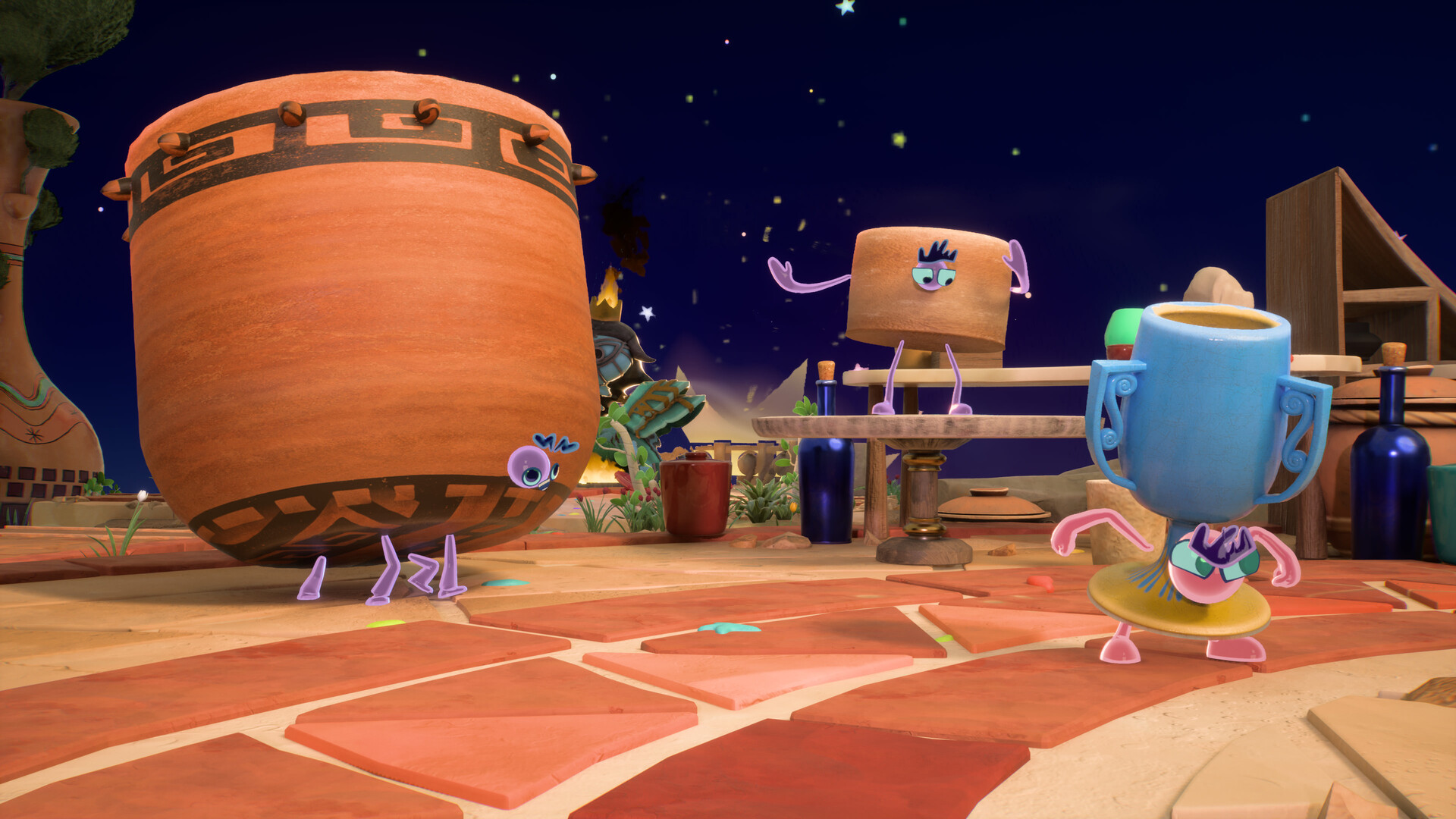
The pots you craft aren't just cosmetic — their shape and size carry into the fight as your health and water capacityDouble Fine Productions -
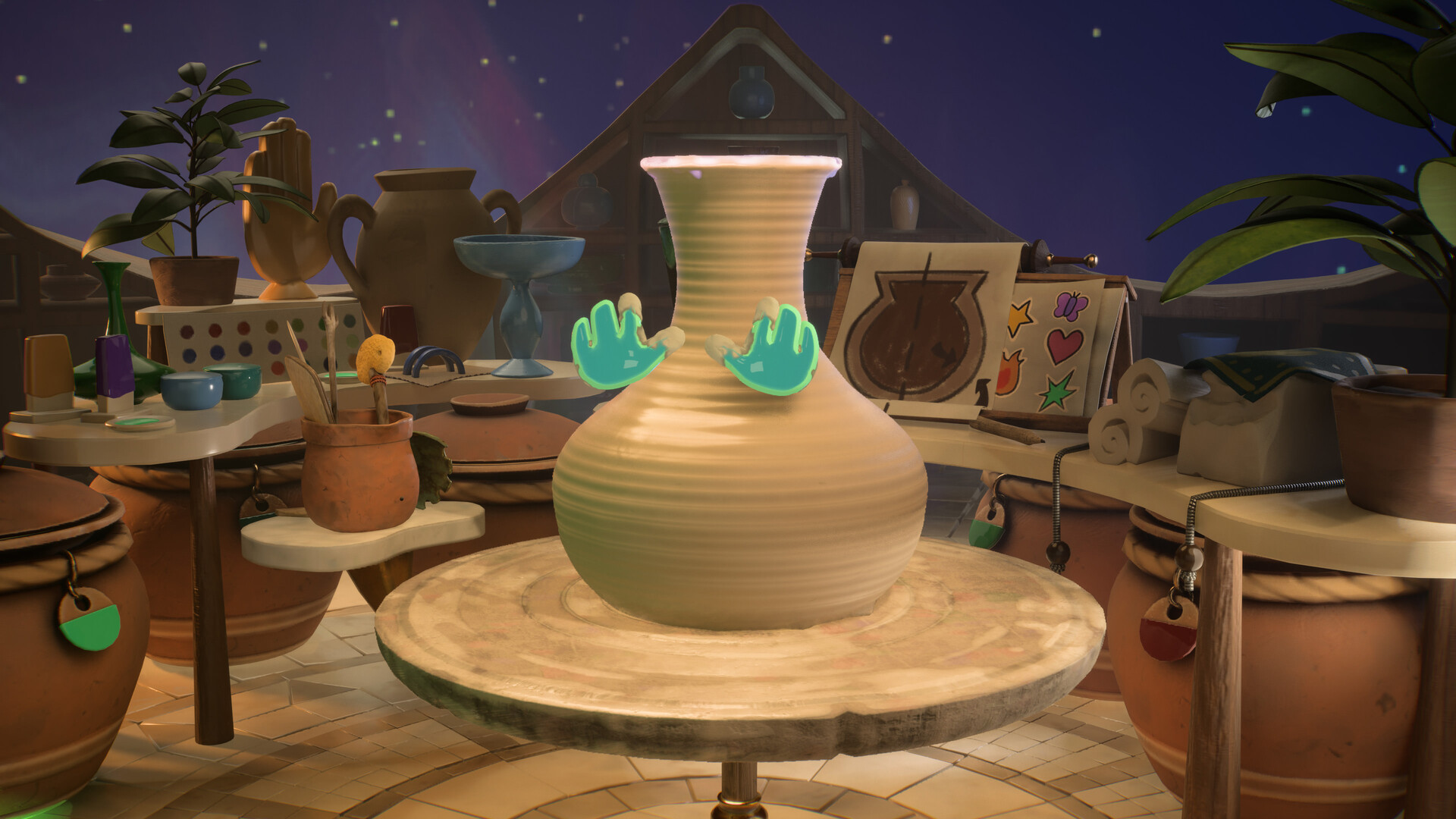
The pottery wheel is where Kiln's best idea lives, letting players throw and glaze a pot before ever entering a matchDouble Fine Productions -
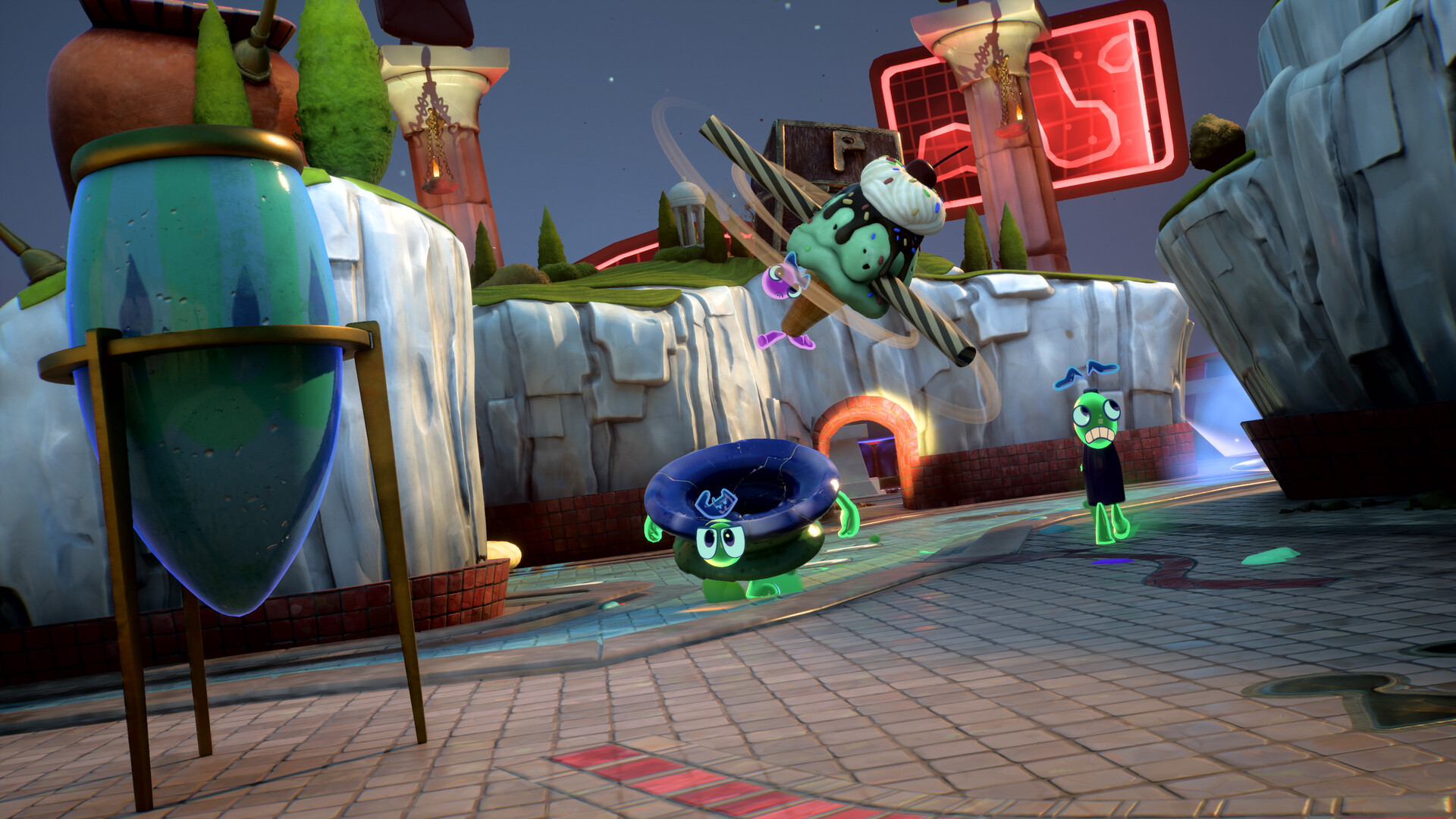
Match maps lean heavily on colourful, varied set dressing even though the objective stays the same across all of themDouble Fine Productions -
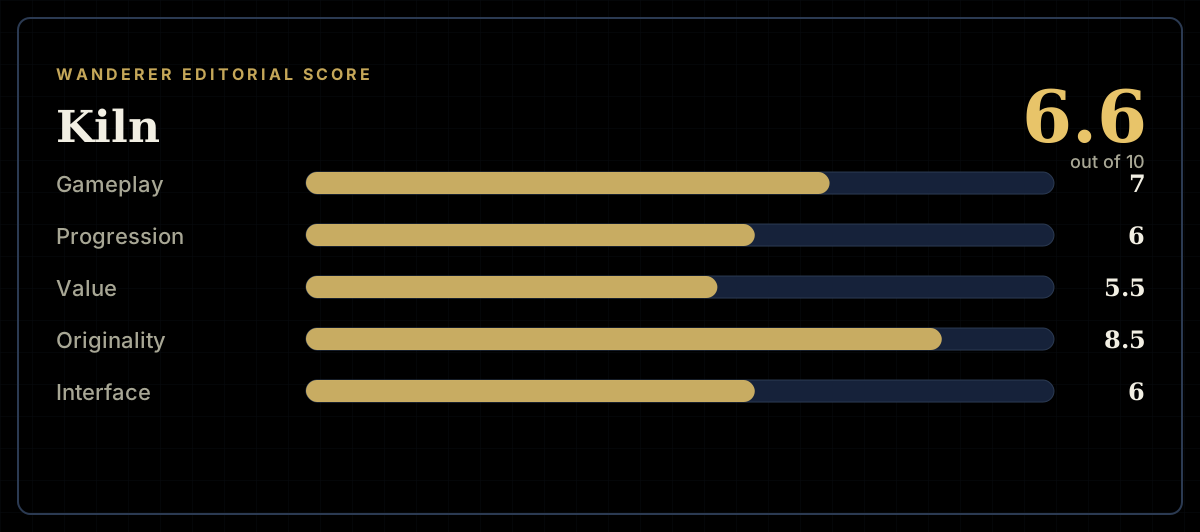
How the review scores each part of the gameWanderer Editorial -
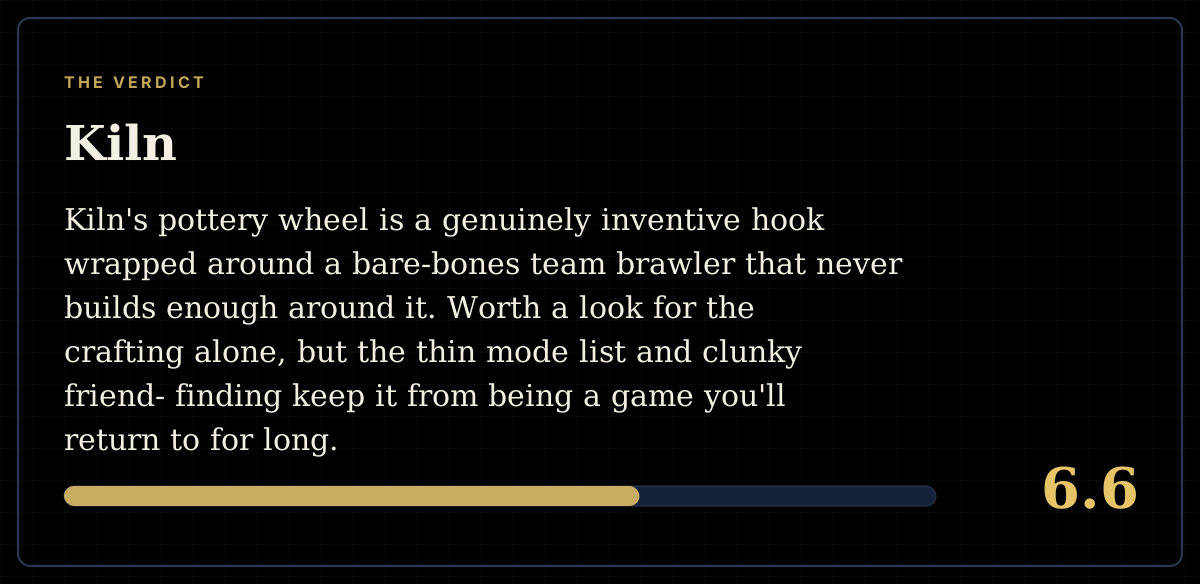
The short versionWanderer Editorial