Game review
Kabuto Park
6.5 / 10
- Developer
- Doot
- Publisher
- Doot Tiny Games
- Released
- 28 May 2025
- Platforms
- Windows
- Genre
- Casual, Indie, RPG, Simulation
- Players
- Single-player
The short version
Biggest strengths
- Genuinely storybook-quality hand-drawn art, singled out by reviewers as the game's standout achievement even when they're otherwise critical
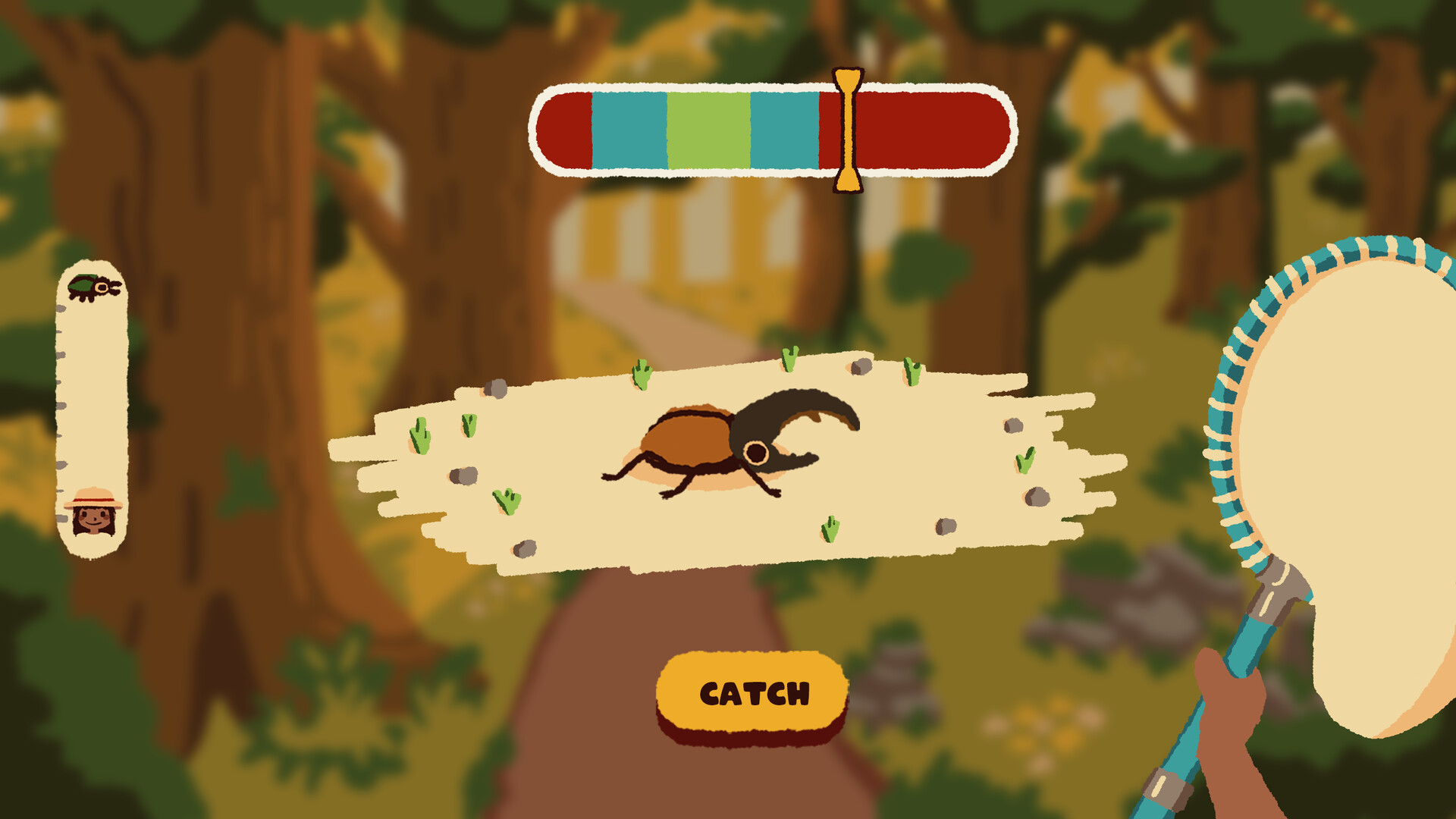
- A satisfying, tactile catching mechanic — timing a click as a meter enters a green zone — that reviewers repeatedly describe as simple but addictive
- Real species-specific facts attached to each catchable bug, which several reviewers with real-world insect and isopod hobbies say adds a layer of genuine charm beyond the collecting loop
Biggest weaknesses
- Overwhelmingly reported as extremely short — multiple reviewers independently report 100%-completing the entire game, achievements included, in one to three hours
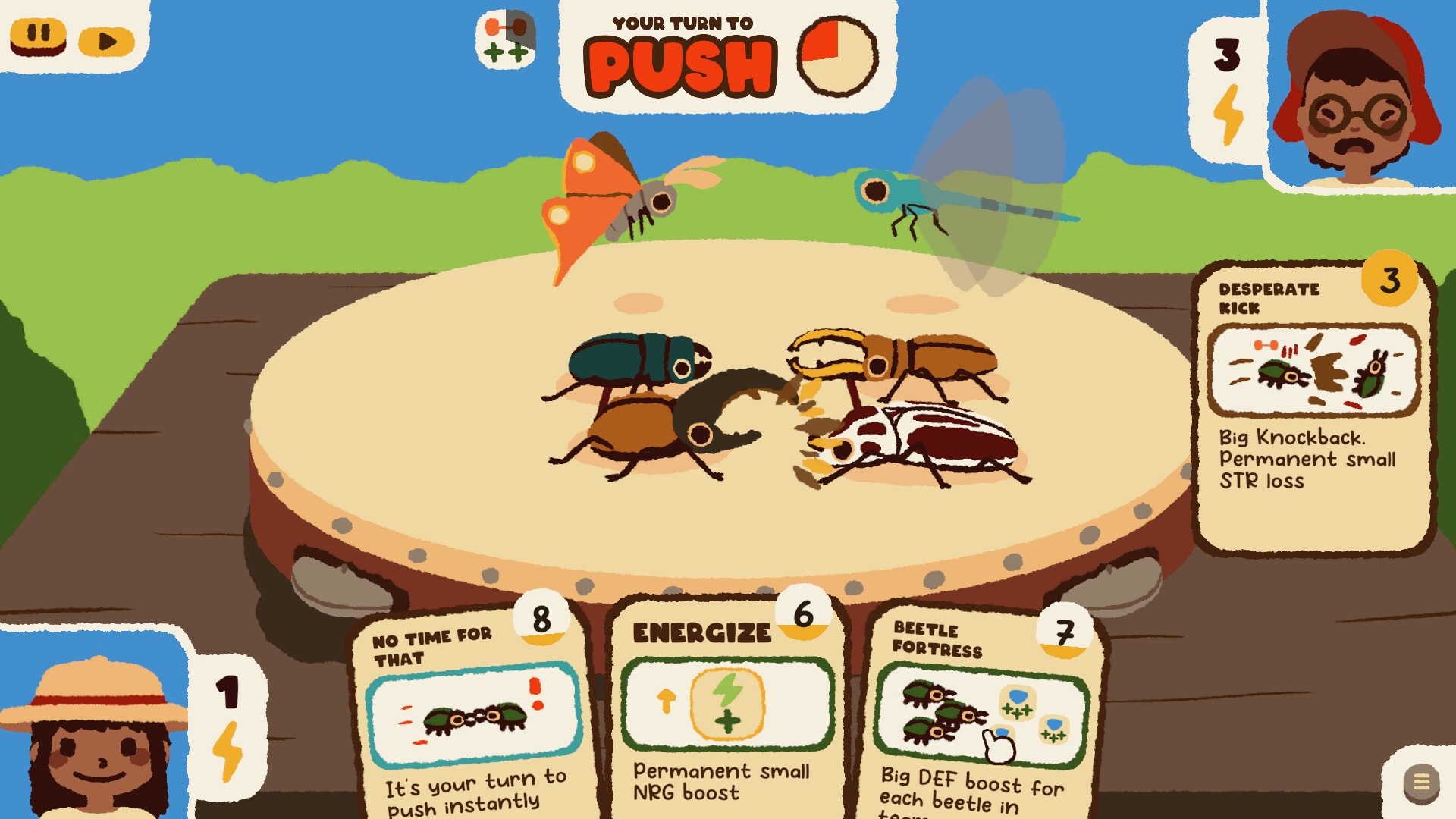
- The bug-battling system is repeatedly criticized as shallow and repetitive, missing basic strategic information like a way to compare a bug's stats against another at a different level
- Very little reason to return once every bug and achievement is caught, with several reviewers explicitly wishing for more content, characters, or a multiplayer battle mode
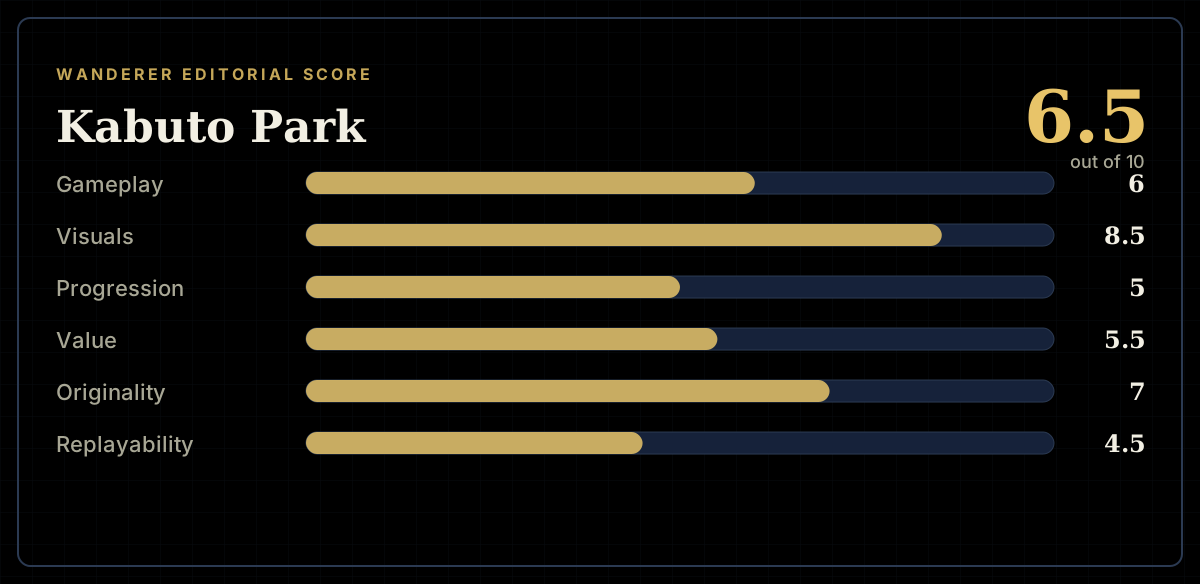
6.5 / 10
A perfect little summer postcard
Kabuto Park's premise is disarmingly simple: it's summer vacation, and your job is to wander a handful of small, beautifully hand-drawn areas — forest, farm, lake, swamp — catching bugs, training them, and pitting them against each other in a miniature sumo-style arena to become the Beetle Battle champion. The catching mechanic itself is the game's best idea in miniature: time a click as a meter sweeps into a green zone, with rarer and shinier variants demanding tighter timing. It's simple enough to describe in a sentence and, by the near-unanimous account of its own reviewers, genuinely satisfying to actually do.
What elevates it past a pure mechanical exercise is the presentation. Reviewers across the spectrum — including several who are otherwise lukewarm on the actual gameplay — single out the art as something closer to a storybook than a typical indie pixel game, and more than one reviewer with real hobbyist experience keeping isopods or snails specifically calls out the attached real-world facts about each catchable species as a detail that elevated the collecting loop beyond a generic Pokémon-style checklist. That combination of genuine visual craft and small, specific factual detail is where the game earns its warmest reviews.
Finished before the afternoon is out
The single most consistent piece of feedback across the entire review corpus, positive and negative alike, is runtime. Reviewer after reviewer reports completing the entire game — every catchable bug, every achievement, the full champion run — inside one to three hours, and several are explicit that this isn't a case of rushing through content: "I actually beat the champion in a little over an hour... completed every fight in the game," one review states directly, having logged enough playtime to have every achievement to back the claim up. Others frame the same fact more generously ("wish the game was longer because it was so fun") but arrive at the identical conclusion about length. At NZD 7.39, that's a real value question rather than a minor gripe, and it's worth weighing directly against the asking price before buying.
Layered onto the short runtime is a specific, recurring critique of the battle system itself: reviewers describe the sumo-arena fights as mechanically shallow and repetitive, with one detailed review pointing out a concrete, fixable gap — there's no way to compare a bug's stats against a same-species bug at a different level, so judging whether it's worth investing training time into a given catch is largely guesswork. That's a specific, actionable piece of feedback rather than a vague "it's boring" complaint, and it's echoed by multiple other reviewers independently describing the fights as "same mechanics over and over" with "no real strategy."
A personal touch some players didn't want
A more unusual thread running through several reviews, distinct from the shortness and shallow-combat complaints, concerns the solo developer's own presence within the game itself — reviewers report the developer's likeness appearing repeatedly throughout, which a meaningful number find distracting rather than charming. It's a genuinely subjective complaint rather than a technical or design flaw, and it doesn't appear to affect the actual mechanics, but it's specific and repeated enough across independent reviewers, including one of the more heavily-upvoted negative reviews on the page, that it's worth naming plainly rather than glossing over: some players who otherwise enjoyed the game found this choice off-putting enough to mention it as their primary reservation.
What the achievement curve says about who sticks around
The achievement data adds useful nuance to the "too short" complaint rather than simply confirming it. The earliest milestones — collecting a first badge, catching a first rare bug, a first shiny — all sit above 80%, meaning nearly everyone who buys the game experiences its core hook at least once. But the curve doesn't collapse sharply after that the way a truly shallow game's would; area-specific catching achievements for the forest, farm, lake and swamp all sit in a fairly tight 58–63% band, and "catch them all" sits at 55.1%, meaning a genuine majority of buyers do see the game through to full completion rather than abandoning it partway. Combat-specific achievements like winning with fewer bugs or stacking many buffs sit lower, in the 30–47% range, which lines up with the specific complaint that the battle system doesn't reward experimentation as clearly as the catching does — players finish the collection goals at a high rate and the more mechanically demanding combat challenges at a meaningfully lower one.
That's a more precise picture than "it's just short": the collecting and exploration half of the game is doing its job well enough that most buyers see it through, while the battling half is the part losing people's engagement along the way, which matches the specific stat-comparison complaint above rather than a general complaint about length.
Where this leaves it
Kabuto Park is a small, lovingly illustrated creature-collector that delivers a genuinely charming few hours before running out of things to offer. The art and the core catching mechanic are both executed with real craft, and the achievement data confirms most buyers do actually engage with the full loop rather than bouncing off early — but "the full loop" here is a one-to-three-hour experience with a shallow battle system underneath the polish, at a price that assumes more of it. Recommended as a short, sweet palate-cleanser rather than a game to expect real staying power from, and worth going in with runtime expectations set correctly rather than discovering the ceiling on your own.
Pros and cons
Pros
- Genuinely storybook-quality hand-drawn art, singled out by reviewers as the game's standout achievement even when they're otherwise critical
- A satisfying, tactile catching mechanic — timing a click as a meter enters a green zone — that reviewers repeatedly describe as simple but addictive
- Real species-specific facts attached to each catchable bug, which several reviewers with real-world insect and isopod hobbies say adds a layer of genuine charm beyond the collecting loop
- A wide achievement spread (95.2% down to 30.8%) confirms most players do engage meaningfully with catching, battling, and shiny-hunting before setting it down
Cons
- Overwhelmingly reported as extremely short — multiple reviewers independently report 100%-completing the entire game, achievements included, in one to three hours
- The bug-battling system is repeatedly criticized as shallow and repetitive, missing basic strategic information like a way to compare a bug's stats against another at a different level
- Very little reason to return once every bug and achievement is caught, with several reviewers explicitly wishing for more content, characters, or a multiplayer battle mode
- One specific, repeated complaint (drawing real engagement in the review base) concerns the solo developer's own likeness appearing throughout the game, which several reviewers find distracting from the gameplay itself
Screenshots
-

Kabuto ParkImage: Doot Tiny Games via Steam -
Kabuto ParkImage: Doot Tiny Games via Steam -
Kabuto ParkImage: Doot Tiny Games via Steam -
How the review scores each part of the gameWanderer Editorial -

At a glanceWanderer Editorial -
The short versionWanderer Editorial