
Game review
Imago Season
7.5 / 10
- Developer
- Lunar Finch
- Publisher
- Haunted Publishing Syndicate
- Released
- 11 June 2026
- Platforms
- Windows, Linux
- Genre
- Adventure, Indie, RPG
- Monetisation
- paid
- Players
- false
The short version
Biggest strengths
- Genuinely strong writing and world-building, evoking comparisons to Disco Elysium and Ursula K. Le Guin's Hainish Cycle from multiple reviewers
- A first-person take on the dialogue-tree, skill-check RPG format that several reviewers found a fresh change from the genre's usual isometric perspective
- A distinctive dice-and-skill-check system tied to visible bodily mutation, letting players see their choices change their character's body over a run
Biggest weaknesses
- A small, heavily gated play area with frequent invisible walls that at least one reviewer found made exploration feel pointless rather than rewarding
- Thin mechanical depth for players expecting a fuller RPG, with only one major decision of real consequence before the ending on a first run
- A short main story that some reviewers found ends just as it sets up its central conflict, functioning more like a first chapter than a complete arc
Who it's for: Fans of dialogue-driven, choices-matter RPGs like Disco Elysium who want a tight three-to-eight-hour story rather than a sprawling epic, not recommended for players who want a long campaign or meaningful combat
Our recommendation: recommended
7.5 / 10
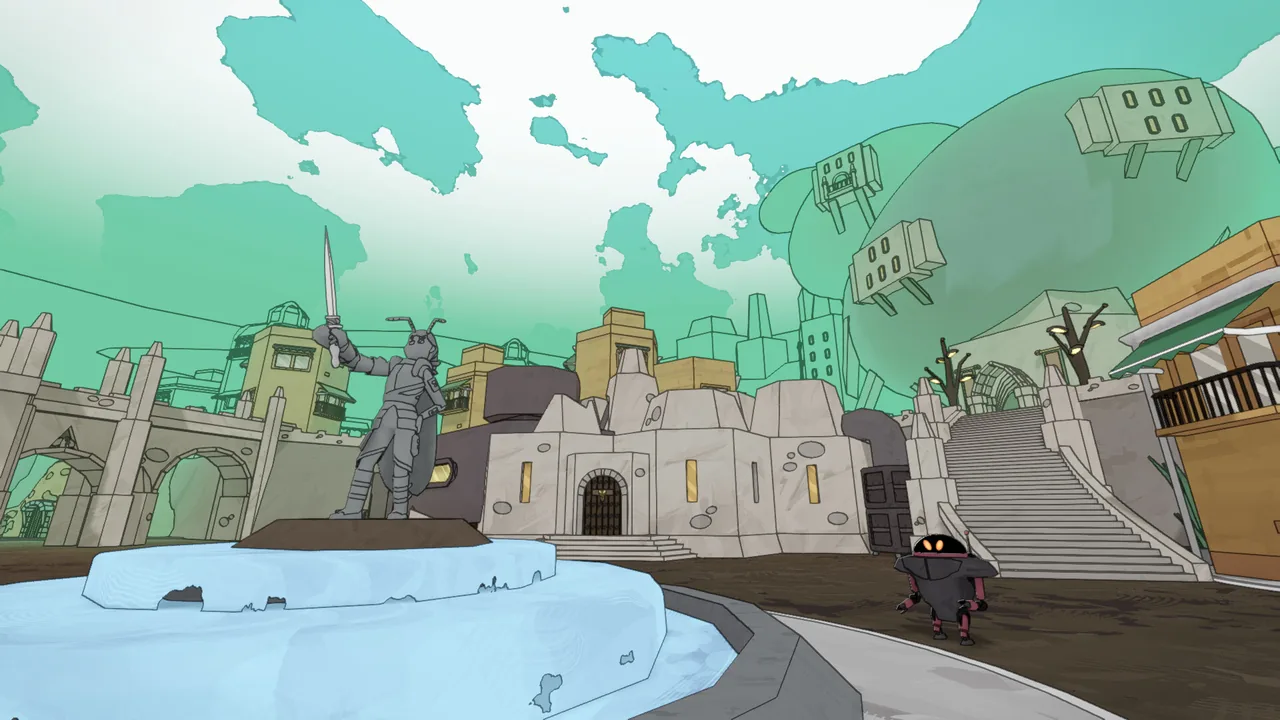
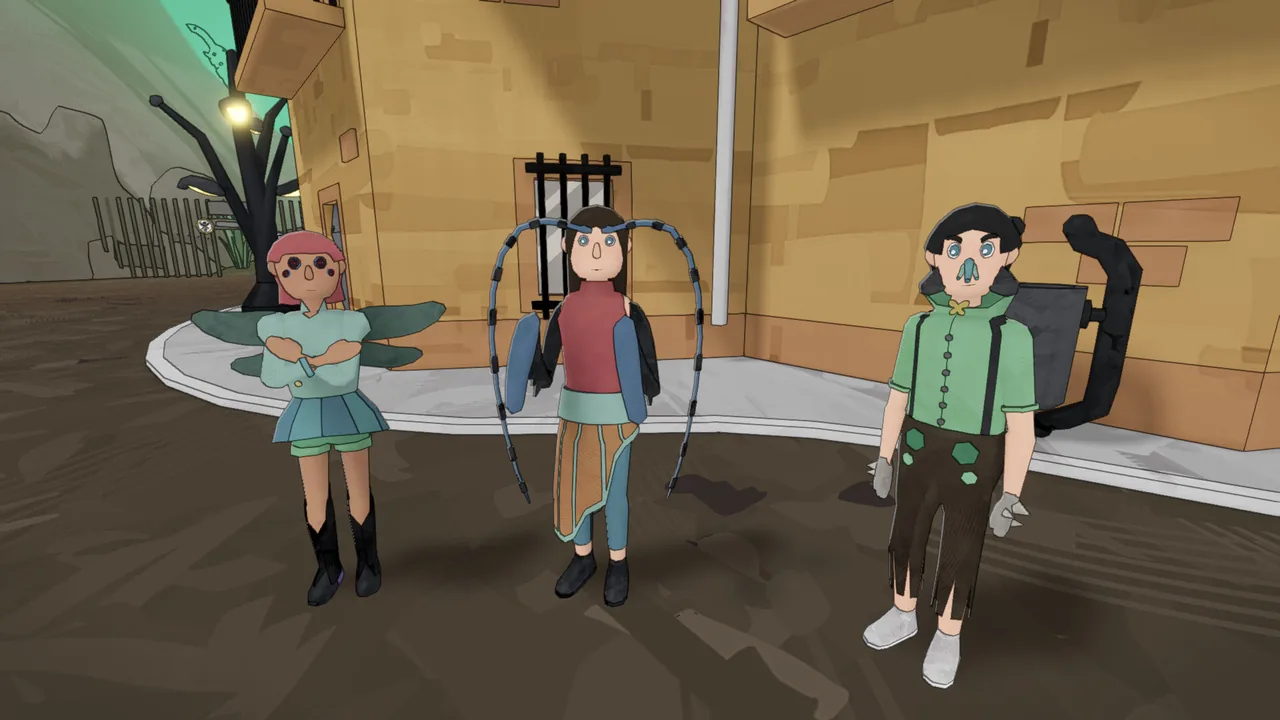
Imago Season released in full on Steam on June 11, 2026, from debut studio Lunar Finch under publisher Haunted Publishing Syndicate, a combat-less narrative RPG that drops players into the body of an amnesiac stranger wandering Tempura, a city of human-insect hybrids caught between an alien Union, a "benevolent" AI overseer, and a brewing revolution. Its 17-review English pool sits at Positive (15 up, 2 down, 88%), and the reviews describe a short, richly written first-person descendant of Disco Elysium that trades scale and mechanical depth for a tightly focused few hours of dialogue, dice, and dilemma.
The writing and world-building draw the pool's most consistent, detailed praise, with reviewers reaching for serious reference points rather than generic compliments. One reviewer called it "a bite-sized cRPG with inspirations ranging from Disco Elysium to Ursula Le Guin to Moebius," specifically praising the setup of "a humanesque world seeded by other humans thousands of years ago but left to develop on their own," and noting that "the gist will be very familiar to readers of the Hainish Cycle." Another reviewer summarized it more bluntly as "creative, charming, and had something to say without being about the fact that it had something to say," adding that it "understands the strengths of the Disco Elysium style of gameplay and executes it perfectly to build character and tone." A third called the writing and world-building "incredible," specifically praising how the game was "highly intellectual and niche while still being accessible and enjoyable."
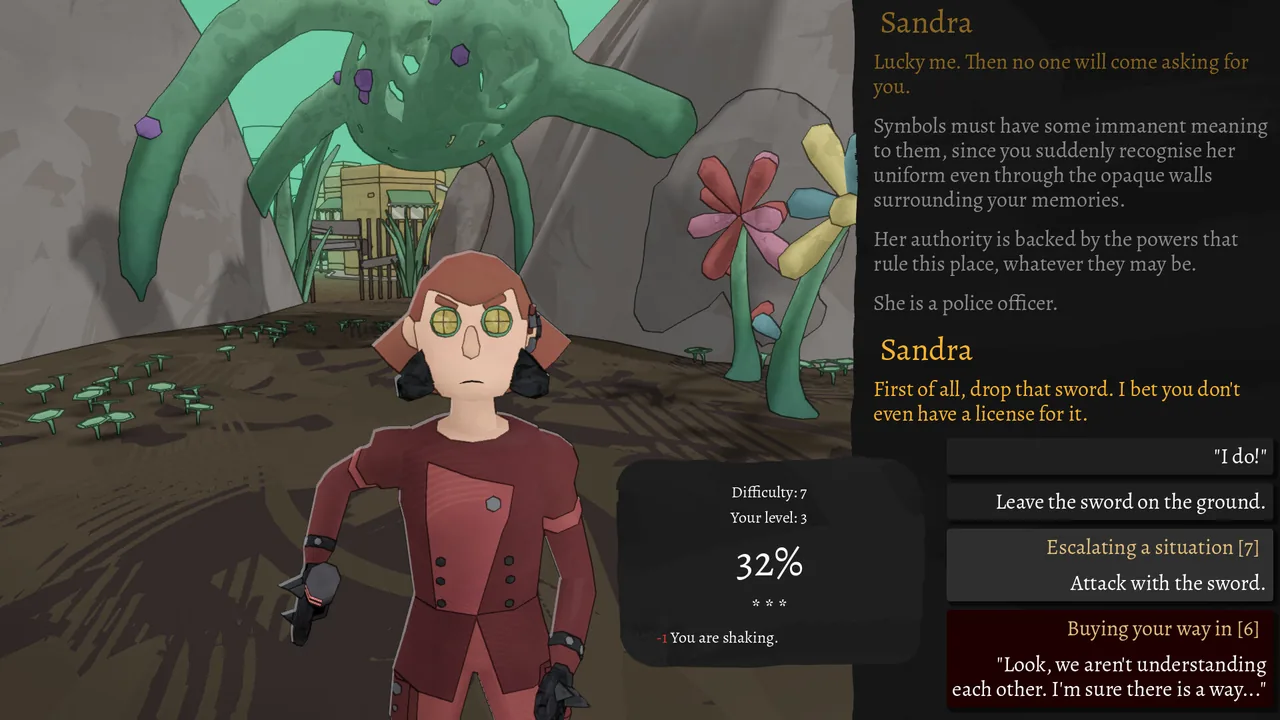
The first-person presentation of a dialogue-tree, skill-check RPG earned its own specific praise as a meaningful departure from genre convention. One reviewer wrote that they "quite like exploring the town in first person compared to an isometric experience," while another called the perspective shift "sort of a genuine innovation for the genre" alongside a small pop-up feature that explains how a dialogue option was unlocked. A more detailed reviewer broke down the moment-to-moment loop specifically, describing "exploration (1st person) and navigating dialogue trees (with multiple options that change depending on your past actions)," and praising the town of Tempura as "charming" with inhabitants that make "the world of Imago Season feel alive."
The skill-check and mutation systems, where failed checks push players toward alternative solutions and successful skill investment visibly transforms the character's body, were also called out specifically. One reviewer praised "the dice mechanic of 'Success' and 'Failure'" and said they "enjoyed seeing your body transform as you leveled up your skill trees," while another reviewer offered a practical breakdown for newcomers: stat upgrades come from "Morphism" chips, found on the ground or bought with credits, and "it's not hard to max your stats" over a single playthrough, with one achievement specifically rewarding players who avoid mutating at all.
Against that praise, the pool's most detailed negative review raises specific, concrete complaints about the game's scope rather than a vague dismissal. That reviewer wrote that "the overall play area is extremely small, and your movement is very frequently blocked off by invisible walls to the extent where it does not feel like there is really any reward for exploration," adding that a diagetic fast-travel system exists seemingly "to avoid walking for 30 seconds across the map," which they read as the game itself acknowledging the problem. The same reviewer stopped playing after about 30 minutes, judging that "continuing to play would [not] be a valuable use of my time," while still allowing that "for a first release from a studio that was very clearly limited on the scope of the game they could afford to produce it's alright."
The game's short runtime, generally a strength in the pool, cuts both ways depending on what a given reviewer wanted from the experience. One reviewer who finished the main story in three to four hours per playthrough (with three runs spanning roughly nine hours to fully complete) called the short run time "a huge strength," arguing that longer choices-matter RPGs often leave players "exhausted" by the idea of replaying largely the same content. But another reviewer who logged only about ninety minutes said they "got a single ending" and "do wish it was longer," and a third reviewer felt the story "feels like a first chapter to a real RPG," noting that the roughly three-hour main path "only really sets up the main conflict, without really solving anything," with just one meaningful decision of consequence before the ending on a first run.
Two brief negative reviews round out the pool's critical side without adding new specifics: one reviewer found the book-like, text-heavy pacing simply wasn't for them, writing plainly that "this type of games is something im not interested in," while a separate short review echoed that the story, while interesting, "failed to hook me." Neither raises a concrete technical or design complaint beyond genre mismatch, which is worth weighing lightly against the more detailed critique above.
On the technical side, the pool is quiet and reassuring: multiple reviewers specifically confirmed strong Steam Deck performance, and one Linux user noted the game "works perfectly fine without any kind of proton-emulator," a useful data point given the game's native Linux support alongside Windows.
Taken together, Imago Season is a well-written, distinctively presented first-person narrative RPG that earns its Disco Elysium comparisons on writing and atmosphere more than on scale or mechanical depth, and its short runtime will read as either a tightly disciplined strength or a frustrating limitation depending on how much game a given player wants for their money. For readers who want a focused few hours of dialogue, dice, and body-horror-tinged sci-fi world-building rather than a sprawling epic, it's an easy recommendation.
Pros and cons
Pros
- Genuinely strong writing and world-building, evoking comparisons to Disco Elysium and Ursula K. Le Guin's Hainish Cycle from multiple reviewers
- A first-person take on the dialogue-tree, skill-check RPG format that several reviewers found a fresh change from the genre's usual isometric perspective
- A distinctive dice-and-skill-check system tied to visible bodily mutation, letting players see their choices change their character's body over a run
- A tight, well-judged runtime of roughly three to eight hours that reviewers repeatedly praised for avoiding the bloat common to choices-matter RPGs
Cons
- A small, heavily gated play area with frequent invisible walls that at least one reviewer found made exploration feel pointless rather than rewarding
- Thin mechanical depth for players expecting a fuller RPG, with only one major decision of real consequence before the ending on a first run
- A short main story that some reviewers found ends just as it sets up its central conflict, functioning more like a first chapter than a complete arc
- Prose that at least one reviewer described as a bit too naive or blunt for the weight of the themes it's tackling
Screenshots
-
Imago SeasonImage: Haunted Publishing Syndicate via Steam -
Imago SeasonImage: Haunted Publishing Syndicate via Steam -
Imago SeasonImage: Haunted Publishing Syndicate via Steam