Game review
Idle TD: Heroes vs Zombies
4.5 / 10
- Developer
- Swell Games LLC
- Publisher
- Swell Games LLC
- Released
- 24 January 2022
- Platforms
- Windows, macOS
- Genre
- Idle, Tower Defense, Free To Play
- Monetisation
- Free-to-play with an in-game gem currency and heavy in-app purchases covering offline-progress length, damage, gold, experience, game speed and hero unlocks
- Players
- Bi-weekly asynchronous PvP leaderboard tournaments; no direct player-versus-player battles
The short version
Idle TD: Heroes vs Zombies is a free-to-play mashup of tower defense and idle progression from Swell Games, released in full on Steam 24 January 2022 after an Early Access period that began the previous July. Sitting at Mostly Positive across 109 English-language reviews (all of which were read for this review), the game's biggest problem is not execution but reputation: a large share of its own negative reviews, several of them the most-upvoted the game has ever received, describe it as a reskin of the developer's earlier Idle Monster TD, released barely a month before this game entered Early Access, and criticise a monetisation structure that itemises nearly every meaningful stat behind a separate purchase.
Biggest strengths
- The core tower-defense-meets-idle loop works as advertised for patient, unhurried players, with several reviewers logging thousands of hours and describing it as a legitimate background game to check on periodically
- Forty heroes with distinct skill sets create genuine synergy decisions when choosing which ten to field, which multiple long-time players single out as the system that kept them engaged
- Bi-weekly PvP tournaments give an otherwise purely single-player idle loop a competitive structure and leaderboard to chase
Biggest weaknesses
- A large share of the negative review sample, including the single most-upvoted review this game has ever received, describes it as a reskin of the developer's own earlier Idle Monster TD, and the release timeline supports the comparison
- Free idle progress caps at four hours; unlocking longer offline rewards is one of several permanent stat categories sold separately, alongside damage, gold, experience, game speed and hero-unlock rate
- The interface and pacing are built around a touchscreen mobile experience, which several PC reviewers describe as an uncomfortable fit even after adjusting expectations
Who it's for: Players who already enjoy Swell Games' Idle Monster TD and want more of the same systems; a poor fit for anyone allergic to itemised free-to-play monetisation or looking for an idle game that respects offline time by default.
Our recommendation: A functional idle tower defense that a meaningful share of its own audience considers an unnecessary rerelease of a better game by the same studio, sold with one of the more aggressively itemised in-app purchase menus documented in this library.
4.5 / 10
Introduction
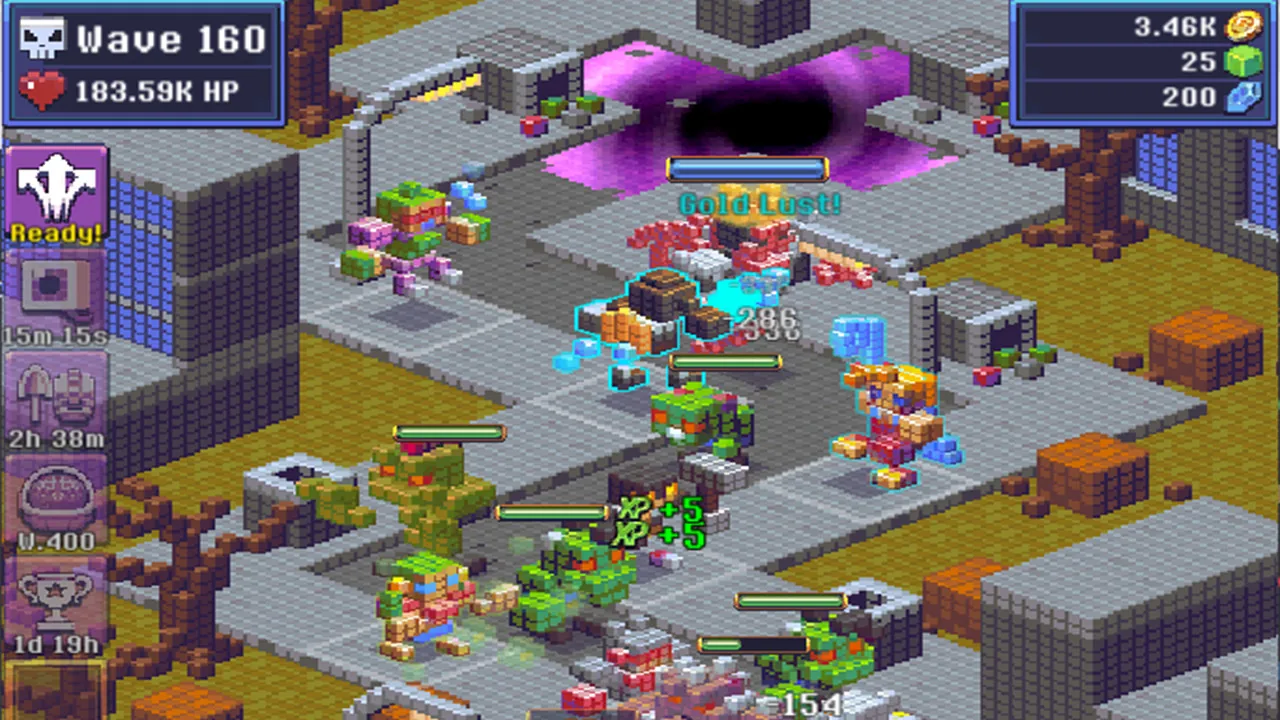
Idle TD: Heroes vs Zombies asks players to command an army of pixel-art heroes against an endless zombie horde, blending tower defense placement with idle-genre number-climbing: heroes sit on a lane, zombies stream toward them, and progress continues in a limited form even when the game is closed. Developed and published by Swell Games LLC, it entered Steam Early Access on 29 July 2021 and reached full release on 24 January 2022, a few months after an iOS launch the previous August. Four years on it sits at Mostly Positive, 73.4% across the 109 English-language reviews this review reads in full. That headline score undersells how specific and how consistent the complaints underneath it are — this is a game whose own most-upvoted review isn't really about the gameplay at all.
An idle tower defense that mostly does what it says
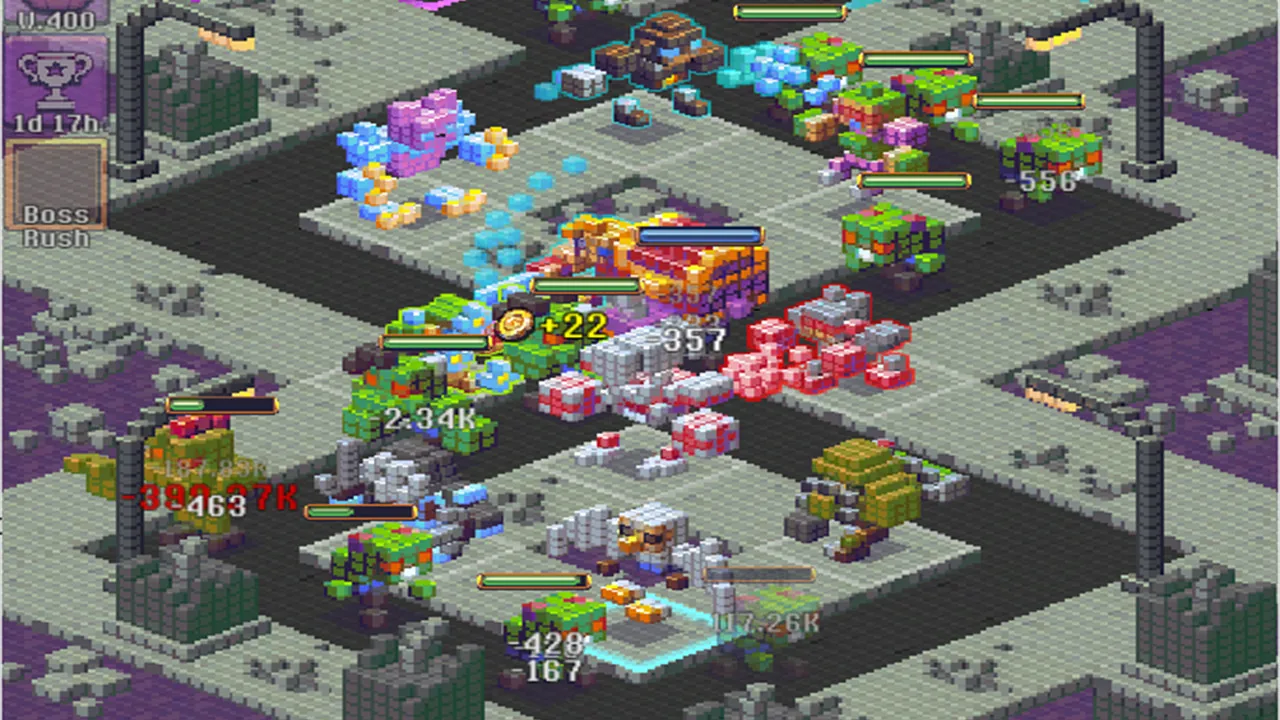
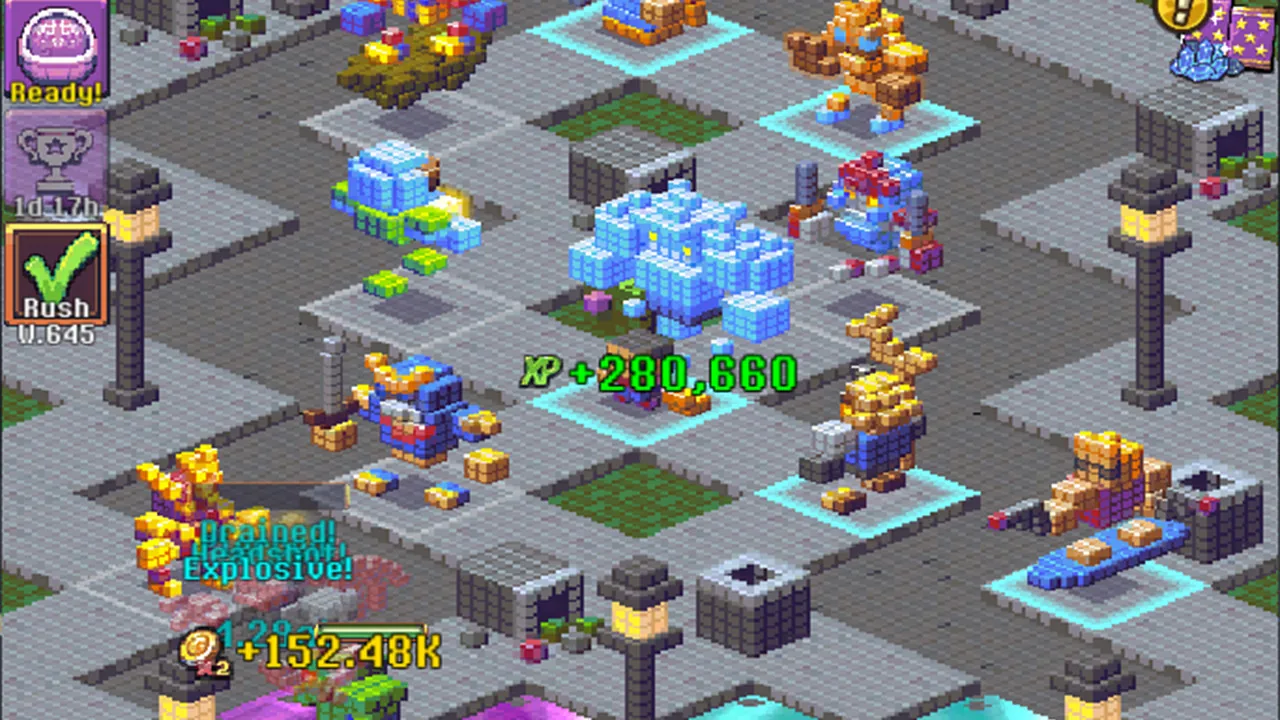
Strip away the surrounding controversy and there's a functional game here. Forty heroes, each with a distinct skill set, can be rotated in and out of a ten-slot roster, and reviewers with the most invested playtime consistently credit hero synergy as the system that kept them coming back — pairing a fast, weak attacker like Earth Surfer with a heavy hitter like Light Bringer is the kind of decision space that separates a real tower defense game from a pure number-clicker. Progress continues through zombie waves that scale endlessly, upgrades and research trees give regular short-term goals, and bi-weekly PvP tournaments add a competitive leaderboard layer that a purely single-player idle loop wouldn't otherwise have. Several reviewers with genuinely enormous playtime — one logging over 12,000 hours, several others in the 3,000-5,000 hour range, almost entirely from the game's first year — describe it as exactly the kind of low-effort background game they wanted, something to check between other activities rather than a game demanding full attention.
The reskin problem
Here's what separates this review from a straightforward "grindy F2P game" writeup: an unusually large share of the negative sample, independently and without prompting, calls Idle TD: Heroes vs Zombies a reskin of Swell Games' own earlier release, Idle Monster TD. That's not an idle accusation — the timeline supports it directly. Idle Monster TD released on Steam 20 June 2021; Idle TD: Heroes vs Zombies entered Early Access almost exactly five weeks later, on 29 July 2021, under the same developer. One reviewer put the comparison in the plainest possible terms: "Sadly this is only a reskin of Idle Monster TD, but sadly worse. At the core the game is nice and could be fun, like the games before. But if you own one of the previous games, there is no actual reason to upgrade to this." That review carries 58 votes, and it's far from alone — "reskin" appears independently across at least half a dozen of the 29 English negatives, and even several positive reviews concede the point while still recommending the game: one 5,025-hour player summed the whole thing up in five words, "idle tower monster in a new skin."
To be fair to Swell Games, releasing a spiritual successor built on proven mechanics isn't inherently a problem — plenty of studios iterate on their own systems. What turns this into a genuine complaint rather than a stylistic note is that reviewers on both sides describe the sequel's monetisation as having gotten worse, not better, in the handover.
The single most-upvoted review this game has
That brings us to the review that dominates this game's page by a wide margin: 207 votes, more than three times the second-highest negative review, and by far the most attention any single piece of feedback on this game has ever received. It alleges specific developer conduct — that the developer offered in-game premium currency to players who left five-star ratings across Steam, Android and iOS, and quotes what it presents as a developer statement from the game's Discord explaining a deliberately hidden pay-to-win mechanic: "It's to not scare away new players with a p2w mechanic, need to get them hooked by playing for a few days before they see such evils." This review cannot verify a private Discord exchange, and treats that specific allegation as exactly what it is — one player's account, not a confirmed fact. What's independently checkable is the itemised purchase list the same review lays out, and it matches what dozens of other reviewers describe separately: permanent boosts to damage, gold, game speed, hero-unlock rate and prestige points are each sold as separate purchases, offline progress beyond four hours is paywalled rather than earned, and daily purchase bundles reportedly total in the tens of dollars, displayed persistently on the main screen. Whatever the truth of the Discord quote, the monetisation structure it describes is corroborated, independently, by a large enough share of this game's own review base that it reads as the honest baseline rather than an outlier complaint.
Monetisation, itemised
It's worth laying out plainly what reviewers describe paying for, because "pay to win" is a label this review won't apply without saying exactly what's being sold. Beyond the base free download, purchasable permanent upgrades reported across multiple reviews include: extended offline-progress duration past the free four-hour cap, a permanent damage multiplier, a permanent gold-drop multiplier, a permanent experience multiplier, increased hero-unlock rate, and boosts usable specifically during the bi-weekly PvP tournaments — meaning competitive standing, not just solo progression speed, can be purchased directly. One reviewer itemised roughly NZ$60 of stacked daily bundles being pushed on the main screen at once. Against that, a small number of long-time players push back hard on the "pay to win" framing specifically, arguing the gap is closeable through patient free play and that competitive tournament placement isn't actually locked behind spending. Both readings appear in the same review sample, from players with comparable playtime, which is the honest way to present a genuinely contested point: the systems exist as described, and how punishing they feel in practice depends on how much of a hurry the player is in.
Interface, difficulty, and where players actually stop
The interface draws its own complaints independent of the reskin debate — several reviewers describe portrait-mode, touch-first menus that feel out of place on a PC screen, exactly what you'd expect from a game built mobile-first and ported rather than designed for a desktop session. Steam's global achievement data gives an objective read on where the difficulty curve actually bites: the single most-earned achievement, awarded for reaching the game's first prestige reset, sits at only 46.6%, meaning a majority of everyone who has ever launched this game never got that far. From there the curve tapers steadily down to 6.5% for the hardest wave milestone, with no achievement in the entire list clearing 50%. That's a notably softer opening than plenty of idle games in this library manage, and it lines up with the reviews describing an unusually slow, friction-heavy early game for a genre that usually front-loads its hooks.
A studio that stopped showing up
Steam's news feed for this game holds exactly three posts, all from 2021, the last dated 21 October — three months before the game's official 24 January 2022 full release, and the feed has carried nothing since. That's a meaningful data point on its own: whatever roadmap existed during Early Access appears to have wrapped up before the game technically left it. Reviews from as recently as 2026 still trickle in, including a handful from players logging thousands of hours as late as this year, so a small dedicated base clearly still exists and still plays — this reads as a studio that built something functional, monetised it aggressively from the start, and then moved on, rather than a game that collapsed technically or emptied out entirely.
Final Verdict
Idle TD: Heroes vs Zombies works, mechanically, as an idle tower defense — the hero-synergy decisions are real, the loop scales sensibly, and a real audience has logged thousands of hours in it since 2021. What holds it back from a fairer score is that a substantial share of its own review base, led by the single most-upvoted piece of feedback this game has ever received, describes it as an unnecessary rerelease of a better game by the same studio, monetised more aggressively than its predecessor and abandoned by its developer within months of reaching its official release. None of that is unverifiable rumour — the release timeline against Idle Monster TD, the itemised in-app purchase list, and the three-post news feed are all checkable facts that corroborate the pattern independently of any single review's more serious allegations. If you've never played Swell Games' earlier idle tower defense and don't mind an itemised monetisation menu, there's a working game here. If you have, most of this game's own audience says you already own the better version.
Pros and cons
Pros
- The core tower-defense-meets-idle loop works as advertised for patient, unhurried players, with several reviewers logging thousands of hours and describing it as a legitimate background game to check on periodically
- Forty heroes with distinct skill sets create genuine synergy decisions when choosing which ten to field, which multiple long-time players single out as the system that kept them engaged
- Bi-weekly PvP tournaments give an otherwise purely single-player idle loop a competitive structure and leaderboard to chase
- Achievements and daily missions give short-session players concrete goals beyond simply letting numbers climb
Cons
- A large share of the negative review sample, including the single most-upvoted review this game has ever received, describes it as a reskin of the developer's own earlier Idle Monster TD, and the release timeline supports the comparison
- Free idle progress caps at four hours; unlocking longer offline rewards is one of several permanent stat categories sold separately, alongside damage, gold, experience, game speed and hero-unlock rate
- The interface and pacing are built around a touchscreen mobile experience, which several PC reviewers describe as an uncomfortable fit even after adjusting expectations
- The developer's visible support ended within roughly nine months of the game's Early Access launch, with no further news posts around or after the full 1.0 release this review covers
Screenshots
-
Idle TD: Heroes vs ZombiesImage: Swell Games LLC via Steam -
Idle TD: Heroes vs ZombiesImage: Swell Games LLC via Steam -
Idle TD: Heroes vs ZombiesImage: Swell Games LLC via Steam -
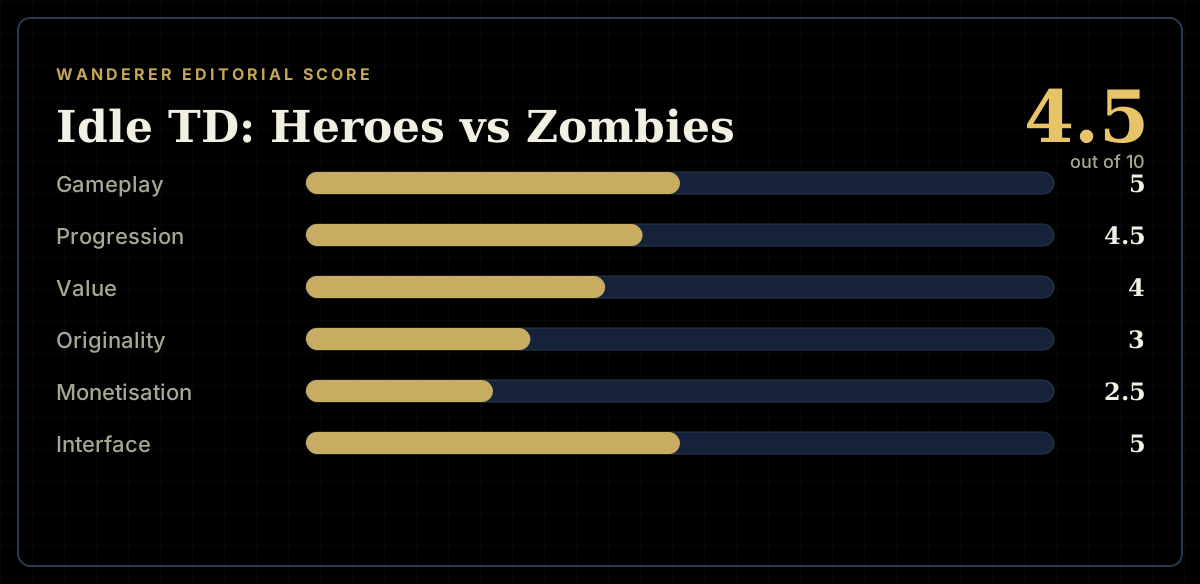
How the review scores each part of the gameWanderer Editorial -
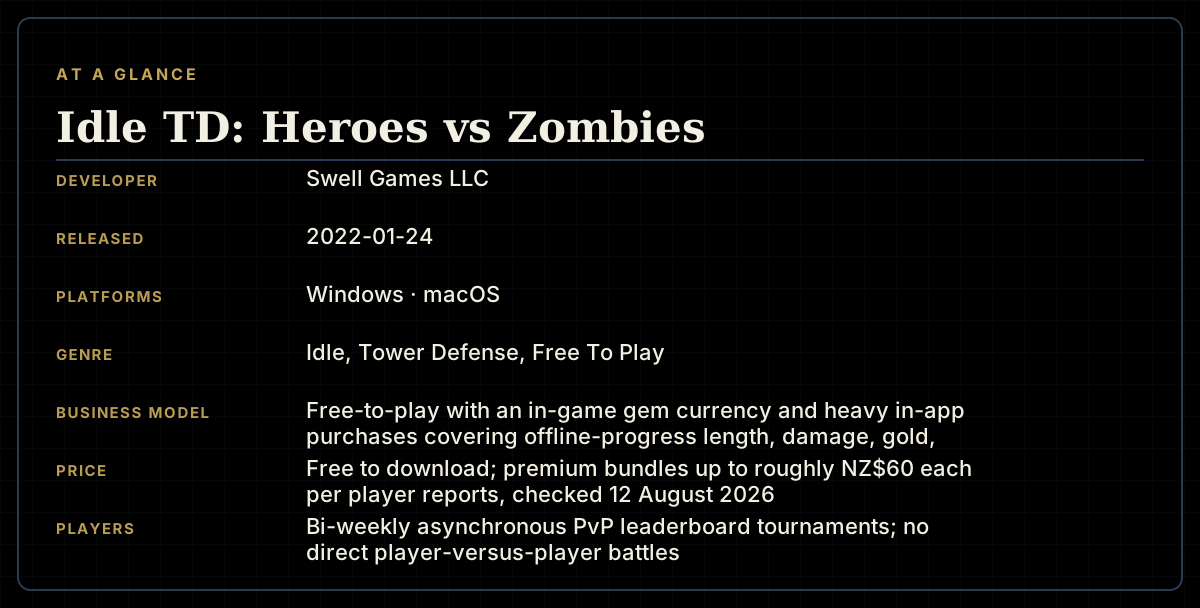
The essentials at a glanceWanderer Editorial -
The short versionWanderer Editorial