Game review
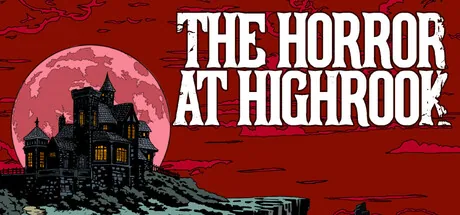
The Horror at Highrook
6 / 10
- Developer
- Nullpointer Games
- Publisher
- Nullpointer Games, Outersloth
- Released
- 1 May 2025
- Platforms
- Windows
- Genre
- Indie, RPG, Simulation
- Monetisation
- Premium, one-time purchase. No microtransactions.
- Players
- Single-player only.
The short version
The Horror at Highrook is Nullpointer Games' occult card-crafting narrative RPG, sending a team of investigators into a haunted mansion to uncover the fate of a missing family through resource management, card matching, and a linear, choice-driven Lovecraftian story. It earns a Very Positive score built on strong, consistent praise for its atmosphere, art direction, and writing, comparisons to Cultist Simulator and Arkham Horror abound, but an equally consistent, heavily corroborated complaint holds that its actual gameplay never meaningfully expands beyond what its free demo already demonstrated, resulting in a short, easy, one-and-done experience several reviewers feel is priced well above what it delivers.
Biggest strengths
- Praised consistently for atmosphere, art, and music, with one reviewer calling the presentation "top notch" and another separately naming the atmosphere, sound, and story as "the real star of the game."
- Praised as an accessible on-ramp to Cultist Simulator-style design, with one reviewer specifically recommending it to anyone who "enjoy[s] Cultist Simulator, but wish it had a distinct narrative," and another calling it "a lot less trial-and-error, a lot less RNG" than its inspirations while remaining recognisably in the same tradition.
- Praised for strong writing within its Lovecraftian horror-without-Cthulhu setting, with one reviewer specifically crediting a "refreshing breeze" in avoiding the genre's most overused icon, and another separately praising character design and lore notes as "more developed" than the main story alone.
Biggest weaknesses
- An overwhelming, heavily corroborated complaint holds the released game does not meaningfully expand on its own free demo, with one reviewer who fully cleared the game with all achievements reporting it "merely adds more demo-level content," calling the result "more of a proof of concept than an engaging game."
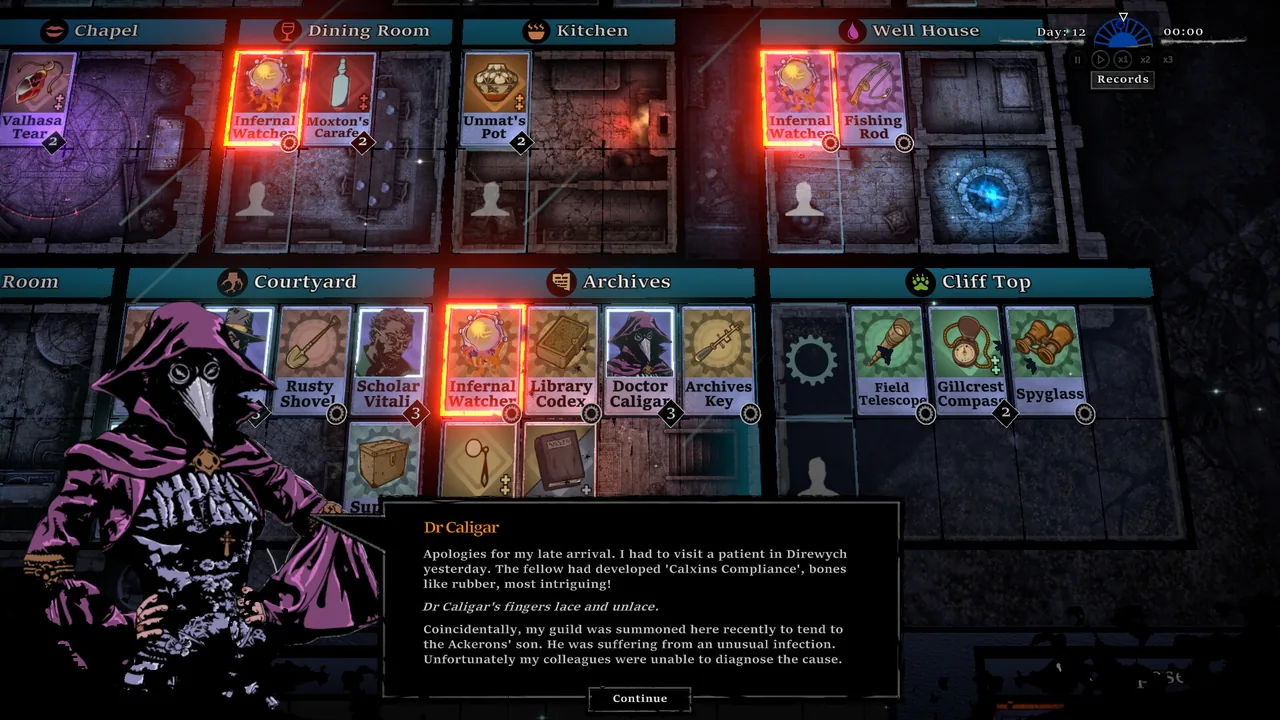
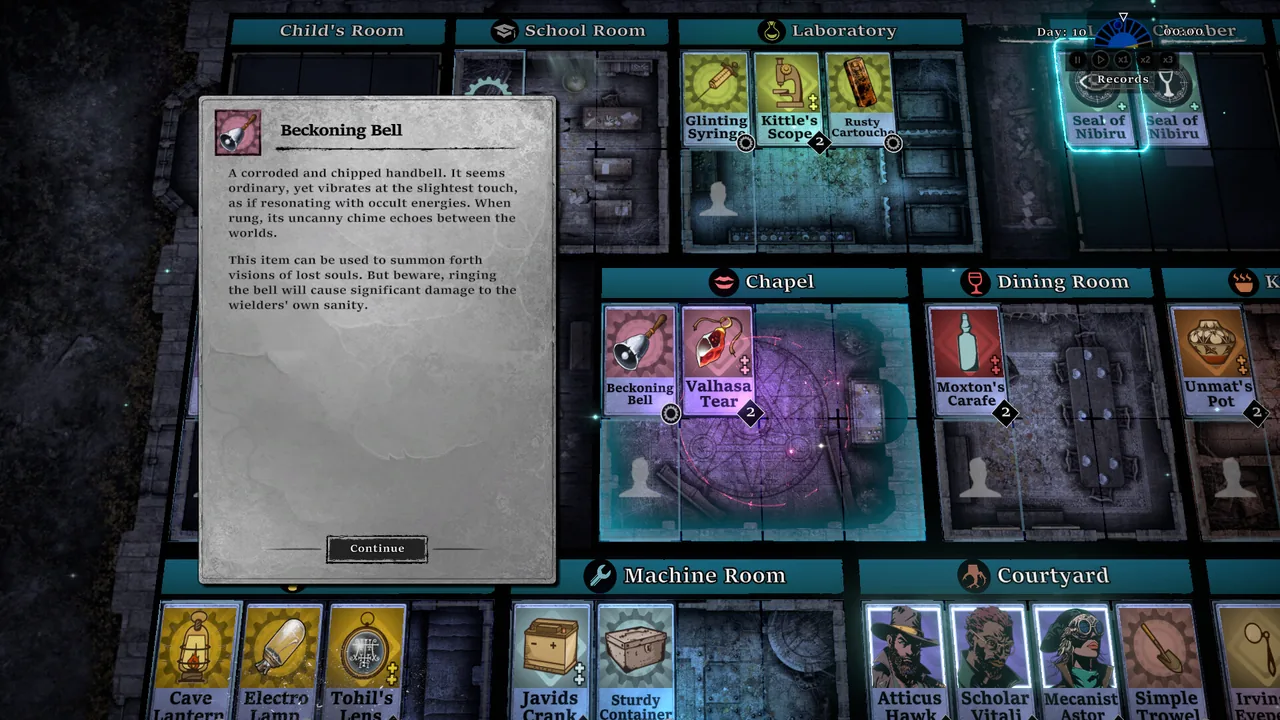
- A widely corroborated complaint concerns shallow, undemanding mechanics, with one reviewer summarising the core loop as "move all cards to matching rooms and click activate," arguing "even if done randomly you will eventually beat the game," and another separately noting they were "not once... near to lose" any of their investigators across a full playthrough.
- A fair, corroborated complaint concerns length and replay value relative to price, with one reviewer calling it "essentially a walking simulator in a card form: short, overpriced, and entirely without any replay value," and another separately completing the entire game and all achievements in roughly 10 hours including restarts.
Who it's for: Fans of Cultist Simulator or Book of Hours intimidated by those games' length and complexity, and players drawn primarily to strong Lovecraftian atmosphere, art, and writing over deep mechanical challenge; players wanting genuine exploration, discovery, or replayability should temper expectations or wait for a discount.
Our recommendation: A beautifully atmospheric, well-written occult card game let down by mechanics that never grow past its demo — worth it for the story and mood alone, but only at the right price.
6 / 10
An occult card game with familiar, well-chosen influences
The Horror at Highrook, released 1 May 2025 by Nullpointer Games, sends a small team of investigators into a haunted mansion to uncover the fate of its missing family, using a card-crafting and resource-management system to explore rooms, summon dark entities, and craft protections against escalating cosmic horror. Its influences are worn openly and, according to the review sample, worn well: reviewers reach again and again for the same handful of comparisons, Cultist Simulator, Weather Factory's Book of Hours, and the board games Arkham Horror and Mansions of Madness, framing Highrook as sitting somewhere between those touchstones, a more condensed, narratively focused take on a card-driven occult-investigation formula that has built a genuinely devoted niche audience over the past decade.
That positioning earns real, specific praise from reviewers already fluent in that niche. One detailed review structures itself explicitly as a recommendation checklist, telling readers to buy the game if they "enjoy Cultist Simulator, but wish it had a distinct narrative," or if they enjoy board games like Mansions of Madness and want "a singleplayer video game that scratches the same itch." Another reviewer, self-identified as more drawn to the greater complexity of Cultist Simulator and Book of Hours, still gives the game a thumbs up specifically because they "can recognize a well made game that just happens to be targeted at a different audience," a notably generous framing that recurs across several reviews from players who did not personally love the experience but respected its craft and its clear target audience.
Atmosphere and writing carry the experience
Where the review sample is closest to unanimous is on presentation. Reviewers repeatedly single out the art direction, music, and sound design as genuine highlights, with one describing the game's "presentation" as "top notch" from the opening moments, and another going further, calling atmosphere, sound, and story collectively "the real star of the game," specifically praising the writing as "a lit[erary]" cut above genre expectations. A notable, recurring point of praise concerns the setting's specific take on Lovecraftian horror: multiple reviewers highlight the game's decision to explore cosmic horror themes without leaning on Cthulhu mythology directly, one calling it "a refreshing breeze" compared to how saturated the genre has become with that specific iconography.
The game's more accessible, streamlined design compared to its clear inspirations also draws consistent praise from reviewers who found Cultist Simulator's famously opaque, trial-and-error systems offputting. One reviewer describes Highrook as "Cultist Simulator-lite," explicitly framing that as "not criticism, that's praise," crediting "a lot less trial-and-error, a lot less RNG" for making the experience more approachable without feeling dumbed down. That accessibility, paired with the game's strong presentation, is clearly the combination winning over the large majority of its Very Positive review sample.
A demo's worth of game, stretched across a full price tag
The review sample's most serious, most consistently repeated criticism concerns exactly what that streamlining costs the game mechanically, and it comes through with unusual precision and detail. One of the most upvoted negative reviews reports having fully cleared the game and earned all its achievements, only to conclude the released version "merely adds more demo-level content" to what the free demo already offered, calling the final result "more of a proof of concept than an engaging game" despite genuinely liking its component parts individually. That framing, the pieces are good, but they are never assembled into something that grows or challenges the player, recurs across a large share of the critical reviews.
The specific mechanical complaint underlying that framing is stated bluntly by multiple reviewers: the core gameplay loop amounts to little more than assigning cards to matching rooms and clicking to activate them, with one reviewer arguing "even if done randomly you will eventually beat the game," and another separately reporting they were "not once... near to lose" any of their investigators across an entire playthrough, undercutting the tension a horror-themed game depends on. A related complaint concerns the story's linearity, with one reviewer contrasting it directly against Cultist Simulator's open-ended sandbox structure, noting "there is no exploration like in CS," and arguing that while a tightly directed story is not inherently a weakness, the game "tells you exactly what to do, when to do it, and how to do it" in a way that removes any sense of genuine discovery or experimentation from the investigation at the heart of its premise.
Combined with reports of relatively short completion times, one reviewer finished the entire game and earned all achievements in around ten total hours including restarts, and a general absence of meaningful branching or replay incentive, several reviewers land on the same underlying conclusion: the experience, while polished and well-written, does not justify its asking price for players expecting genuine mechanical depth or discovery to match its strong atmosphere.
Verdict
The Horror at Highrook is a genuinely well-crafted piece of atmosphere and writing wrapped around mechanics that, by the review sample's own overwhelming account, never grow past what a free download already showed. That is not a fatal flaw for every player: reviewers specifically drawn to Cultist Simulator's world and themes but intimidated by its length and opacity will likely find exactly the shorter, gentler, story-forward experience they are looking for, and the game's art, music, and writing are strong enough to carry that audience through to the credits with real satisfaction. But for players expecting the deeper resource-management puzzle-solving its genre comparisons imply, the consistent, specific complaints about shallow mechanics, low challenge, and thin replay value are hard to dismiss as a minority opinion. Play the demo first, as several reviewers explicitly recommend, and treat your reaction to it as a near-perfect preview of the entire paid game rather than a limited slice of something larger.
Pros and cons
Pros
- Praised consistently for atmosphere, art, and music, with one reviewer calling the presentation "top notch" and another separately naming the atmosphere, sound, and story as "the real star of the game."
- Praised as an accessible on-ramp to Cultist Simulator-style design, with one reviewer specifically recommending it to anyone who "enjoy[s] Cultist Simulator, but wish it had a distinct narrative," and another calling it "a lot less trial-and-error, a lot less RNG" than its inspirations while remaining recognisably in the same tradition.
- Praised for strong writing within its Lovecraftian horror-without-Cthulhu setting, with one reviewer specifically crediting a "refreshing breeze" in avoiding the genre's most overused icon, and another separately praising character design and lore notes as "more developed" than the main story alone.
Cons
- An overwhelming, heavily corroborated complaint holds the released game does not meaningfully expand on its own free demo, with one reviewer who fully cleared the game with all achievements reporting it "merely adds more demo-level content," calling the result "more of a proof of concept than an engaging game."
- A widely corroborated complaint concerns shallow, undemanding mechanics, with one reviewer summarising the core loop as "move all cards to matching rooms and click activate," arguing "even if done randomly you will eventually beat the game," and another separately noting they were "not once... near to lose" any of their investigators across a full playthrough.
- A fair, corroborated complaint concerns length and replay value relative to price, with one reviewer calling it "essentially a walking simulator in a card form: short, overpriced, and entirely without any replay value," and another separately completing the entire game and all achievements in roughly 10 hours including restarts.
Screenshots
-
The Horror at HighrookImage: Nullpointer Games via Steam -
The Horror at HighrookImage: Nullpointer Games via Steam -
The Horror at HighrookImage: Nullpointer Games via Steam -
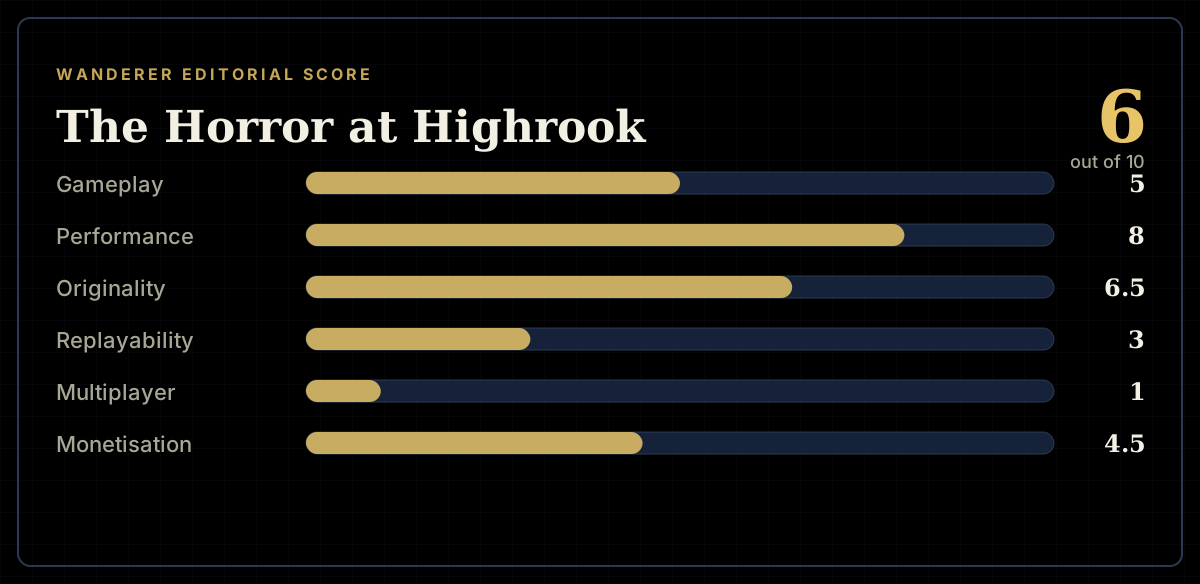
How the review scores each part of the gameWanderer Editorial -
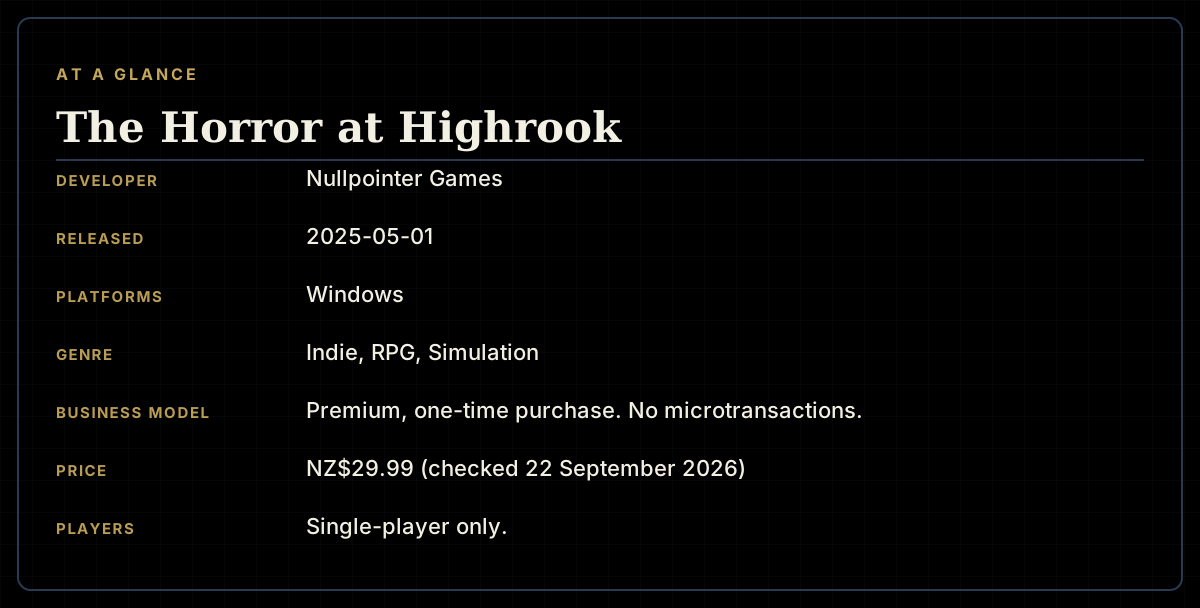
Key facts at a glanceWanderer Editorial -
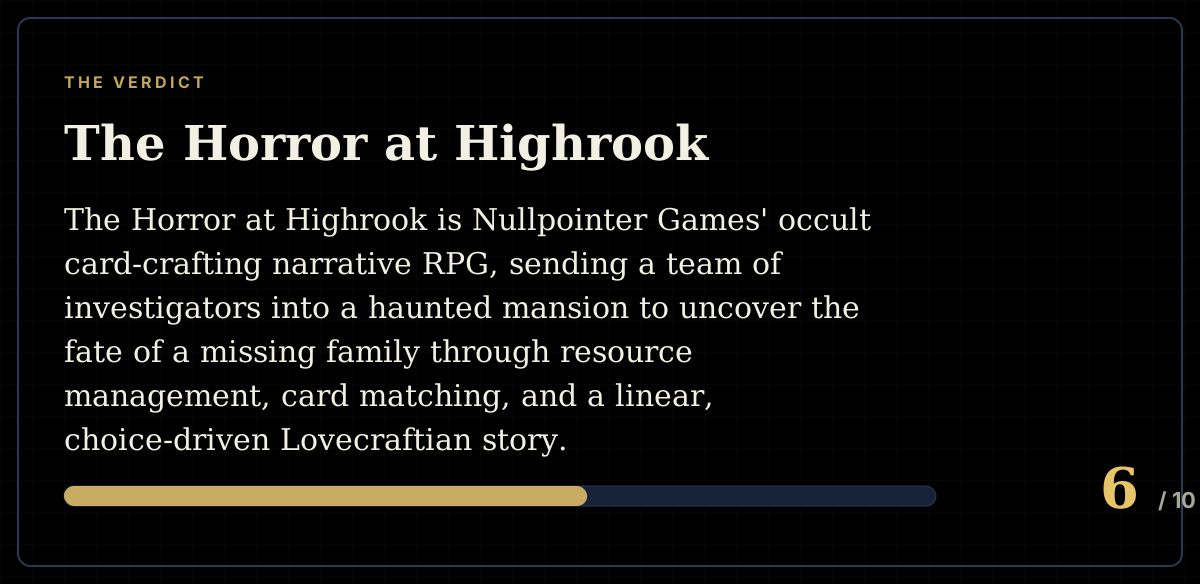
The short versionWanderer Editorial