
Game review
Gridbound Review
7.5 / 10
- Developer
- SkidaddleDev
- Publisher
- SkidaddleDev
- Released
- 5 September 2026
- Platforms
- ["Windows"]
- Genre
- Puzzle Idler
A Grid, Some Items, And A Slowly Unfolding Puzzle
Gridbound, released September 5, 2026 by solo developer SkidaddleDev, is a $2.99 grid-based puzzle and resource strategy game built around a deceptively simple loop: place items on a board, watch them generate coins and magical essence, and figure out which combinations turn a cluttered grid into an efficient one. All seven of its English reviews are positive, and the review pool is unusually consistent in describing exactly what kind of game this is, and isn't. As one reviewer sums it up, "place items on a grid to collect coins and essence to unlock abilities and helping trinkets, more items, new worlds," while another calls it simply "fun and chill idle game with a twist for the player to think on how to optimize the best way possible."
Two Ways To Play The Same Board
What stands out across the review pool is that Gridbound seems to genuinely support two different playstyles on the exact same grid. Some reviewers treat it as an active optimization puzzle, hunting for the single most efficient arrangement of items before moving on. Others treat it as a background idle game, letting a good-enough setup tick along while they do something else. One reviewer captures both modes in a single sentence: "one can puzzle to make great combinations but I played it more chill and just let it run now and then. Nonetheless, I enjoyed unlocking everything." Another reviewer, who says they favor "find synergy" incrementals specifically, praises how well the game nails that structure while still being generous to a more relaxed approach. That flexibility, rather than any single mechanical hook, seems to be the game's real selling point.
New Levels That Don't Abandon The Old Ones
The progression structure earns specific, detailed praise from multiple reviewers, and it's a smarter design than the "unlock the next level and never look back" pattern common to the genre. One reviewer describes it in NG+ terms: "you unlock new areas with new items to get, new obstacles to build around, new mechanics and ways to progress, etc. Except your previous levels will still be useful for researching the skill tree while you're getting up to speed on a new level. These transitions are paced very well." Another reviewer independently confirms the same structural choice, noting that "setups in previous levels affects resource income and moving forward in levels does not block you from going back," which gives the player room to return to an earlier board and re-optimize it once new tools or trinkets become available. That backward-compatibility between levels, where an old grid keeps mattering instead of becoming a discarded relic, is the kind of detail that's easy to overlook in a screenshot but clearly registers with the people actually playing it.
An Interface That Reviewers Say Needs Work
Not everything lands cleanly, and the review pool is candid about where the game falls short even while staying positive overall. The most detailed critique comes from a reviewer who otherwise enjoys the puzzle concept: "the UI is not really intuitive/space maxxing, feels like its designed for a phone, having to go back and forth to page 1/2 is annoying. Same with clicking other menu items to show/hide stuff all the time." The same reviewer flags a more concrete missing feature, that one-off changes can't be undone until a specific late-game unlock provides save/import functionality, which turns early experimentation into a more cautious, save-scummed process than it probably needs to be. Another reviewer playing on Steam Deck reports a smaller but related issue: "apart from some text being not very readable, it went just great," suggesting the interface's small-target, text-dense design was likely built with mouse-and-keyboard in mind first and adapted to handheld and controller play second.
Item Variety Without The RNG Frustration
For a genre that often lives or dies on random drops, reviewers specifically call out Gridbound for avoiding the worst of that frustration. One reviewer explains that "there's plenty of ways to progress, so you won't really stagnate due to bad RNG drops (getting new items is randomized), except in level 3," a caveat given honestly rather than glossed over. That same reviewer admits their own play pattern tended toward "stack boosts on a single strongest producer" as the dominant strategy once discovered, but frames finding that strategy as the actual fun of the game rather than a sign the systems are shallow. Combined with a soundtrack that at least one reviewer found "really repetitive" enough to turn off entirely, the overall picture is a game whose core loop is stronger than its supporting details, competent where it counts and a little unpolished everywhere else.
Verdict
Gridbound doesn't try to reinvent the grid-puzzle-meets-incremental genre, and it doesn't need to. At $2.99, it delivers a genuinely well-paced progression system, real flexibility between active puzzling and passive idling, and enough item variety to keep the "figure out the optimal setup" loop interesting across multiple worlds, all cited approvingly and specifically by a small but unanimous review pool. The rough edges, an unintuitive menu-heavy interface, a missing undo option until deep into the tech tree, and music several players muted outright, keep it from being a polished standout, but none of them undermine the core appeal reviewers keep returning to.
For a solo-developed game priced under three dollars, that's a strong showing. It's the kind of release that rewards patience with its interface in exchange for a puzzle structure that respects the player's earlier decisions instead of discarding them, and for the handful of reviewers who've found it so far, that trade has clearly been worth making.
Screenshots
-
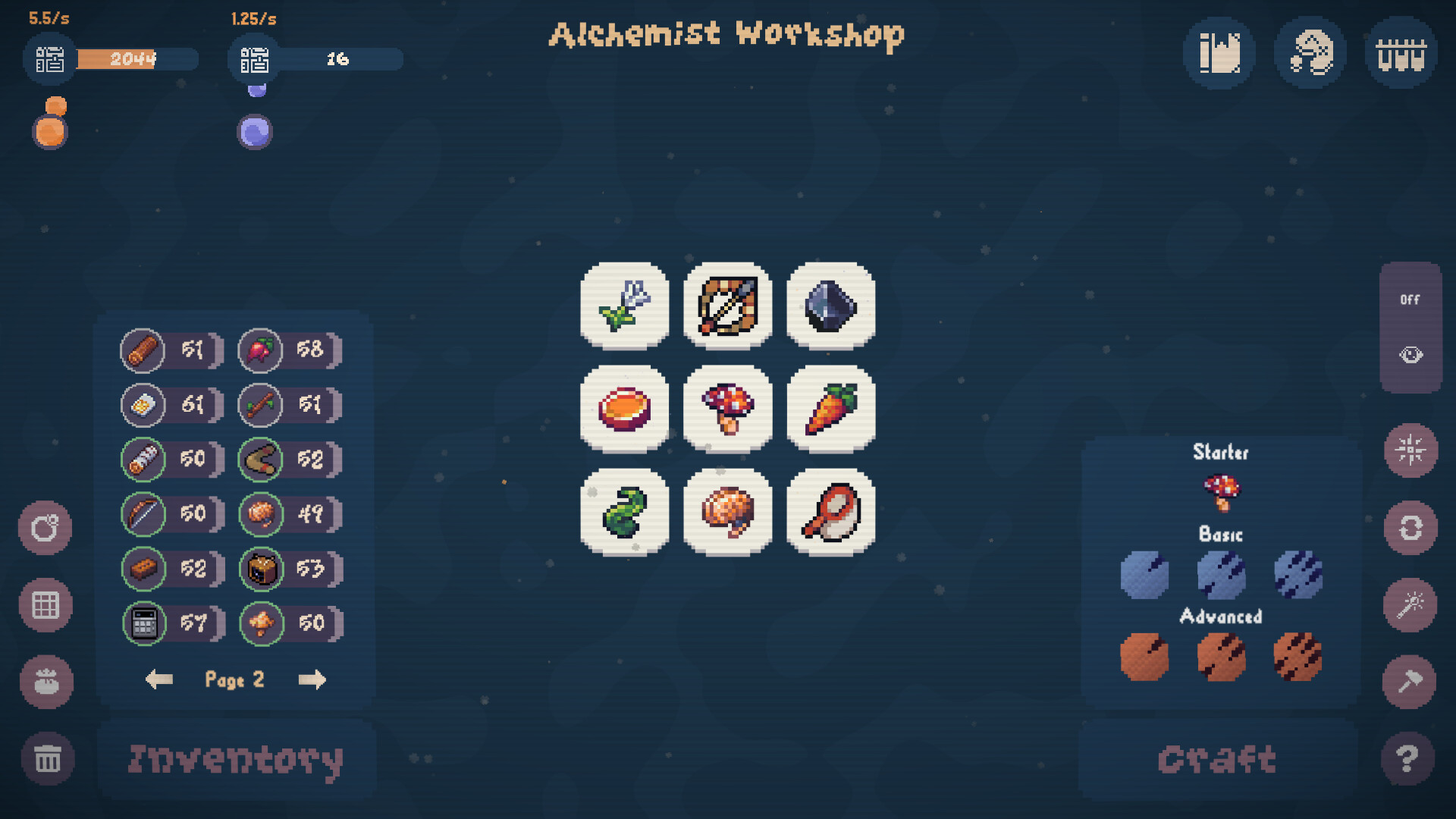
The Alchemist Workshop, one of the game's crafting boards, where raw resources on the left get turned into the items reviewers say create the game's best combinations.Image: SkidaddleDev via Steam -
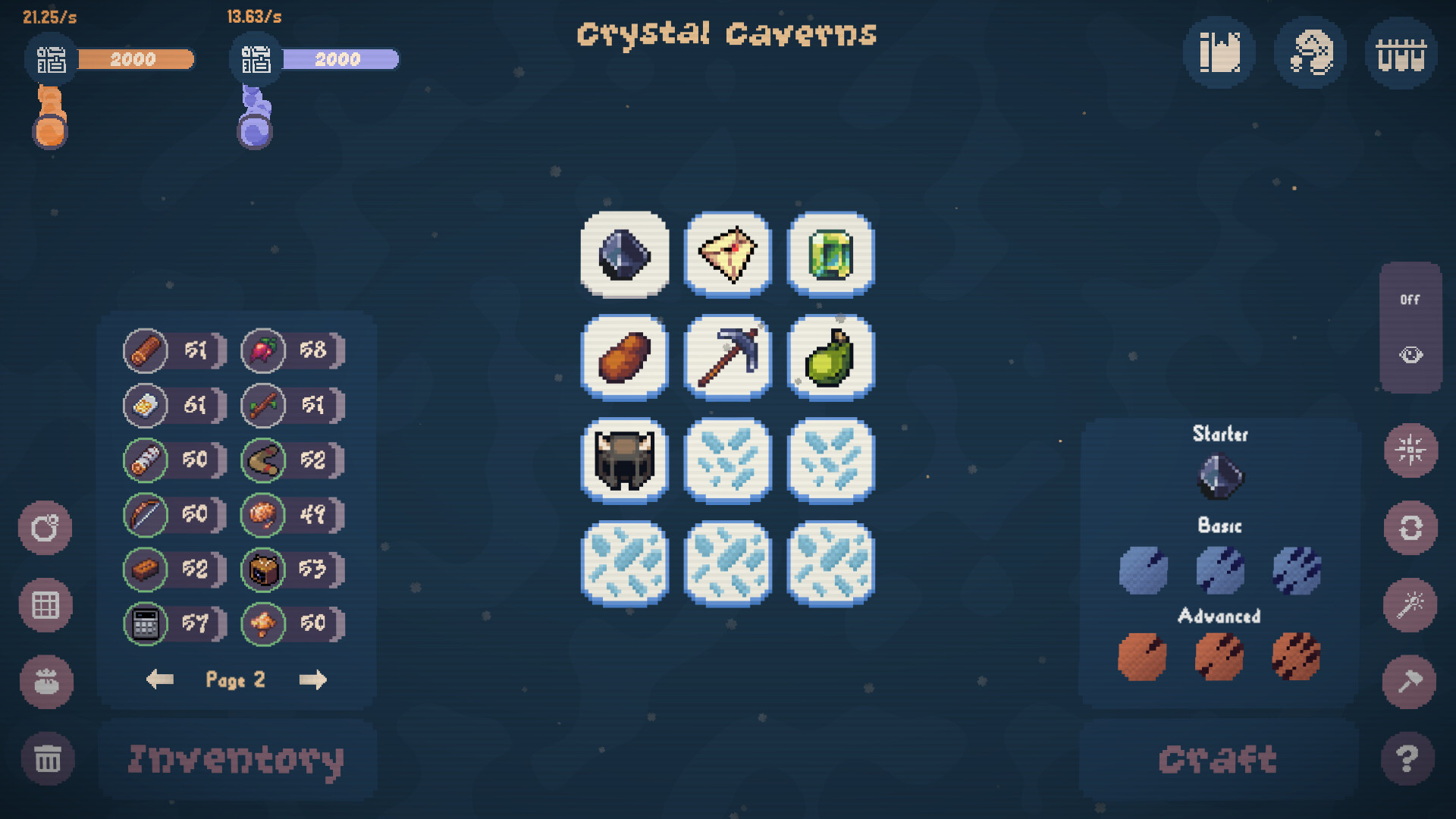
Crystal Caverns, a later area, showing the higher per-second generation rates reviewers describe unlocking as new worlds and item types open up.Image: SkidaddleDev via Steam -
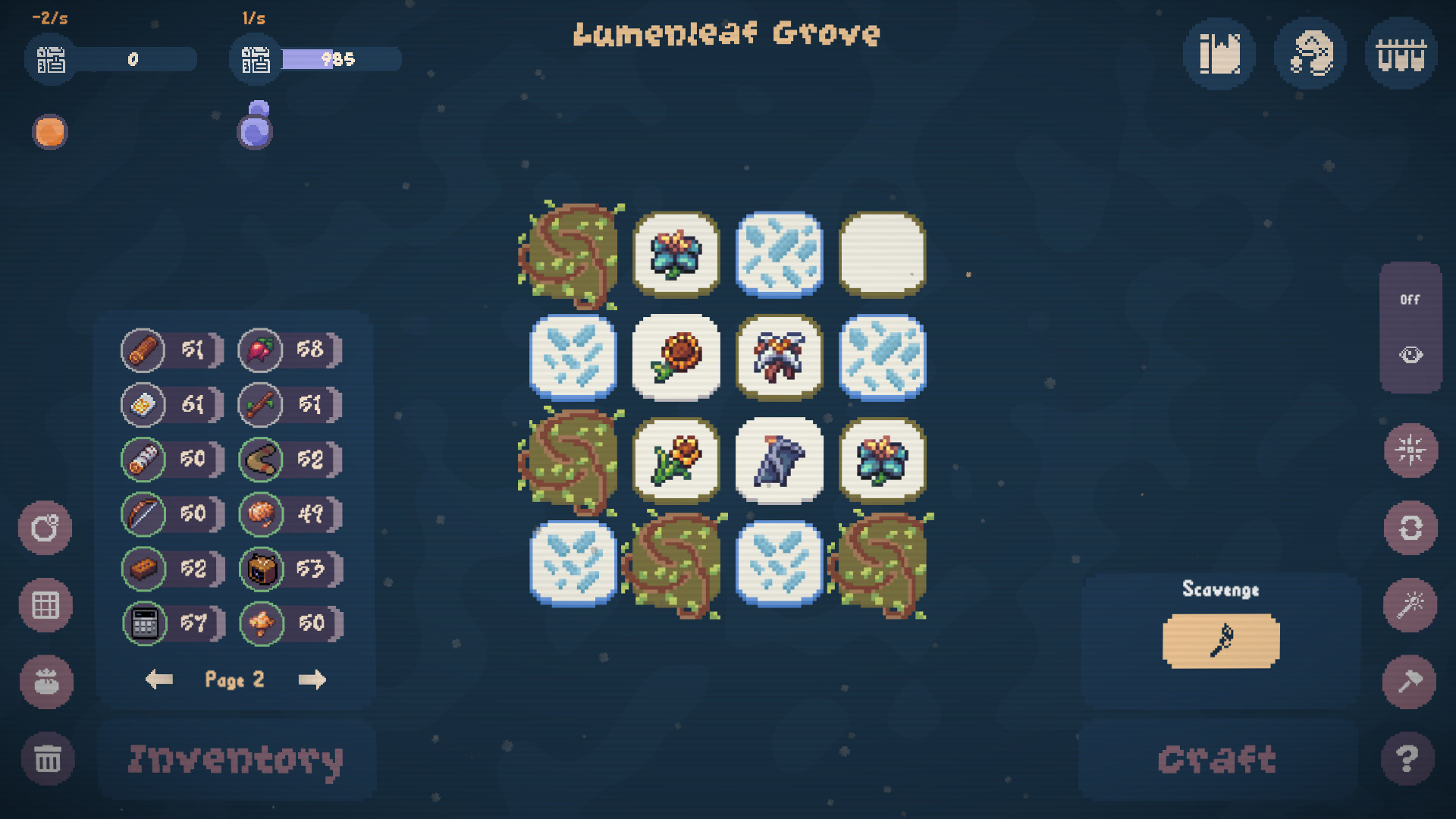
Lumenleaf Grove, a denser sixteen-tile board, illustrating the kind of layout puzzle reviewers say rewards finding the right combination over brute-forcing one.Image: SkidaddleDev via Steam