Game review
Ghost Song
6 / 10
- Developer
- Old Moon
- Publisher
- Balor Games
- Released
- 3 November 2022
- Platforms
- Windows, macOS
- Genre
- Metroidvania, Action RPG, Souls-like
- Monetisation
- One-time purchase, no DLC, no in-app purchases
- Players
- Single-player only
The short version
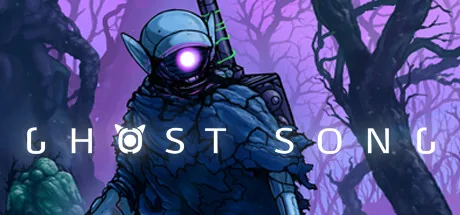
Ghost Song sends an amnesiac survivor exploring the ruins of a dead moon, blending Super Metroid-style exploration with Dark Souls-inspired stamina combat. Developed by solo creator Matt White under the studio name Old Moon and published by Balor Games, it released 3 November 2022 after roughly nine years of publicly documented development, and sits at Very Positive, 83.8% across 1,040 English-language reviews. Atmosphere and hand-drawn art draw wide, genuine praise, and a real share of this game's positive reception is explicitly framed around supporting the developer's long personal journey to finish it. Set against that goodwill is a large, detailed, and remarkably consistent complaint: the combat, pacing and structural design underneath that atmosphere feel underdeveloped relative to the genre's modern standard.
Biggest strengths
- Hand-drawn art and atmosphere draw wide, genuine praise, with reviewers consistently describing a real sense of isolation and melancholy that sets the game apart visually
- Music and voice-acted dialogue earn solid, consistent praise as reinforcing the game's tone effectively
- A meaningful share of reviewers explicitly frame their recommendation around supporting solo developer Matt White's nine-year journey to complete the project, a genuinely sympathetic and specific context several reviewers take time to explain
Biggest weaknesses
- A large, detailed share of reviewers describe the combat as underdeveloped relative to modern Metroidvania and Souls-like standards, with damage-spongey enemies, wonky hit detection and repetitive encounters recurring across independent reviews
- Multiple reviewers report specific, concrete signs of unfinished polish — doors appearing on the map that don't exist in the world, and certain bosses reportedly softlockable — describing the game as feeling incomplete rather than simply difficult
- Pacing draws consistent criticism, with several reviewers calling the main quest a padded fetch-quest structure and backtracking hampered by limited fast-travel options
Who it's for: Metroidvania fans who prioritise atmosphere and are willing to be patient with combat and pacing rough edges, especially those who want to support a long, personal solo-developer project; a poor fit for anyone wanting tight, modern Metroidvania combat to match the visuals.
Our recommendation: A genuinely atmospheric, hand-drawn world let down by combat and pacing that a large share of its own players say never fully catches up to the presentation — worth it for the vibe and the story behind it, temper expectations for the moment-to-moment gameplay.
6 / 10
Introduction
Ghost Song sends an amnesiac survivor exploring the haunting, hand-drawn ruins of a dead moon, blending Super Metroid-style exploration with stamina-based, Dark Souls-inspired combat. Developed by solo creator Matt White under the Old Moon banner and published by Balor Games, it released 3 November 2022 after roughly nine years of publicly documented, Kickstarter-funded development — this was the game's genuine first public release across all platforms, not a delayed port of an earlier version. It sits at Very Positive, 83.8% across the 1,040 English-language reviews this review draws from. The atmosphere here is genuinely, consistently praised. What's worth reading carefully alongside that praise is a large, detailed, and remarkably consistent complaint about what sits underneath it mechanically.
Atmosphere that earns real, consistent praise
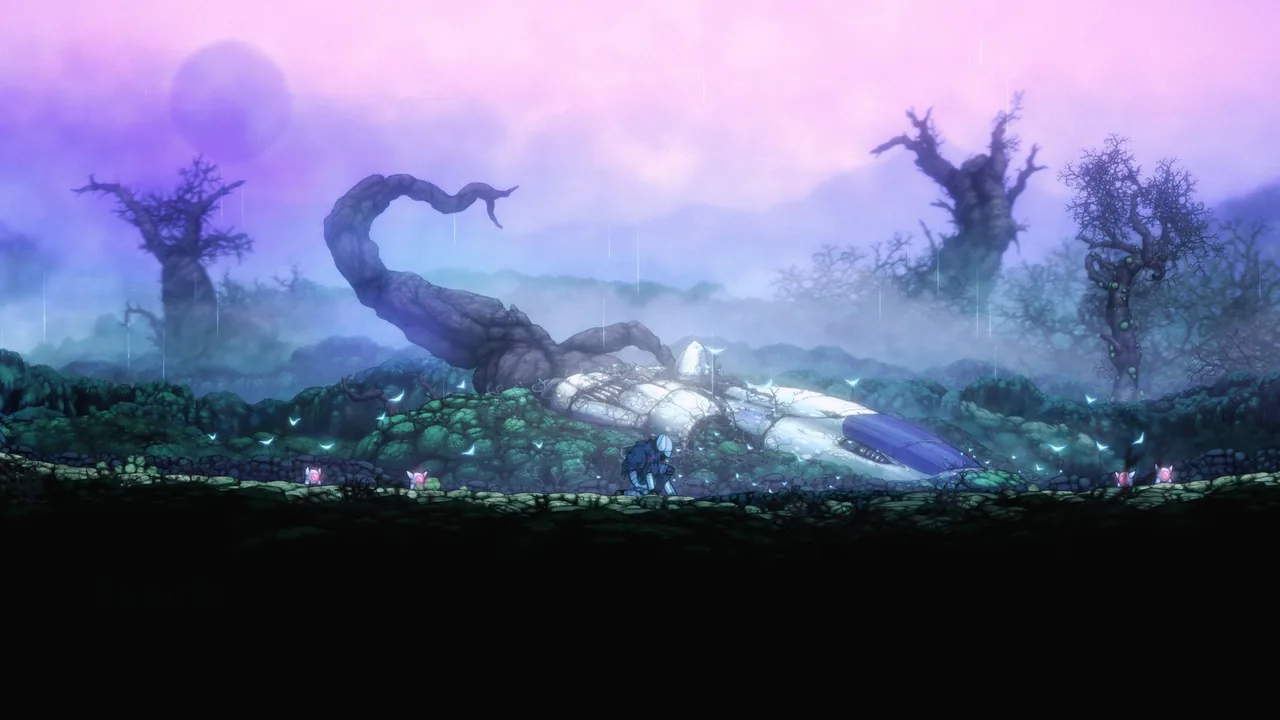
Start with what draws the clearest agreement across this game's reviewers. The hand-drawn art style and overall sense of isolation earn wide, specific credit, with reviewers describing a genuine melancholic mood that sets Ghost Song apart from its genre peers visually. Music and voice-acted dialogue draw their own solid, consistent praise for reinforcing that tone effectively. A meaningful share of the positive sample explicitly frames its recommendation around the story behind the game rather than the game alone — one of the most-upvoted reviews on the entire page, at 463 votes, opens by choosing to tell "you what I know about its journey" rather than simply reviewing the mechanics, describing solo developer Matt White's long path from a Super Metroid and Dark Souls fan to finishing a nine-year passion project. That's a genuinely sympathetic context, and it clearly shapes how a real portion of this game's audience approaches their score.
The complaint underneath the atmosphere
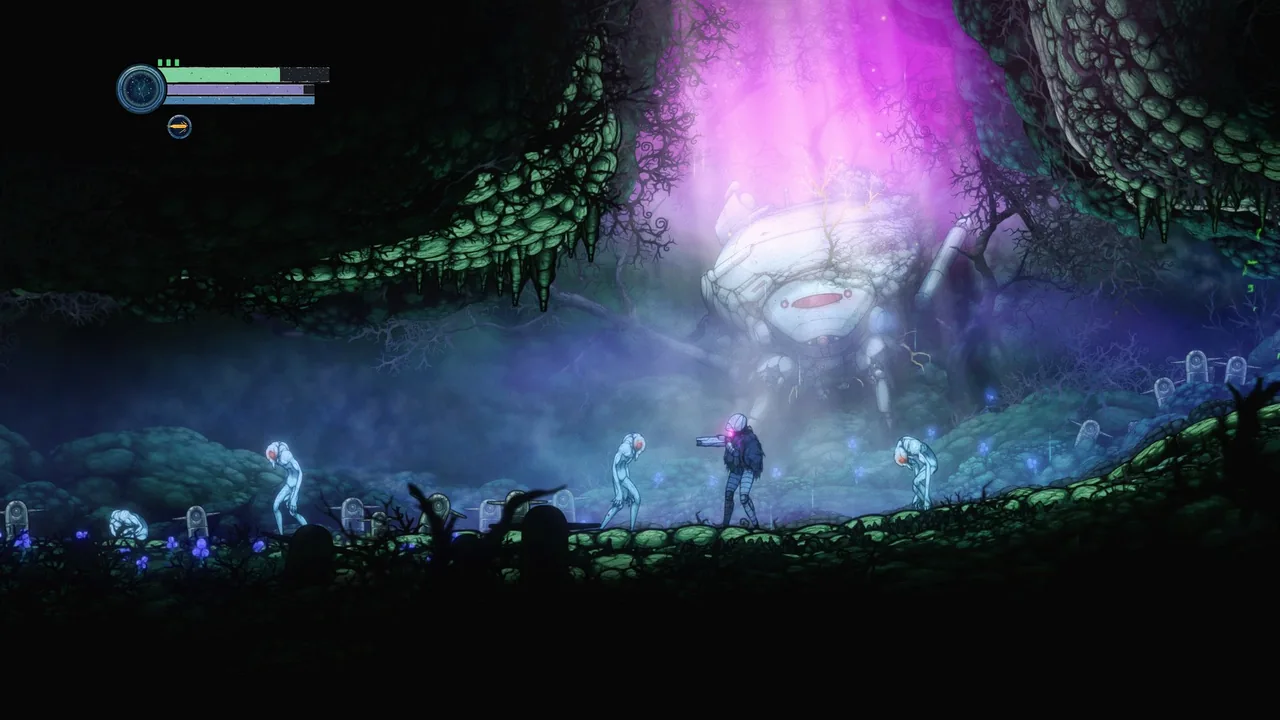
Here's the specific, consistent pattern worth centring this review on. A large share of reviewers, including several who ultimately recommend the game, describe the combat and structural design as underdeveloped relative to what the genre's modern standard demands. One detailed 141-vote review titled its assessment directly: "A Functionally Monotone Game That is Padded and Needs a Structural Redesign To Be Good." A separate reviewer summed up the tension precisely: "Aesthetically sublime, mechanically adequate, this game is the epitome of style over substance," specifically advising other buyers to "adjust your expectations" for a game that reads, mechanically, as "a surface level read of the genre" rather than a deep exploration of it. Damage-spongey enemies and repetitive encounters recur across multiple independent reviews as a specific frustration, with one reviewer noting flatly that "all enemies are extreme damage sponges and no amount of progression alleviates this issue."
A second, more concrete cluster of complaints concerns unfinished polish rather than difficulty tuning: multiple reviewers report specific, checkable issues like doors appearing on the map that don't actually exist in the traversable world, and certain bosses being reportedly softlockable under specific conditions — the kind of detail that reads as incomplete testing rather than intentional design. Pacing draws its own consistent criticism, with several reviewers describing the main quest structure as padded fetch-questing, compounded by limited fast-travel options that make backtracking through already-explored areas feel like a chore rather than a meaningful part of the Metroidvania loop.
A story with more potential than payoff
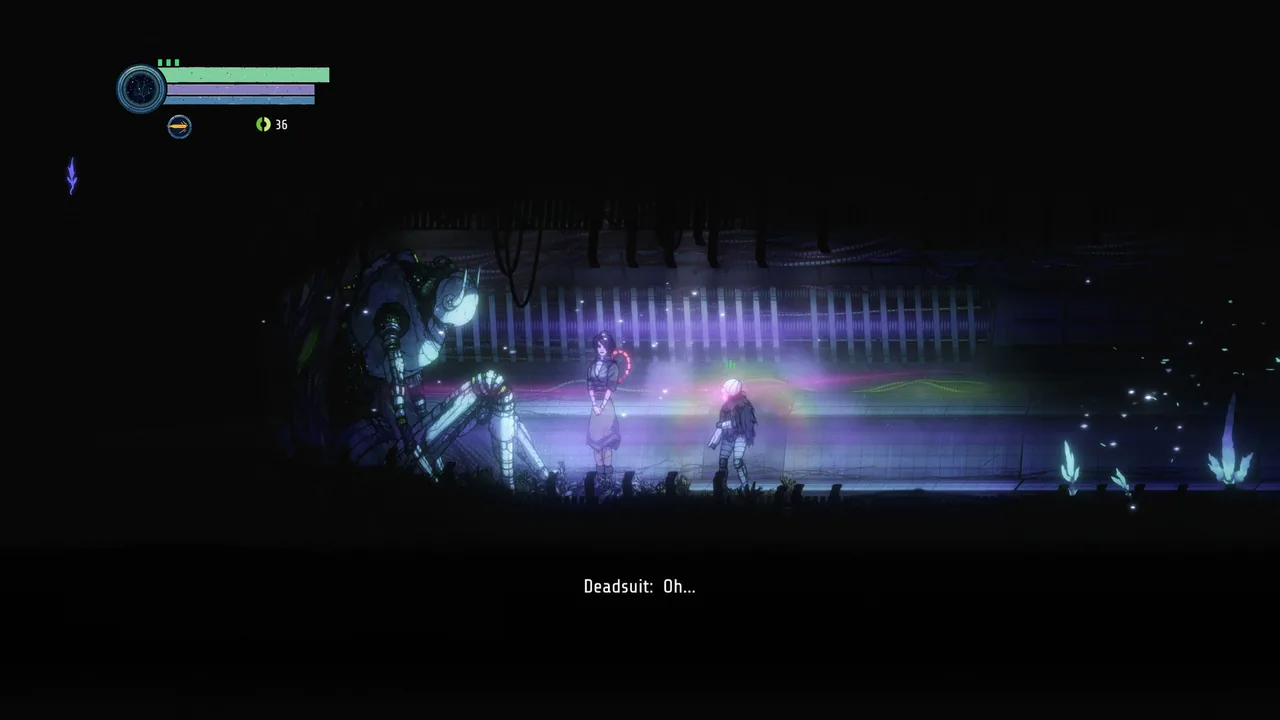
A smaller but recurring complaint concerns narrative: several reviewers specifically note that the game's most interesting lore details and background story threads are introduced with real promise and then never meaningfully explored or resolved, leaving the world feeling underexplained rather than deliberately mysterious. That's a distinct complaint from the combat and pacing issues above, though it contributes to the same overall impression several reviewers land on — genuine ambition and atmosphere that the finished game doesn't fully follow through on.
Where players actually get to
Steam's achievement data shows a real but modest depth of engagement: the top achievement sits at 53.2%, tapering through a genuine midgame before the hardest, most dedicated unlocks drop to under 2% — consistent with a real, if not enormous, base of players pushing well into the game's harder content, even amid the pacing and combat complaints documented above.
Final Verdict
Ghost Song is a genuinely atmospheric, hand-drawn world that earns real, consistent praise for its mood and presentation, carried in part by a real and sympathetic story about the solo developer who spent nine years bringing it to release. What keeps this from a stronger score is that a large, detailed share of this game's own players — not a hostile minority, but reviewers who clearly wanted to love it — describe combat, pacing and structural polish that never quite catches up to the visuals it's wrapped in. If atmosphere and the story behind the game matter more to you than tight, modern Metroidvania combat, there's something worth experiencing here. If you're buying specifically for gameplay depth to match the presentation, a meaningful share of this game's own audience will tell you, honestly, that it isn't quite there yet.
Pros and cons
Pros
- Hand-drawn art and atmosphere draw wide, genuine praise, with reviewers consistently describing a real sense of isolation and melancholy that sets the game apart visually
- Music and voice-acted dialogue earn solid, consistent praise as reinforcing the game's tone effectively
- A meaningful share of reviewers explicitly frame their recommendation around supporting solo developer Matt White's nine-year journey to complete the project, a genuinely sympathetic and specific context several reviewers take time to explain
- Achievement data shows a real, if modest, base of dedicated players pushing well into the game's harder late-game content
Cons
- A large, detailed share of reviewers describe the combat as underdeveloped relative to modern Metroidvania and Souls-like standards, with damage-spongey enemies, wonky hit detection and repetitive encounters recurring across independent reviews
- Multiple reviewers report specific, concrete signs of unfinished polish — doors appearing on the map that don't exist in the world, and certain bosses reportedly softlockable — describing the game as feeling incomplete rather than simply difficult
- Pacing draws consistent criticism, with several reviewers calling the main quest a padded fetch-quest structure and backtracking hampered by limited fast-travel options
- Story and lore draw a specific complaint: several reviewers say the game's most interesting background details and plot threads are introduced and then never meaningfully explored or followed up on
Screenshots
-
Ghost SongImage: Balor Games via Steam -
Ghost SongImage: Balor Games via Steam -
Ghost SongImage: Balor Games via Steam -
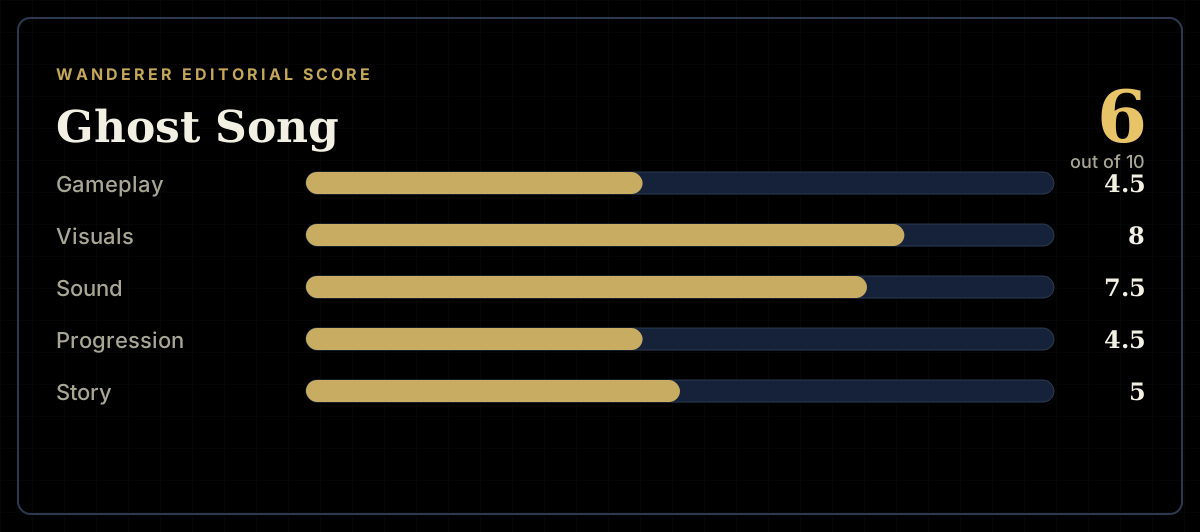
How the review scores each part of the gameWanderer Editorial -
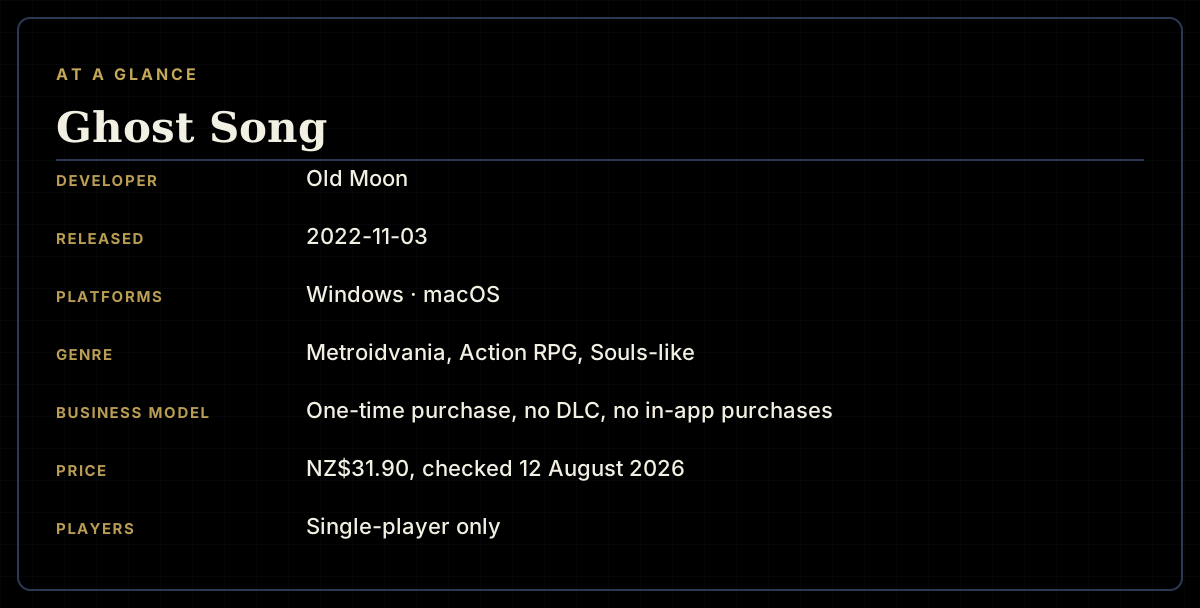
The essentials at a glanceWanderer Editorial -
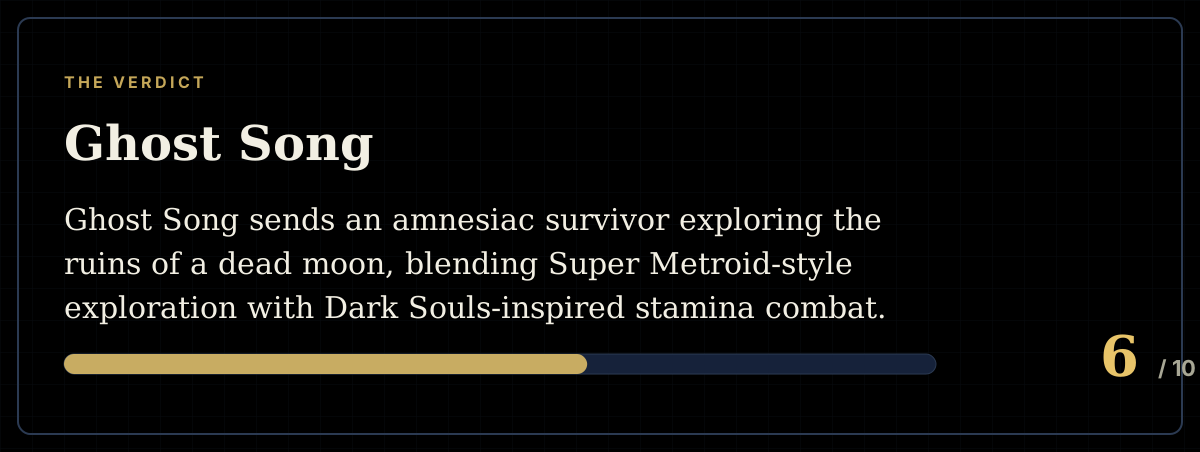
The short versionWanderer Editorial