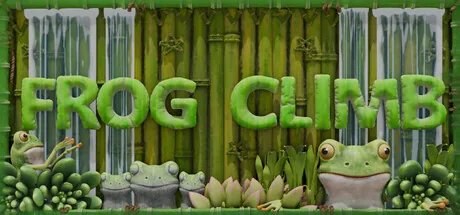
Game review
Frog Climb
7.5 / 10
- Developer
- Çınar's Art
- Publisher
- Çınar's Art
- Released
- 22 June 2026
- Platforms
- Windows
- Genre
- Casual, Indie, Free To Play
- Monetisation
- free-to-play
- Players
- true
The short version
Biggest strengths
- A genuinely satisfying core climbing mechanic, grabbing and stacking blocks to build your own path upward, that reviewers consistently called the game's best feature
- A charming, quirky presentation with music and world design that several reviewers said grew on them the longer they played
- Completely free with a surprising amount of content for the price, including five distinct levels, boss encounters, and unlockable perks
Biggest weaknesses
- A progression system that undermines its own central mechanic: over-investing in jump-height perks lets players skip the block-building climbing entirely in later levels
- Little to no active online matchmaking population, meaning most players will need to coordinate with friends directly rather than finding random co-op partners
- Movement and controls that multiple reviewers described as janky or difficult to learn, even if most came to see that as part of the game's charm once they adjusted
Who it's for: Fans of physics-driven climbing platformers who want a free, charming, easy-to-pick-up co-op experience to play with friends over a short session, and who don't mind some jank and a progression system that can trivialize its own core challenge
Our recommendation: recommended
7.5 / 10
Build your own way up
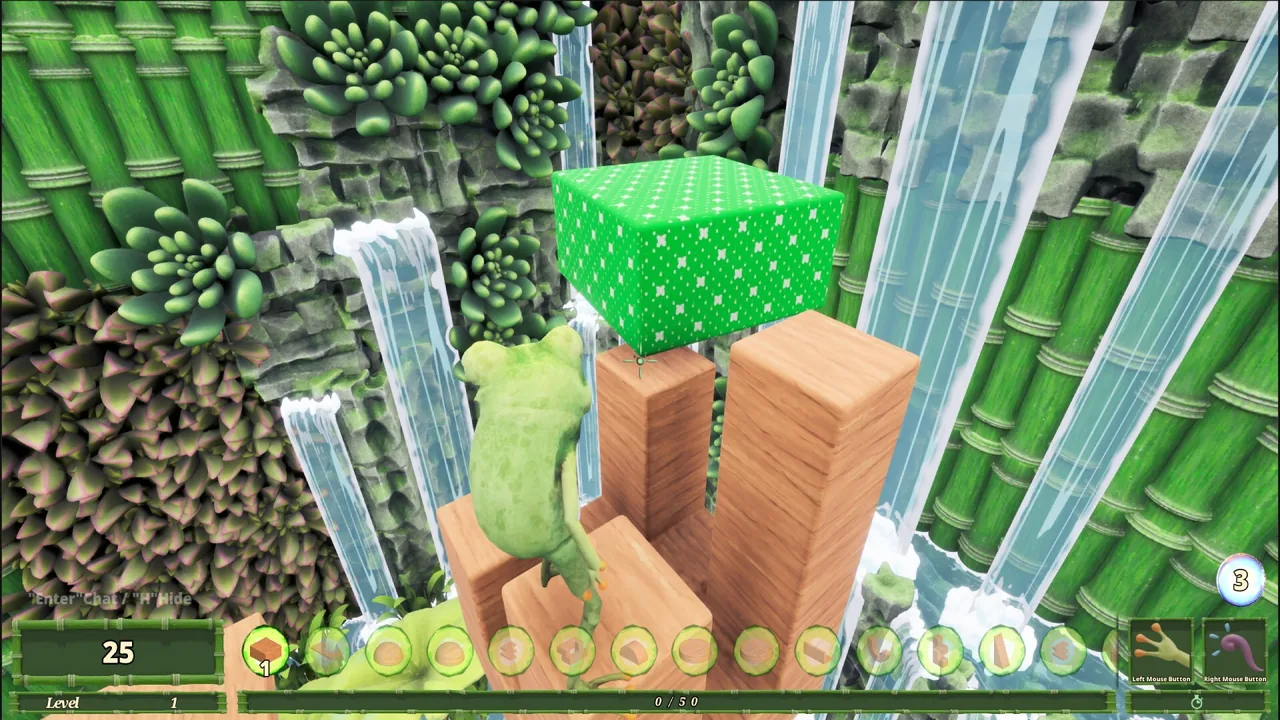
Frog Climb's premise is right there in the title: you play a small frog scaling terrarium-like towers, but instead of following a fixed path, you grab floating blocks with your tongue and stack them into whatever route gets you to the top. One detailed reviewer summed up why that hook works: "The best thing about Frog Climb is the movement. Getting the frog where you want it takes some practice, and the climbing sections can be satisfying when you finally make it through a difficult part." Another reviewer, initially skeptical, was won over by the same core loop: "Absolute masterpiece, the gameplay its a bit repetitive but overall fun and very catchy." That kind of understated, self-directed platforming challenge, closer to freeform tower-building than a scripted obstacle course, is consistently the thing reviewers point to first when explaining what makes the game click.
Free, but far from thin
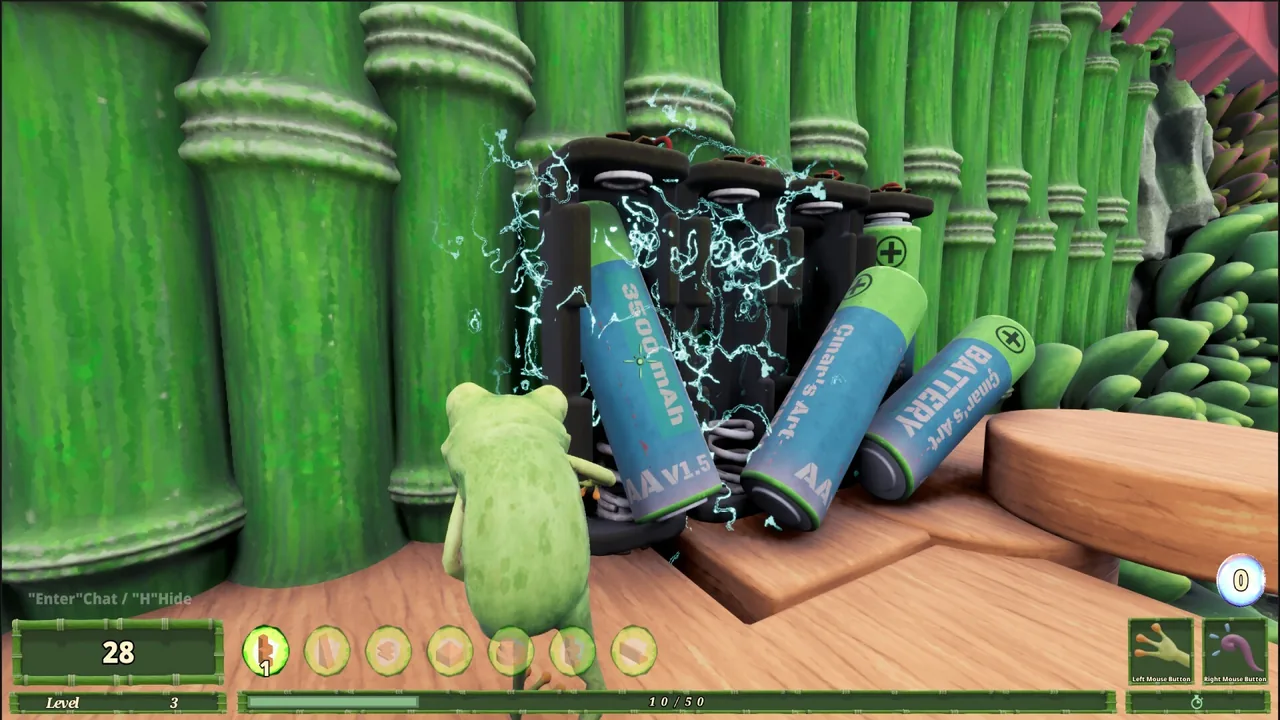
Reviewers were repeatedly surprised by how much game is packed into a free release. One wrote that the leveling and progression "makes it fun," describing how "you pick up blocks in bubbles (or grab them with your tongue) and use them to build a structure that reaches into the sky and lets you face the final boss area and complete each of the five levels," with pearls collected along the way funding permanent upgrades. Another reviewer put it simply: "I would have payed money for this game," a sentiment echoed by several others who explicitly flagged the price-to-content ratio as a standout strength rather than something to apologize for given the free tag.
A charming, if slightly rough, presentation
Several reviewers noted the game takes a session or two to fully click, both mechanically and tonally, but consistently landed on genuine affection once it did. One wrote plainly, "the game is a bit janky, so don't expect a smoothly polished experience (but that is part of the charm)," while another called it "a bit quirky at first, but it grew on me quickly," specifically praising its distinctive soundtrack. A third reviewer drew a comparison to a much larger commercial climbing game, arguing "this game is objectively even better than White Knuckle... a hidden indie gem everyone must play," specifically singling out the music as its own standout element.
Co-op is where it shines, but finding partners takes effort
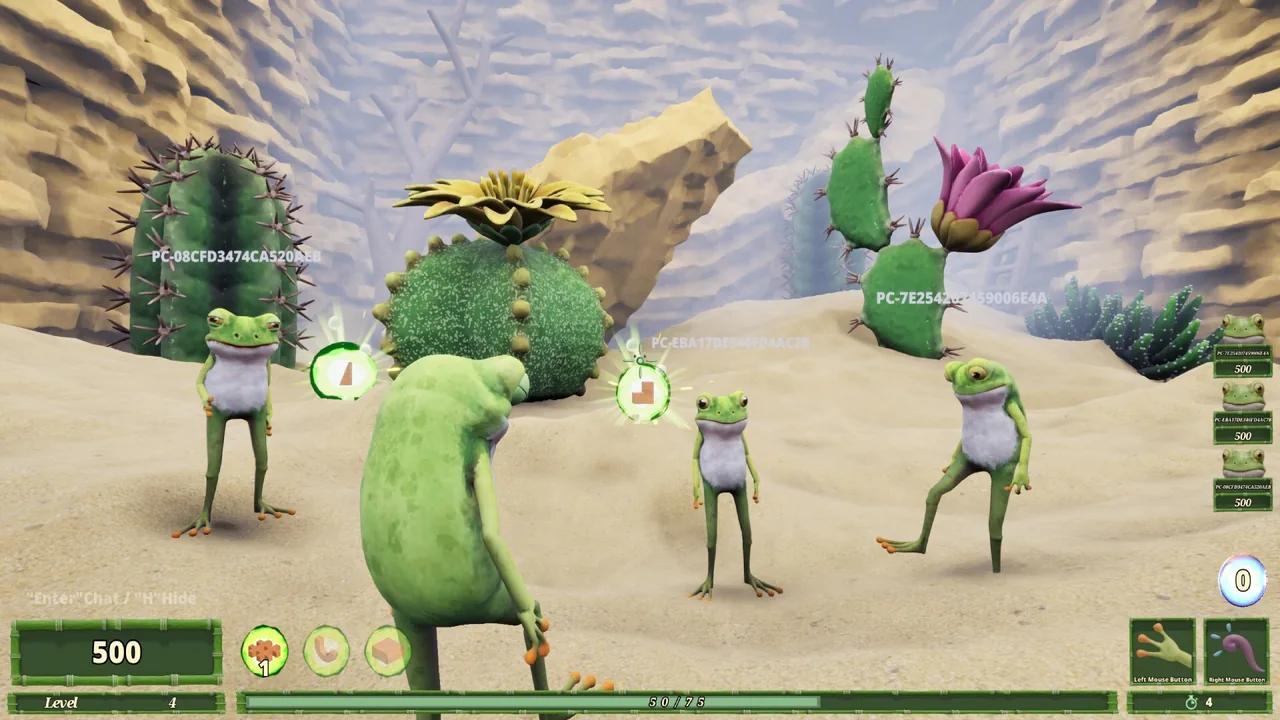
Despite being built around co-op play, Frog Climb doesn't appear to have much of an active matchmaking population, and multiple reviewers flagged that directly. One noted bluntly, "you'll probably have to play this single player since there's nobody online but it's perfectly decent for a free game," a workable fallback but a real limitation for a game whose most enthusiastic praise consistently centers on playing with friends. Reviewers who did bring their own co-op partners were uniformly positive about that experience specifically: "Great game to play with friends when you just want to chill and not think too hard" and "we had fun with friends, I recommend it" are typical of the tone among that group.
A progression system that undercuts its own best idea
The clearest, most specific criticism in the review pool concerns how the game's perk system interacts with its core climbing mechanic. One reviewer laid it out precisely: "the leveling system ruins that fun. The second you max out extra jumps and high jump the game becomes way too easy, skipping the whole core mechanic of building your own platforms. So from level one and after it became quite repetitive." A second reviewer independently confirmed the same exploit: "investing stat points into jumps let you just jump all the levels instead of building, I thought this was really fun" anyway, treating it more as an amusing sequence break than a flaw, but the underlying design tension is the same either way: a game whose signature mechanic is optional to bypass once its own upgrade system is pushed far enough.
A genuine sense of surprise among reviewers
Several reviewers explicitly framed their reaction in terms of low expectations exceeded, a recurring tone across the pool that's worth noting as its own signal. One wrote, "congratulations! you went steam dumpster diving and found a gem! grab a friend and finish this, its really short but really fun," while another called it "finally a climbing game that isn't an asset flip and actually has an original idea," directly contrasting it with the glut of low-effort climbing games that have flooded Steam's free-to-play catalog in recent years. That framing matters for a free release specifically: reviewers weren't grading Frog Climb on a curve because it cost nothing, they were actively comparing it favorably against paid competitors and coming away impressed regardless of price.
A short runtime that suits its scope
Consistent with its free price tag, most reviewers reported finishing the game's five levels in a single sitting or two, generally in the two-to-three-hour range depending on how much of the block-building challenge they engaged with versus exploited through the jump-perk shortcut. Rather than treating that brevity as a shortcoming, most reviewers framed it as appropriately scoped for a free indie project, more akin to a well-crafted afternoon diversion than an attempt at a full-priced climbing game's scale. One reviewer's closing line captured that calibration well, recommending it specifically as "a calm, funny, and short experience" rather than promising more depth than a small, free-to-play release can reasonably deliver.
Verdict
Frog Climb is a free, charming climbing platformer whose central idea, grabbing and stacking blocks to build your own route upward, genuinely delivers the satisfying, self-directed challenge it promises, especially with a friend along for the climb. Its rough edges are real but manageable: janky-but-endearing controls, an unclear shop system on first exposure, and a progression system that can trivialize its own best mechanic if perks are min-maxed too aggressively. With essentially no barrier to entry given the price, it's an easy recommendation for anyone who enjoys physics-driven climbing games or just wants a short, quirky co-op session with a friend, just bring that friend yourself rather than counting on finding one online.
Pros and cons
Pros
- A genuinely satisfying core climbing mechanic, grabbing and stacking blocks to build your own path upward, that reviewers consistently called the game's best feature
- A charming, quirky presentation with music and world design that several reviewers said grew on them the longer they played
- Completely free with a surprising amount of content for the price, including five distinct levels, boss encounters, and unlockable perks
- Genuinely fun in co-op, with numerous reviewers specifically praising sessions played with friends over solo play
Cons
- A progression system that undermines its own central mechanic: over-investing in jump-height perks lets players skip the block-building climbing entirely in later levels
- Little to no active online matchmaking population, meaning most players will need to coordinate with friends directly rather than finding random co-op partners
- Movement and controls that multiple reviewers described as janky or difficult to learn, even if most came to see that as part of the game's charm once they adjusted
- A shop/upgrade system that at least one reviewer found unclear on first playthrough, without any explicit in-game signposting
Screenshots
-
Frog ClimbImage: Çınar's Art via Steam -
Frog ClimbImage: Çınar's Art via Steam -
Frog ClimbImage: Çınar's Art via Steam