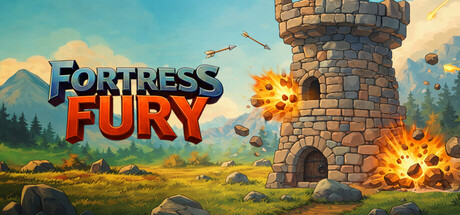
Game review
Fortress Fury Review: An Addictive Loop Buried Under Rough Edges
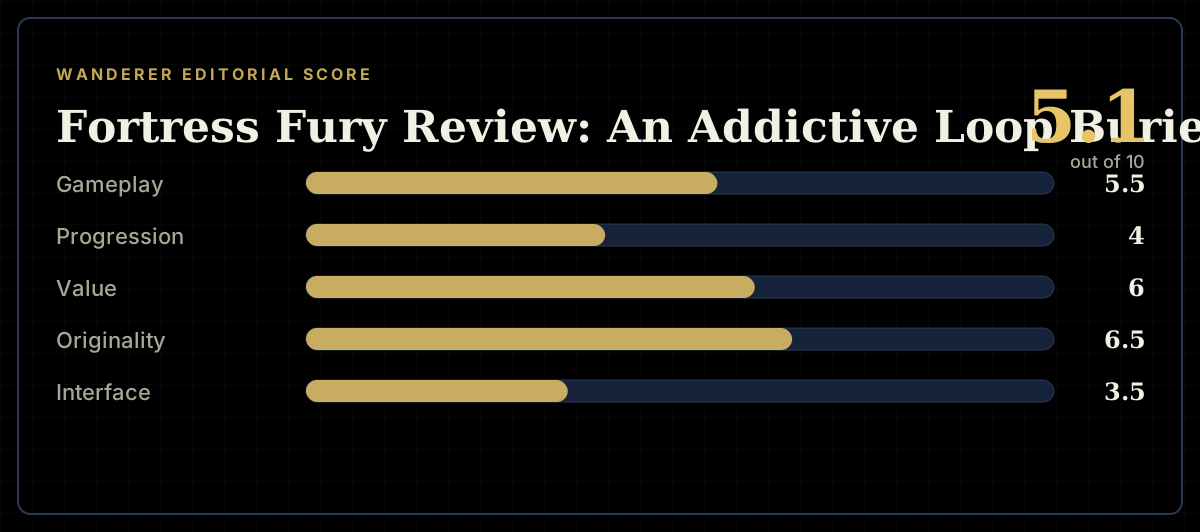
5.1 / 10
- Developer
- Kervado
- Publisher
- Kervado
- Released
- 21 January 2026
- Platforms
- ["PC"]
- Genre
- Tower Defense / Survivor
- Monetisation
- Free to Play
- Players
- true
The short version
Fortress Fury puts a single tower on a tile and throws waves of enemies at it in a survivor-style, incremental-progression twist on tower defense, and reviewers who click with that loop describe it as genuinely addictive. But the sample is just as consistent about the rough edges around that loop -- a launch marred by crashes and broken profiles, a near-total absence of tutorial or in-game explanation for its own systems, build balance that reviewers say funnels everyone toward the same defensive strategy, and pay-to-win complaints about its gem economy.
Biggest strengths
- Multiple reviewers describe the core loop as genuinely addictive, with one 385-hour reviewer citing its 'just one more play' pull
- The developers responded quickly to serious launch-day bugs, and at least one reviewer specifically flipped a negative review to positive after seeing the fix and the communication around it
- Free to play, which several reviewers weigh favourably even while criticising other aspects of the game
Biggest weaknesses
- The most detailed review in the sample describes the tutorial as covering barely 30 seconds of content and failing to explain most of the game's actual mechanics, leaving players to discover core systems like reroll timers and price scaling entirely on their own
- The same review reports that build variety collapses in practice -- most skills 'don't work long term,' with a defensive reflect-damage build described as close to the only strategy that survives past wave 20
- A pay-to-win complaint about the gem-based shop, plus multiple reports of broken matchmaking that leaves players facing bots rather than other people despite the game's multiplayer framing
Who it's for: Free-to-play tower-defense fans who enjoy incremental/survivor hybrids and don't mind digging through undocumented systems to find what works.
Our recommendation: Worth trying since it costs nothing, but go in expecting to learn the game's real mechanics from other players or trial and error rather than from the game itself.
5.1 / 10
Fortress Fury, a free-to-play tower defense from solo-attributed developer Kervado, sits at 62% positive across 112 Steam reviews -- a more divided reception than most of the games this section covers. A sample of 17 English-language reviews spanning launch week through several months later shows why: a core loop several reviewers find genuinely compelling, wrapped in enough rough edges that plenty of others bounced off entirely.
A Hybrid That Works, When It Works
The game's pitch -- a single tower on a tile, facing endless waves, with incremental upgrades and survivor-style build choices -- draws real enthusiasm from reviewers who engage with it. One long-session reviewer, with over 385 hours logged, writes simply that "this game has the... just one more play... about it," while hoping "the devs don't give up on it and keep releasing smaller updates." Another, with 75 hours in, calls it "nice roguelike tower defence, loads of good fun. Especially fun with friends." A third, shorter review sums up the appeal in five words: "fun game interesting concept needs fixing." That last phrase captures the sample well -- the concept isn't in dispute, but its execution repeatedly is.
A Rocky Launch, Followed by a Real Turnaround
Several of the sample's earliest, most negative reviews describe a genuinely broken launch: one reviewer posted a one-line "cant [expletive] load the game pls fix" on launch day, while another reports a tutorial-completion freeze paired with a profile error, calling the game "unplayable." What's notable is what happened next. One reviewer who initially posted a negative review specifically returned to update it: "EDIT: They fixed the issue and it seems they are communicating with the players which is a good sign. I will flip this review as i see the devs are really trying their best." That kind of specific, dated reversal is a stronger signal of genuine post-launch support than any amount of general praise -- it shows a reviewer who was frustrated enough to leave a negative review, then satisfied enough by the fix and the communication to come back and change it.
No Tutorial for a Game That Needs One
The sample's most detailed review, a lengthy 71-hour account, is worth engaging with directly because it's rare among reviews of any game in this depth of specificity. It describes the actual in-game tutorial as lasting "about 30 seconds" and demonstrating an early-game state that "doesn't look like" what players actually encounter on their first real run. From there, it lists a string of mechanics the game apparently never explains: that players can hold up to four skills at once, that choosing a first skill grants a one-time free reroll, that rerolls reset on a 30-second timer, and that upgrade prices scale as you buy more. None of this is optional trivia -- the reviewer frames all of it as necessary to understand before a run can go well, and notes having to learn the game's actual winning strategy from another player rather than from anything in-game.
Balance That Funnels Everyone the Same Way
The same detailed review argues that once you look past the missing tutorial, the deeper problem is balance: "the skills and upgrades are totally unbalanced and most of them don't work long term," with only a defensive build stacking health, regeneration, armor, and damage reflection surviving past wave 20 in the reviewer's extensive testing. It also flags a specific, checkable annoyance -- some enemies deal no direct damage but instead buff nearby monsters and block pathing, and are nearly unkillable without abandoning the one build that actually works. No other review in the sample directly confirms or disputes this level of build-testing detail, but it's specific enough, and consistent enough with the general "needs fixing" sentiment elsewhere in the sample, to weigh seriously.
Multiplayer Framing, Mostly Bot Opponents
Despite being marketed and tagged as multiplayer, several reviewers report that the lobby system barely functions. The detailed 71-hour review notes "there's a lobby... doesn't work, so the only thing you can do is 'start game'... and you find yourself playing among bots with random names (Bob, Average Guy) and if you're lucky you'll get another player." This matches the broader pattern in the sample of core systems technically existing but not reliably working as advertised.
Monetisation Concerns
Being free to play, the game monetises through a gem currency, and at least one reviewer flags this directly as a fairness problem: "this is a pure pay to win game. As I don't pay, it's quite frustrating." The detailed review echoes a softer version of the same complaint, describing the gem shop's cheaper options as "awful" and the meaningfully useful gems as expensive to grind for. Balanced against that, several reviewers weigh the fact that it costs nothing to try favourably, even while criticising everything else -- a distinction worth keeping in mind, since "free but frustrating" and "not worth your time at any price" are different complaints.
Final Verdict
Fortress Fury has a genuinely addictive hook for the right player, and its developers deserve credit for responding quickly and visibly to a bug-plagued launch. But the sample is consistent, in real detail, about what's still missing: a tutorial that actually explains the game's own systems, build balance that doesn't collapse into one dominant strategy, working matchmaking for a game marketed as multiplayer, and monetisation that doesn't tip into pay-to-win territory. Since it costs nothing, it's a reasonable free download for tower-defense fans willing to learn its real mechanics the hard way -- just don't expect the game itself to teach you.
Pros and cons
Pros
- Multiple reviewers describe the core loop as genuinely addictive, with one 385-hour reviewer citing its 'just one more play' pull
- The developers responded quickly to serious launch-day bugs, and at least one reviewer specifically flipped a negative review to positive after seeing the fix and the communication around it
- Free to play, which several reviewers weigh favourably even while criticising other aspects of the game
Cons
- The most detailed review in the sample describes the tutorial as covering barely 30 seconds of content and failing to explain most of the game's actual mechanics, leaving players to discover core systems like reroll timers and price scaling entirely on their own
- The same review reports that build variety collapses in practice -- most skills 'don't work long term,' with a defensive reflect-damage build described as close to the only strategy that survives past wave 20
- A pay-to-win complaint about the gem-based shop, plus multiple reports of broken matchmaking that leaves players facing bots rather than other people despite the game's multiplayer framing
Screenshots
-
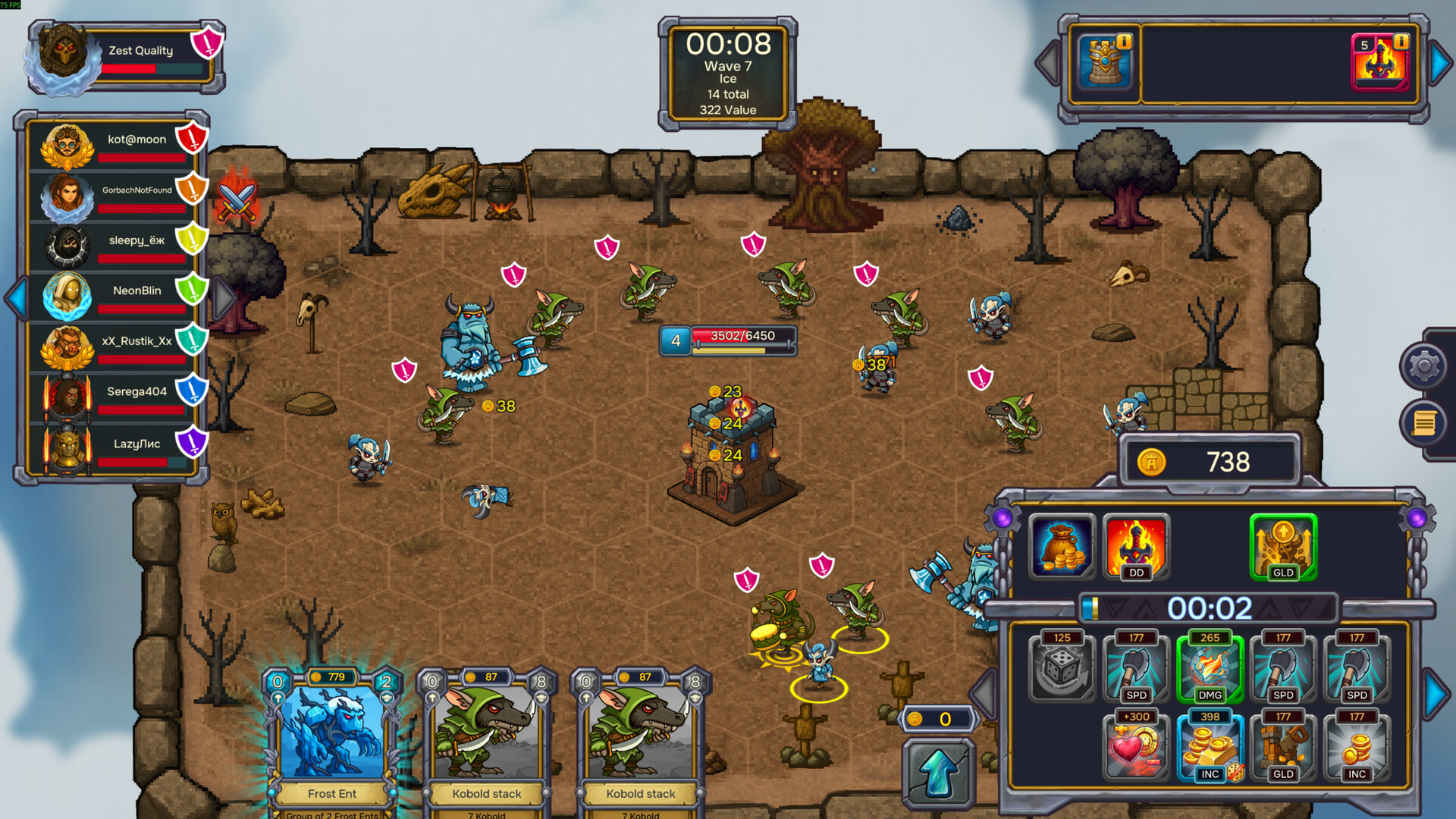
A wave in progress, with the multiplayer lobby's player list running down the left side of the screenKervado -
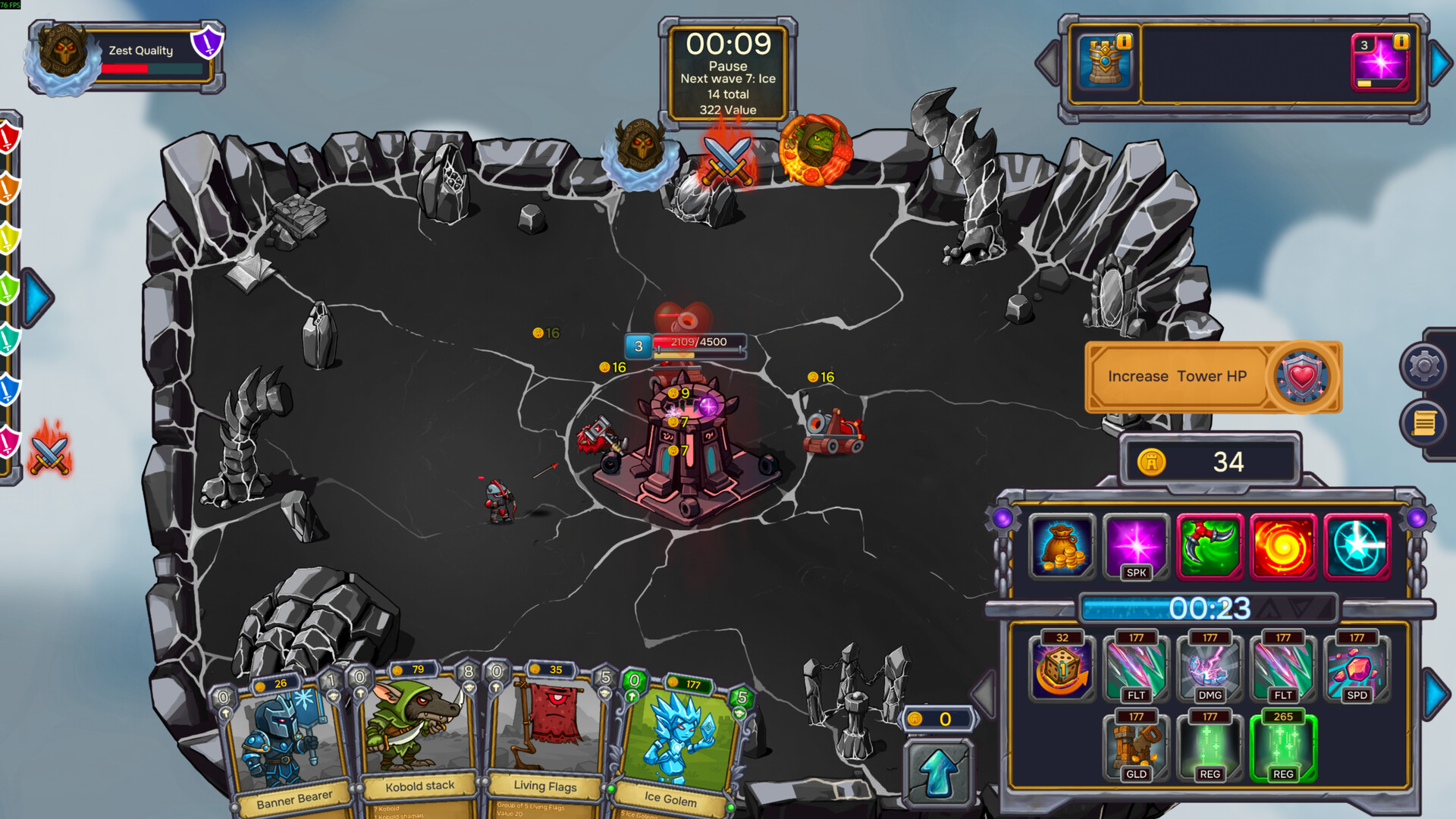
Choosing an upgrade between waves -- one of the skill choices the sample's most detailed review says the game never fully explainsKervado -
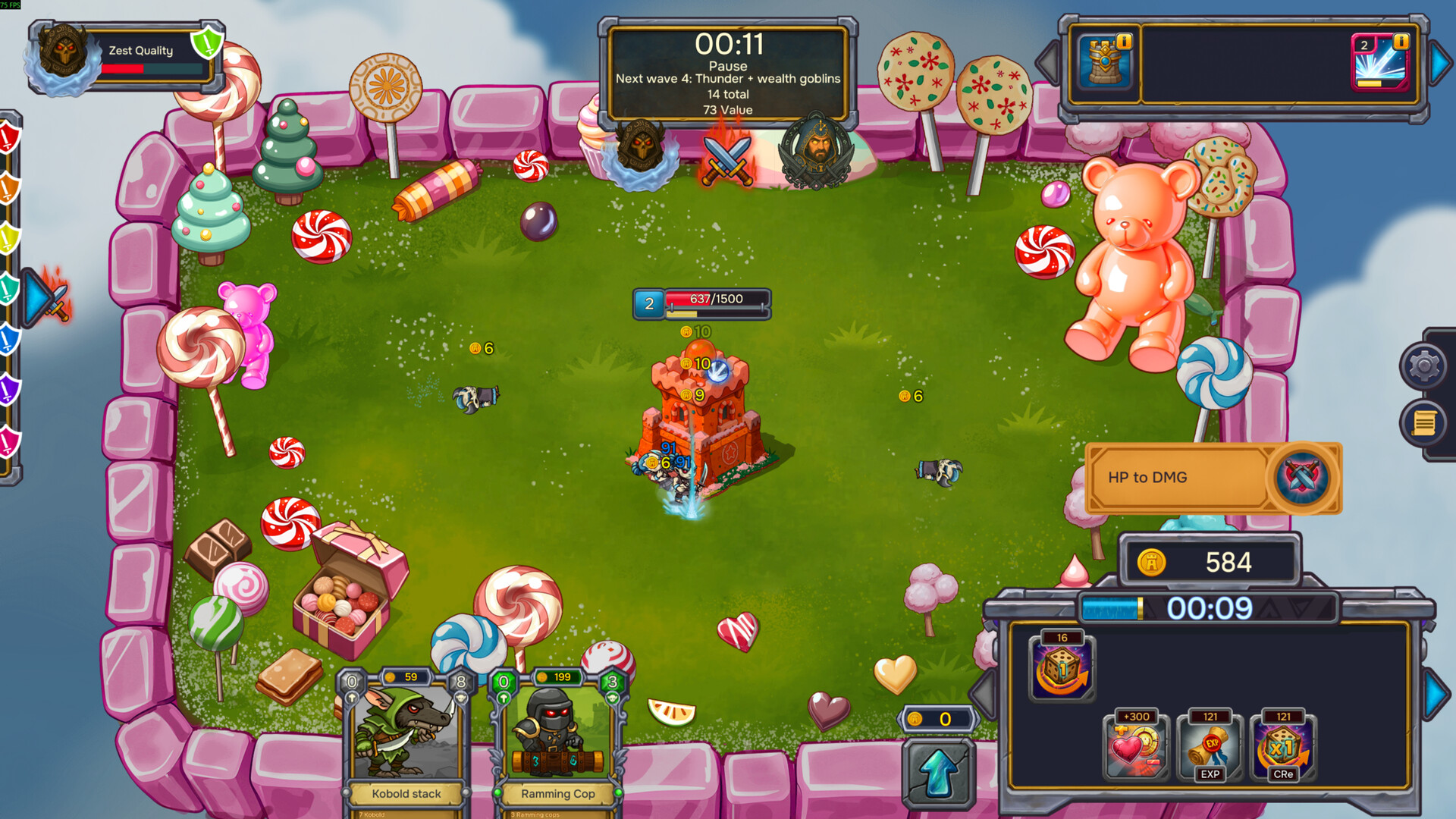
One of the game's more whimsical map themes, mid-wave against a "Thunder + wealth goblins" assaultKervado -
How the review scores each part of the gameWanderer Editorial -
The short versionWanderer Editorial