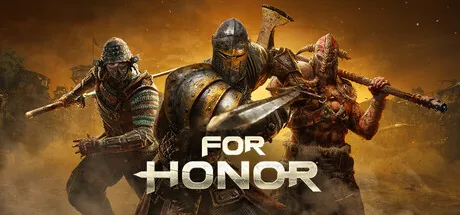
Game review
For Honor
6.5 / 10
- Developer
- Ubisoft Montreal, Ubisoft Quebec, Ubisoft Toronto, Blue Byte
- Publisher
- Ubisoft
- Released
- 13 February 2017
- Platforms
- Windows
- Genre
- Action
- Monetisation
- Base game purchase plus real-money and in-game-currency hero unlocks, cosmetics and seasonal battle passes
- Players
- Online PvP and co-op multiplayer modes, separate from the single-player campaign
The short version
For Honor is Ubisoft's third-person melee fighting game, putting knights, vikings, samurai, the Wu Lin and the Outlander faction into brutal one-on-one and team PvP built around the "Art of Battle" stance-and-parry combat system. Steam's aggregate sits at 69% positive ("Mixed") across 83,656 English-language reviews, and this review read the 100 most-helpful negative reviews alongside a sample of the 100 most recent English reviews.
What holds up nine years later is the combat itself — reviewers writing furious one-star reviews still stop to say the system is unlike anything else on the market, and total logged playtimes on even the harshest negative reviews regularly run into the hundreds or low thousands of hours. What drags the score down is everything wrapped around that system: a community reviewers across multiple years independently call toxic, a matchmaking pool that puts brand-new players against veterans, balance that reviewers say gets upended every time a new hero launches, and a monetisation model that sells individual heroes for real money on top of a NZ$49.95–149.95 box price. The 100 most recent English reviews sit at 57% positive — worse than the lifetime badge, not better.
Biggest strengths
- An "Art of Battle" stance-and-parry combat system reviewers on both sides of the score independently call genuinely unique, with no real equivalent elsewhere in the genre
- Nine-plus years of continuous content support, now in Year 10 Season 2 with monthly roadmaps and new heroes still shipping in 2026
- A hook strong enough that reviewers writing thumbs-down reviews routinely report hundreds to well over a thousand hours logged, several saying outright they expect to keep playing
Biggest weaknesses
- The 100 most recent English reviews run 57% positive, noticeably below the lifetime 69% "Mixed" badge — current sentiment reads worse than the aggregate score suggests
- Reviewers repeatedly describe new hero launches as destabilising balance, with some alleging heroes ship overpowered during their paid-exclusive window and get nerfed only once available for free in-game currency — an allegation this review could not independently verify
- A community reviewers across multiple years independently describe as toxic, with matchmaking regularly reported putting brand-new players against thousand-hour veterans
Who it's for: Committed PvP and fighting-game players prepared to climb a genuinely brutal learning curve and put up with a rough community for a combat system this review's own negative sample keeps calling unique in spite of itself.
Our recommendation: Worth it for the "Art of Battle" system alone if you can commit to the climb — skip it if you want a relaxed pickup-and-play multiplayer game, or resent paying for individual characters on top of the box price.
6.5 / 10
Introduction
For Honor is Ubisoft's third-person melee fighting game, developed by Ubisoft Montreal with Ubisoft Quebec, Ubisoft Toronto and Blue Byte, and published by Ubisoft. It launched on 13 February 2017 at NZ$49.95 (Gold and Ultimate editions run to NZ$99.95 and NZ$149.95), putting knights, vikings, samurai, the Wu Lin and the Outlander faction against each other in one-on-one duels and team-based PvP built around a stance-and-parry system called "Art of Battle." Nine years and 53 pieces of DLC later, it sits at 69% positive ("Mixed") across 83,656 English-language Steam reviews, and remains under active seasonal development — Year 10, Season 2, with a new hero, Arakure, added as recently as July 2026. This review read the 100 most-helpful negative reviews of 26,206 total, plus a sample of the 100 most recent English reviews, to separate what has genuinely changed from what is a permanent fixture of the game.
A combat system nobody has replicated
The single most consistent thing in this review's negative sample is that even the angriest one-star reviews stop to praise the fighting itself. "The core gameplay is absolutely unique, taking the spirit of the fighting genre and turning it into something new and exciting," reads one long-running review, written despite a thumbs-down. A 2026 reviewer with 82 hours on PC and hundreds more on console put it more bluntly: "Love the actual combat system. It's the only one of its kind, and it (the combat system) is actually pretty fun." Another, 1,016 hours in: "This game has the best fundamental fight mechanics I've ever seen but its ruined every year by the devs who have never seen a balanced character in their life" — praising the system in the same breath as condemning what's built on top of it. That split runs through almost the entire negative sample: the complaints are rarely about the combat's design, and almost always about balance, community or monetisation around it.
Recent sentiment is worse than the lifetime badge, not better
Steam's lifetime aggregate reads 69% positive, "Mixed." Pulling the 100 most recent English reviews instead of the lifetime sample gives 57% positive — a meaningfully rougher number than the badge a shopper sees first. That gap matters: a badge earned across nine years, more than 53,000 lifetime positive reviews and a chaotic 2017 launch can sit well above how the game actually reads today. Unlike some older titles in this outlet's library, this isn't a fossil — the most-helpful negative sample split roughly in half between 2017 launch complaints (servers, always-online single-player, day-one microtransactions) and a substantial, genuinely current cluster from 2025–2026, so the softer recent number reflects live sentiment rather than an artefact of an old wave of votes.
New heroes, whiplash balance
Balance is the single largest complaint in this review's 2025–2026 sample, appearing in well over a third of recent negative reviews, consistently tied to new hero releases. "Every new hero they add, every ♥♥♥♥♥♥♥ update and it just keeps getting worse," reads one review with 1,266 hours logged. Another, 195 hours: "Every character they add make the game more unplayable." A third, with 550 hours: "do you enjoy intense action packed, rewarding, and balanced gameplay? ... you wont find it here!" A specific, more serious allegation recurs in a smaller number of reviews: that new heroes launch deliberately overpowered during their real-money exclusive-purchase window, then get nerfed only once available to everyone through in-game currency. This review could not independently verify that sequence — it would require tracking a specific hero's patch history across a paid-early-access window — but it is worth flagging as a repeated, specific player allegation rather than vague grumbling, and it lines up with the roughly monthly patch cadence this review confirmed through the game's own news feed.
A community reviewers call toxic, on top of a brutal curve
Toxicity and matchmaking complaints appear independently across reviewers who otherwise disagree about almost everything else. "Some of if not the greasiest slimiest losers the world has ever seen," reads a 773-hour review that opens by calling the combat "some of the most unique and in depth" the author has played. Another, 19 hours in: "The skill matchmaking is inaccurate and puts new players up against seasoned veterans." A third, with almost a thousand hours: "What once was a game about learning the movesets of each hero, dueling and getting better to fight tougher opponents is now a toxic cesspool of spamming, scripting, griefing." The Steam achievement data backs up how steep the resulting curve is in hard numbers: across 60 achievements, the single most-earned one sits at just 15.5% of owners, the median is 5.6%, and 23 of the 60 sit under 5%. Most people who buy this game, in other words, never get anywhere near deep enough to be the veterans newer players are describing running into. A handful of 2026 reviews also report scripting, lag-switching and alleged DDoS attacks despite EasyAntiCheat being active on the Steam page — a claim this review reports as attributed player testimony, since a review corpus cannot audit anti-cheat software.
Paying for the box, then the heroes, then the season
For Honor's current storefront lists a NZ$49.95 Standard Edition alongside NZ$99.95 Gold and NZ$149.95 Ultimate editions, 53 pieces of DLC, individual heroes priced roughly NZ$16.65–24.95 each, and active Year 10 Season 2 battle passes around NZ$16.95. Several reviewers, across both the 2017 and 2025–2026 samples, treat this as a standing complaint rather than a launch-only one: "This game, progression wise, is some of Ubisoft's most greedy attempts ever to nickle and dime you," reads one 2025 review, while a much older one from shortly after launch complains about paying "$30 to unlock the entire skill progression as well as $5 for a pack of 5,000 steel." The specific numbers have changed over nine years, but the shape of the complaint — a full-price purchase that still gates individual characters and content behind further real-money spend — has not.
Nine years, still going
Set against all of that, For Honor's longevity is a genuine, checkable positive. The game's own news feed shows monthly roadmap posts running through 2026, a new hero added in July, and a Year 10, Season 2 in progress — an unusually long active life for a 2017 game sitting on a "Mixed" aggregate. That longevity is echoed in the negative sample itself: reviewers routinely report thousands of hours, several describe the game in explicitly compulsive terms ("I hate this game... and yet I can't stop playing it"), and more than one predicts they'll be back on it the same night they write a one-star review. That is not a ringing endorsement of the game's design around its combat system, but it is hard evidence the core loop still has a real grip on a large, long-running playerbase.
Verdict
For Honor's "Art of Battle" combat is the rare case where this review's own negative sample argues against itself — reviewers writing thumbs-down keep stopping to say the fighting is unlike anything else in the genre, nine years and 83,656 English reviews after launch. What surrounds it is the problem: recent sentiment (57% positive on the last 100 English reviews) reads worse than the lifetime 69% "Mixed" badge, balance gets upended by nearly every new hero according to this review's recent sample, the community draws repeated, independent toxicity complaints, and the monetisation stacks real-money hero purchases and seasonal passes on top of an already-expensive box price. Worth it for committed PvP players willing to climb a genuinely brutal learning curve — a poor pick for anyone looking for a relaxed pickup-and-play multiplayer game.
Pros and cons
Pros
- An "Art of Battle" stance-and-parry combat system reviewers on both sides of the score independently call genuinely unique, with no real equivalent elsewhere in the genre
- Nine-plus years of continuous content support, now in Year 10 Season 2 with monthly roadmaps and new heroes still shipping in 2026
- A hook strong enough that reviewers writing thumbs-down reviews routinely report hundreds to well over a thousand hours logged, several saying outright they expect to keep playing
- A large, still-active English review corpus (83,656 reviews) rather than a game that has quietly gone dark
Cons
- The 100 most recent English reviews run 57% positive, noticeably below the lifetime 69% "Mixed" badge — current sentiment reads worse than the aggregate score suggests
- Reviewers repeatedly describe new hero launches as destabilising balance, with some alleging heroes ship overpowered during their paid-exclusive window and get nerfed only once available for free in-game currency — an allegation this review could not independently verify
- A community reviewers across multiple years independently describe as toxic, with matchmaking regularly reported putting brand-new players against thousand-hour veterans
- Individual heroes are sold for real money (roughly NZ$16.65–24.95 each) on top of a NZ$49.95–149.95 purchase price, alongside recurring seasonal battle passes
- A brutal difficulty curve backed by hard numbers: even the single most-earned Steam achievement sits at just 15.5% of owners, with a 5.6% median across 60 achievements
- Cheating — scripting, lag-switching and alleged DDoS attacks — is reported by recent reviewers despite EasyAntiCheat being active
Screenshots
-
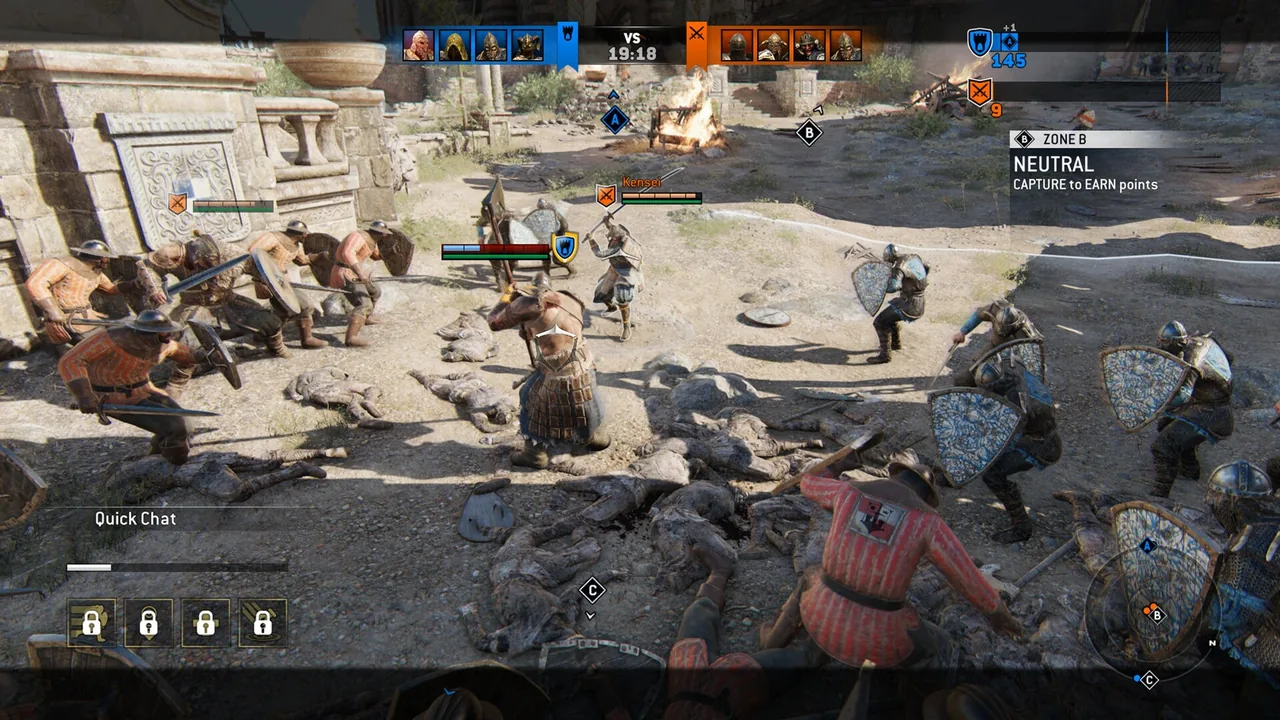
FOR HONOR™Image: Ubisoft via Steam -
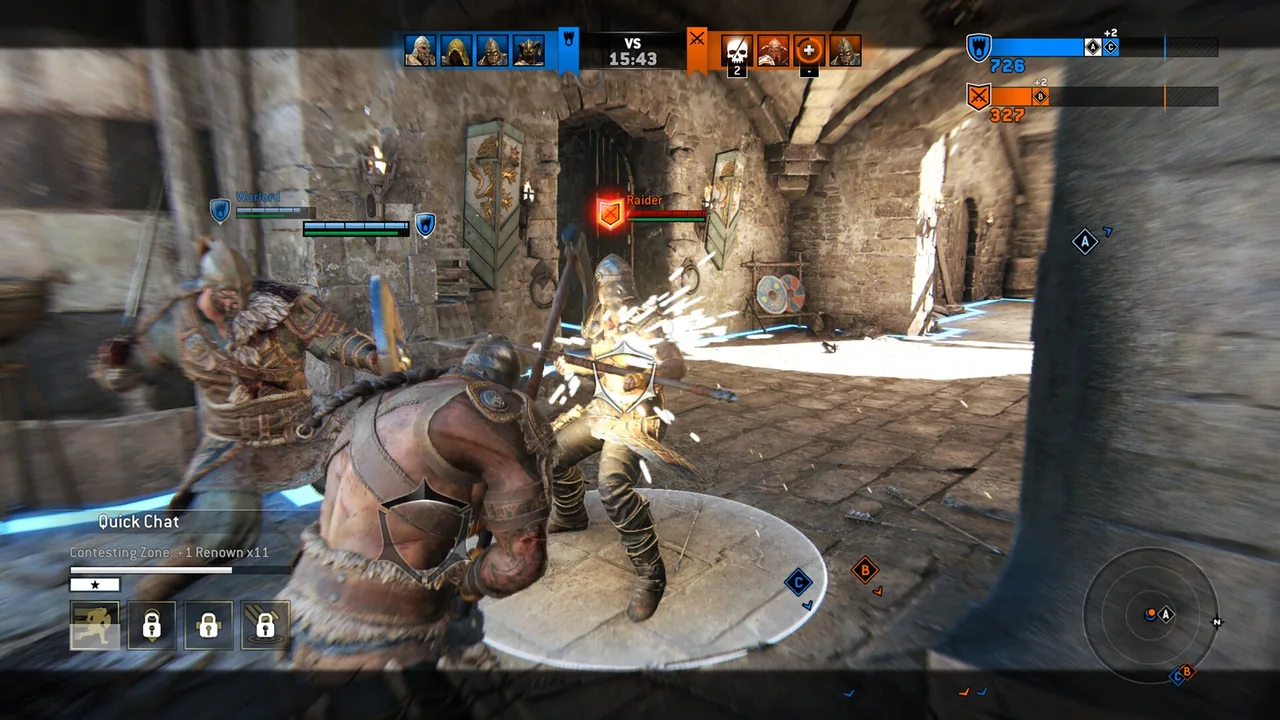
FOR HONOR™Image: Ubisoft via Steam -
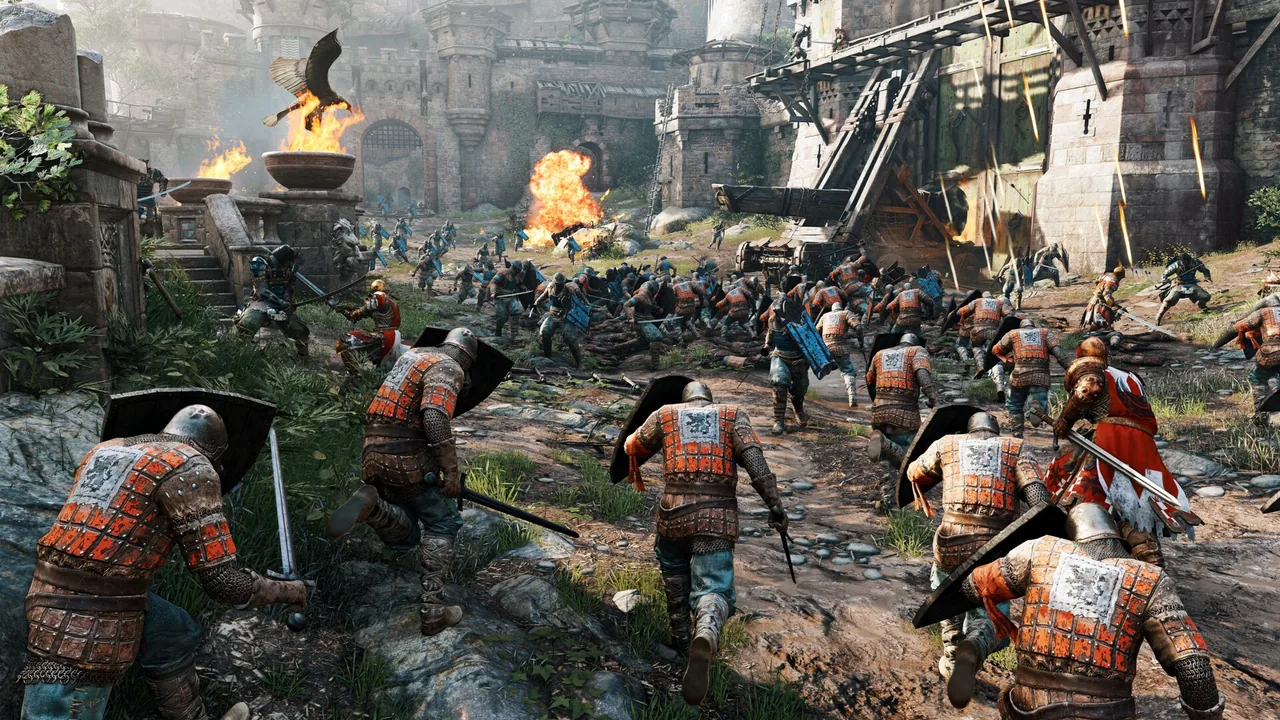
FOR HONOR™Image: Ubisoft via Steam -
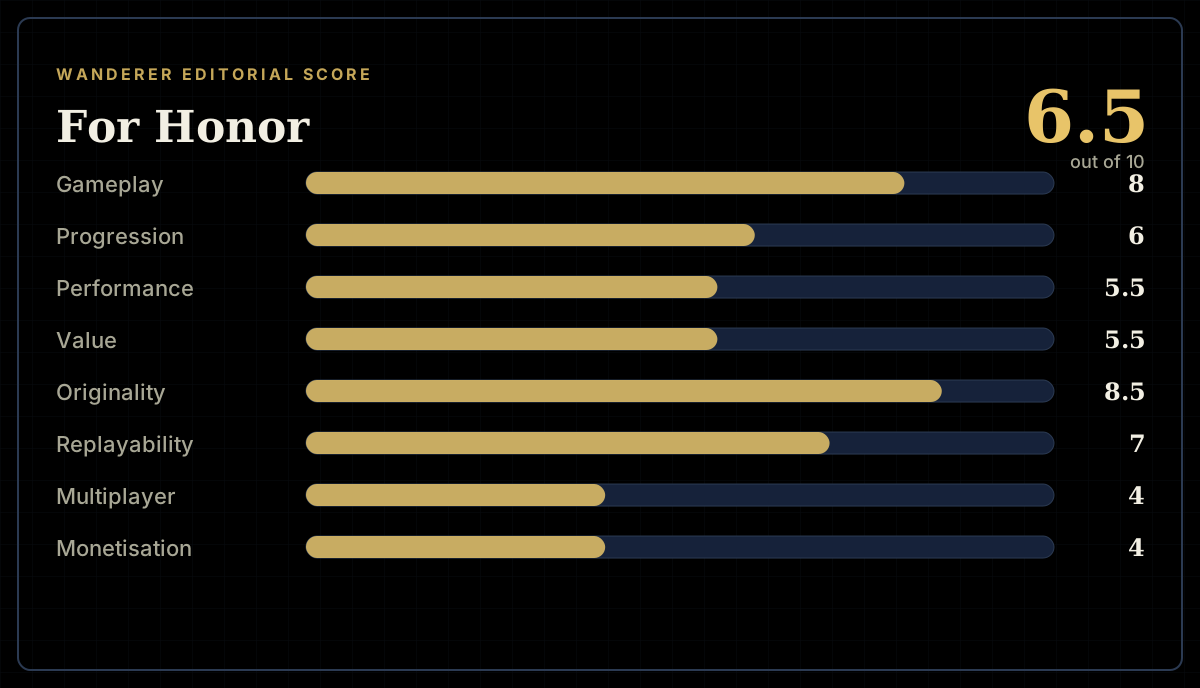
How the review scores each part of the gameWanderer Editorial -
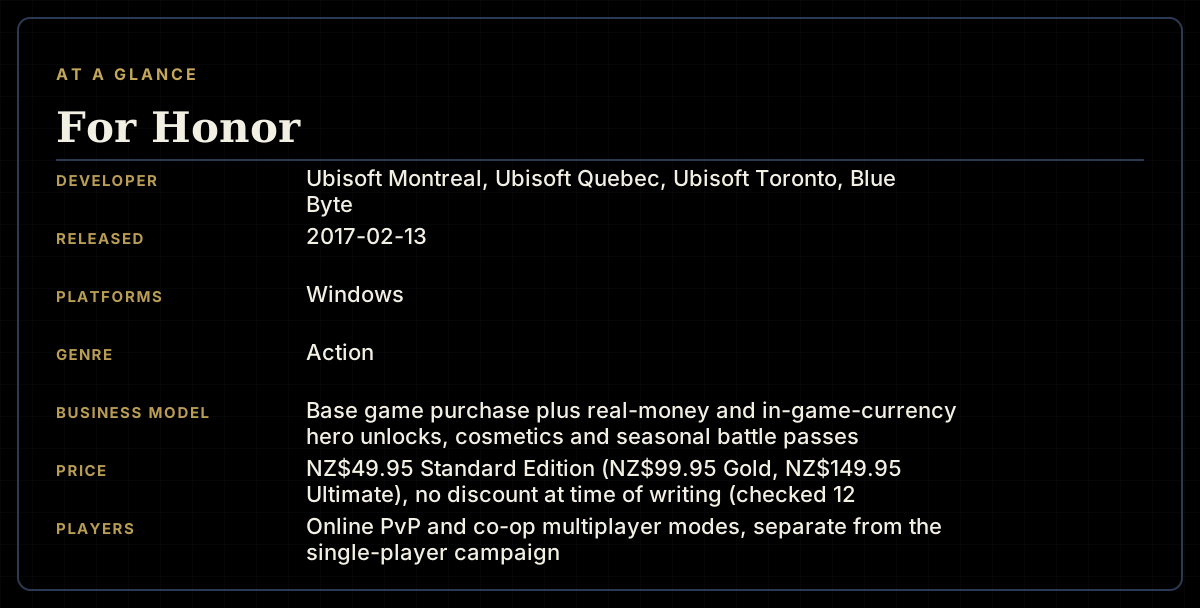
The essentials at a glanceWanderer Editorial -
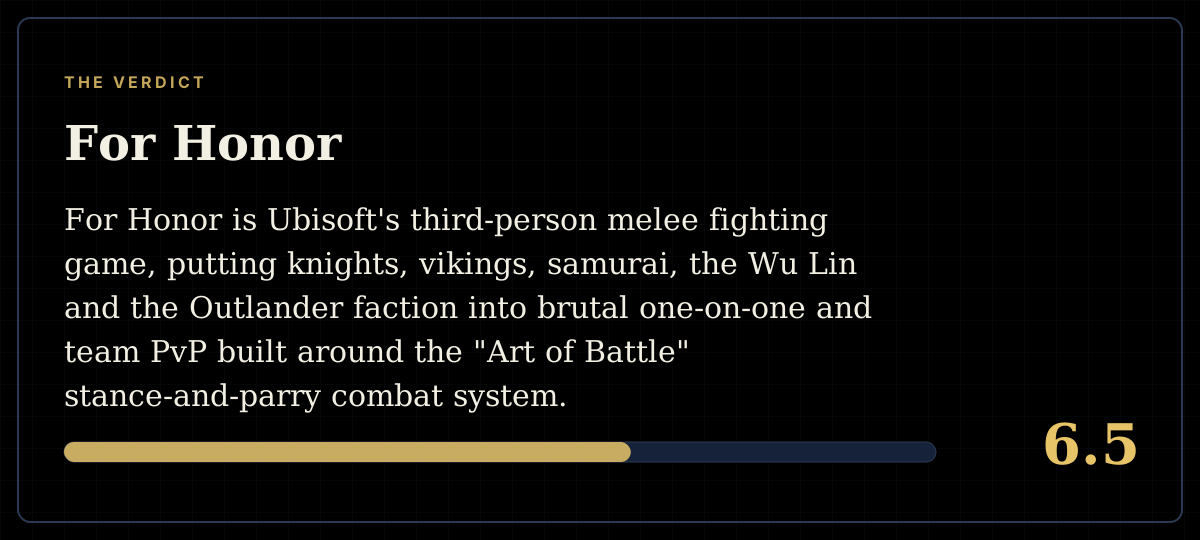
The short versionWanderer Editorial