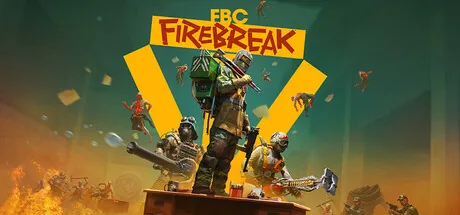
Game review
FBC: Firebreak
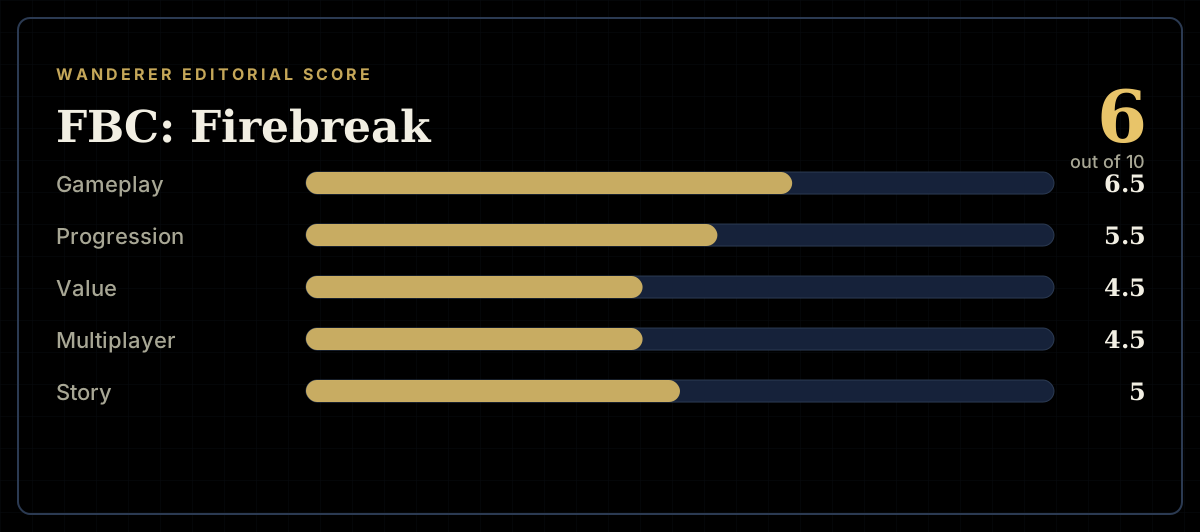
6 / 10
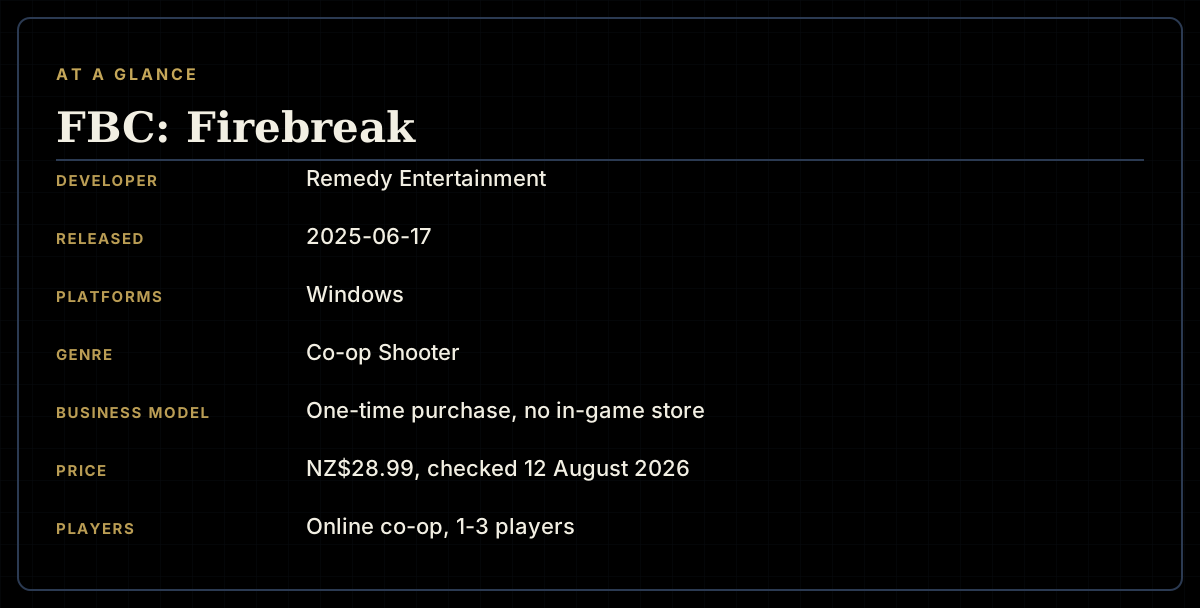
- Developer
- Remedy Entertainment
- Publisher
- Remedy Entertainment
- Released
- 17 June 2025
- Platforms
- Windows
- Genre
- Co-op Shooter
- Monetisation
- One-time purchase, no in-game store
- Players
- Online co-op, 1-3 players
The short version
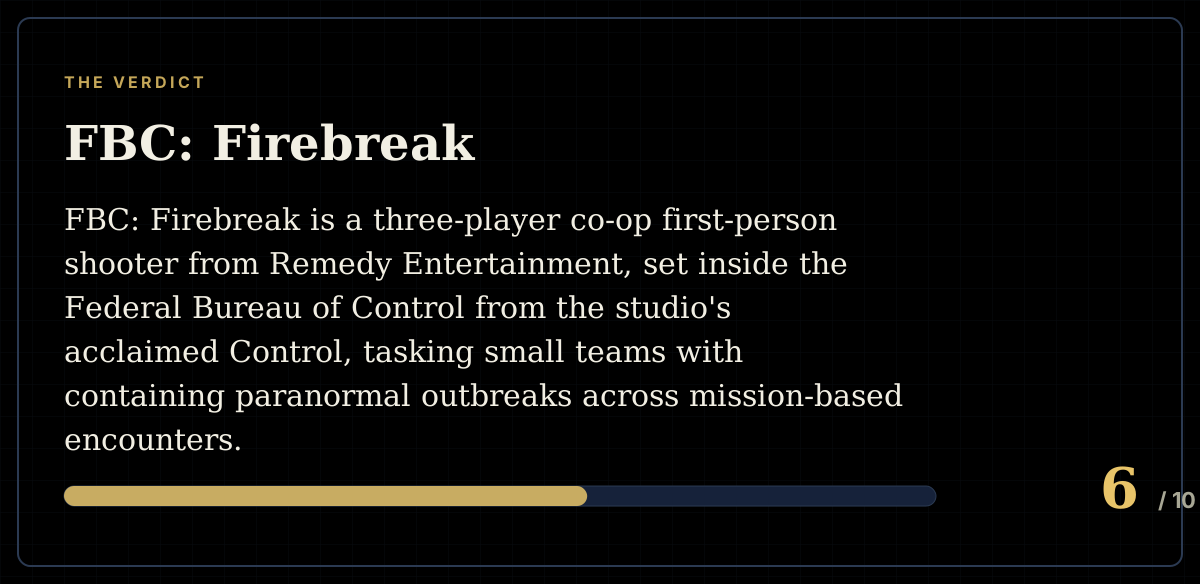
FBC: Firebreak is a three-player co-op first-person shooter from Remedy Entertainment, set inside the Federal Bureau of Control from the studio's acclaimed Control, tasking small teams with containing paranormal outbreaks across mission-based encounters. Released 17 June 2025 for NZ$28.99, it launched to a Mixed reception that has stayed largely consistent since — 64.4% positive across its 2,312-review all-language corpus, 68.1% across 1,686 English-language reviews. This review reads the 100 most-relevant English negative reviews and finds an overwhelming, specific launch-week complaint: 48 of the 100 raise thin content directly, several comparing a $40 asking price against five missions and three difficulty tiers with no Early Access label to explain the scope. Remedy responded with genuine, substantial content updates through the rest of 2025 and into 2026 — including a major "Breakpoint" update several reviewers credit with real improvement — before officially ending major support in March 2026. That timing coincided, though Remedy never stated a direct cause, with CEO Tero Virtala's resignation in October 2025 following a €14.9 million impairment tied to the game's commercial underperformance.
Biggest strengths
- The underlying gameplay loop draws real credit once players get past launch-week impressions, with reviewers specifically praising traversal tools like the pogo hammer and objective variety that improved substantially after later updates
- Remedy shipped genuine, substantial post-launch content over roughly nine months — a major "Breakpoint" update adding alternative objectives, new weapons and a roguelike mode, followed by further named updates (Rogue Protocol, Endless Shift, Open House) — rather than abandoning the game immediately after a rough launch
- Atmosphere and setting inside the Control universe earn consistent praise for staying true to the source material's tone, even from reviewers otherwise disappointed by the gameplay
Biggest weaknesses
- Content volume at launch is this review's single most repeated complaint by a wide margin — 48 of the 100 negative reviews read for this piece raise it directly, with reviewers describing five missions and three difficulty tiers as feeling like an Early Access release sold at full price without the label
- Basic social and communication features were missing at launch — no in-game voice chat, added only in a November 2025 update roughly five months after release — a serious gap for a co-op-focused game
- Player population and matchmaking draw real, recent complaints, with several 2026-dated reviews reporting empty lobbies or being unable to find a match at all, undermining a game whose design depends on having teammates
Who it's for: Control universe fans and PvE co-op shooter enthusiasts specifically curious about the improved, post-Breakpoint version of the game; a poor fit for anyone expecting the scope or price fairness typical of a fully realised live-service launch.
Our recommendation: A genuinely solid co-op shooter foundation that launched underbaked for its price and improved meaningfully before support ended. Worth trying now that it's had a year of content added and is available cheaper, but check current player population before buying for the multiplayer specifically.
6 / 10
Introduction
FBC: Firebreak puts one to three players inside the Federal Bureau of Control, the government agency at the centre of Remedy's acclaimed Control, containing paranormal outbreaks across mission-based PvE encounters. Developed and published by Remedy itself, it released 17 June 2025 for NZ$28.99 and settled quickly into a Mixed reception that has held roughly steady since — 64.4% positive across its 2,312-review all-language corpus, 68.1% across 1,686 English-language reviews. This review reads the 100 most-relevant English negative reviews and finds a launch story this outlet has seen before in the live-service genre: a real, playable foundation sold before it had enough built on top of it, followed by a genuine attempt to fix that over the following year — an attempt that ultimately wasn't enough to save the project's long-term support.
A thin launch, documented with striking consistency
The single dominant complaint across this review's negative sample is content volume, and the consistency with which reviewers describe it is unusual even for this library's corpus. Forty-eight of the 100 negative reviews raise it directly, and the framing recurs almost word for word: five missions, three difficulty tiers, described repeatedly as feeling like an Early Access build without the Early Access label or pricing to match. "Not that much content for an apparent '1.0 Release,'" reads one representative review from launch day, adding that the core loop — including a genuinely fun pogo-hammer traversal tool — was enjoyable but insufficient to justify the price alone. Another, more pointed: "5 missions, 3 levels of ac[tivity]... currently not worth the price." This isn't scattered grumbling from a handful of impatient buyers — it's close to half of this review's entire negative sample independently landing on the same specific critique within days of release.
Compounding that first impression, basic social infrastructure was missing at launch. In-game voice chat — a fairly fundamental expectation for a three-player co-op shooter — wasn't added until a November 2025 update, roughly five months after release, and several reviewers specifically call out the absence as baffling for a game built entirely around small-team coordination.
Not quite Control, according to its own fans
A second, more specific thread of criticism concerns identity rather than volume. Several longtime Control fans in this review's sample argue Firebreak trades away the freeform physics and superpower combat that made the original distinctive, landing instead on comparatively generic co-op shooter mechanics dressed in the setting's atmosphere. "They made a control game without the cool superpowers and physics that made the original stand out," reads one review, adding that the atmosphere holds up even as the moment-to-moment gameplay doesn't carry the same identity. That's a different, more specific complaint than "not enough content," and it's worth separating the two: some reviewers who fault the game for thinness still enjoy what's there, while this group argues the core design itself falls short of what the license implied.
A real recovery attempt, documented in the patch history
Where this story diverges from a simple "underbaked live-service flop" is what happened next. Rather than abandoning the game after its rough reception, Remedy kept shipping substantial content through the rest of 2025 and into 2026: a major "Breakpoint" update added alternative mission objectives, new weapons, gun modifications and a roguelike game mode, and reviewers who returned after it shipped describe real improvement. "If you played or heard things before the Breakpoint update, then you need to try it now," reads one 63-vote review from September 2025, crediting the update with making "everything way better." Further named content drops — Rogue Protocol, Endless Shift, an Open House update — continued through early 2026, alongside a steady cadence of hotfixes. This is a genuinely substantial post-launch investment, not a token patch or two, and it's the part of the story a snapshot of launch-week reviews alone would miss entirely.
The ending, and its coincidental timing
That recovery effort didn't ultimately secure the game's future. Remedy's own Steam news feed labels its March 2026 patch "FBC: Firebreak's Last Major Update," confirming the studio wound down active development roughly nine months after launch — the game remains playable and purchasable, offered at a reduced price, rather than being shut down outright. The wider business context is worth reporting plainly: in October 2025, Remedy CEO Tero Virtala stepped down after nine years in the role, a move multiple independent outlets connected to a profit warning the company had issued shortly before, tied to a €14.9 million impairment attributed to Firebreak's commercial underperformance. Remedy did not state the resignation was directly caused by the game, and this review does not assert that causation as settled fact — but the timing is documented and worth a reader knowing, since it speaks to just how significant this launch's commercial struggles were for the studio behind it, independent of how the finished game plays today.
One review in this sample raises a claim worth noting cautiously rather than repeating as fact: that part of the initial negative wave was driven by review-bombing following a critical video from a popular content creator, timed to a specific date. This review did not independently verify a coordinated spike in negative reviews around that date, and reports the claim only as one reviewer's characterisation rather than a confirmed finding.
What the numbers say
Steam's achievement data shows a moderate completion curve — a median of 22.3% across 43 achievements, against a top rate of 80.3% — neither catastrophically steep nor unusually healthy, consistent with a game that held a meaningful share of its buyers through at least some of its expanded post-Breakpoint content without becoming a long-term habit for most of them.
Final Verdict
FBC: Firebreak tells a genuinely instructive story about what a thin launch costs a game, even when the studio behind it tries seriously to fix the problem afterward. The five-mission, full-price launch state drew an unusually unified complaint from this review's negative sample, and missing basics like voice chat compounded a first impression the game never fully recovered from commercially, whatever its later Breakpoint update achieved on the merits. That update is real and worth crediting — this isn't a story of a studio ignoring its players — but it landed too late to change the business outcome, and support ended in March 2026 alongside a CEO departure whose timing speaks for itself even without an official stated cause. For a player today, considering the game at its current reduced price with a year of added content already in place, it's a reasonably fair proposition; considering it at launch, this review's sample suggests the criticism was earned.
Pros and cons
Pros
- The underlying gameplay loop draws real credit once players get past launch-week impressions, with reviewers specifically praising traversal tools like the pogo hammer and objective variety that improved substantially after later updates
- Remedy shipped genuine, substantial post-launch content over roughly nine months — a major "Breakpoint" update adding alternative objectives, new weapons and a roguelike mode, followed by further named updates (Rogue Protocol, Endless Shift, Open House) — rather than abandoning the game immediately after a rough launch
- Atmosphere and setting inside the Control universe earn consistent praise for staying true to the source material's tone, even from reviewers otherwise disappointed by the gameplay
- No microtransactions or additional monetisation beyond the purchase price, in a genre where live-service co-op shooters frequently layer battle passes or premium currencies on top
Cons
- Content volume at launch is this review's single most repeated complaint by a wide margin — 48 of the 100 negative reviews read for this piece raise it directly, with reviewers describing five missions and three difficulty tiers as feeling like an Early Access release sold at full price without the label
- Basic social and communication features were missing at launch — no in-game voice chat, added only in a November 2025 update roughly five months after release — a serious gap for a co-op-focused game
- Player population and matchmaking draw real, recent complaints, with several 2026-dated reviews reporting empty lobbies or being unable to find a match at all, undermining a game whose design depends on having teammates
- Several longtime Control fans specifically criticise the game for lacking the freeform superpowers and physics-driven combat that distinguished the original, describing Firebreak as a comparatively generic co-op shooter wearing the setting's atmosphere without its mechanical identity
Screenshots
-
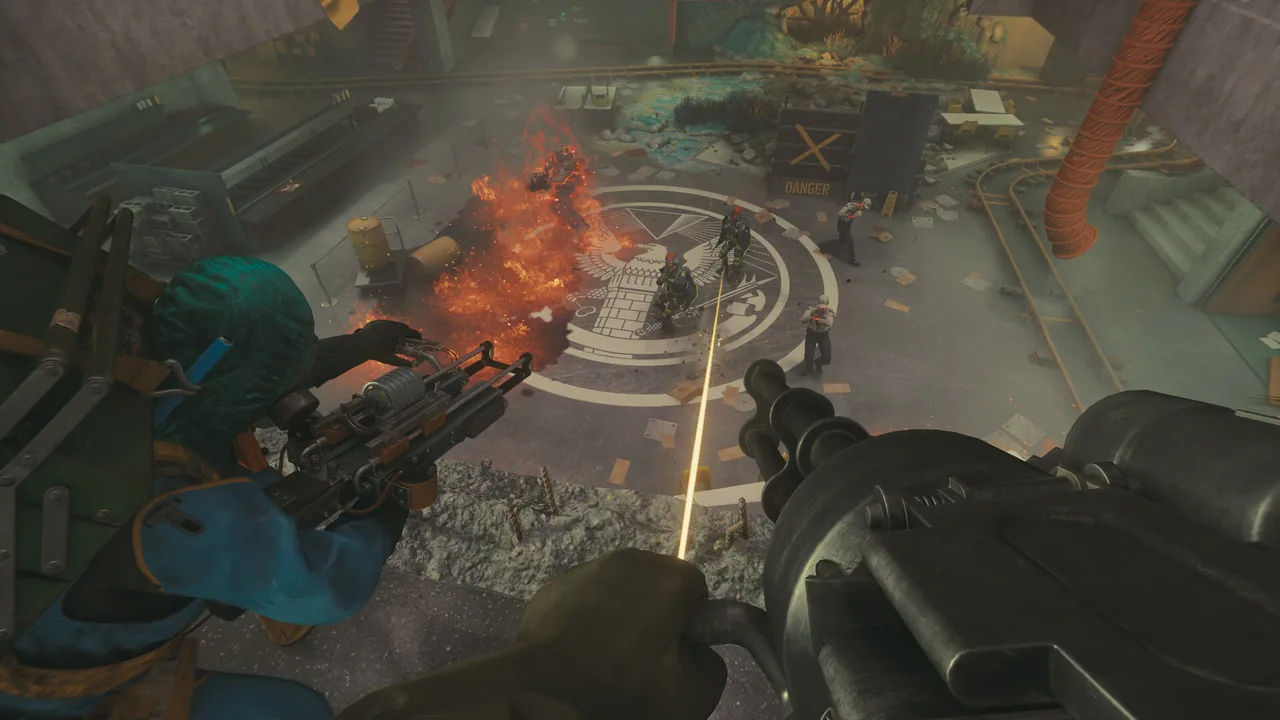
FBC: FirebreakImage: Remedy Entertainment via Steam -
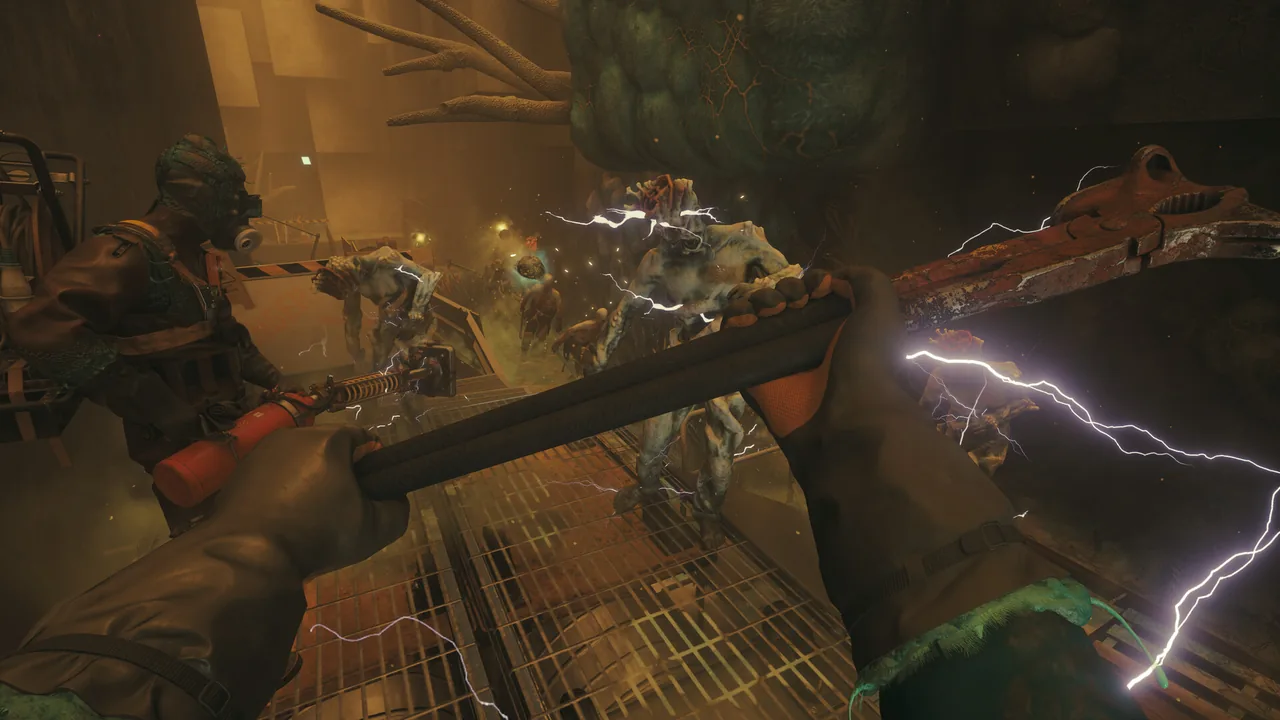
FBC: FirebreakImage: Remedy Entertainment via Steam -
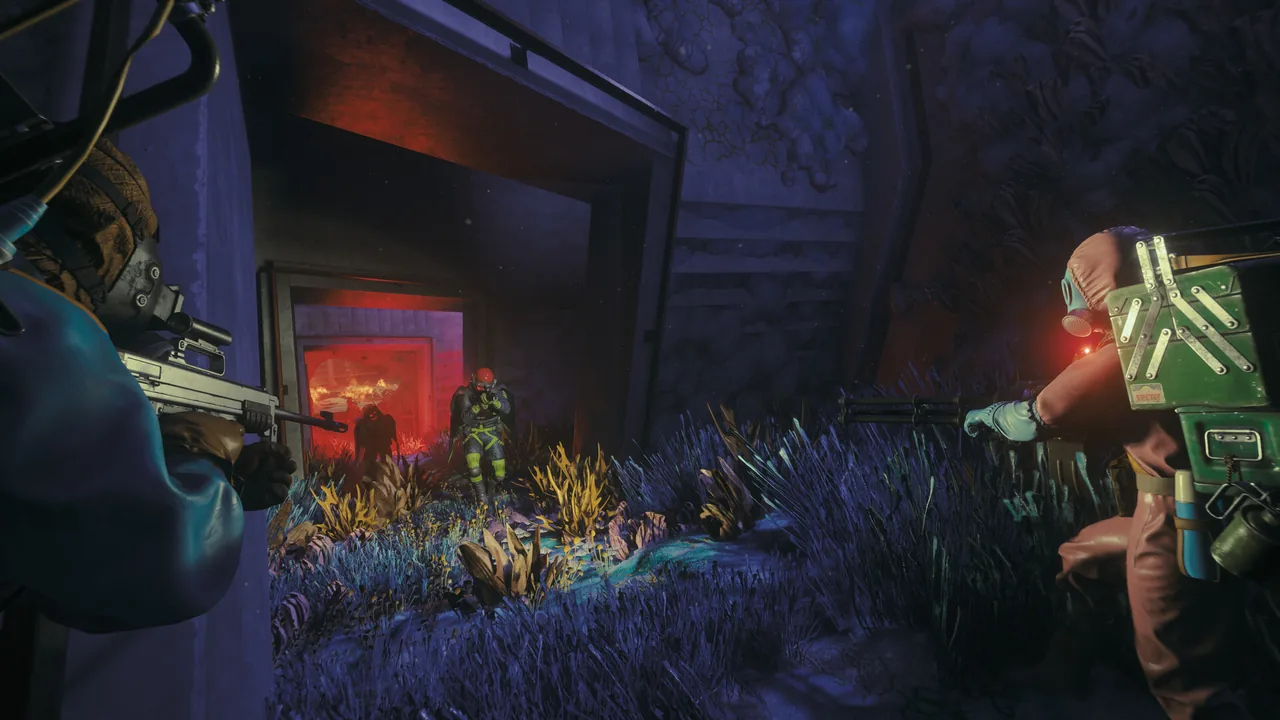
FBC: FirebreakImage: Remedy Entertainment via Steam -
How the review scores each part of the gameWanderer Editorial -
The essentials at a glanceWanderer Editorial -
The short versionWanderer Editorial