
Game review
FANTASIAN Neo Dimension
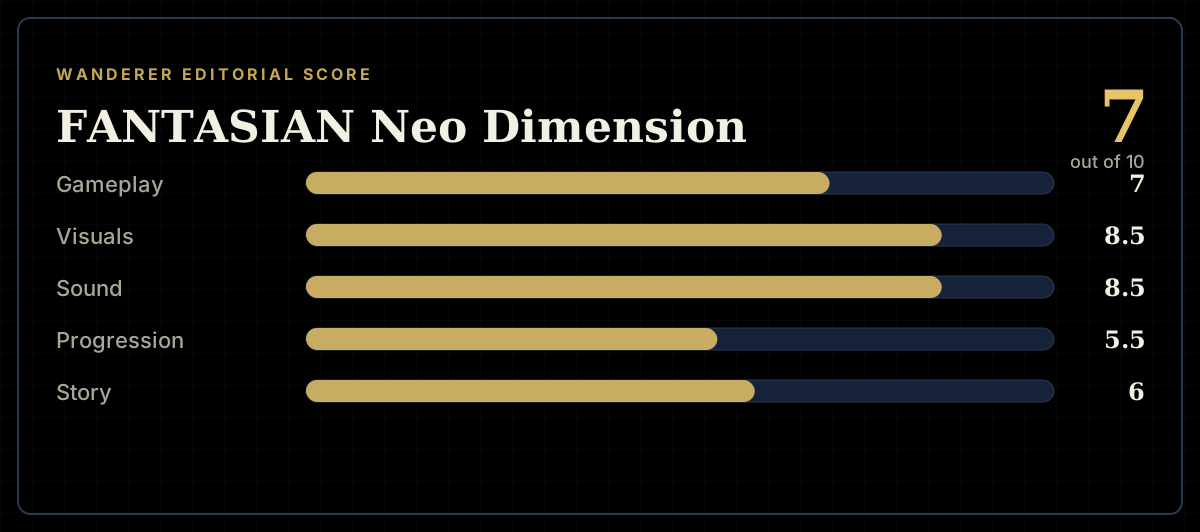
7 / 10
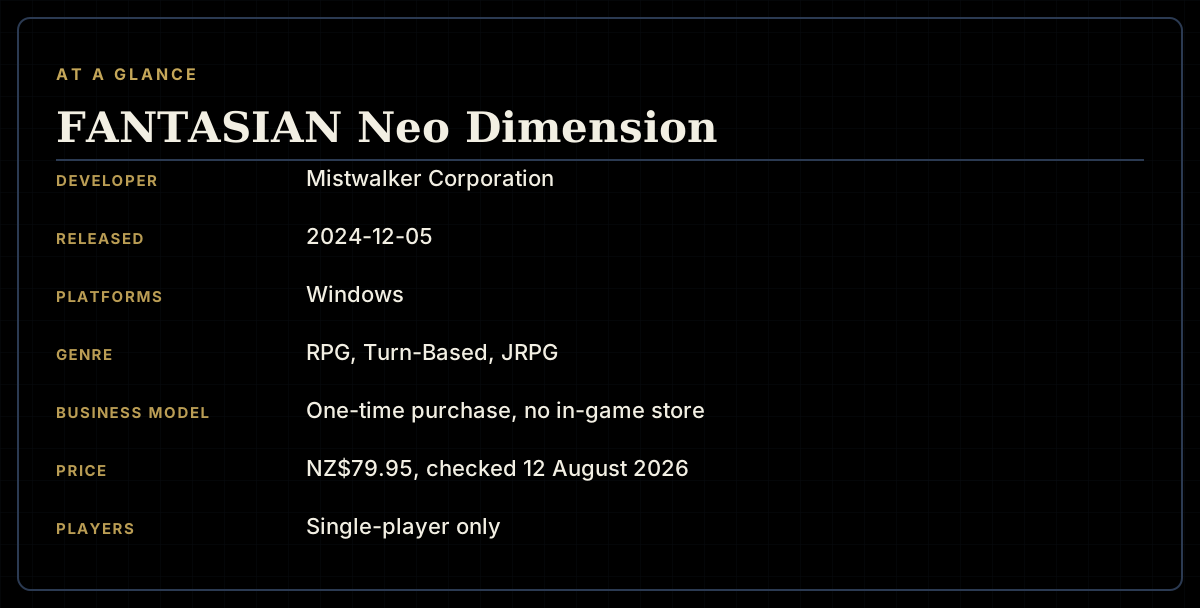
- Developer
- Mistwalker Corporation
- Publisher
- Square Enix
- Released
- 5 December 2024
- Platforms
- Windows
- Genre
- RPG, Turn-Based, JRPG
- Monetisation
- One-time purchase, no in-game store
- Players
- Single-player only
The short version
FANTASIAN Neo Dimension is the PC and console debut of Hironobu Sakaguchi and Nobuo Uematsu's Apple Arcade RPG, a deliberate throwback to the PS1-era Final Fantasy and Chrono Trigger era built around backgrounds photographed from real, handcrafted physical dioramas. Developed by Mistwalker Corporation and published by Square Enix, this Neo Dimension edition released on 5 December 2024, adding full voice acting, a Normal difficulty mode and other quality-of-life changes to a game originally released across two parts on Apple Arcade in 2021. Its 443 English-language Steam reviews sit at Mostly Positive, roughly 78.8%, and reading the full negative sample of 94 reviews alongside the top positives finds real, specific affection for its world and presentation running into equally specific, well-documented frustration with its pacing and a genuinely punishing final stretch.
Biggest strengths
- The handcrafted diorama backgrounds — real physical models photographed and used as the game's environments — draw wide, specific praise as a genuinely unique visual identity unlike anything else in the genre, mentioned by name in over a quarter of this review's full sample
- Nobuo Uematsu's soundtrack draws consistently strong praise, alongside newly added full voice acting that reviewers credit as a substantial improvement over the original mobile release
- The Neo Dimension edition's added Normal difficulty and quality-of-life options are credited with smoothing out a game the original mobile version's fans describe as notoriously punishing
Biggest weaknesses
- Core combat systems, including character-swapping and the talent tree, don't unlock until roughly 20 hours in, which multiple detailed reviews single out as a serious pacing failure that leaves the opening stretch feeling comparatively thin
- The final quarter of the game draws the most consistent, specific criticism in the entire sample: boss fights described as taking upwards of 30 minutes each, introducing new mechanics with no way to prepare, forcing lengthy repeat attempts
- Several reviewers, including some recommending the game, describe the writing and characters as shallow, event-driven and prone to over-explaining mysteries rather than trusting the player
Who it's for: Fans of PS1-era Square RPGs and Chrono Trigger who want a genuine throwback experience with a truly distinctive visual identity; a poor fit for anyone allergic to old-school JRPG pacing or unwilling to push through a demanding endgame.
Our recommendation: A visually and musically extraordinary RPG whose systems arrive too slowly and whose final act overstays its welcome, best played by genre veterans with patience for both.
7 / 10
Introduction
FANTASIAN began life as an Apple Arcade exclusive, split across two parts released in 2021, built by Mistwalker under the direction of Hironobu Sakaguchi — the creator of Final Fantasy — with a score by his longtime collaborator Nobuo Uematsu. Neo Dimension is its first release beyond mobile, arriving on PC and consoles through Square Enix on 5 December 2024 with a substantial upgrade pass: full voice acting, a new Normal difficulty mode alongside the original's demanding default, and general quality-of-life work. This review reads the full available negative sample of 94 English-language reviews alongside the top 100 positives, out of 443 reviews sitting at Mostly Positive, roughly 78.8%, and finds a game whose most distinctive quality is rarely in dispute even where its pacing is.
A visual identity nothing else in the genre has
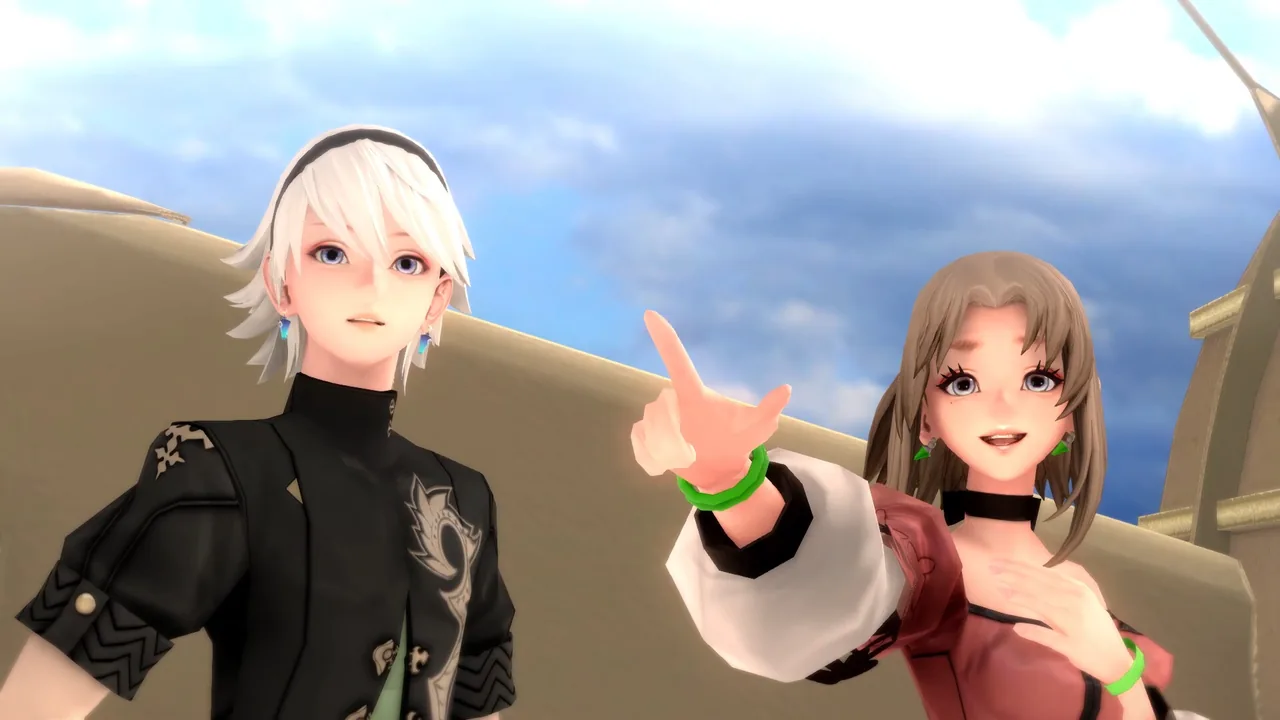
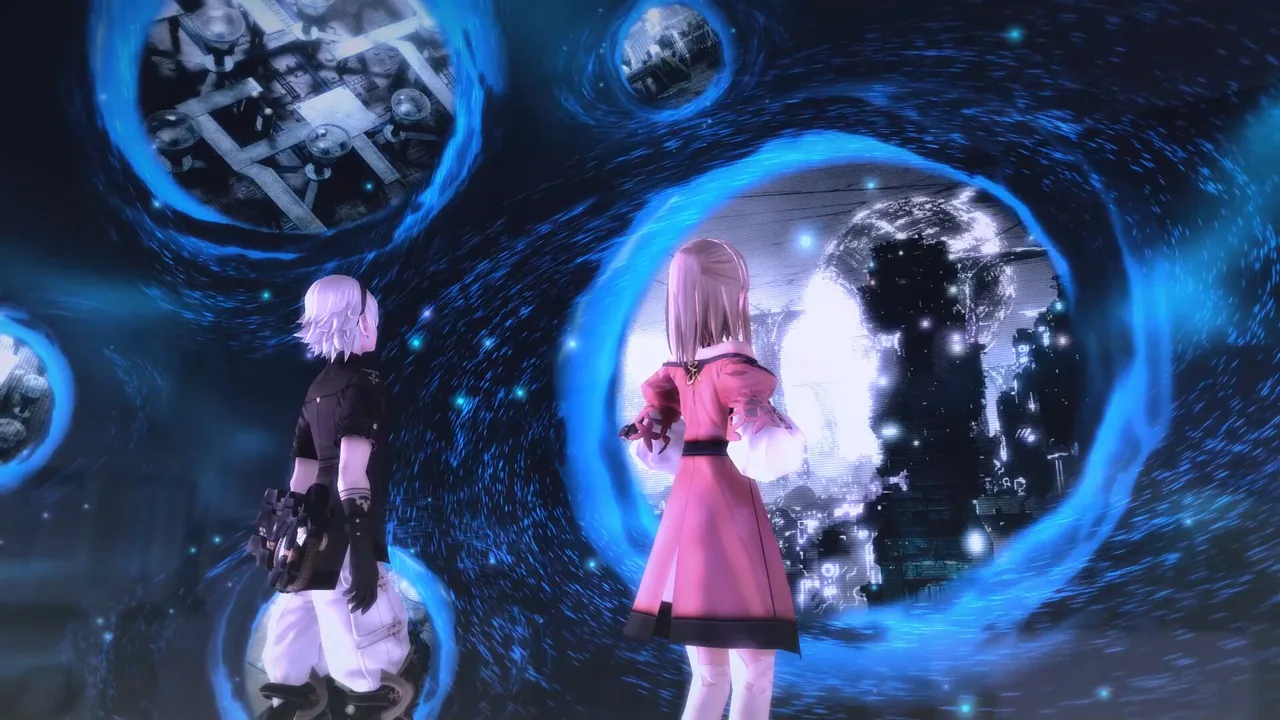
FANTASIAN's signature feature is its backgrounds: rather than rendering environments digitally, the game photographs real, physically handcrafted dioramas — miniature sets built by hand — and uses them as the world the player's characters walk through. That technique earns wide, specific praise across this review's sample, with "diorama" or "dioramas" appearing in a striking share of both positive and negative reviews alike, a sign of just how central it is to how the game gets discussed regardless of a reviewer's overall verdict. Reviewers reach for genuinely strong company when describing the whole package: PS1-era Final Fantasy, Chrono Trigger and Chrono Cross come up repeatedly, with one reviewer arguing plainly that "if this game had come out on the PS1 in 1998 it would have sold gangbusters." Uematsu's soundtrack draws its own consistent, specific praise, and the newly added full voice acting is credited across multiple reviews as a meaningful step up from the mobile original.
Systems that arrive too late
The most consistent structural criticism in the negative sample concerns pacing at the front of the game. Multiple detailed reviews report that core combat systems — including the ability to swap characters mid-battle and the talent tree that shapes long-term builds — don't unlock until roughly 20 hours in, leaving what one reviewer called "a very average turn based system" for a significant opening stretch before the game's real depth arrives. That's a long runway by modern standards, and it's the kind of complaint that shows up specifically and repeatedly rather than as a vague "slow start" grumble, which suggests it's a genuine structural decision worth knowing about before committing rather than a matter of individual patience.
A final act several reviewers call a grind
The sharpest, most specific complaint in the entire sample concerns the game's last quarter. Multiple detailed reviews — including from players who spent 40, 60 or more hours with the game and enjoyed most of it — describe a late-game shift into what one called "an insufferable grind fest," with boss fights taking upwards of half an hour each and introducing new mechanics mid-fight with no way to have prepared for them, forcing repeated, lengthy attempts. Another reviewer described an experience penalty that kicks in once the talent tree unlocks, meaning outlevelling content provides almost no experience at all, pushing players toward "meaningful" fights against tough optional bosses just to keep pace. This isn't a case of the difficulty being uniformly punishing from the start — several of the same reviewers explicitly praise the first three-quarters of the game before describing exactly where and how it changes, which gives the complaint real specificity rather than reading as generic difficulty grumbling.
Writing that doesn't match the craft on display
A smaller but recurring thread argues the story and characters don't live up to the visual and musical ambition surrounding them. One detailed review argued the game is "a series of events" with characters who lack real interiority, criticising a tendency to explain mysteries immediately through blatant signposting rather than letting the player sit with them. This criticism appears across a meaningful minority of the sample rather than dominating it, but it's worth flagging plainly for anyone drawn in primarily by Sakaguchi's pedigree in narrative-driven Final Fantasy entries — this is a game whose strongest asset is its world, not necessarily what happens in it.
Final Verdict
FANTASIAN Neo Dimension is, by a wide margin in this review's sample, one of the most visually distinctive RPGs available on PC, and its handcrafted diorama worlds and Uematsu score earn every bit of the praise reviewers give them. What holds it back from a stronger score is structural: a first act that withholds the game's real combat systems for roughly 20 hours, and a final act enough detailed, invested reviewers independently describe as a genuine grind that it reads as a real design choice rather than a one-off complaint. This is a game worth playing for what it does that nothing else does, provided you go in ready for a slow build and a demanding finish rather than a uniformly smooth ride.
Pros and cons
Pros
- The handcrafted diorama backgrounds — real physical models photographed and used as the game's environments — draw wide, specific praise as a genuinely unique visual identity unlike anything else in the genre, mentioned by name in over a quarter of this review's full sample
- Nobuo Uematsu's soundtrack draws consistently strong praise, alongside newly added full voice acting that reviewers credit as a substantial improvement over the original mobile release
- The Neo Dimension edition's added Normal difficulty and quality-of-life options are credited with smoothing out a game the original mobile version's fans describe as notoriously punishing
- Multiple reviewers place the combat favourably alongside Chrono Trigger and Final Fantasy X, once its full systems come online
Cons
- Core combat systems, including character-swapping and the talent tree, don't unlock until roughly 20 hours in, which multiple detailed reviews single out as a serious pacing failure that leaves the opening stretch feeling comparatively thin
- The final quarter of the game draws the most consistent, specific criticism in the entire sample: boss fights described as taking upwards of 30 minutes each, introducing new mechanics with no way to prepare, forcing lengthy repeat attempts
- Several reviewers, including some recommending the game, describe the writing and characters as shallow, event-driven and prone to over-explaining mysteries rather than trusting the player
- A cluster of reviews describes the interface as still carrying visible traces of its mobile origins despite the port work, and some question the price relative to a game still built around touchscreen-era conventions
Screenshots
-
FANTASIAN Neo DimensionImage: Square Enix via Steam -

FANTASIAN Neo DimensionImage: Square Enix via Steam -
FANTASIAN Neo DimensionImage: Square Enix via Steam -
How the review scores each part of the gameWanderer Editorial -
The essentials at a glanceWanderer Editorial -
The short versionWanderer Editorial