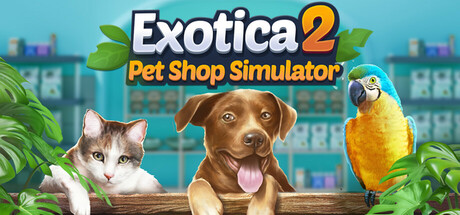
Game review
Exotica 2: Pet Shop Simulator
5 / 10
- Developer
- Konrul Game
- Publisher
- Ultimate Games S.A.
- Released
- 21 January 2026
- Platforms
- Windows
- Genre
- Adventure, Casual, Indie, Simulation
- Monetisation
- One-time purchase, no in-game purchases listed
- Players
- Single-player
The short version
Exotica 2: Pet Shop Simulator, released 21 January 2026 by Konrul Game, is a cozy management game centred on designing and running an exotic pet shop, caring for and breeding over 70 animals, and managing customers and staff. It sits Mostly Positive with a substantial sample of 74 negative and 50 positive reviews reviewed in detail here, and reading widely through both reveals a genuinely appealing concept undermined by a striking number of specific, well- corroborated complaints. Reviewers consistently praise the animal variety, breeding system and shop customization as filling a real gap in the management-sim genre, distinct from the more common supermarket or restaurant setting. Set against that praise, a large number of reviewers describe exhausting fetch-quest-style micromanagement, since customers reportedly don't carry items to the register themselves, forcing the player or staff to personally retrieve every item a shopper wants. Multiple reviewers separately report a confusing, broken building tutorial that can trap new players in an unfixable shop layout, poor economic balance where money is too easy to earn but a loan system is reported as needlessly restrictive, and buggy employee AI requiring frequent game restarts. A further, specific and unusually well-corroborated complaint concerns disclosed AI-generated wall art, which a striking number of otherwise enthusiastic reviewers state is the single element keeping them from recommending an otherwise beloved game.
Biggest strengths
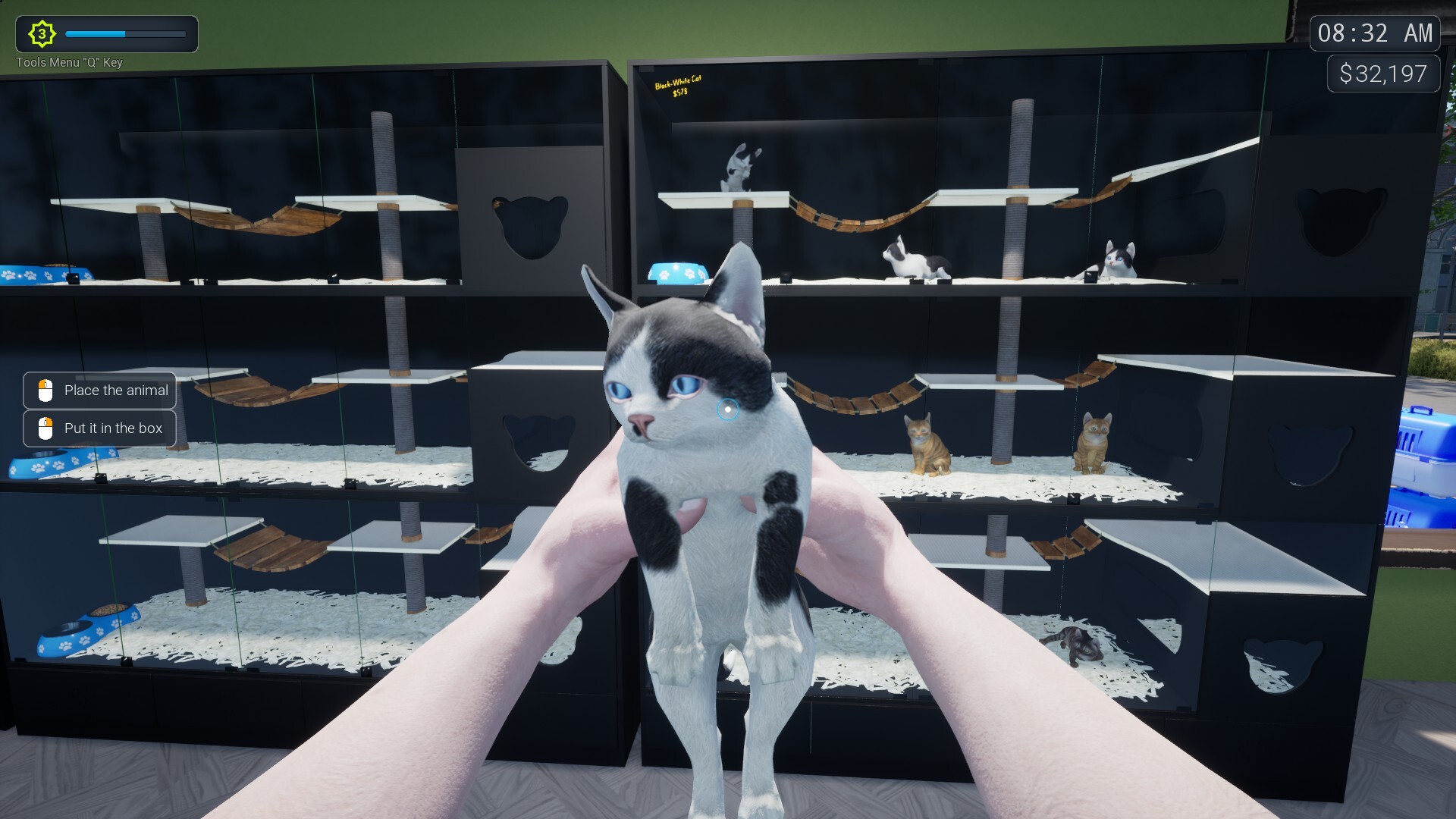
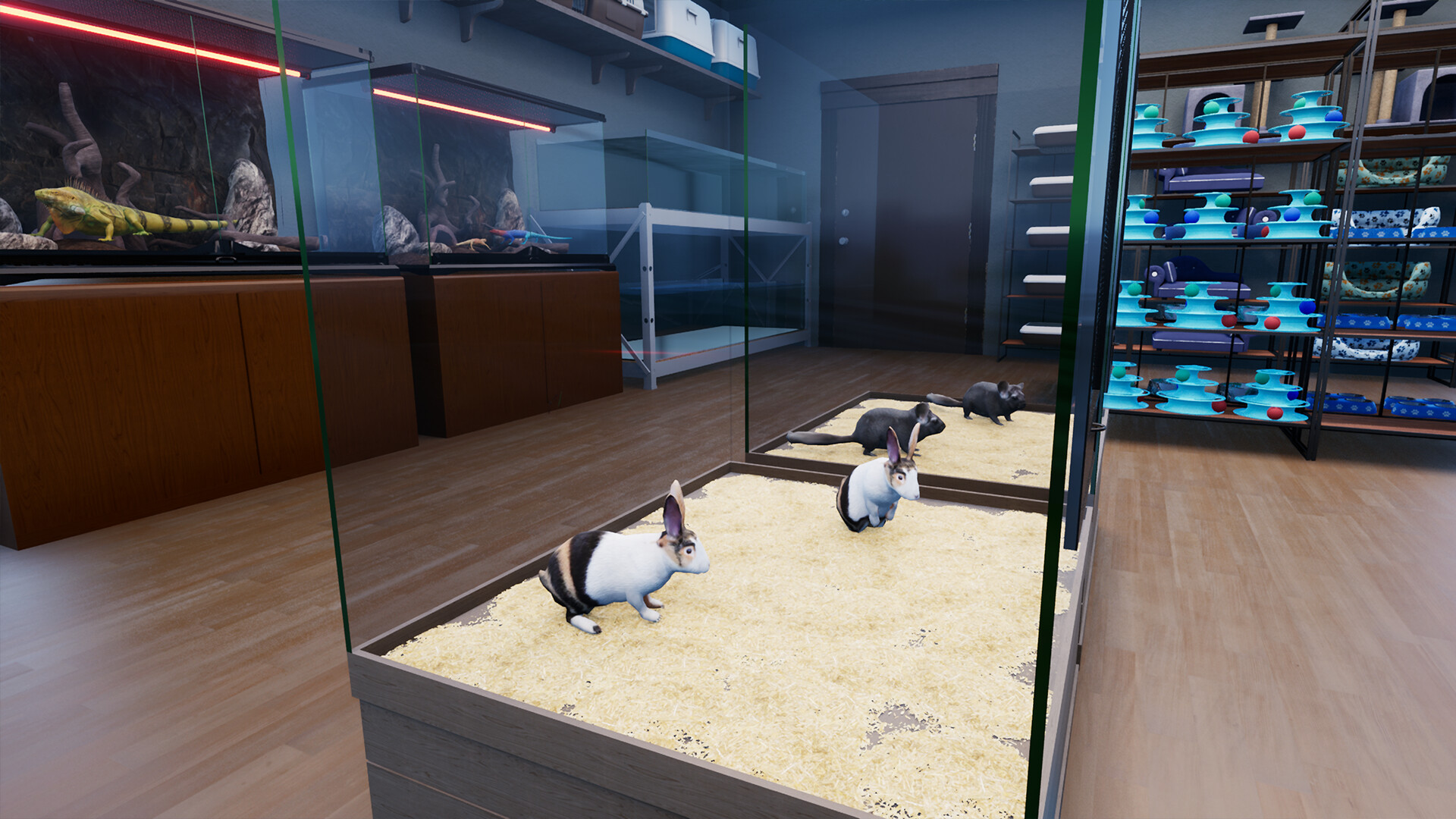
- Animal variety and the breeding system draw consistent, enthusiastic praise, with reviewers describing genuine excitement caring for and breeding rare colour variants across dozens of species, filling a specific niche the wider management-sim genre rarely covers
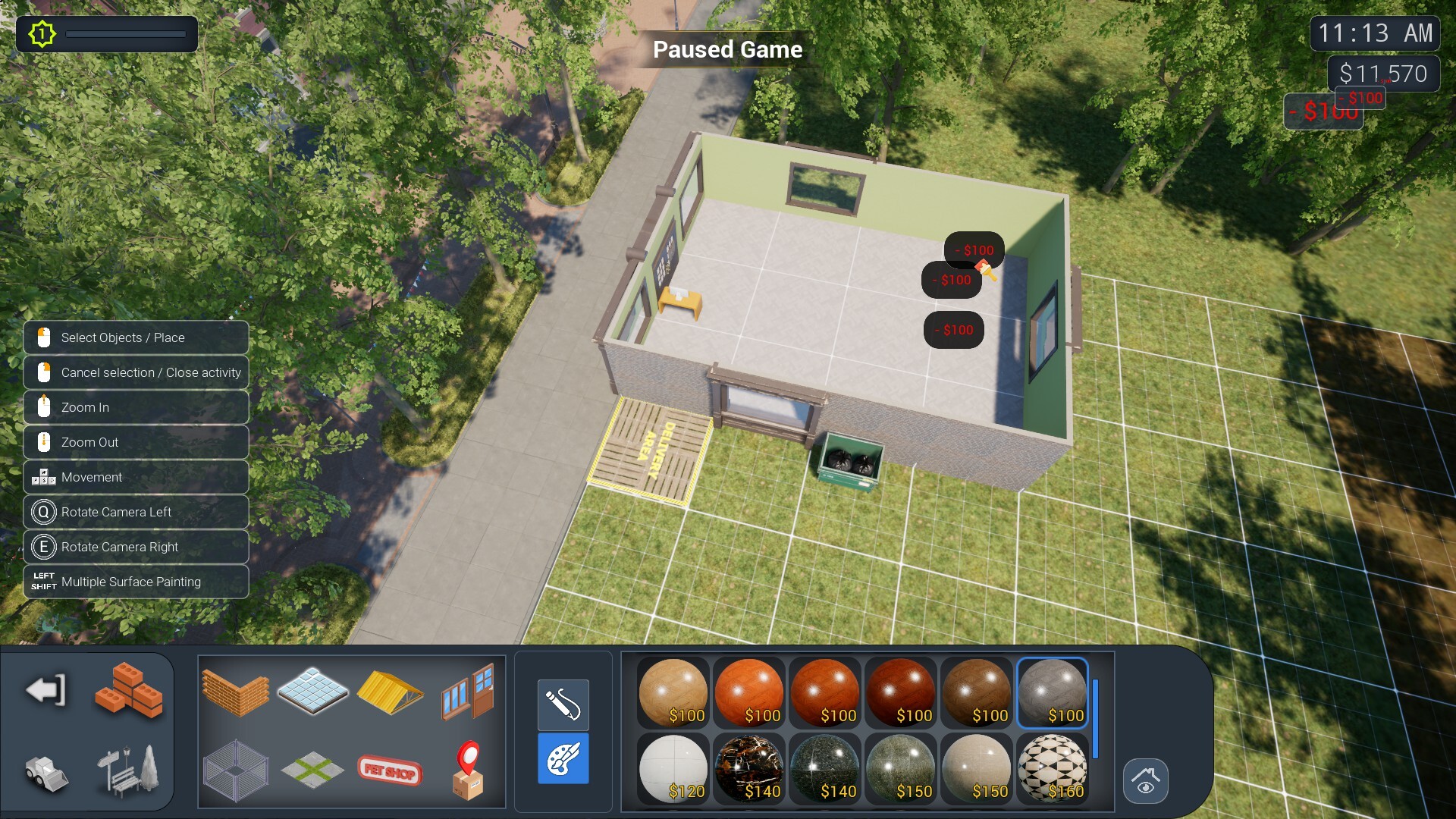
- Shop customization and building options draw specific praise for depth and creative freedom, with reviewers describing shelving, accessories and layout options as genuinely satisfying to design once the initial building hurdles are overcome
- The overall concept fills a real, specific gap in the genre, with multiple reviewers explicitly contrasting it favourably against the more common supermarket or restaurant setting typical of similar management sims
Biggest weaknesses
- A large number of reviewers describe exhausting, tedious micromanagement as the game's central flaw, reporting that customers don't carry items to the register themselves, forcing the player or staff to personally fetch every item requested, with one reviewer describing the resulting loop as closer to a "cardboard box tossing simulator" than a pet shop game
- Multiple reviewers report a confusing, broken building tutorial that can trap new players in an unfixable shop layout, with several stating they were forced to construct a poorly-planned initial building with no way to correct mistakes made during that same tutorial sequence
- Economic balance draws sustained criticism, with reviewers describing money as too easy to earn given a constant stream of customers, while separately reporting a loan system that requires already having twice the requested amount on hand, undermining its usefulness as a genuine source of early capital
Who it's for: Fans of cozy management sims and exotic pet enthusiasts looking for genuine animal variety and breeding depth, who can tolerate real tedium in daily shop operations and a rough, occasionally broken tutorial experience.
Our recommendation: Worth it for pet and breeding enthusiasts specifically drawn to the concept, with patience for real friction in daily operations; wait for further patches if excessive micromanagement or the reported AI-generated decor are dealbreakers for you.
5 / 10
Introduction
Exotica 2: Pet Shop Simulator, released 21 January 2026 by Konrul Game, invites players to design and run their own exotic pet shop: care for over 70 animal species, raise babies, breed rare colour variants, and manage a growing staff and customer base. It sits Mostly Positive with a substantial review sample, and reading widely through it reveals a genuinely appealing, distinctive concept undermined by a specific, unusually well-corroborated cluster of complaints spanning gameplay design, balance, technical stability, and one striking, widely-shared objection to part of its art.
A genuinely distinctive concept, well executed in places
The clearest strength across this sample is the underlying premise itself. Reviewers consistently praise the sheer animal variety and breeding system, describing genuine excitement caring for and breeding rare colour variants across dozens of species — a specific niche multiple reviewers note the wider management-sim genre rarely touches compared to the far more common supermarket or restaurant settings. Shop customization draws its own specific praise, with reviewers describing shelving, accessories and layout options as genuinely satisfying to design once initial hurdles are cleared.
Exhausting micromanagement at the core of daily play
Set against that praise, this review found a large, consistent body of criticism focused on the core daily gameplay loop. A large number of reviewers report customers don't carry items to the register themselves, forcing the player or their staff to personally retrieve every single item a shopper wants from across the store. One detailed reviewer describes the resulting experience as closer to a "cardboard box tossing simulator" than a genuine pet shop management game, with time spent hauling cardboard and stocking shelves dramatically outweighing time spent actually engaging with the animals the game is ostensibly about.
A tutorial that can trap new players
A separate, specific complaint concerns onboarding. Multiple reviewers report a confusing, broken building tutorial that can trap new players in a poorly-planned initial shop layout, with several describing being forced to construct part of their building during the tutorial with no way to correct mistakes made in that same sequence. This is a serious first-impression problem distinct from general difficulty complaints — reviewers describe being functionally unable to fix basic structural errors before the game even lets them properly begin.
Poor economic balance and buggy employees
Beyond onboarding, this review found sustained criticism of the game's economic systems. Multiple reviewers describe money as too easy to earn given a near-constant stream of customers, while separately reporting a loan system that requires already possessing twice the requested loan amount — a specific, self-defeating restriction that undermines its usefulness as genuine early-game capital. Employee AI draws its own repeated complaint, with staff described as failing to respect item placement, getting stuck, or simply ceasing to function correctly until the entire game is closed and relaunched.
A disclosed AI-art complaint reviewers say is the deciding factor
This review found one especially striking, well-corroborated pattern worth centring directly. A notable number of reviewers specifically flag disclosed AI-generated wall art and decor — reportedly noted in the game's own store-page disclosure — as the single element standing between them and a positive recommendation for a game they otherwise strongly like. Several reviewers state explicitly they would switch their review to positive if that specific content were replaced with traditionally created art, distinguishing this clearly from the more common, unverified AI-authorship speculation this review encounters elsewhere: here, the AI usage is reported as disclosed rather than suspected, and reviewers' objection is specifically about visual quality and consistency with the rest of the game's genuinely well-regarded art direction, not a hidden-practice concern.
Smaller quality-of-life gaps reviewers specifically want fixed
Beyond the major complaints above, this review found a cluster of smaller, more specific requests that recur often enough to be worth naming directly. Multiple reviewers report animal enclosure requirements aren't always accurately represented, and separately note that purchasing multiple breeds of a given animal type sometimes shares a single tank slot in a way that doesn't reflect how that species would actually need to be housed. More than one reviewer specifically asks for the ability to name individual pets, framing its absence as a surprising gap for a game this focused on individual animal care and breeding. Star rewards for completing levels are reported as inconsistent, with one detailed reviewer noting an earlier, easier level granting more unlock points than a later, harder one — the opposite of what a coherent progression curve should deliver. None of these individually are severe, but their volume and specificity suggest a game whose individual systems were built without always testing how they'd interact with each other in practice.
A genre fan's perspective on where this sits
It's worth including directly how reviewers with broad genre experience specifically frame this game relative to its competition. Multiple self-described veteran management-sim players state they find Exotica 2 notably rougher than comparable, more established entries in the wider shop-sim genre, with one detailed reviewer explicitly contrasting its awkward customer-fetching mechanics against smoother, more automated systems standard in other store simulators they've played. This review treats that comparative framing as useful context: the complaints documented above aren't simply a case of a niche concept being inherently difficult to execute well, but of specific design choices that diverge from conventions the wider genre has already worked out, according to players with the experience to make that comparison credibly.
Final Verdict
Exotica 2: Pet Shop Simulator pursues a genuinely distinctive, appealing concept — real animal variety and breeding depth in a genre that rarely explores this specific niche — and reviewers consistently recognise that potential even when frustrated by the current build. What holds this score down is a specific, well-corroborated cluster of problems: exhausting fetch-quest micromanagement at the core of daily play, a broken tutorial capable of trapping new players, poorly balanced economic systems, buggy employees, and a striking, widely-shared objection to disclosed AI-generated decor that a meaningful share of this game's own fans say is the only thing keeping them from a full recommendation. Worth it for patient pet and breeding enthusiasts; wait for further patches if daily-operation tedium or the reported AI art are dealbreakers for you.
Pros and cons
Pros
- Animal variety and the breeding system draw consistent, enthusiastic praise, with reviewers describing genuine excitement caring for and breeding rare colour variants across dozens of species, filling a specific niche the wider management-sim genre rarely covers
- Shop customization and building options draw specific praise for depth and creative freedom, with reviewers describing shelving, accessories and layout options as genuinely satisfying to design once the initial building hurdles are overcome
- The overall concept fills a real, specific gap in the genre, with multiple reviewers explicitly contrasting it favourably against the more common supermarket or restaurant setting typical of similar management sims
- At least one reviewer specifically credits the developer with being unusually responsive, reporting multiple bug fixes shipped per day and expressing confidence in the game's ongoing development compared to other sim releases that receive little post-launch support
Cons
- A large number of reviewers describe exhausting, tedious micromanagement as the game's central flaw, reporting that customers don't carry items to the register themselves, forcing the player or staff to personally fetch every item requested, with one reviewer describing the resulting loop as closer to a "cardboard box tossing simulator" than a pet shop game
- Multiple reviewers report a confusing, broken building tutorial that can trap new players in an unfixable shop layout, with several stating they were forced to construct a poorly-planned initial building with no way to correct mistakes made during that same tutorial sequence
- Economic balance draws sustained criticism, with reviewers describing money as too easy to earn given a constant stream of customers, while separately reporting a loan system that requires already having twice the requested amount on hand, undermining its usefulness as a genuine source of early capital
- Employee AI is reported as buggy by multiple reviewers, with staff described as failing to respect item placement, getting stuck, or simply not working correctly until the game is fully closed and relaunched
- A striking number of reviewers specifically flag disclosed AI-generated wall art and decor as the single element keeping them from recommending an otherwise strongly-liked game, with several stating explicitly they would switch their review to positive if that specific content were removed or replaced
Screenshots
-
Exotica 2 Pet Shop SimulatorImage: Ultimate Games S.A. via Steam -
Exotica 2 Pet Shop SimulatorImage: Ultimate Games S.A. via Steam -
Exotica 2 Pet Shop SimulatorImage: Ultimate Games S.A. via Steam -
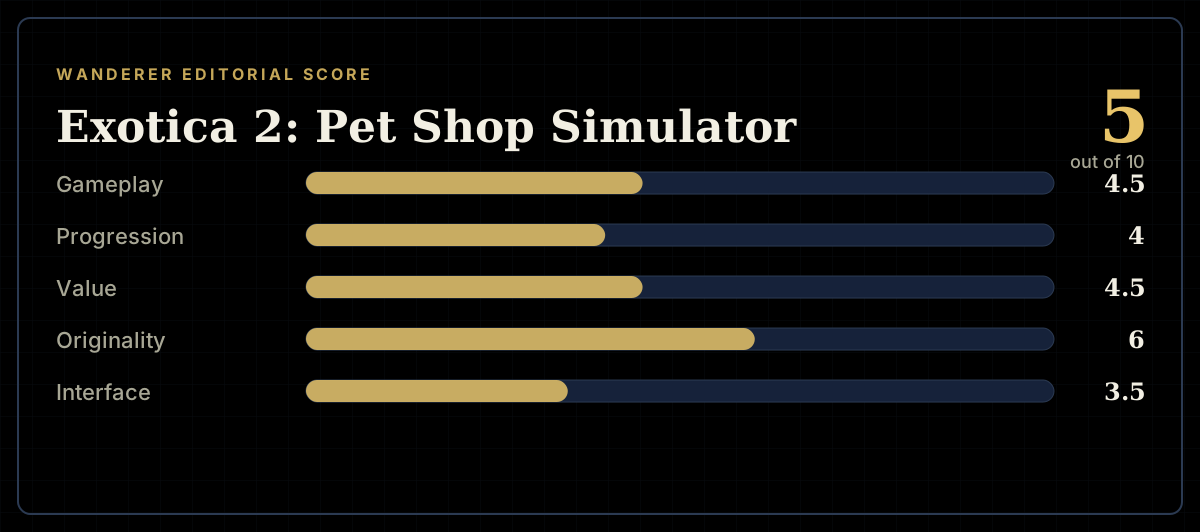
How the review scores each part of the gameWanderer Editorial -
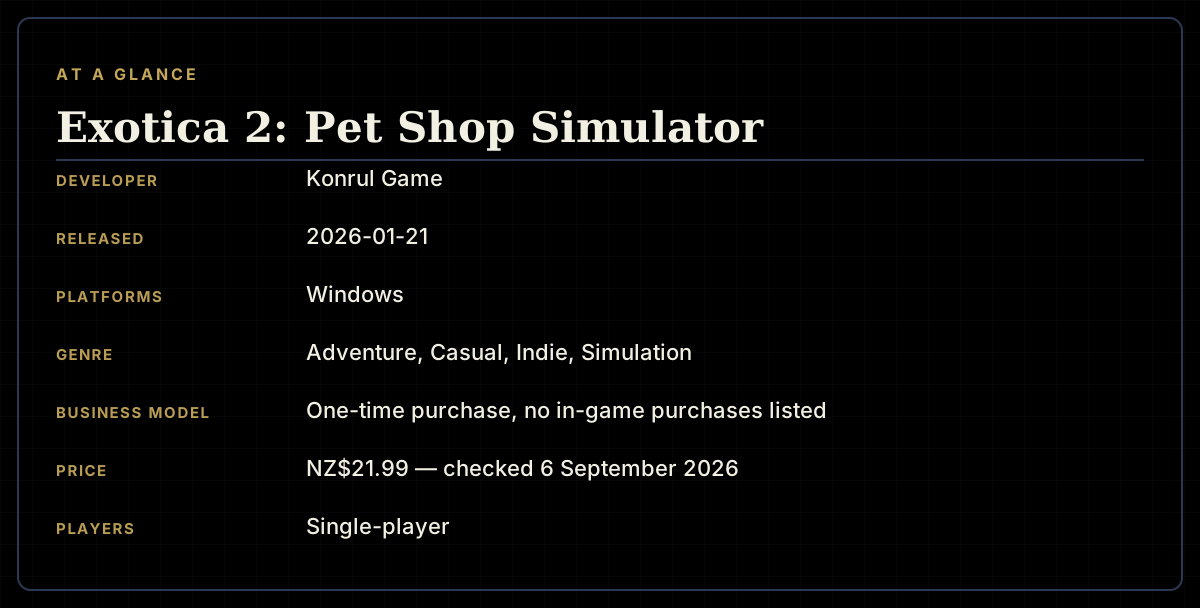
The essentials at a glanceWanderer Editorial -
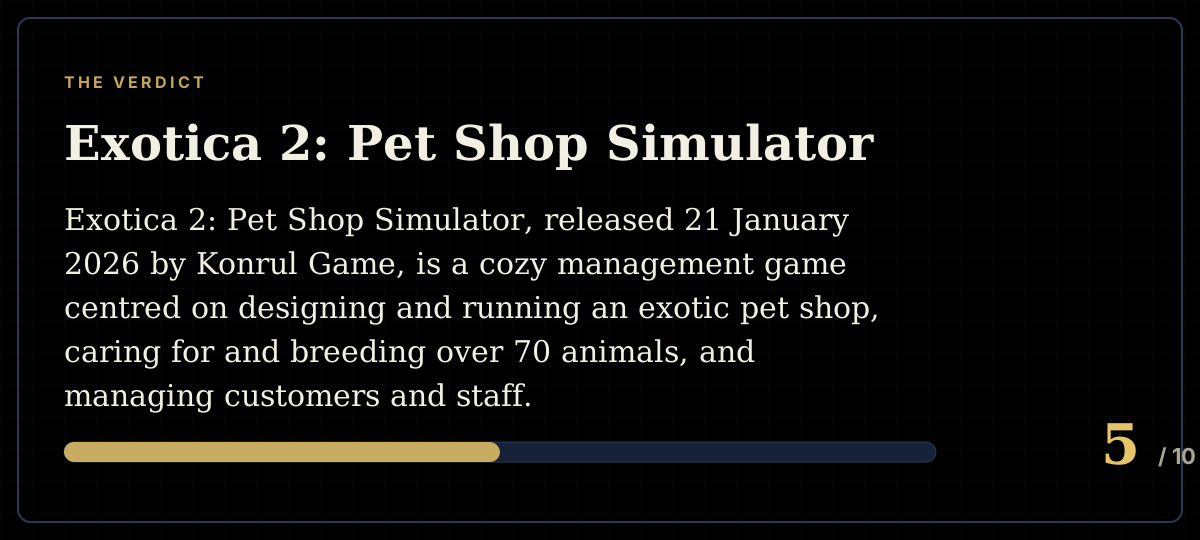
The short versionWanderer Editorial