
Game review
Eden's Eclipse
7.5 / 10
- Developer
- xxGameRoom
- Publisher
- xxGameRoom
- Released
- 9 June 2026
- Platforms
- Windows
- Genre
- Action, Indie
- Monetisation
- paid
- Players
- false
The short version
Biggest strengths
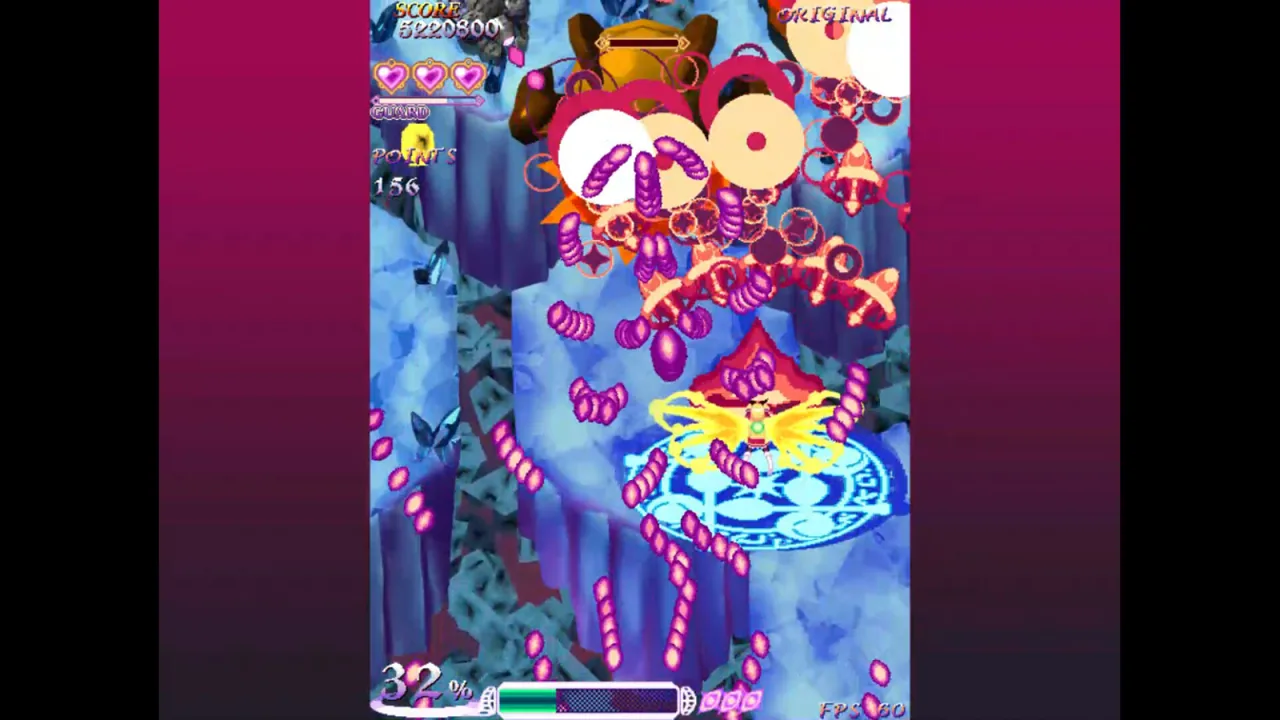
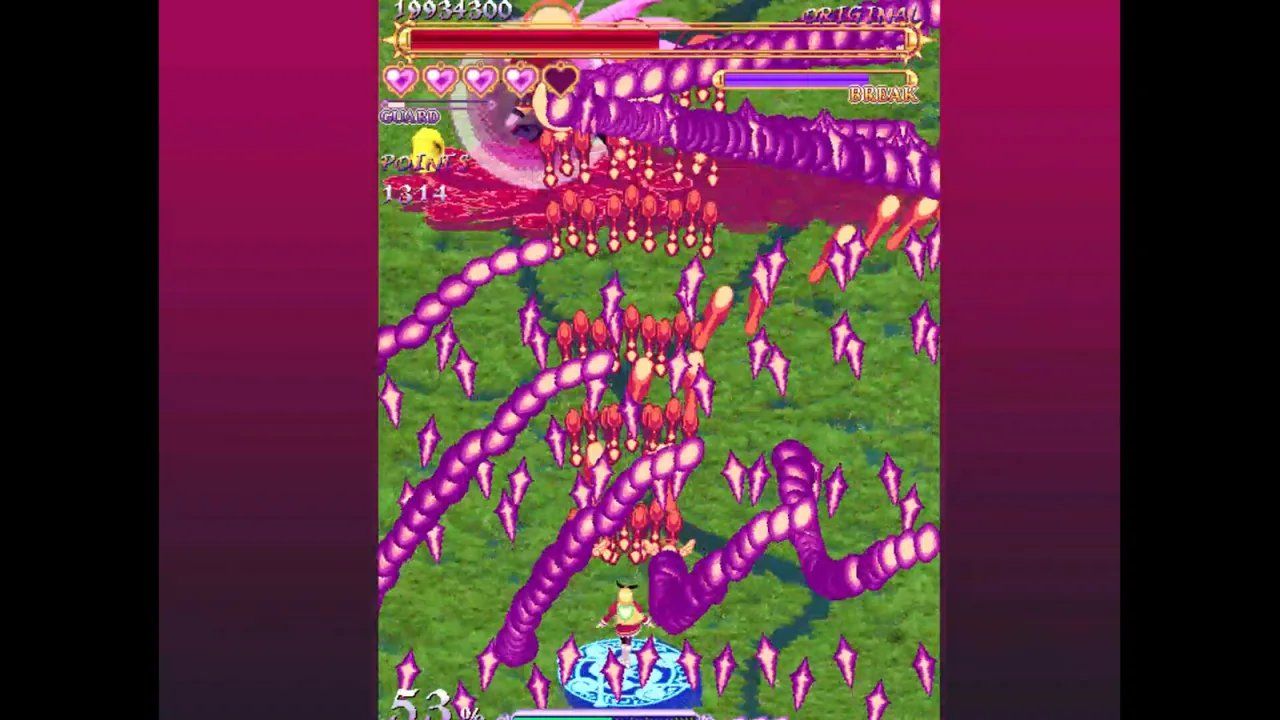
- A well-regarded guard mechanic that lets players absorb a hit once a gauge fills, praised for integrating cleanly with scoring and providing real comeback potential
- Strong, satisfying audiovisual scoring feedback and a well-liked royalty-free Japanese techno soundtrack
- Four playable characters and three difficulty settings that reviewers said meaningfully change how the game feels, adding real replay value
Biggest weaknesses
- No easy or beginner-friendly difficulty mode, unlike the developer's prior series entries, which reviewers said risks alienating newcomers to the genre
- Reported hitbox clarity issues, with the character's long, thin sprite making the actual hitbox feel higher and less intuitive than expected, especially on harder difficulties
- Continuing after losing all lives restarts the entire level rather than resuming from the point of death, a quality-of-life gap multiple reviewers specifically requested be addressed
Who it's for: Experienced shmup fans, especially those who enjoy Cave-style bullet cancel mechanics and EspGaluda's guard system, more than newcomers looking for an easy entry point into the genre
Our recommendation: recommended
7.5 / 10
Eden's Eclipse released on Steam on June 9, 2026, a vertical-scrolling bullet-hell shoot-'em-up from longtime doujin shmup developer xxGameRoom (credited by fans as "X.X"), the third entry in the studio's long-running Eden series and its first new release in the line since Eden's Aegis in 2010. Its 24-review English pool is a perfect Positive (24 up, 0 down), and the reviews come overwhelmingly from experienced genre fans with deep, specific points of comparison, giving this an unusually well-informed and technically detailed review sample for such a niche release.
The developer's pedigree and the genre's small, devoted fanbase come through clearly in how reviewers frame their praise. One extensive review put it simply: "if there's a new X.X game released in a given year, then it will be a good year," describing the developer's back catalog, including Blue Wish Desire and the earlier Eden games, as a personal touchstone. Another reviewer offered useful genre context, calling it "maybe no EspGaluda II, but a modern EspGaluda by a well regarded indie dev is still pretty cool to see on Steam," breaking down the core mechanics precisely: a wider shot and a focused shot, slower movement while focusing that shrinks and highlights the player's hitbox, and a separate button for slow movement outside of focus fire for more flexible weaving. A third reviewer, who discovered the earlier Eden games years ago through Japanese doujin sites like Freem and DLsite, called the new release something "truly special," noting the game offers three playable characters at launch (Spoon, Fork, and later Knife) each changing the feel of play meaningfully.
The game's central guard mechanic draws consistent, specific praise as the system that ties the whole experience together. One reviewer described it as allowing players "to take a hit without dying once you fill a special gauge," calling out how well it "integrates very well with the scoring and provides some much appreciated comeback potential," while separately praising the game as "very generous with resources," especially once players learn the locations of hidden bombs and extends. Another reviewer compared the scoring feedback favorably to Cave's shmup output specifically, saying it has "all the right audiovisual feedback to make it satisfying," while praising the "royalty-free Japanese techno BGM" and confirming that with four characters and three difficulties, players are "definitely getting your money's worth."
That said, the pool's most substantive and recurring criticism centers on the game's difficulty curve and its total absence of an easier entry point. One detailed review flagged this as the single biggest issue: "no Heaven (easy) mode. The easiest difficulty available is Classic mode which is pretty rough and will likely alienate casuals," calling this a clear break from the developer's prior series entries, which typically offered a genuinely beginner-friendly difficulty. Another reviewer, self-described as someone who loves shmups despite being "awful" at them, echoed the same underlying concern from a different angle, praising the variety of fire modes and Cave-like feel while noting that after four hours of play they still hadn't cleared stage two on the easiest available settings, calling it roughly twice as difficult as the developer's previous game, Blue Wish Desire.
Smaller, more technical complaints round out an otherwise glowing pool. One reviewer flagged the character sprite's hitbox as unintuitive, describing it as "too long and thin," which becomes "extremely frustrating" specifically on the game's hardest Heaven mode where the actual hitbox sits higher than the visual sprite suggests. Multiple reviewers separately requested a quality-of-life fix around continuing after death, since the game currently restarts an entire level from the beginning rather than resuming from the point of failure, a frustration one reviewer specifically called out despite loving nearly everything else about the moment-to-moment gameplay. One reviewer also flagged a specific technical bug worth knowing about upfront: pausing the game prevents a replay recording from being saved afterward, a real functional loss for a genre where players often want to review and share their runs. And in a smaller but memorably specific complaint, one reviewer joked that the game's tight, well-designed difficulty curve was "almost enough to make you forget about the creepy illustrations on the score tally screens," a small aesthetic note consistent with the Mature Content flag on the game's storefront tags, though it didn't stop them from recommending the game overall.
Worth weighing too is how reviewers positioned Eden's Eclipse against the developer's own back catalog rather than against the genre in the abstract, since that framing shapes the score more than a simple "is this game good" question would. One reviewer directly compared the two available games on Steam from this studio, arguing that Eden's Eclipse does "some things better and some worse" than Blue Wish Desire, specifically finding the first couple of stages, particularly stage two, overly long relative to the earlier release, while still preferring this game's music overall. That kind of granular, catalog-spanning comparison only shows up when a fanbase is deeply invested in a developer's evolving body of work, and it's a useful signal that most of the criticism here comes from a place of high expectations rather than disappointment with the genre or the studio broadly. It also means prospective buyers unfamiliar with xxGameRoom's earlier games should calibrate slightly differently than the review pool itself did, since several of the sharper complaints, the missing easy mode chief among them, are framed explicitly as a regression from a standard the developer had previously set rather than an absolute flaw in isolation.
Given the reviewer pool's genre expertise and unanimous recommendation, Eden's Eclipse reads as a genuinely well-crafted, mechanically deep shmup that's succeeding specifically at what its target audience wants from it, tight bullet patterns, a rewarding guard-and-score system, and real build variety across its characters and difficulties, while falling short on accessibility for anyone outside that core audience. The missing easy mode and the harsh continue system are real, fixable shortcomings rather than fundamental design flaws, and for players who already know they enjoy Cave or EspGaluda-style shmups, this is an easy recommendation; for genre newcomers hoping for a gentle introduction, it's worth tempering expectations first.
Pros and cons
Pros
- A well-regarded guard mechanic that lets players absorb a hit once a gauge fills, praised for integrating cleanly with scoring and providing real comeback potential
- Strong, satisfying audiovisual scoring feedback and a well-liked royalty-free Japanese techno soundtrack
- Four playable characters and three difficulty settings that reviewers said meaningfully change how the game feels, adding real replay value
- Deep, Cave-and-EspGaluda-inspired bullet patterns that experienced genre fans consistently praised as fun to dodge and technically well-designed
Cons
- No easy or beginner-friendly difficulty mode, unlike the developer's prior series entries, which reviewers said risks alienating newcomers to the genre
- Reported hitbox clarity issues, with the character's long, thin sprite making the actual hitbox feel higher and less intuitive than expected, especially on harder difficulties
- Continuing after losing all lives restarts the entire level rather than resuming from the point of death, a quality-of-life gap multiple reviewers specifically requested be addressed
- A specific bug where pausing the game prevents a replay from being saved afterward
Screenshots
-

Eden's EclipseImage: xxGameRoom via Steam -
Eden's EclipseImage: xxGameRoom via Steam -
Eden's EclipseImage: xxGameRoom via Steam