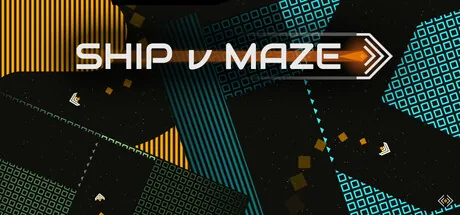
Game review
Ship v Maze Review: Two Buttons, One Addictive Maze
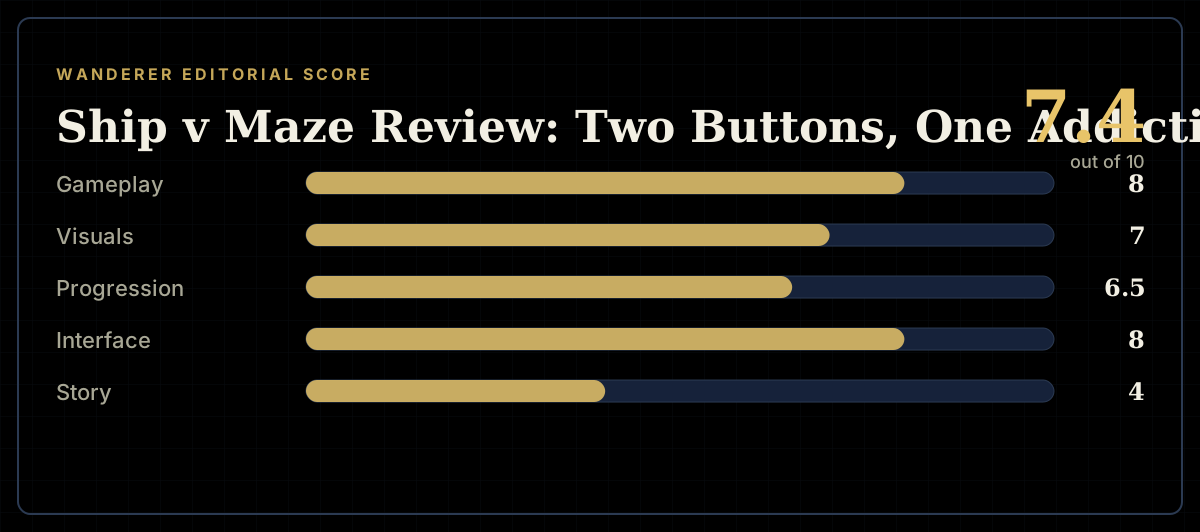
7.4 / 10
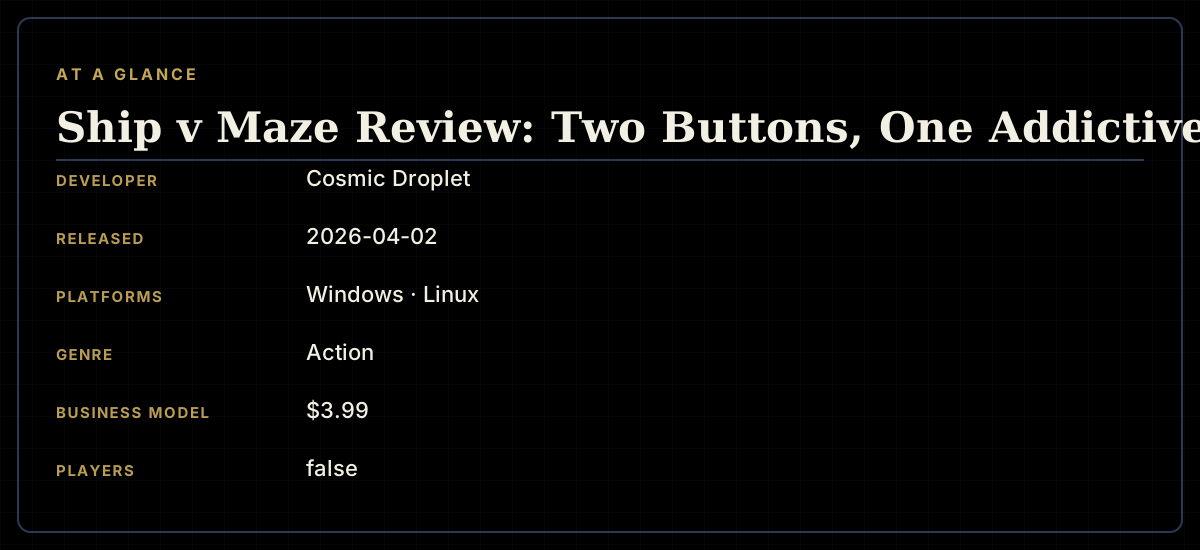
- Developer
- Cosmic Droplet
- Publisher
- Cosmic Droplet
- Released
- 2 April 2026
- Platforms
- Windows, Linux
- Genre
- Action
- Monetisation
- $3.99
- Players
- false
The short version
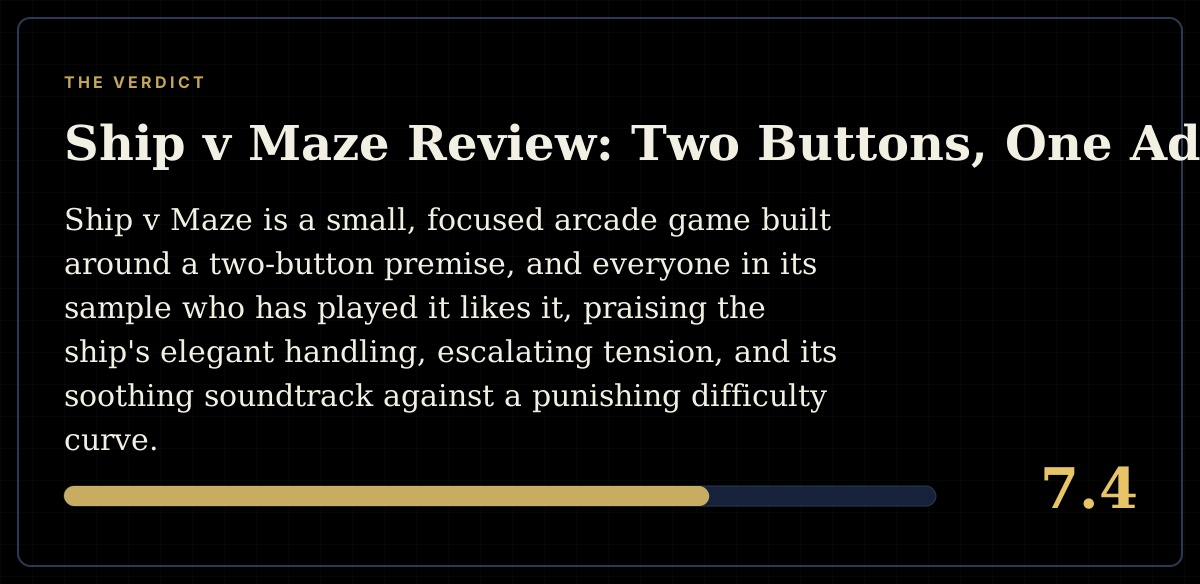
Ship v Maze is a small, focused arcade game built around a two-button premise, and everyone in its sample who has played it likes it, praising the ship's elegant handling, escalating tension, and its soothing soundtrack against a punishing difficulty curve.
Biggest strengths
- Movement that reviewers repeatedly describe as elegant and precise, built around a deceptively simple two-button turn-left/turn-right control scheme
- Three difficulty tiers — Slow, Fast, and Insane — that reviewers say meaningfully change the experience from a relaxing, meditative flow-state to a punishing test of reflexes
- A well-liked soundtrack and a distinctive robotic announcer voice that several reviewers single out by name as adding real character to short runs
Biggest weaknesses
- The sample, while unanimous, is thin at only 14 reviews, meaning the strength of the consensus should be read against a relatively small and possibly early-adopter-skewed pool
- At least two reviewers disclose a personal or promotional connection to the developer (a friend of the developer, and former beta testers who received free copies), which this outlet flags for transparency even though their impressions echo the wider sample
- There is effectively no story or narrative content — this is a pure score-attack arcade game, which may not suit players looking for more than a skill-based loop
Who it's for: A strong fit for arcade and score-attack fans who like short, replayable sessions and a genuine skill ceiling; less interesting to players looking for narrative or long-term progression systems.
Our recommendation: Buy it
7.4 / 10
Fly. Crash. Repeat.
Ship v Maze strips arcade design down to its bones: guide a constantly forward-moving ship through a procedurally shifting maze using only two inputs, turn left and turn right, while your speed steadily climbs the longer you survive. There's no story, no upgrades to grind toward, and no combat — just a clean, escalating test of reaction time and spatial reading, scored by how long you can last before you clip a wall.
Controls reviewers keep calling elegant
The single most consistent praise across the sample targets feel over content. One English-language reviewer calls the ship's movement "remarkably elegant" as it flows around the maze's curves and contours, a sentiment echoed by others who describe the two-button scheme as easy to learn but genuinely demanding to master. Several reviewers note the game supports keyboard, controller, or mouse input, giving players some flexibility in how precisely they want to steer.
Three difficulties, three different games
A specific structural strength reviewers highlight is the spread between its three difficulty tiers. The Slow setting is repeatedly described as a relaxing, near-meditative experience that still holds attention, while Fast and especially Insane are framed as punishing tests of reflexes for players chasing leaderboard times. One reviewer specifically praises this range for letting the same core loop serve two very different moods depending on what a player wants out of a session.
Sound design carrying more weight than expected for a $3.99 game
Multiple reviewers single out the soundtrack and audio direction as a standout, unprompted, given the low price point. A distinctive robotic announcer voice comes up by name in more than one review as adding real personality to otherwise silent, high-concentration runs, and the music itself is repeatedly described as soothing, atmospheric, or well-suited to the game's flow-state pacing even at higher difficulty.
A loop built for "just one more try"
The scoring structure — survive as long as possible, with skilled players learning to stall in early sections by looping through easier obstacles to buy time before harder stretches — earns consistent praise for how compulsively replayable it is. One reviewer frames it as an ideal fit for both short sessions and longer "one-more-try all-nighter" stretches, while another admits to losing count of how many times frustration at a crash immediately turned into another attempt.
A small, transparent developer scene
Worth noting in the interest of full context: at least two reviews in the sample disclose a personal connection to the game, one from a friend of the developer and another from a former beta tester who received a free copy. Neither review reads as dishonest or inflated relative to the rest of the sample — both raise the same specific praise for feel and difficulty balance found throughout — but this outlet flags the disclosures plainly rather than treating every five-star review as equally arm's-length.
Leaderboards give the loop somewhere to go
Beyond the raw pull of "just one more try," one reviewer specifically notes the presence of online rankings alongside the three difficulty tiers, giving score-attack players a concrete external target rather than just their own previous best. Combined with the way skilled players learn to manipulate early, easier maze sections to bank extra survival time before the harder stretches begin, the scoring system rewards a level of route-optimization thinking that several reviewers clearly appreciate — treating individual runs less like a single life and more like a puzzle to be solved and re-solved.
Who this is actually built for
Reviewers converge on a similar framing of audience fit even when they don't say so directly: this is a game for players who already enjoy the score-attack and endless-runner genres, or who specifically want a low-commitment way to fill short pockets of time without needing to remember plot threads or gear loadouts between sessions. Its almost total lack of onboarding friction — learn two buttons, understand the goal instantly — is treated as a feature rather than a limitation throughout the sample, and at $3.99 several reviewers frame it as a low-risk purchase relative to the amount of replay value they've already gotten out of it.
Weighing a thin but unanimous sample
With only 14 reviews total and all of them positive, Ship v Maze doesn't have the volume of a larger release to lean on, and a small, early-adopter-skewed sample can sometimes present a rosier picture than a wider audience would eventually deliver. That said, the consistency across languages and playtime levels — from quick 18-minute impressions to reviewers well past 20 hours — gives the sample more credibility than raw count alone would suggest, and nothing in it reads as an outlier or planted review.
A steady stream of post-launch polish
The developer's update history backs up the sample's overall confidence in the project: a beta playtest and public demo both preceded release by months, and the months following launch saw a run of numbered patches addressing bugs and small balance tweaks rather than the game going quiet after its first week. For a $3.99 solo-feeling indie release, that kind of sustained attention is a meaningful, if easy to overlook, signal that the loop players are enjoying now is one the developer is still actively refining.
Verdict
Ship v Maze succeeds by doing one small thing extremely well: a two-button arcade loop with elegant handling, a genuinely broad difficulty curve, and a soundtrack that punches above its price point. It won't hold interest for players seeking narrative depth or long-term systems, but for arcade and score-attack fans, it's an easy, cheap recommendation backed by a small but genuinely unanimous chorus of praise.
Pros and cons
Pros
- Movement that reviewers repeatedly describe as elegant and precise, built around a deceptively simple two-button turn-left/turn-right control scheme
- Three difficulty tiers — Slow, Fast, and Insane — that reviewers say meaningfully change the experience from a relaxing, meditative flow-state to a punishing test of reflexes
- A well-liked soundtrack and a distinctive robotic announcer voice that several reviewers single out by name as adding real character to short runs
- A genuinely addictive time-attack scoring loop reviewers describe as hard to put down, with one calling it 'so cool, we need way more arcade games like this'
Cons
- The sample, while unanimous, is thin at only 14 reviews, meaning the strength of the consensus should be read against a relatively small and possibly early-adopter-skewed pool
- At least two reviewers disclose a personal or promotional connection to the developer (a friend of the developer, and former beta testers who received free copies), which this outlet flags for transparency even though their impressions echo the wider sample
- There is effectively no story or narrative content — this is a pure score-attack arcade game, which may not suit players looking for more than a skill-based loop
- As an endless runner built around a punishing difficulty curve, its appeal narrows considerably for players who don't enjoy repetition-based skill mastery
Screenshots
-
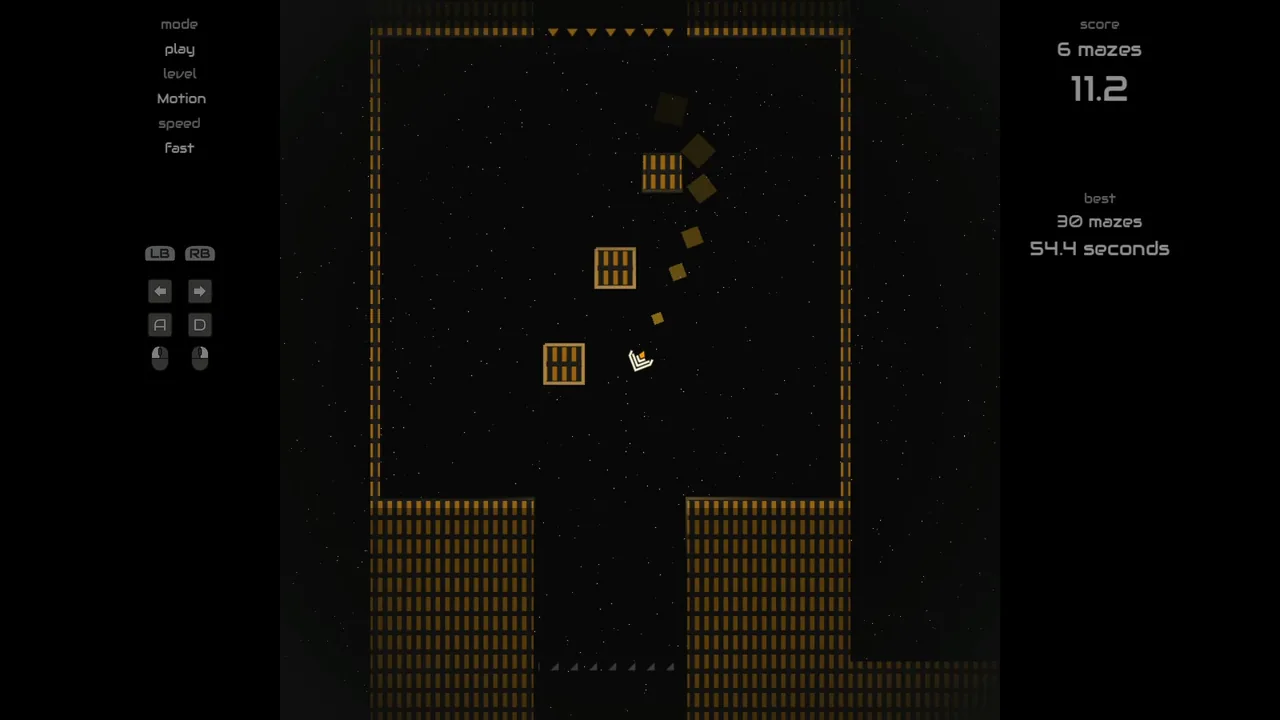
Image: Cosmic Droplet via Steam -
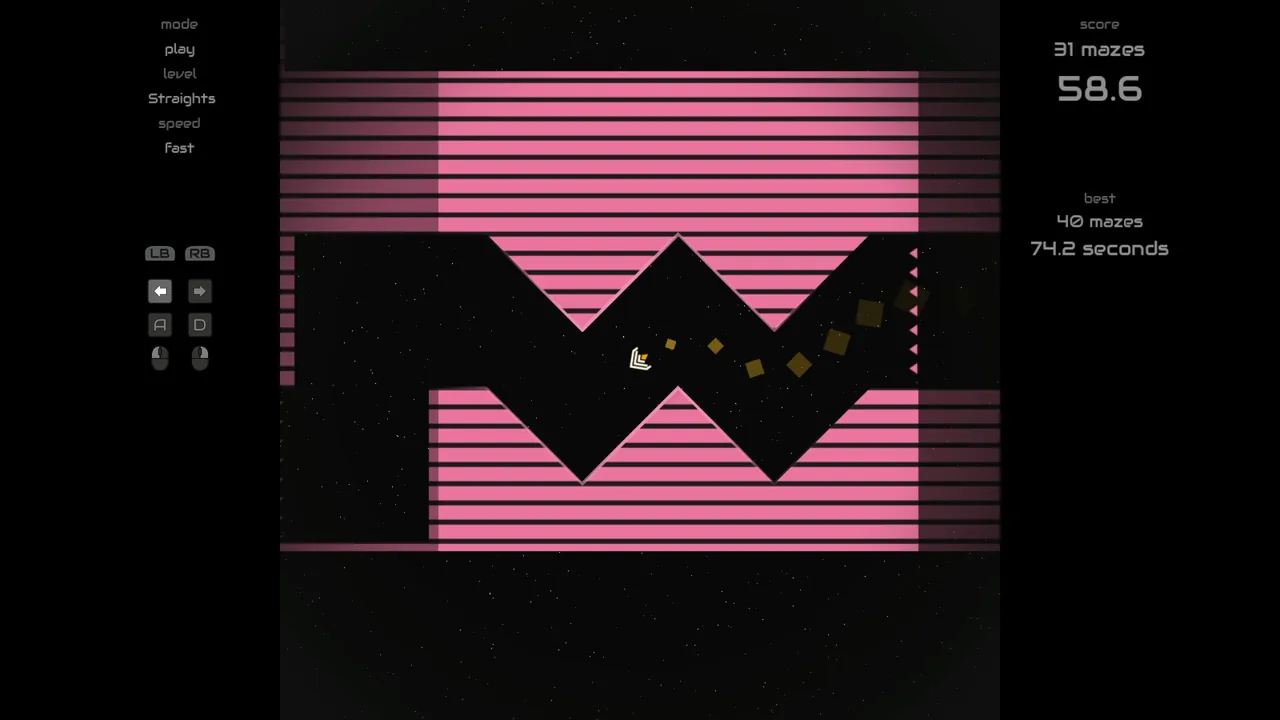
Image: Cosmic Droplet via Steam -
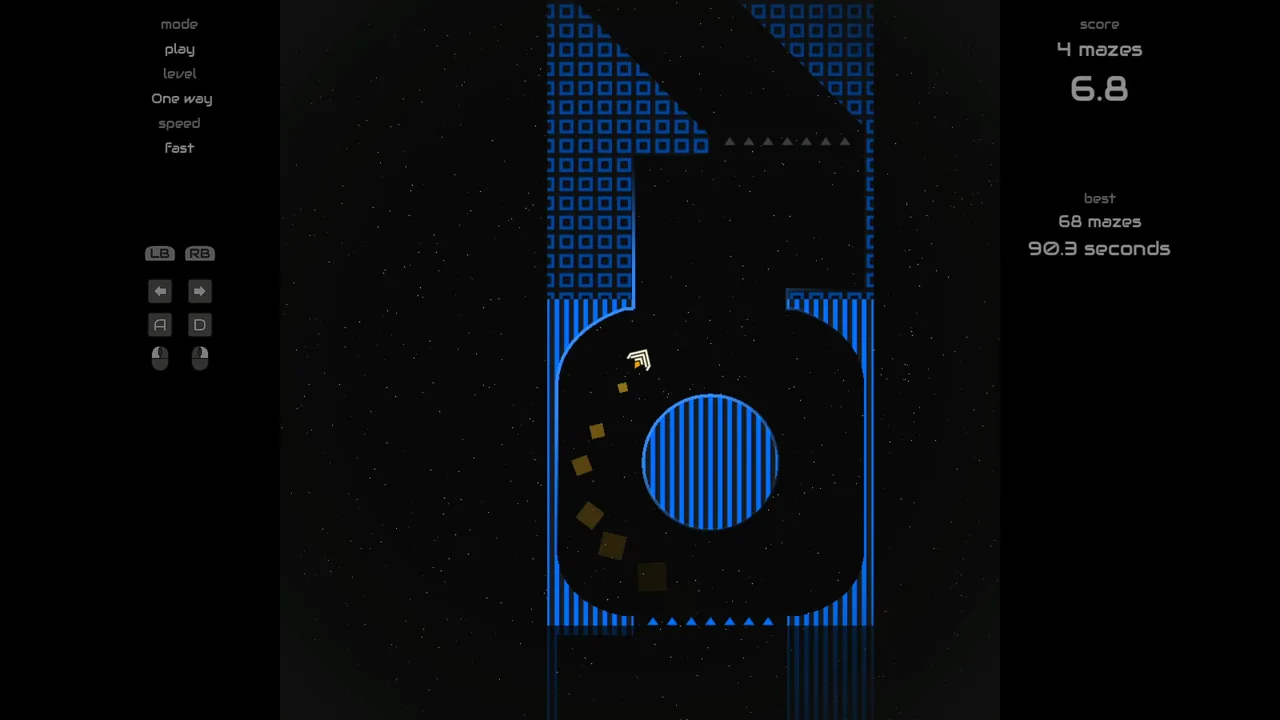
Image: Cosmic Droplet via Steam -
Wanderer Editorial -
Wanderer Editorial -
Wanderer Editorial