Game review
Dorfromantik
7.5 / 10
- Developer
- Toukana Interactive
- Publisher
- Toukana Interactive
- Released
- 28 April 2022
- Platforms
- Windows, macOS, Linux
- Genre
- Puzzle, City Builder, Casual
- Monetisation
- One-time purchase, no DLC, no in-app purchases; the developer added an in-game link promoting their next release, Star Birds, in a later update
- Players
- Single-player only
The short version
Dorfromantik hands the player an endless supply of hexagonal landscape tiles to place into a sprawling, ever-growing countryside, scoring points for matching biomes and completing gentle quests along the way. Developed and self-published by Toukana Interactive, it entered Steam Early Access on 25 March 2021 and reached full 1.0 release on 28 April 2022, sitting at Overwhelmingly Positive, 96.2% across 16,889 English-language reviews. Presentation and sound draw near-universal acclaim, and many reviewers describe the game as genuine, effective stress relief. Underneath that acclaim, though, this game's own players disagree sharply on whether it actually delivers the relaxation its marketing promises — a consistent complaint concerns the lack of any way to recover from a bad run of tiles — and a smaller, more recent controversy concerns the developer inserting a promotional link for their next game.
Biggest strengths
- Presentation draws near-universal, often emotional praise, with the cozy hexagonal art style and soundtrack credited repeatedly as genuinely soothing and a real source of comfort during difficult periods for several reviewers
- The core placement loop is widely described as immediately addictive, with players losing track of time across dozens or hundreds of hours
- A well-implemented, low-pressure quest system gives structure to the otherwise open-ended landscape-building without forcing any particular approach
Biggest weaknesses
- The single most consistent complaint concerns randomness with no mitigation: there is no way to swap, sell, recycle or trade an unwanted tile, so a run of bad draws can undo a carefully built landscape with nothing the player can do about it, which several reviewers say undermines the game's own relaxing framing
- A genuine split exists among reviewers about whether the game is actually relaxing at all — several describe real stress and anxiety, particularly players with completionist tendencies who find themselves unable to let an imperfect placement go
- A smaller but real controversy concerns a later update that added an in-game promotional link for the developer's next game, Star Birds; reviewers disagree sharply on how prominent that link actually is, but its mere presence in a paid, ad-free game upset a meaningful number of longtime players
Who it's for: Fans of gentle, meditative puzzle games who don't mind genuine randomness shaping their results; a poor fit for anyone with completionist tendencies who wants tools to correct a bad run, or players who found the "relaxing" marketing at odds with real anxiety while playing.
Our recommendation: A gorgeous, genuinely addictive tile-placement puzzle whose promise of relaxation is honestly contested by its own biggest fans — go in expecting real randomness with no safety net, not a stress-free sandbox.
7.5 / 10
Introduction
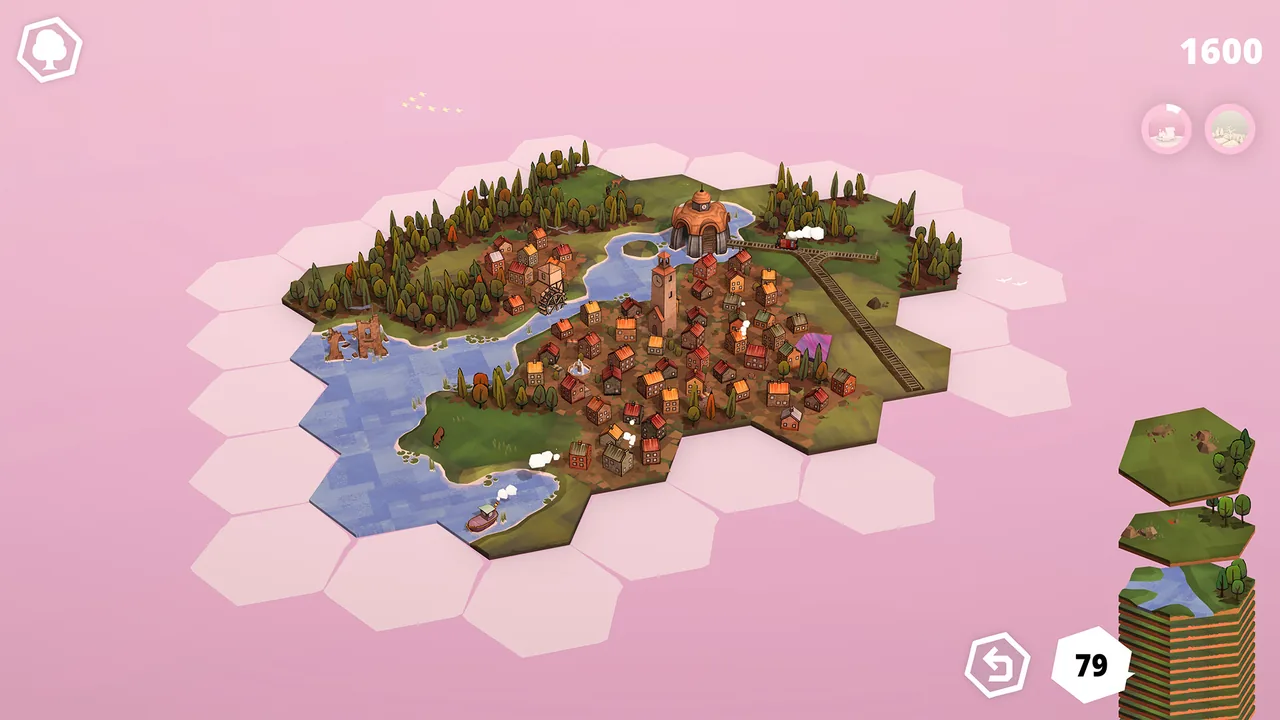
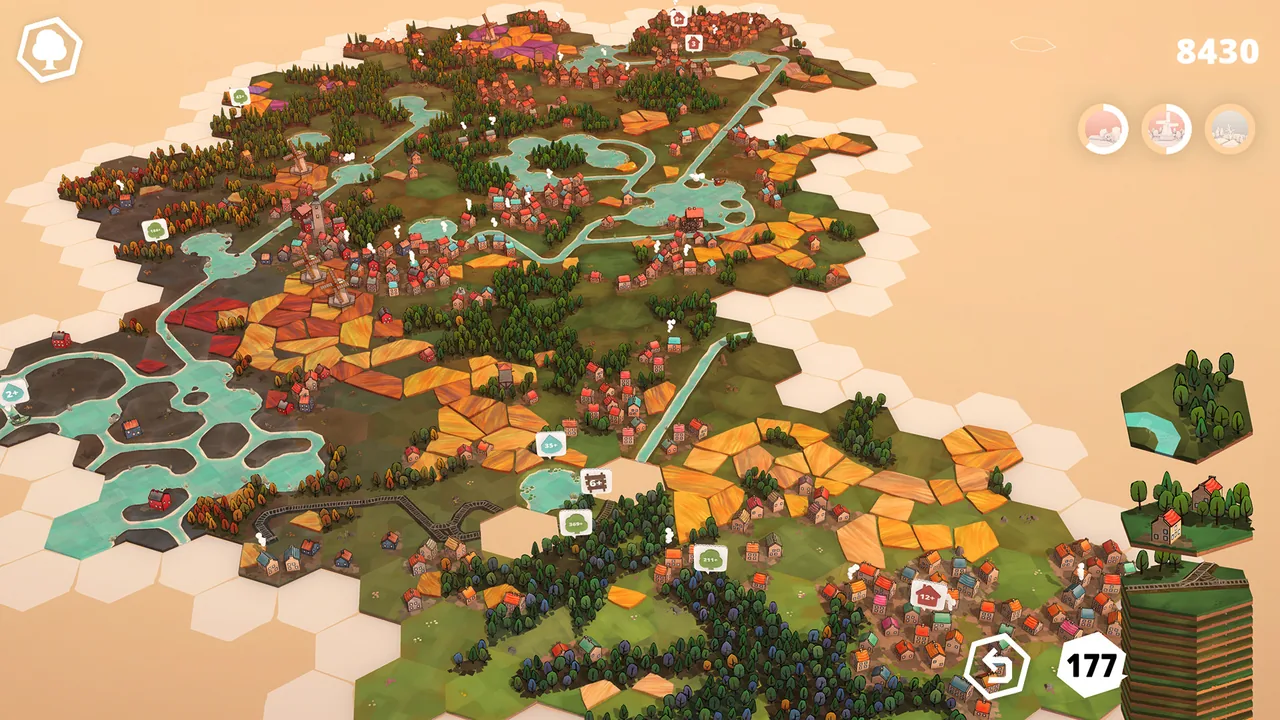
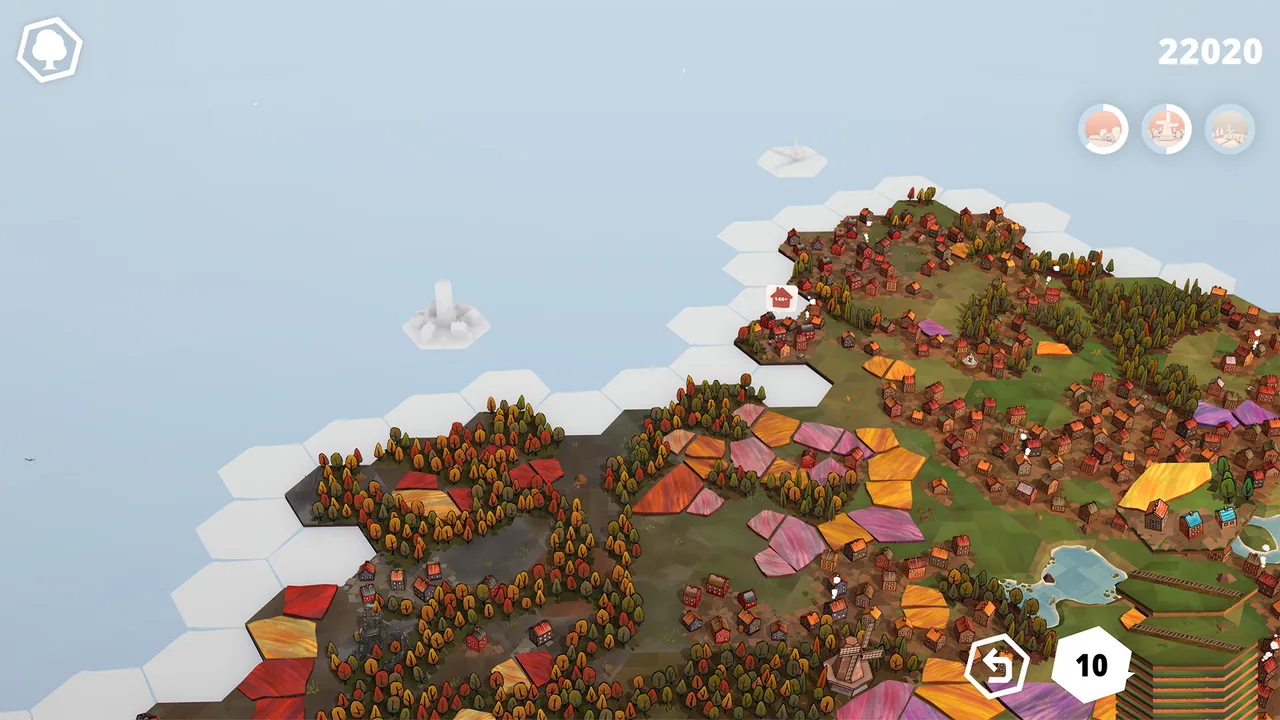
Dorfromantik gives the player an endless hand of hexagonal tiles — forests, rivers, farmland, rail lines — to place one at a time into a sprawling countryside, scoring points for matching biomes at the edges and completing gentle, open-ended quests along the way. Developed and self-published by Toukana Interactive, it entered Steam Early Access on 25 March 2021 and reached its full 1.0 release on 28 April 2022, drawing over 150,000 players in its opening EA week. It sits at Overwhelmingly Positive, 96.2% across the 16,889 English-language reviews this review draws from. The presentation earns that score honestly — but reading through a substantial share of both its positive and negative samples turns up a genuinely interesting internal disagreement about whether this game delivers what it promises.
A gorgeous, addictive loop nearly everyone credits
Start with what draws overwhelming, often emotionally specific praise. The hexagonal art style and soundtrack earn consistent acclaim, and several reviewers describe the game in genuinely personal terms — one wrote, during what they described as a difficult period in their life, that the game helped them "understand that even though things don't go the way you planned them to be, you can still find something beautiful you didn't expect on the way." Another, describing chronic anxiety, called it a reliable "go-to" activity specifically because of how calming they find it. The core placement loop draws its own wide praise as immediately addictive, with reviewers reporting dozens to hundreds of hours lost to what looks, at a glance, like a simple game.
Is it actually relaxing? Its own fans disagree
Here's the genuinely interesting split running through this game's reception. A large, detailed share of reviewers directly dispute the "relaxing" framing the game markets itself with. One 291-vote review, itself positive overall, opened by warning: "Do not believe the description, there is nothing relaxing about this game. Under the hood of cozy village aesthetics hides one of most hardcore puzzles out there," describing intense pattern recognition and spatial-reasoning demands that contradict a casual pitch. A separate, negative review made the point from the frustration side: "I did not find this game relaxing. It bills itself as a relaxing puzzle game... it's the 'until the end of the game' part where the relaxation turns into stress," describing genuine anxiety building as a carefully built landscape approaches collapse from a bad tile draw. A third reviewer, self- identifying compulsive or completionist tendencies, described enjoying the game initially before realising it was actively working against their mental health rather than supporting it. This isn't a small minority view — it recurs across enough independent, detailed reviews on both sides of the recommend line to read as a genuine, honest disagreement about the product rather than a few outliers.
The complaint underneath the disagreement: no way to recover
The specific mechanical reason for that split is consistent and worth stating plainly: Dorfromantik gives the player no tools to mitigate bad luck. There's no way to swap an unwanted tile, sell it, recycle it, or trade for something better — once a tile is drawn, it must be placed, and a run of poor draws can undo a carefully optimised landscape with nothing the player can do to stop it. One detailed 50-vote review put it precisely: "the randomness of it is crippling. You can play for an hour, and then a run of bad tiles will bring all your hard work to a premature end - and there's literally nothing you can do about it." That's the same diagnostic question this library applies to randomised builders generally — not how much content exists, but what tools the player has to hunt for what they want — and Dorfromantik, by design, offers essentially none. For some players that's precisely the point, a pure test of adaptation rather than control; for others, it's the specific thing turning a promised relaxation exercise into a stress test.
A smaller, more recent controversy
A separate, more recent complaint deserves direct treatment. A 2025 review reported that Toukana Interactive patched a promotional link for their next game, Star Birds, into Dorfromantik's main menu, describing the link as "even bigger than the button to start a new game" and calling the addition "bloody rude" in a paid, previously ad-free product. This review can independently confirm one part of that account: Star Birds is, in fact, also developed by Toukana Interactive, so the underlying claim of cross-promotion is accurate. What's genuinely contested is how intrusive that promotion actually is — a later, highly-upvoted review pushed back directly, describing the "ad" as nothing more than "a tiny button link... only visible on the main menu and pause" screen, arguing the controversy had been overstated. Both accounts can't be fully reconciled from outside the game itself, so this review reports the dispute as exactly that: a real, verifiable act of cross-promotion whose actual prominence different players experience differently.
Where players actually get to
Steam's achievement data shows a healthy early engagement curve, with several early-tier achievements sitting in the 87-89% range before tapering steeply toward late-game, high-score achievements under 2% — consistent with a game the overwhelming majority of buyers enjoy for a meaningful stretch, even as true mastery-tier scores remain reserved for a much smaller, more dedicated group.
Final Verdict
Dorfromantik is a genuinely beautiful, addictive puzzle game that a huge majority of its players love — but this review's closest reading of the corpus finds something more interesting than a simple consensus underneath that acclaim: real, honest disagreement among devoted fans about whether the game actually delivers the relaxation it promises, rooted in a specific, deliberate design choice to offer no way to recover from bad luck. Add a smaller, genuinely contested controversy over self-promotion in a later update, and the honest picture is a wonderful game that isn't quite as simple, or as universally calming, as its marketing and its headline score suggest. Go in expecting genuine randomness with no safety net, and decide for yourself which side of this game's own internal debate you land on.
Pros and cons
Pros
- Presentation draws near-universal, often emotional praise, with the cozy hexagonal art style and soundtrack credited repeatedly as genuinely soothing and a real source of comfort during difficult periods for several reviewers
- The core placement loop is widely described as immediately addictive, with players losing track of time across dozens or hundreds of hours
- A well-implemented, low-pressure quest system gives structure to the otherwise open-ended landscape-building without forcing any particular approach
- A large-scale success story for a small studio, with the game reportedly attracting over 150,000 players in its first week of Early Access and sustaining a large, active community since
Cons
- The single most consistent complaint concerns randomness with no mitigation: there is no way to swap, sell, recycle or trade an unwanted tile, so a run of bad draws can undo a carefully built landscape with nothing the player can do about it, which several reviewers say undermines the game's own relaxing framing
- A genuine split exists among reviewers about whether the game is actually relaxing at all — several describe real stress and anxiety, particularly players with completionist tendencies who find themselves unable to let an imperfect placement go
- A smaller but real controversy concerns a later update that added an in-game promotional link for the developer's next game, Star Birds; reviewers disagree sharply on how prominent that link actually is, but its mere presence in a paid, ad-free game upset a meaningful number of longtime players
- Several detailed reviewers describe the core loop growing repetitive after several hours, with new tile types adding variety without adding meaningfully deeper strategy
Screenshots
-
DorfromantikImage: Toukana Interactive via Steam -
DorfromantikImage: Toukana Interactive via Steam -
DorfromantikImage: Toukana Interactive via Steam -
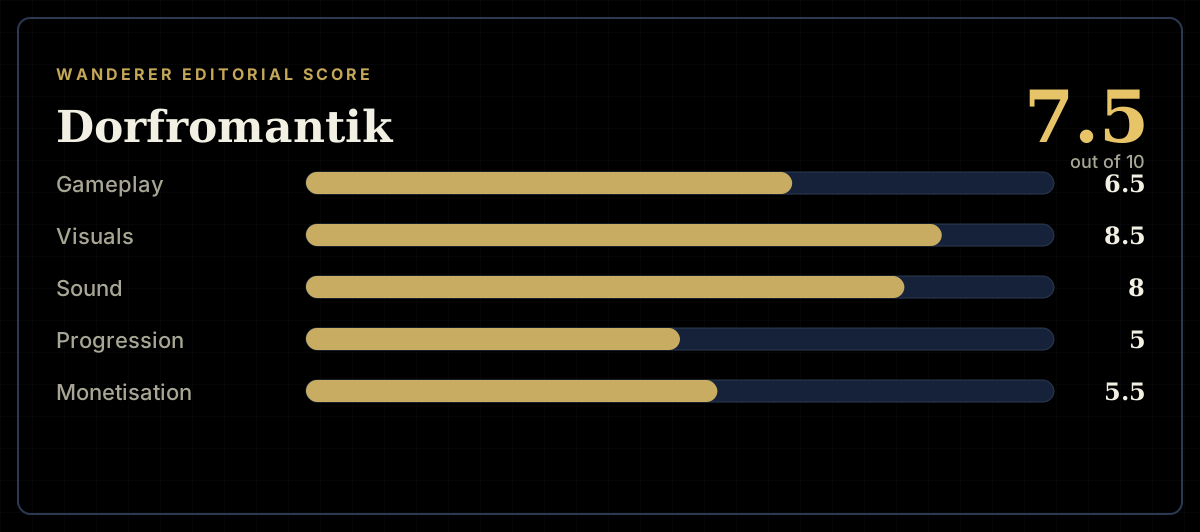
How the review scores each part of the gameWanderer Editorial -
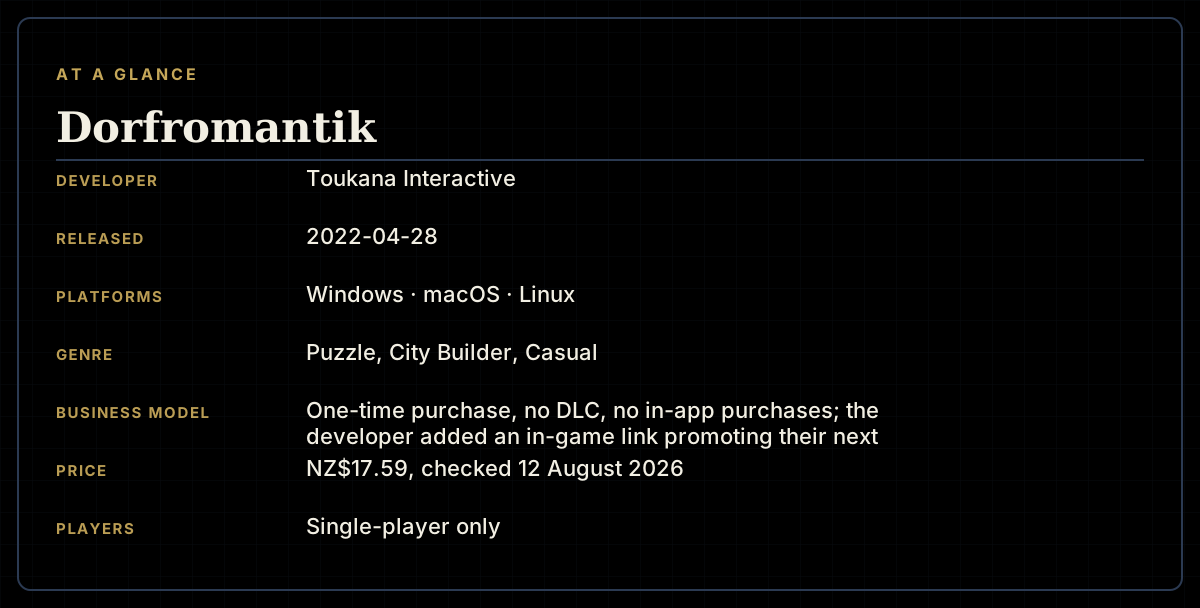
The essentials at a glanceWanderer Editorial -
The short versionWanderer Editorial