
Game review
Doll Impostor
6 / 10
- Developer
- David Gallardo
- Publisher
- HeadArrow
- Released
- 28 March 2024
- Platforms
- Windows
- Genre
- Co-op horror detective/social deduction
- Monetisation
- One-time purchase, no DLC or microtransactions
- Players
- Online co-op, 1-4 players
The short version
Doll Impostor casts one to four players as guardians racing to identify which of a room's possessed dolls intends to kill them before 9am, using clues about each doll's likes, dislikes, and behaviour. This review's sample confirms a genuinely popular, prolifically updated game with a huge content library and real fan devotion, but a large, specific set of complaints — persistent multiplayer crashes, allegations that AI-generated assets have crept into recent updates, and a serious, sourced controversy over the publisher's own branding — temper that enthusiasm considerably.
Biggest strengths
- The core detective loop of observing doll behaviour and cross-referencing likes and dislikes earns consistent, specific praise for feeling genuinely clever, distinct from more combat-focused entries in the ghost-hunting genre
- Steam's own partner-events feed documents an extraordinarily prolific update cadence, with 100 documented posts including 19 major numbered updates, seasonal events, and open-beta testing cycles, alongside a nomination for Steam's Labor of Love Award and confirmed sales milestones of 40,000 and 50,000 units
- The achievement list contains 209 tracked entries spanning many maps and modes, confirming a genuinely large and still-growing amount of content well beyond the base release
Biggest weaknesses
- A large, specific, and repeated negative-review theme describes persistent multiplayer crash bugs, with one reviewer reporting their group "consistently crash after finishing one round on any map... this has been going on for months" with no way to file a crash report
- Multiple reviewers independently report the game's VR support, on both Meta Quest 3 and PSVR2, is severely underdeveloped and barely functional despite being offered as a feature
- Several reviewers raise a specific, repeated concern that AI-generated art and assets have been introduced in recent content updates, with multiple independently describing newer doll models as looking noticeably cheaper and less atmospheric than the originals; this review's sample could not independently confirm AI generation, as no official disclosure was found, but the visual downgrade itself was corroborated by multiple reviewers describing the same specific change
Who it's for: Groups of friends looking for a Phasmophobia-or-Demonologist-style co-op horror puzzle game with a genuinely large and still-expanding content library; not a fit for solo VR players given reviewer reports of poor VR support, or for buyers who weigh publisher conduct heavily in their purchasing decisions.
Our recommendation: A strong pickup for co-op horror fans specifically playing with a group, provided you check for known multiplayer stability issues in current reviews before buying and are comfortable with the publisher-conduct concerns raised by multiple reviewers.
6 / 10
Doll Impostor tasks one to four players with a specific job: figure out which doll in a room full of them is possessed and intends to kill everyone by 9am, using observed behaviour and a list of likes and dislikes to narrow down the culprit. This review's sample confirms a genuinely clever, popular core concept backed by an unusually large amount of ongoing content — alongside a set of serious, specific concerns that go well beyond typical gameplay criticism.
A genuinely clever detective loop
Reviewers consistently praise the core mechanic as a fresh spin on a crowded genre. "A high-quality detective game that's unfairly overlooked," one reviewer writes, awarding it near-perfect marks for atmosphere. Another frames the appeal precisely: "It's got a ton of achievements and replayability as you try to 'catch' every doll in the act before it kills you." A third reviewer, initially skeptical, admits: "Did my cat rubbing against my leg while I was playing the game make me fall out of the chair in a blind panic... maybe... The game is a lot more fun than I had expected it to be." That combination of genuine tension and puzzle-solving satisfaction is the clearest, most consistent strength across this review's sample.
Persistent, specific multiplayer bugs
Set against that praise, this review's negative sample raises a serious, repeated technical complaint. "My friend and I consistently crash after finishing one round on any map. Once this bug is fixed, I will change my review... there is no way to put in a crash report and this has been going on for months," one reviewer writes. Another confirms a similar pattern: "Game has consistent crashing issues... The most recent update isn't even playable." Given the game is explicitly designed around co-op play, this is a significant, specific reliability concern rather than a minor annoyance, and it's worth checking current reviews for whether it has been resolved before buying specifically to play with friends.
Suspected AI art and a documented publisher controversy
Beyond bugs, this review's sample raises two more serious, specific concerns worth stating plainly. Several reviewers describe a decline in visual quality they attribute to AI-generated assets: "I really dislike the use of AI... I think this game could go pretty far if they just get the support and stop using AI," one writes, while another separately confirms newer doll models "look frankly cheap and strange. It feels as if the models were made in a hurry." This review found no official confirmation of AI generation, so this remains an unverified but repeatedly and independently raised reviewer suspicion rather than a confirmed fact.
More seriously, multiple reviewers separately raise a specific, sourced controversy about the publisher itself: "the developer is so inconsiderate of the indigenous people with their logo and belief systems," one reviewer states, while another elaborates further, naming a specific content creator: "please check out a Youtube video from an amazing creator named ShanaLeigh, they go into depth with how these developers are immature and disrespectful towards indigenous people... their logo was an indigenous person with an arrow through their head." This review's sample could not independently verify the full account beyond what reviewers described, but the specificity — a named source, a described interaction with the studio, and independent corroboration across multiple separate reviews — makes this a legitimate matter for prospective buyers to research directly rather than an unfounded rumour.
A community reacting to constant change
Several reviewers frame their disappointment specifically around how much the game has changed since they first fell in love with it, rather than around its current baseline quality. "I absolutely loved this game when it came out, but the choices they have made since then blow my mind," one longtime reviewer writes, citing newer maps with clues they found obscure and hard to track without external reference. Another raises a specific balance concern about high-difficulty modes: "nightmare difficulty randomizes how much evidence you get... doesn't seem balanced to have 0-1 tasks a doll likes as enough sufficient evidence to make a guess on a high-stakes match." That pattern of specific, detailed dissatisfaction from invested long-time players carries real weight, even set against the game's broadly positive overall reception.
What the update record confirms
Steam's own partner-events feed leaves no doubt this is an exceptionally actively developed game: 100 documented posts span 19 major numbered updates, extensive open-beta testing cycles, recurring seasonal events, and confirmed sales milestones of 40,000 and 50,000 units, alongside a nomination for Steam's own Labor of Love Award. That level of sustained investment is real and verifiable — though it also means the specific complaints raised above about AI art and evolving difficulty balance stem from a studio still very much actively shaping the game, for better and worse, rather than one that has stopped listening.
A note on solo play
While the game supports up to four players, several reviewers confirm it works reasonably well solo, too, for those without a regular group. "If you want to play this game solo, then you won't have any problem doing so. The problems start in multiplayer," one reviewer notes, distinguishing clearly between the two modes' relative stability. That's a useful distinction for buyers without a consistent group of friends: the core detective loop holds up on its own, even if the co-op-specific technical issues raised throughout this review don't apply to single-player sessions.
Final verdict
Doll Impostor succeeds as a genuinely clever, well-supported co-op horror detective game, and this review's sample confirms real, sustained enthusiasm from a large player base backed by an unusually deep content library. But persistent multiplayer crash bugs, unresolved suspicions about AI-generated art, and a specific, sourced controversy over the publisher's own branding are serious enough that this isn't a simple, uncomplicated recommendation. Groups of friends drawn to the core concept should check current bug reports before buying, and buyers who weigh developer conduct in their purchasing decisions should research the branding controversy directly before deciding.
Pros and cons
Pros
- The core detective loop of observing doll behaviour and cross-referencing likes and dislikes earns consistent, specific praise for feeling genuinely clever, distinct from more combat-focused entries in the ghost-hunting genre
- Steam's own partner-events feed documents an extraordinarily prolific update cadence, with 100 documented posts including 19 major numbered updates, seasonal events, and open-beta testing cycles, alongside a nomination for Steam's Labor of Love Award and confirmed sales milestones of 40,000 and 50,000 units
- The achievement list contains 209 tracked entries spanning many maps and modes, confirming a genuinely large and still-growing amount of content well beyond the base release
- Multiple long-time reviewers report becoming genuinely invested and "addicted" to the core loop, with several specifically praising the atmosphere and jump-scare design as effective despite the game's puzzle-focused core
- The lack of any DLC or microtransactions keeps all of this extensive content available in the base purchase price
Cons
- A large, specific, and repeated negative-review theme describes persistent multiplayer crash bugs, with one reviewer reporting their group "consistently crash after finishing one round on any map... this has been going on for months" with no way to file a crash report
- Multiple reviewers independently report the game's VR support, on both Meta Quest 3 and PSVR2, is severely underdeveloped and barely functional despite being offered as a feature
- Several reviewers raise a specific, repeated concern that AI-generated art and assets have been introduced in recent content updates, with multiple independently describing newer doll models as looking noticeably cheaper and less atmospheric than the originals; this review's sample could not independently confirm AI generation, as no official disclosure was found, but the visual downgrade itself was corroborated by multiple reviewers describing the same specific change
- A serious, specific, and multiply-corroborated controversy concerns the publisher's own branding: several reviewers state the HeadArrow company logo depicts an Indigenous person with an arrow through the head, citing a named content creator (ShanaLeigh) who documented the issue in detail after engaging directly with the studio; this review's sample could not independently verify the full account beyond what reviewers described, but the specificity and repetition across multiple, separate reviewers make this a legitimate concern for prospective buyers to research themselves
- Several reviewers who enjoyed earlier versions of the game describe specific dissatisfaction with balance and difficulty changes introduced in later updates, including randomized evidence availability on higher difficulties that some reviewers argue can make certain rounds effectively unsolvable
Screenshots
-

Doll ImpostorImage: HeadArrow via Steam -

Doll ImpostorImage: HeadArrow via Steam -

Doll ImpostorImage: HeadArrow via Steam -
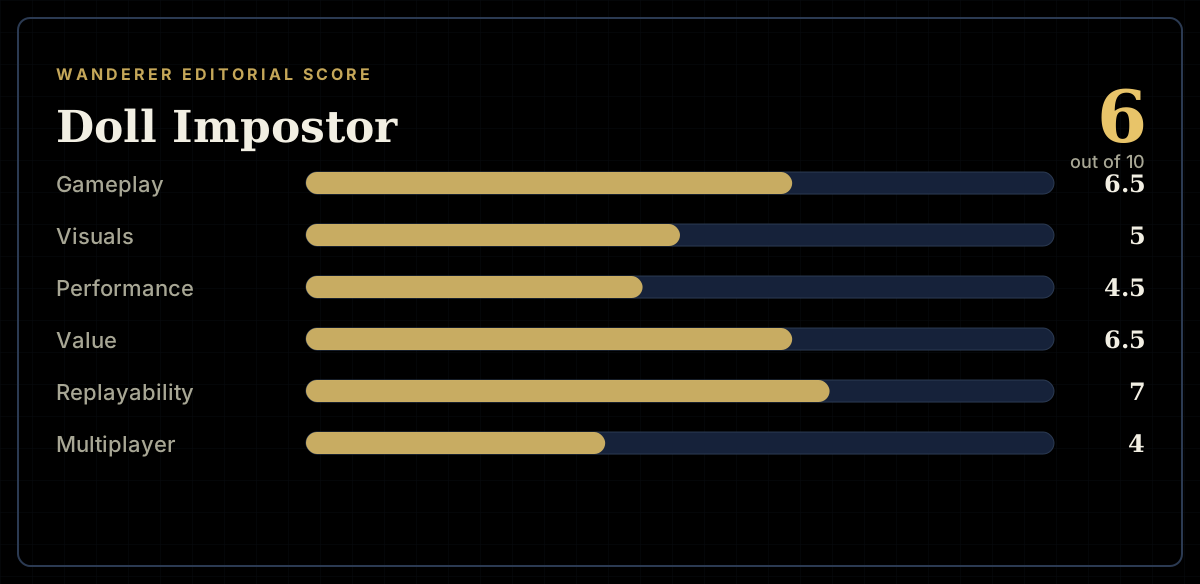
How the review scores each part of the gameWanderer Editorial -
The short versionWanderer Editorial