Game review
Deep Sea Idle: Infinity Abyss
6.5 / 10
- Developer
- HIGHKICKSTUDIO
- Publisher
- HIGHKICKSTUDIO
- Released
- 21 July 2026
- Platforms
- Windows
- Genre
- Incremental
- Monetisation
- One-time purchase, no in-game store, no IAP
- Players
- None; fully single-player
The short version
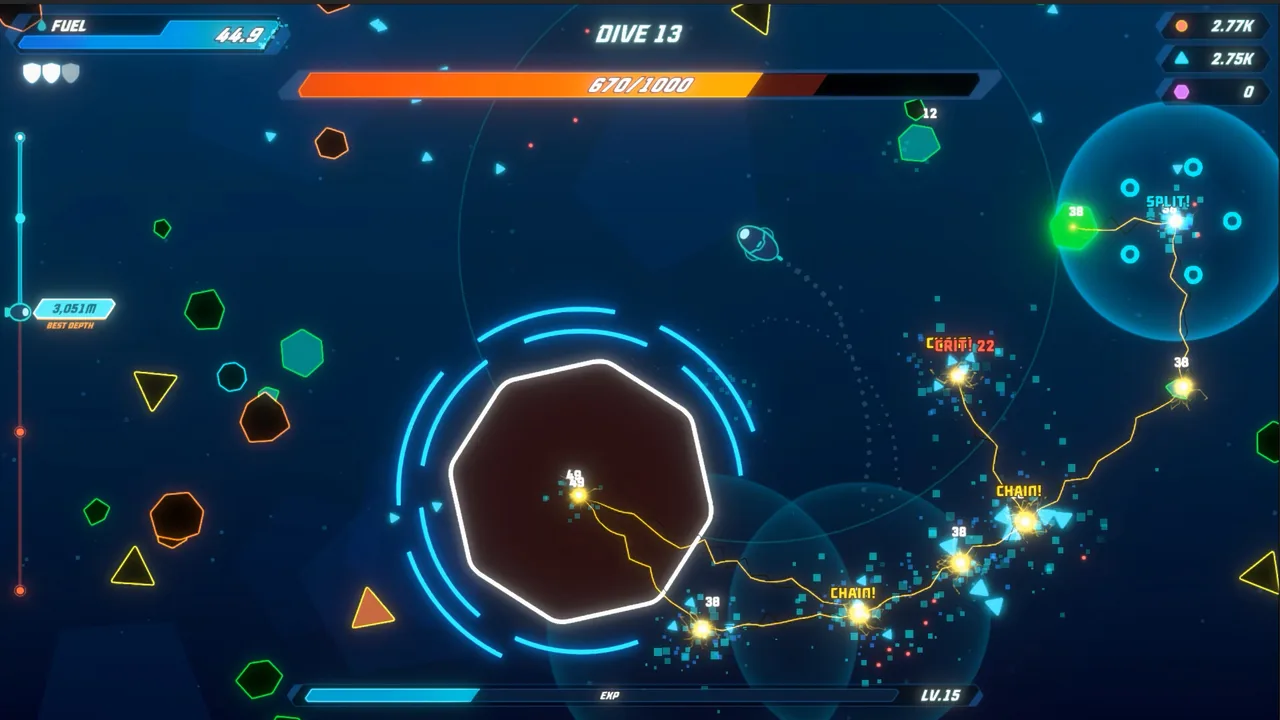
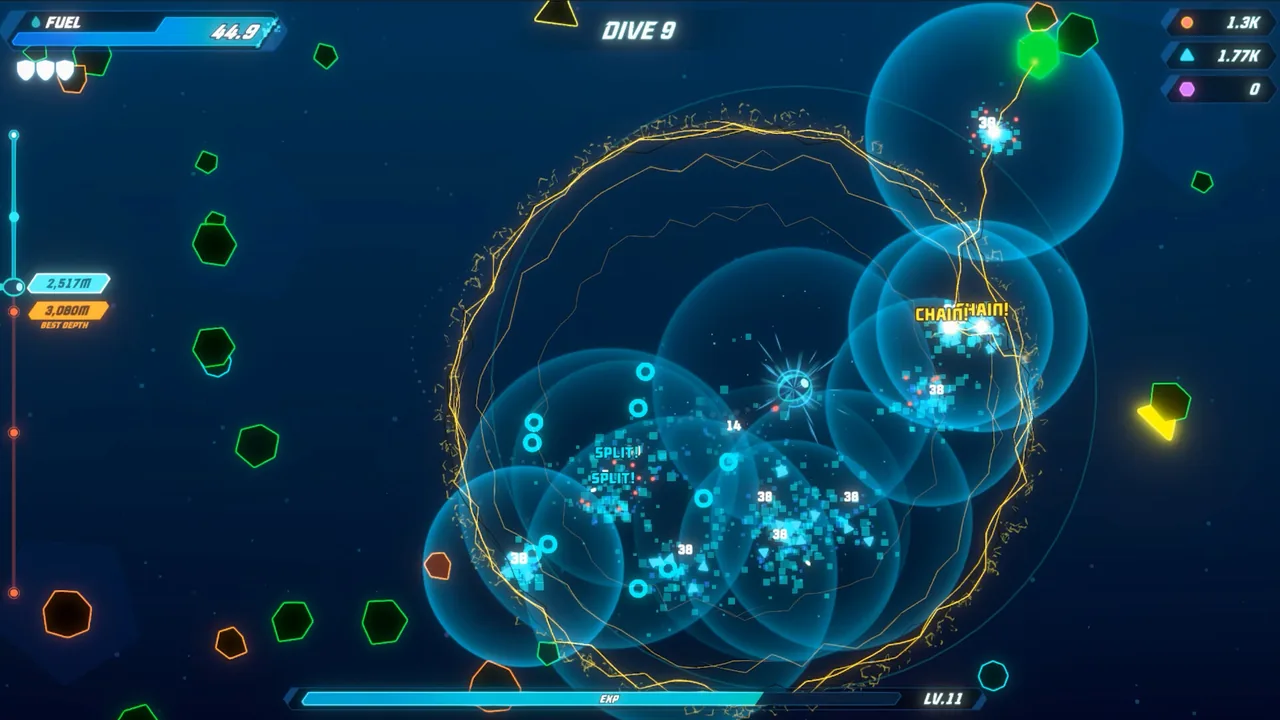
Deep Sea Idle: Infinity Abyss dresses up a familiar incremental structure in a distinctive setting: pilot an automated submarine deeper into the abyss, chain torpedoes, split shots, lightning and plasma across screens full of enemies, mine the resulting resources, and prestige your sub through an expanding tech tree once you hit a wall. Reviewers who click with it describe exactly the effect the genre chases — one calls it "very satisfying," another praises how the "screen-filling chain reactions... feel great and keep escalating."
A detailed minority report complicates that picture in a specific, checkable way: after the first couple of prestige tiers, the sense of actually getting stronger reportedly flattens out hard, turning early minutes of each dive into a slog before a late-run card-collecting mechanic finally lets the numbers pop. Global achievement data backs this up directly — one specific achievement sits at just 10% completion against 90%-plus for most others, matching independent complaints about a punishing late-game grind.
Biggest strengths
- A distinctive setting and visual hook — automated torpedoes, plasma, lightning and split shots chaining across the screen — that reviewers consistently praise as satisfying to watch escalate
- A short, respectable runtime (roughly two to three hours for most reviewers) that doesn't overstay its welcome, with several reviewers explicitly praising the pacing
- An accessible on-ramp for players newer to the incremental genre, with the first prestige reset arriving faster than expected according to more than one reviewer
Biggest weaknesses
- One detailed review describes a specific, structural problem: after the first couple of prestige tiers, upgrades stop translating into a felt sense of power, turning the early minutes of every subsequent dive into a repetitive slog before a late-run card mechanic finally lets damage scale up
- Global achievement data corroborates the grind complaint directly — one specific achievement sits at just over 10% completion against 90%-plus for most others, and a very high-playtime reviewer (over 100 hours) sums up their experience with just three words: "achievements are too painful"
- One reviewer specifically requests keyboard shortcuts for the in-run card-selection screen, reporting that mouse-only controls cause accidental collisions with enemies while navigating choices mid-dive
Who it's for: Incremental fans who want a short, visually satisfying session — a couple of hours, not a couple of weeks — built around chaining automated weapon effects rather than deep strategic build choices.
Our recommendation: A solid, cheap pick for a short incremental session, with the understanding that the power fantasy the genre usually promises reportedly flattens in the middle stretch before picking back up — and that full completion, per the achievement data, is a genuinely steep ask.
6.5 / 10
Most incrementals ask you to imagine the spectacle behind their numbers; Deep Sea Idle: Infinity Abyss just shows it to you directly. Pilot an automated submarine into the abyss, and torpedoes, split shots, lightning arcs and plasma bursts fire on their own, chaining across whatever's in front of you while resources pour in behind the carnage. It's a genuinely satisfying visual hook for the genre, and it's the reason most of the game's first eighteen reviewers — 15 of them — come away recommending it.
Automated weapons, actual spectacle
The core loop follows familiar incremental beats — dive, fight, extract resources, spend them on your submarine's tech tree, prestige once you hit a wall, dive again stronger — but the moment-to- moment presentation earns specific praise reviewers don't usually bother giving this genre. One Korean-language review calls it "a genuinely satisfying incremental game," singling out how "the screen-filling chain reactions from torpedoes, splits, plasma, and lightning feel great and keep escalating." An English reviewer describes the specific emotional arc well: "The first time you are forced to reset it feels like a setback, but once you get a bit further in, you really start to get the dopamine rush you wanted." A Japanese review calls it "orthodox" but appreciates exactly that familiarity, praising simple, approachable graphics early on and increasingly flashy effects late-game, and noting the prestige system is generous enough on repeat resets — money and skill auto-acquisition both return quickly — that starting over doesn't sting as much as it could.
Where the power fantasy stalls
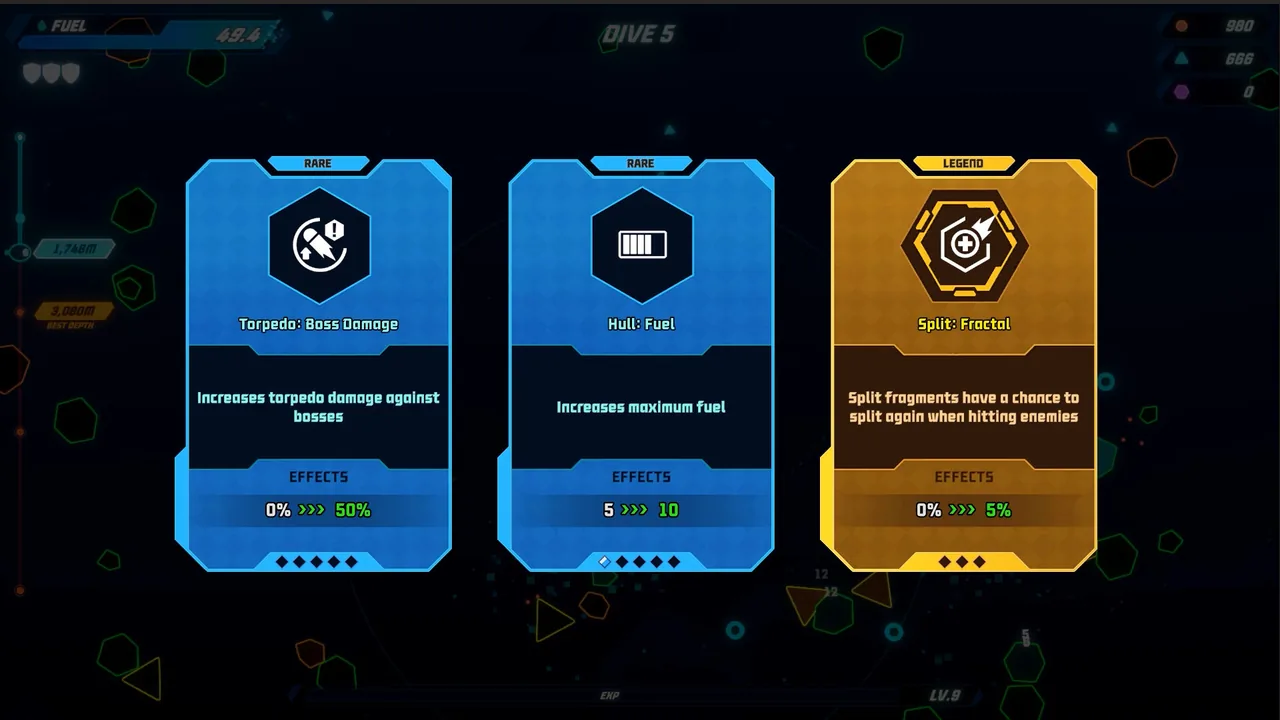
The most detailed critical account in the sample makes a specific, structural argument rather than a vague complaint. Translated from Korean: early submarine tier-ups build real anticipation and feel fun, but by roughly the second or third tier, that feeling drops off sharply — content and mechanical variety are described as too thin to sustain interest, and worse, upgrading stops producing a felt sense of getting stronger. Even at maximum difficulty, with resources ground out and spent aggressively on upgrades, enemies reportedly still won't die in a single hit. The reviewer describes the actual solution as a separate mechanic entirely — collecting level-up cards within a single dive, Vampire Survivors-style, which is what finally lets damage scale meaningfully — but reaching that point means enduring the same slow opening stretch at the start of every single dive, which the reviewer calls genuinely boring to repeat.
That's a specific enough claim to check against harder data, and the game's own achievement statistics back it up. Global completion sits above 90% for most of Deep Sea Idle's 31 achievements, but one entry — a mission-specific challenge — sits at just over 10%, a steep outlier against the rest of the curve. A separate reviewer with more than 100 hours logged, a genuinely enormous investment for a game most players finish in two to three hours, sums up their experience in three words: "achievements are too painful." Read together, the detailed power-fantasy complaint and the achievement data point at the same conclusion — whatever's gating that specific challenge is a real difficulty spike, not just one player's frustration.
Smaller friction points worth knowing
A handful of more specific, practical complaints round out the negative side of the sample. One reviewer asks for keyboard shortcuts on the in-run card-selection screen, describing a real problem with mouse-only controls: reaching left or right to click a card while also steering the submarine causes accidental collisions with enemies mid-dive. A separate English-language review makes a pointed observation worth reporting neutrally rather than amplifying into an accusation: the game includes an achievement specifically for reaching two hours of playtime, which the reviewer notes lands suspiciously close to the point past which Steam typically stops allowing refunds. This review has no way to confirm whether that's an intentional design choice or simple coincidence with a natural progression milestone, and reports it only as a detail one player flagged.
A short game that mostly delivers what it promises
Length comes up repeatedly, and mostly as a neutral-to-positive fact rather than a complaint: one reviewer reports hitting an end screen at 2 hours 47 minutes after about 110 dives, another logs roughly 2.5 hours while still chasing a final achievement, and a Japanese review frames a few-hour runtime as ideal for "a bit of time-killing" rather than a shortcoming. For a genre that can easily overstay its welcome, several reviewers treat Deep Sea Idle's brevity as a point in its favour rather than against it — provided the price, which nearly everyone agrees is fair, matches the time actually spent.
Final verdict
Deep Sea Idle: Infinity Abyss delivers a genuinely satisfying incremental spectacle for most of the people who've tried it, with a distinctive submarine setting and weapon-chaining visuals that reviewers single out specifically rather than generically. The mid-game power-fantasy complaint is detailed, specific, and corroborated by the game's own achievement data rather than just one frustrated account, and it's worth knowing about before diving in expecting an unbroken upward curve of strength.
At its price, for a short, focused session, this is a reasonable pick — just be ready for a stretch in the middle where the numbers keep climbing without the game feeling like it's climbing with them, and treat full achievement completion as a genuinely optional, difficult goal rather than a natural extension of finishing the game.
Players who want that same escalating power fantasy sustained without the mid-run flatness, built to keep compounding over a much longer timeline, may also want to look at Wanderer.
Pros and cons
Pros
- A distinctive setting and visual hook — automated torpedoes, plasma, lightning and split shots chaining across the screen — that reviewers consistently praise as satisfying to watch escalate
- A short, respectable runtime (roughly two to three hours for most reviewers) that doesn't overstay its welcome, with several reviewers explicitly praising the pacing
- An accessible on-ramp for players newer to the incremental genre, with the first prestige reset arriving faster than expected according to more than one reviewer
- Cheap even before any discount, and multiple reviewers frame the price as a clear positive relative to what's on offer
- A day-one hotfix shows the developer responding to launch feedback quickly
Cons
- One detailed review describes a specific, structural problem: after the first couple of prestige tiers, upgrades stop translating into a felt sense of power, turning the early minutes of every subsequent dive into a repetitive slog before a late-run card mechanic finally lets damage scale up
- Global achievement data corroborates the grind complaint directly — one specific achievement sits at just over 10% completion against 90%-plus for most others, and a very high-playtime reviewer (over 100 hours) sums up their experience with just three words: "achievements are too painful"
- One reviewer specifically requests keyboard shortcuts for the in-run card-selection screen, reporting that mouse-only controls cause accidental collisions with enemies while navigating choices mid-dive
- One English-language reviewer notes, pointedly, that the game includes an achievement for reaching two hours of playtime — just past Steam's standard refund window — a detail this review reports as an observation raised by a player rather than a confirmed design intent
- Content depth is limited by design for a game this short, and reviewers who want a longer, more strategic incremental experience should expect the loop to run its course quickly
Screenshots
-
Deep Sea Idle: Infinity AbyssImage: HIGHKICKSTUDIO via Steam -
Deep Sea Idle: Infinity AbyssImage: HIGHKICKSTUDIO via Steam -
Deep Sea Idle: Infinity AbyssImage: HIGHKICKSTUDIO via Steam -
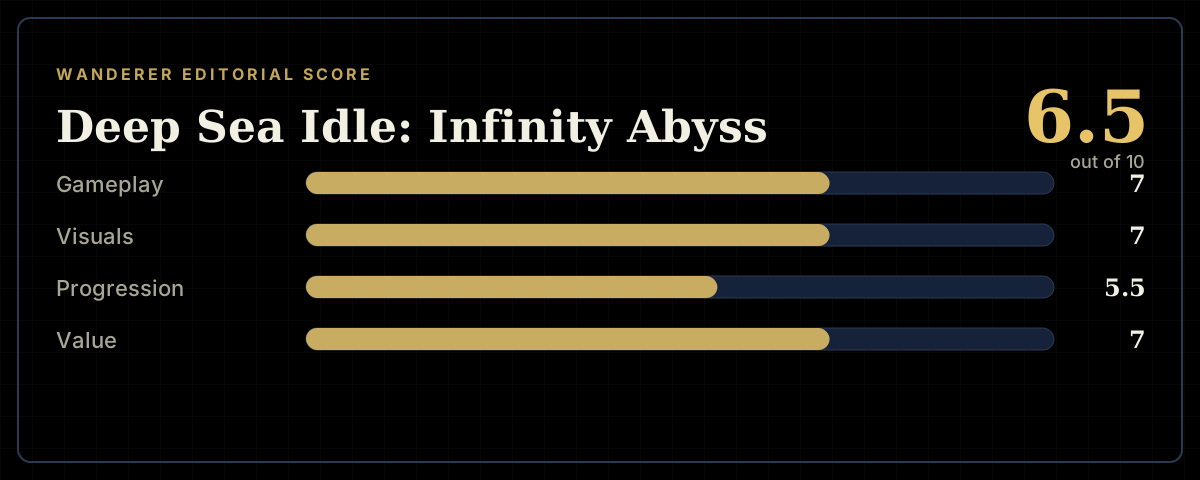
How the review scores each part of the gameWanderer Editorial -
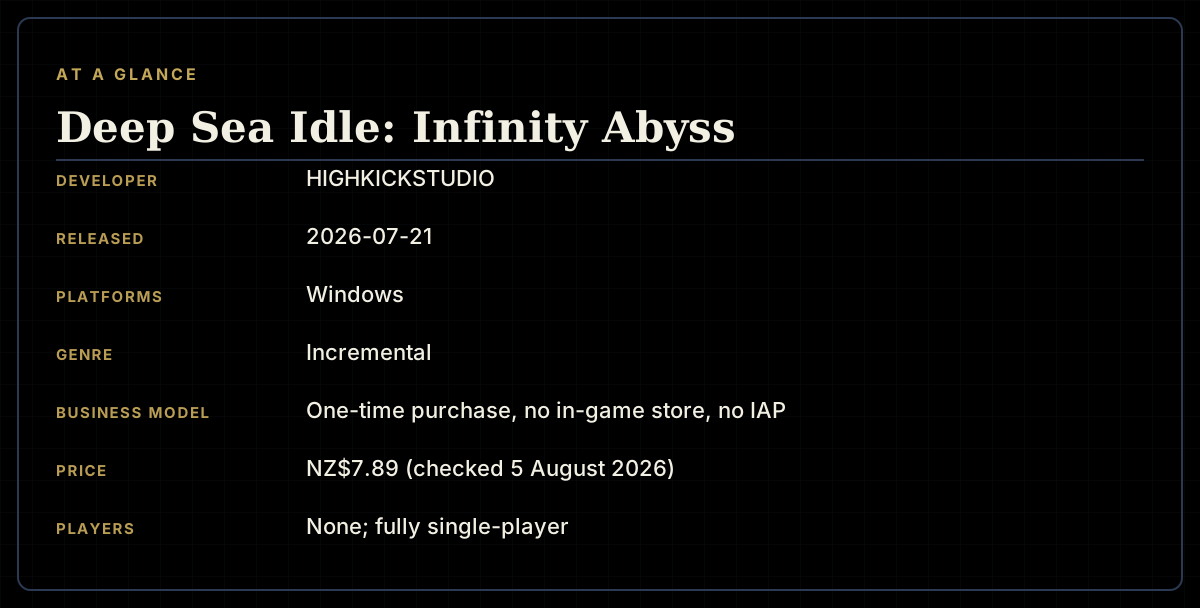
The game at a glanceWanderer Editorial -
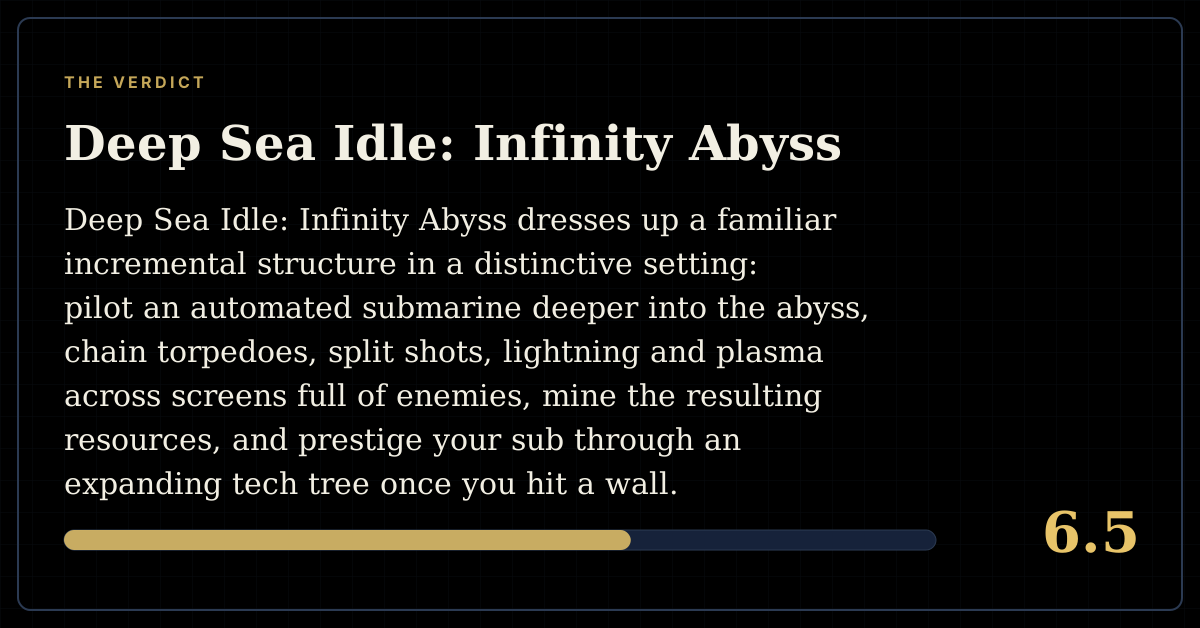
The short versionWanderer Editorial