Game review
DarkSwitch Review: An Ambitious Frostpunk-Like Still Fighting Its Own Bugs
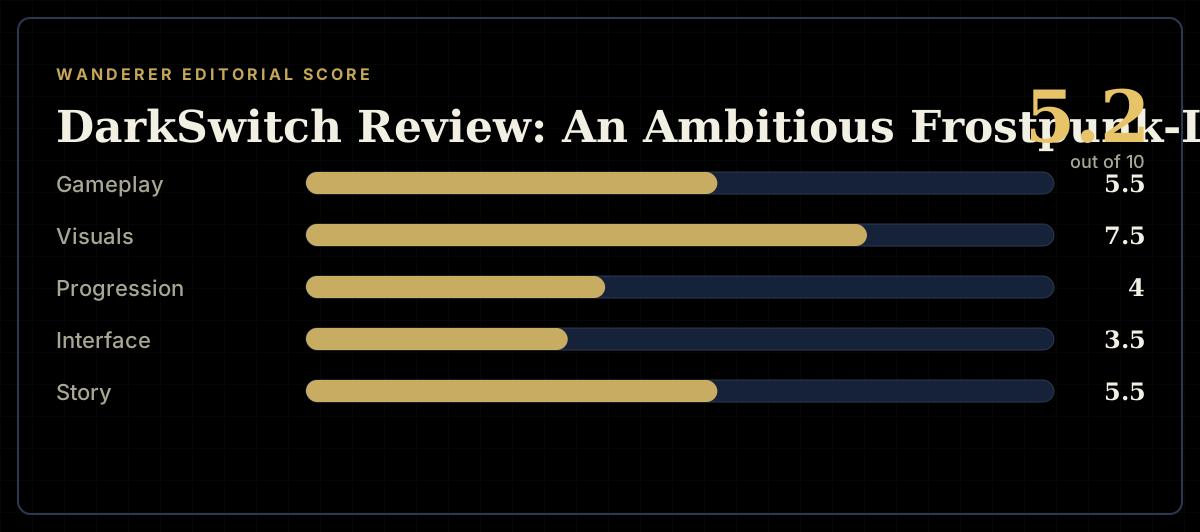
5.2 / 10
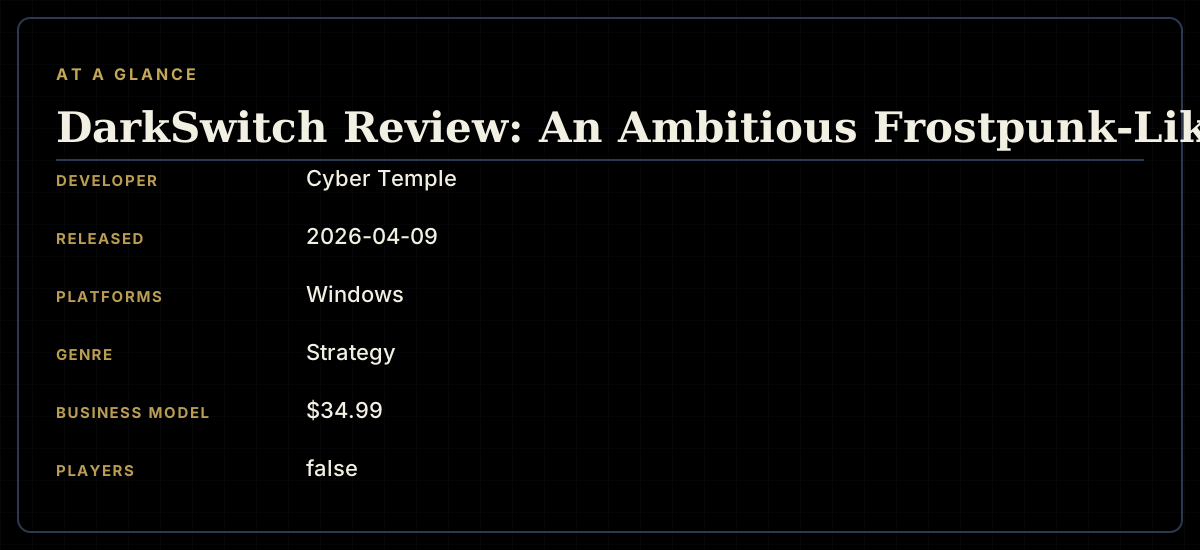
- Developer
- Cyber Temple
- Publisher
- Cyber Temple Games LLC
- Released
- 9 April 2026
- Platforms
- Windows
- Genre
- Strategy
- Monetisation
- $34.99
- Players
- false
The short version
A genuinely striking, Frostpunk-inspired vertical survival city-builder whose worldbuilding and art direction outpace its interface, balance, and stability, resulting in a game that a sizable share of its own players call fun and broken in the same sentence.
Biggest strengths
- A distinctive setting: a vertical city built on a giant tree, defended against a rising, monster-filled fog
- Consistently praised art direction and worldbuilding, described by multiple reviewers as beautiful and atmospheric
- An unusually responsive developer, replying individually to dozens of critical reviews with specific fixes, hotfix timelines, and direct rebuttals to complaints
Biggest weaknesses
- Run-ending bugs reported repeatedly, including stalled fear meters, workers who stop working and starve in place, and permanently stuck units
- A crowded, click-heavy interface with no difficulty settings, no interface scaling, and constant unmutable combat notification spam
- Sharp late-game pacing problems, with several reviewers describing extended stretches of waiting for scripted events to trigger
Who it's for: Frostpunk fans with high tolerance for jank who want a fresh setting and don't mind restarting after a run-ending bug, not players looking for a smooth, fully polished survival city-builder.
Our recommendation: Wait for a sale or a few more patches
5.2 / 10
Frostpunk on a tree
DarkSwitch wears its influence openly, and most reviewers name it directly: this is a Frostpunk-style survival city-builder, transplanted from an ice-locked crater to a giant tree under siege by a rising, monster-filled fog called the Shroud. You build a settlement across limited platforms on and around the tree, balance food, wood, metal, and gas production, send rangers out to fight or scout, and manage a population whose fear meter can end the run outright if it climbs too high. It's a strong, well-realized setting — several reviewers who otherwise had plenty of complaints still opened their reviews by calling the theme, worldbuilding, and art direction genuinely great, and one specifically called the main map and world map "BEAUTIFUL."
A tense loop, for a while
At its best, that description holds up. Reviewers with 15 to 30-plus hours logged describe a real, absorbing tension in the early-to-mid game: choosing where to scout first because an early misstep can cascade into a food shortage, deciding whether to dismantle or relocate buildings as resource nodes deplete, and juggling the tradeoffs between raw and refined "advanced" materials. One reviewer who finished the full campaign called the branching story choices and tree-building concept "fantastic," gave it a 7-to-8-out-of-10 once early bugs were accounted for, and specifically recommended it to "city managers and story-rich players." That's not a fringe opinion; it's echoed by several other long-playtime reviews describing 20-plus hour runs they found genuinely fun despite everything else going wrong around the edges.
Where it breaks: bugs that end runs, not just annoy
The word that recurs most across the negative and mixed reviews isn't "boring," it's "bugs" — and specifically, bugs severe enough to end a run outright rather than just being cosmetic annoyances. Multiple reviewers independently describe workers who simply stop working mid-shift and stand in place until they starve to death, with new workers immediately taking their place in an endless loop. Others report a "fear meter" that refuses to decrease no matter how well-provisioned and defended a fully-built settlement is, effectively soft-locking a run that's otherwise going well — one reviewer described an 800-citizen, fully-lit, zero-casualty settlement that still lost to fear on day 66 with no apparent cause. A third reviewer's very detailed critique listed over a dozen specific design and balance questions, several with confirmed developer replies acknowledging bugs that needed fixing. These aren't isolated reports; they're the single most consistent thread across the 75 negative reviews in the sample.
An interface fighting the player
Even reviewers who liked the core loop consistently flagged the UI as actively hostile to using it. Building a single fully-upgraded tower requires stacking well over a dozen individual clicks across multiple confirmation menus, according to one detailed breakdown; there's no way to resize interface elements, no adjustable notification volume, and combat sequences can trigger a cascade of individual attack notifications loud enough that several reviewers reported muting the game outright. The overworld map camera was called too slow to use comfortably for basic scouting. None of this is fatal on its own, but stacked together with the run-ending bugs above, it paints a picture of a game whose core systems needed more time in the oven before launch.
A developer that won't stop responding
What sets DarkSwitch apart from a typical rough launch is the sheer density of developer engagement visible directly in the reviews. Nearly every review in the sample, positive or negative, has a direct, specific reply from the developer — not a copy-pasted apology, but individual answers to individual complaints: confirming a hotfix timeline, explaining a confusing mechanic, asking a reviewer for their exact resolution to reproduce a UI bug, or directly rebutting accusations that the art and voice acting were AI-generated with a link to a behind-the-scenes dev diary. Several reviewers who initially recommended against the game noted the developer had since shipped a hotfix addressing their specific complaint. That level of visible, active support doesn't erase the launch problems, but it's a genuinely good sign for where the game is headed, and it's rare enough to be worth calling out directly.
Pacing and progression: strong start, rougher back half
Progression is where the campaign's shape becomes a real liability rather than just an annoyance. The early hours, when there's always another resource shortage to solve or another platform to expand onto, are consistently the part reviewers praise most. But several of the same reviewers who enjoyed that opening stretch describe the back half of a run differently: long waits for scripted story beats to trigger, resource curves that flatten out once the early scramble is solved, and less to actually decide once the settlement's core loop is stable. One completionist reviewer who pushed through to the end of the story specifically separated their experience into "great first half, slower second half" territory, still landing on a recommendation overall but flagging the drop-off explicitly. Combined with the lack of adjustable difficulty settings noted elsewhere, that pacing dip makes DarkSwitch a game that's easiest to recommend for a single focused playthrough rather than one built for repeat runs, at least as it stands right now.
Verdict
DarkSwitch is, honestly, a game in progress rather than a finished product — its own 195-review sample splits almost exactly along those lines, with real praise for its setting, art, and early-game tension sitting right next to real, run-ending frustration with its bugs and interface. If you have a high tolerance for restarting after a soft-lock and want a fresh, ambitious take on the Frostpunk formula, there's a genuinely good game trying to get out. If you want something that works cleanly on day one, the reviews say clearly: not yet, but keep an eye on the patch notes.
Pros and cons
Pros
- A distinctive setting: a vertical city built on a giant tree, defended against a rising, monster-filled fog
- Consistently praised art direction and worldbuilding, described by multiple reviewers as beautiful and atmospheric
- An unusually responsive developer, replying individually to dozens of critical reviews with specific fixes, hotfix timelines, and direct rebuttals to complaints
- A real, tense resource-management loop that several long-playtime reviewers found genuinely gripping through the first half of a campaign
Cons
- Run-ending bugs reported repeatedly, including stalled fear meters, workers who stop working and starve in place, and permanently stuck units
- A crowded, click-heavy interface with no difficulty settings, no interface scaling, and constant unmutable combat notification spam
- Sharp late-game pacing problems, with several reviewers describing extended stretches of waiting for scripted events to trigger
- Voice acting and dialogue writing criticized broadly enough that multiple reviewers assumed, incorrectly per the developer, that it or the art was AI-generated
Screenshots
-
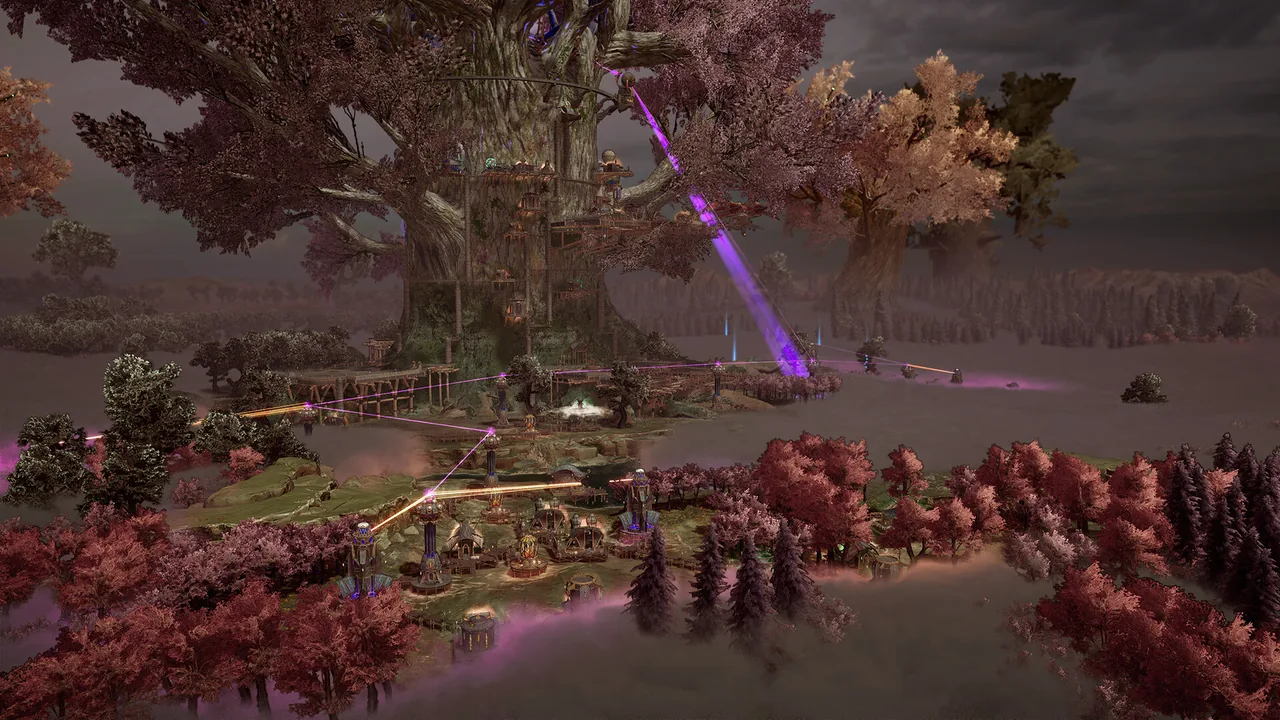
Image: Cyber Temple via Steam -
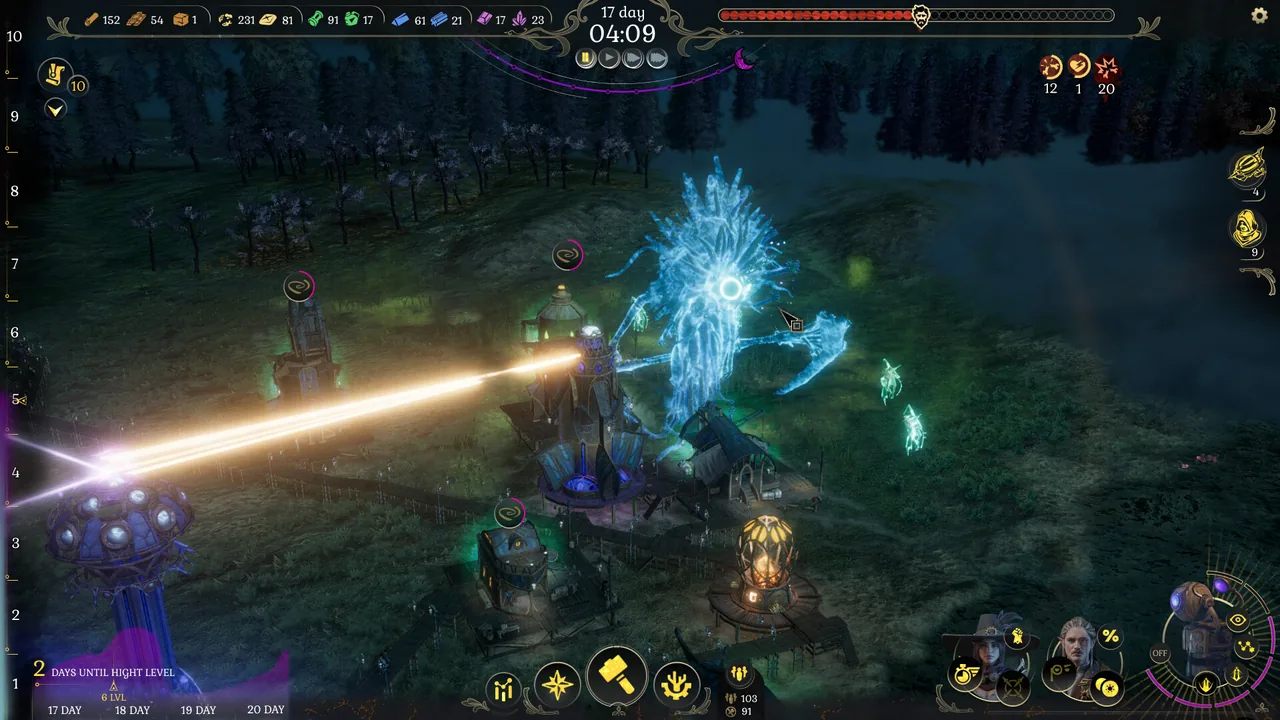
Image: Cyber Temple via Steam -
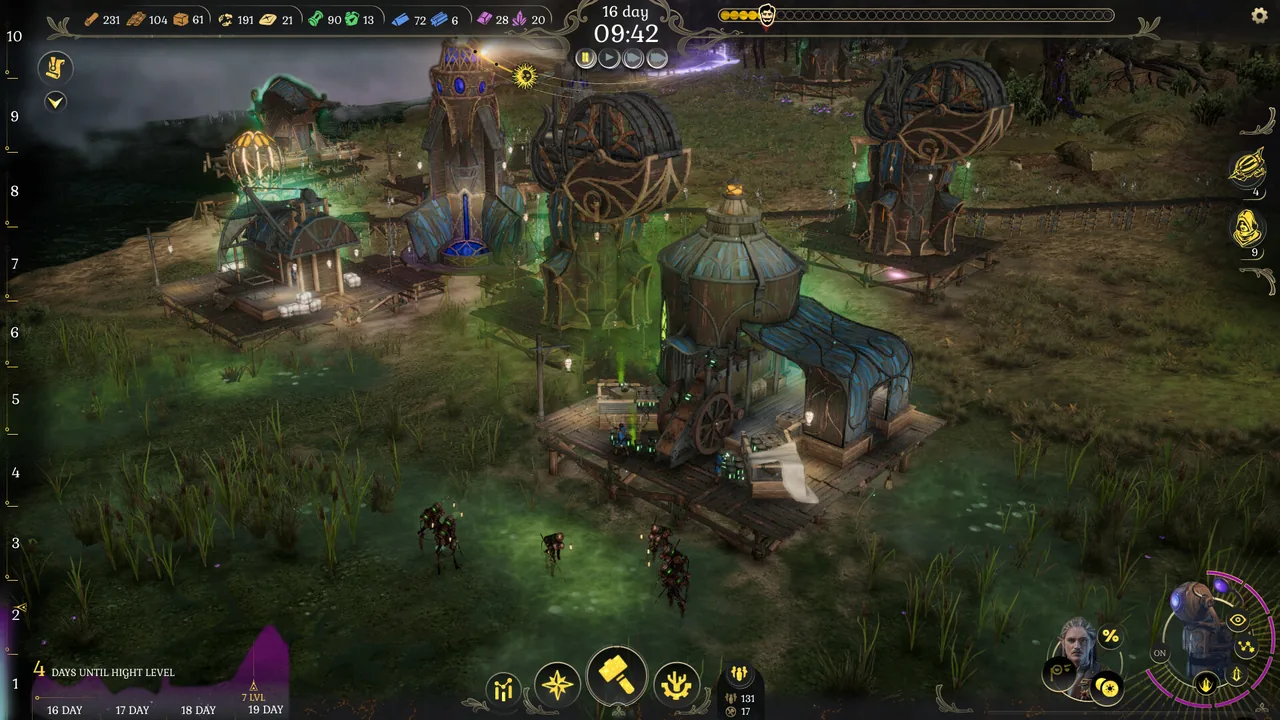
Image: Cyber Temple via Steam -
Wanderer Editorial -
Wanderer Editorial -
Wanderer Editorial