Game review
Cube Crusaders Review
6.5 / 10
- Developer
- Frentwick Indie
- Publisher
- Frentwick Indie
- Released
- 18 September 2026
- Platforms
- ["Windows"]
- Genre
- Action
A Halo Fan's Big-Headed Answer to Metroidvania Combat
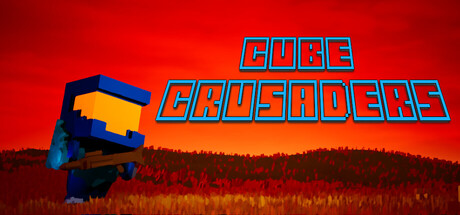
Cube Crusaders is the solo project of a developer working under the studio name Frentwick Indie, who has been building the game nights and weekends since at least early 2024 while holding down a full-time job elsewhere in the games industry. That grind shows up in the finished pitch: a big-headed, blocky-armored Crusader is sent into the underground of the dying planet Adoros to crush a reality-warping "Void Anomaly" and the cubic horrors it spawns, across a metroidvania-style campaign that can be played solo or in local couch co-op. The developer has been open about the game's biggest influence — Halo, repeatedly cited by name across the development diary — and it's visible everywhere from the armor-piece customization system down to the game's signature difficulty modifiers.
Curses, Not Just Difficulty Sliders
Rather than a blunt easy/normal/hard toggle, Cube Crusaders borrows the spirit of Halo's "Legendary, All Skulls On" challenge and turns it into a menu of stackable Curse Modifiers players can apply before a run. Faulty Capacitors halves magazine capacity, Junk Batteries cuts weapon damage in half, Paper Armor makes any hit lethal, and Death Party turns every kill into a shower of confetti — a mix of genuinely punishing handicaps and purely cosmetic chaos that lets players tune their own difficulty curve well past what the base campaign offers. It's a smart way to extend a roughly two-hour campaign's replay value without resorting to randomized loot or procedural levels, and it gives the kind of dedicated player who clears a game on the default settings something concrete to chase afterward.
The armor customization system pulls just as directly from Halo, letting players mix and match helmets, shoulders, chest pieces, back pieces, boots, visor colors, auras, and full armor colors, with each helmet carrying its own scrap of lore about the wearer's past. It's a nice touch for a low-budget solo project — the kind of world-building detail that's easy to skip when a single developer is also handling every other system in the game, and its presence suggests real care went into making the Crusader feel like a character rather than a stat block.
Campaign and Horde, Built for Company
The core campaign follows the Crusader through the Adoros underground across roughly eight explorable areas beyond its opening demo section, adding NPCs to guide players through the narrative, an objective HUD indicator, and — as of the most recent pre-launch update — early prototype mech controls for larger-scale encounters. A second co-op character joins with their own dedicated abilities: a healing move to top up player one, an ammo counter and HP bar displayed above their head, and a teleport-to-partner button that replaced an earlier dash ability the developer found kept launching the AI companion off-screen. Those are small, practical fixes, but they're the sort of iteration that tends to separate a functional co-op mode from an actually pleasant one, and it's reassuring to see them worked out ahead of launch rather than left for a player to discover mid-run.
Horde Mode is the game's other headline pillar: an endless wave-survival mode playable locally with a second player or online with up to sixteen people, though the developer has confirmed lobby settings technically scale as high as two hundred, untested, purely because there was no compelling reason to hard-cap it lower. Rounds were rebalanced twice across public playtests at GameCon Canada in both 2024 and 2026, softening the early waves while sharpening the late ones, and a recent optimization pass targeted the CPU spikes caused by large numbers of enemies dying in the same instant — the unglamorous kind of engineering work that matters far more to a horde shooter's feel than any single new weapon does.
No Reviews Yet, But a Visible Paper Trail
Cube Crusaders launched without a single public Steam review to draw on, which would normally be a hard stop for evaluating a game responsibly. What it does have is an unusually thorough public paper trail: developer diary posts stretching back to February 2024, a demo that was iterated on publicly for well over a year, two rounds of convention playtesting with documented feedback incorporated into patch notes, and a March 2026 status update aimed specifically at "Pre-Release Owners" who'd already been handed keys to test the campaign ahead of the wider public. That's a substantially more transparent development process than most solo indie launches offer, and it's enough to responsibly assess the game on its stated design and documented iteration even without a review base to lean on. It also means anyone burned by promise-heavy Kickstarter-style pitches can actually go back and read years of incremental, mundane progress updates rather than a handful of glossy trailers.
A Fair Price for an Honest, Unfinished-Feeling Package
At $9.99, Cube Crusaders is priced modestly for a co-op action game with both a structured campaign and an open-ended horde mode, and the developer has been explicit that there are no microtransactions — all cosmetic unlocks come from playing. That's a welcome stance in a genre that leans heavily on cosmetic monetization elsewhere. The trade-off is that the polish is visibly uneven: as of the last pre-launch update, save-and-load still had bugs tied to collision and level streaming, and the UI was flagged by the developer as unfinished. A promised six months of post-launch updates driven by community feedback is a reasonable way to close that gap, but it does mean early buyers are effectively signing up for a game that's still finding its final shape, not a fully buttoned-up release.
Verdict
Cube Crusaders is a transparent, patiently-built solo project that wears its Halo influences proudly, translating them into a metroidvania campaign backed by stackable curse modifiers and a scalable co-op horde mode. There's no review base yet to confirm how it's landing with players, but two-plus years of public devlogs, convention playtests, and iterative patch notes paint a credible picture of a functional, if still slightly rough, launch. For $9.99 with a genuine no-microtransactions promise and a stated commitment to six months of post-launch support, it's a reasonable bet for co-op-minded action fans willing to tolerate some early jank while the developer keeps polishing.
Screenshots
-
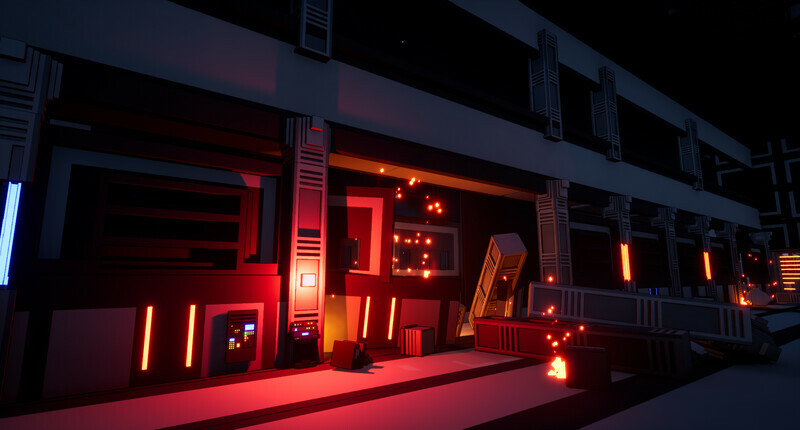
One of the Adoros underground's industrial interiors, lit in warning red and scattered with sparking debris.Image: Frentwick Indie via Steam -
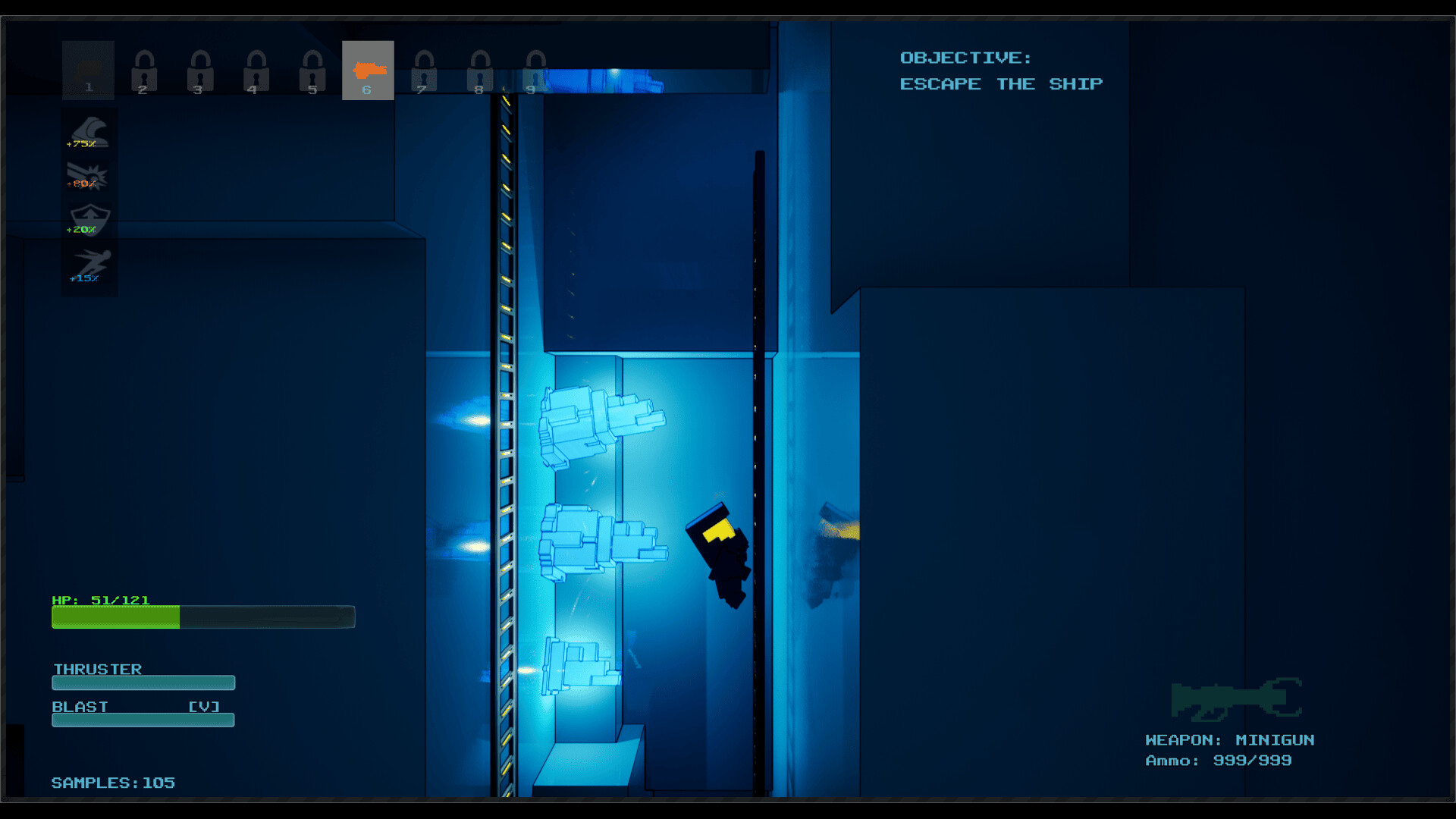
Escaping a ship corridor with the minigun equipped, curse modifiers stacked in the top-left corner of the HUD.Image: Frentwick Indie via Steam -
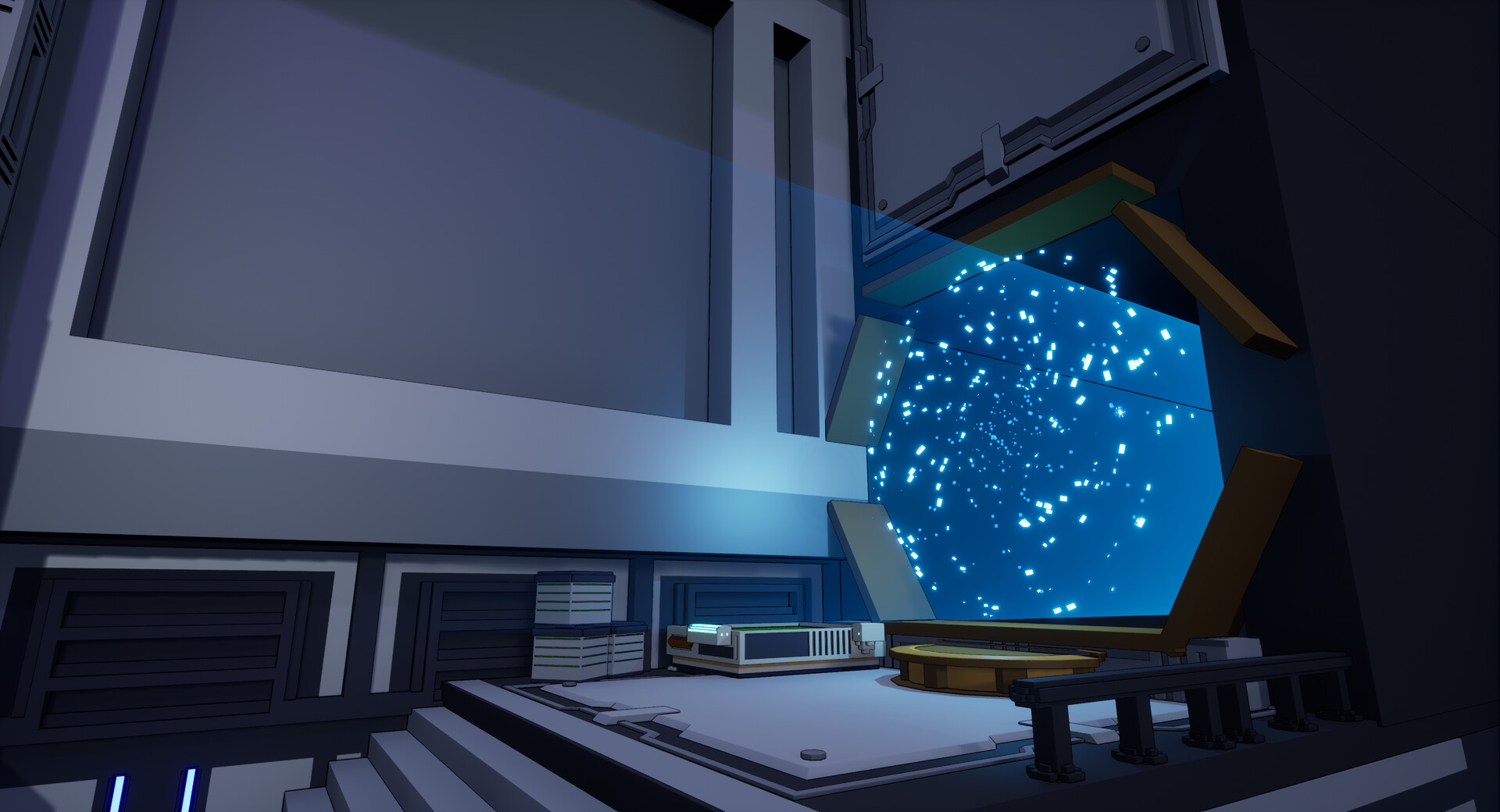
A quiet moment aboard ship, framing the hexagonal viewport that leads into the campaign's space-transition sequence.Image: Frentwick Indie via Steam