
Game review
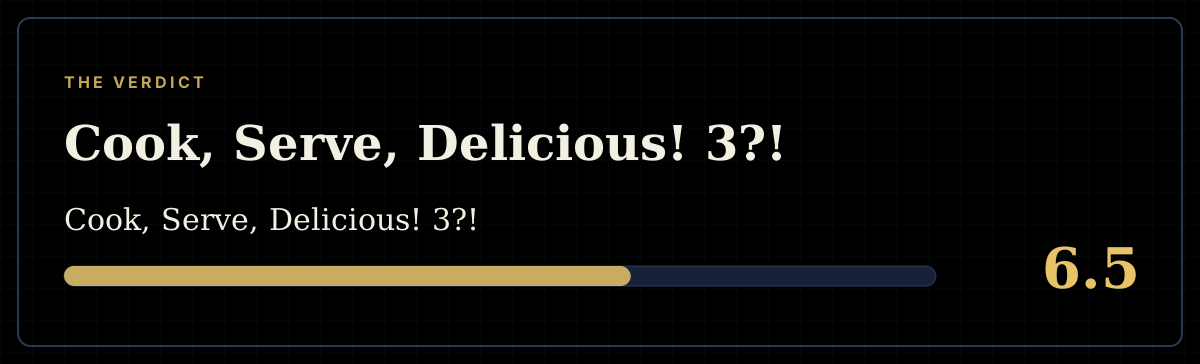
Cook, Serve, Delicious! 3?!
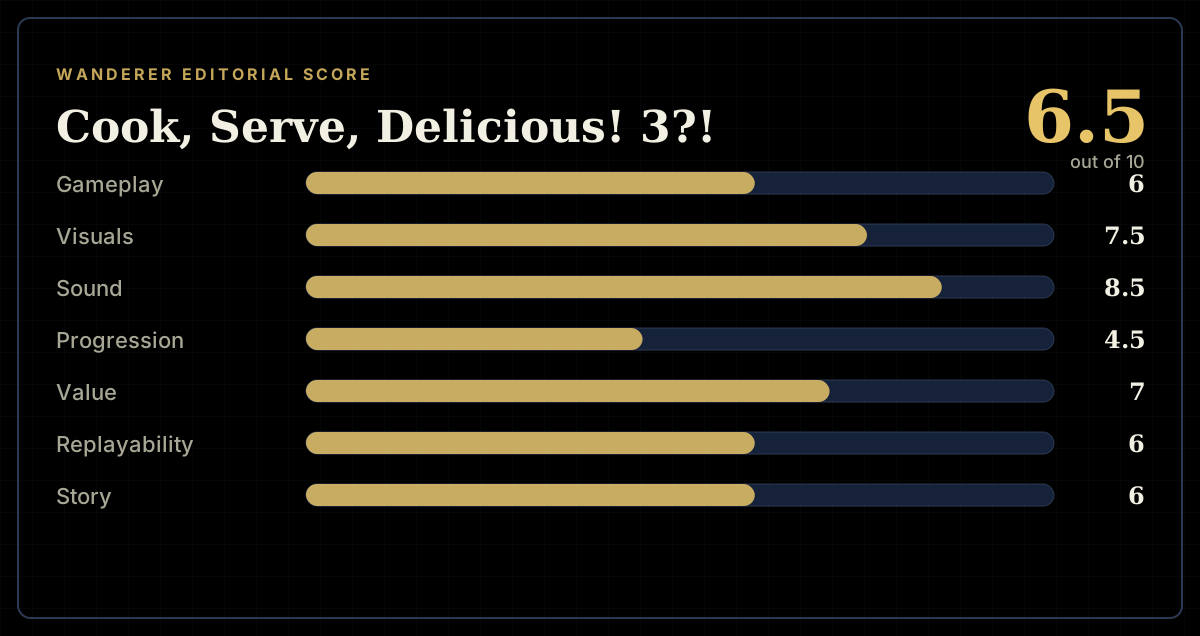
6.5 / 10
- Developer
- Vertigo Gaming Inc.
- Publisher
- Vertigo Gaming Inc.
- Released
- 14 October 2020
- Platforms
- Windows, macOS, Linux
- Genre
- Cooking Simulation / Typing Action
- Monetisation
- Premium one-time purchase; no DLC or in-game purchases
- Players
- Single-player only
The short version
Cook, Serve, Delicious! 3?! keeps everything longtime fans love about the series — the frantic typing-based cooking chaos, an infectiously good soundtrack, and genuine charm in its post-apocalyptic road-trip framing — while cranking its trademark difficulty up steeply enough, from the very first stop, that a large share of its own review base says the fun gets buried under stress. Global achievement data backs that complaint at scale: even the most commonly earned achievement clears barely a third of the playerbase, and most clear under 5%.
Biggest strengths
- The soundtrack draws some of the most enthusiastic, specific praise in the whole review sample, repeatedly singled out as a series and genre highlight
- Difficulty customization options give players real control over pace and challenge, and several reviewers specifically credit this flexibility with making an otherwise brutal game approachable on their own terms
- The post-apocalyptic road-trip framing and voiced robot companion characters add genuine personality and humor that reviewers say elevates the game beyond a pure mechanical exercise
Biggest weaknesses
- A large, detailed and independently corroborated body of reviews reports the difficulty ramps up dramatically faster than in the first two games, with chaos hitting hard from the very first stop rather than building gradually as players learn the systems
- Global achievement data shows an unusually steep completion curve even by this list's standards: the single most-earned achievement clears only around 35% of owners, and the large majority of achievements sit under 5%, consistent with reviewers' reports that very few players progress far into the game's later chapters
- Several reviewers report missing quality-of-life features they specifically wanted carried over or added, including no way to discard a dish being prepared and no error log explaining what went wrong on a failed order
Who it's for: Series veterans and rhythm-game-adjacent typing fans who specifically want the franchise's hardest, most punishing entry, more than newcomers or players who enjoyed the more gradual difficulty curve of the first two games.
Our recommendation: Long-time fans should go in prepared for a steeper wall than the earlier games presented, and lean hard on the game's difficulty customization options from the start rather than assuming the default experience will ease you in the way its predecessors did.
6.5 / 10
Cook, Serve, Delicious! built its reputation on a simple, punishing idea: cooking as a typing minigame, where orders pile up faster than you can type ingredient codes and hit the right keys in the right order. The third entry takes that formula on the road, literally, sending players across a war-torn, post-apocalyptic America in a food truck rebuilt after their restaurant gets destroyed in the opening minutes. It's a bigger, weirder setting than the series has tried before, and most of the review sample agrees the personality and humor Vertigo Gaming built around it works. What divides the audience is how much harder the game got to actually play.
The charm hasn't gone anywhere
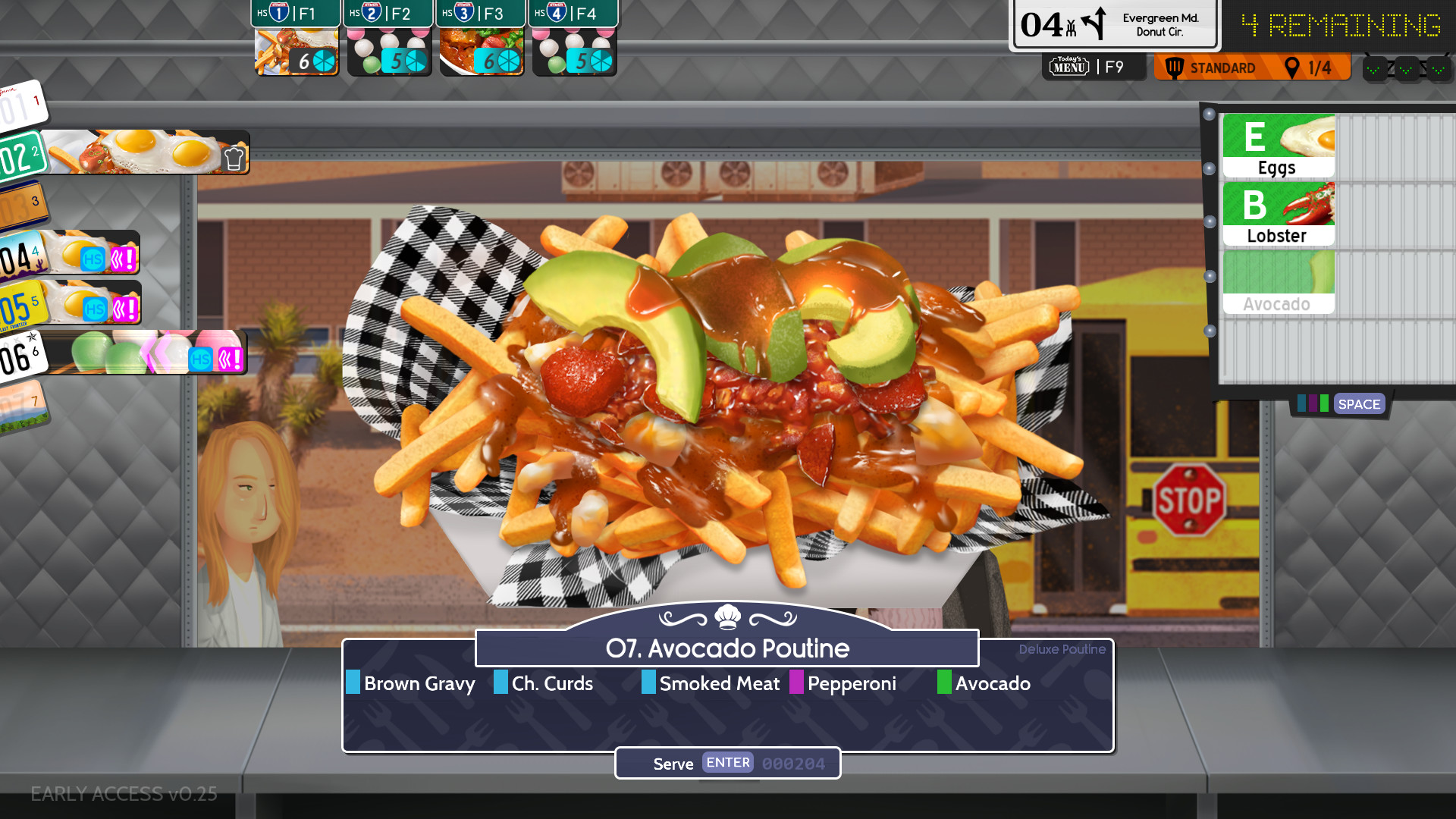
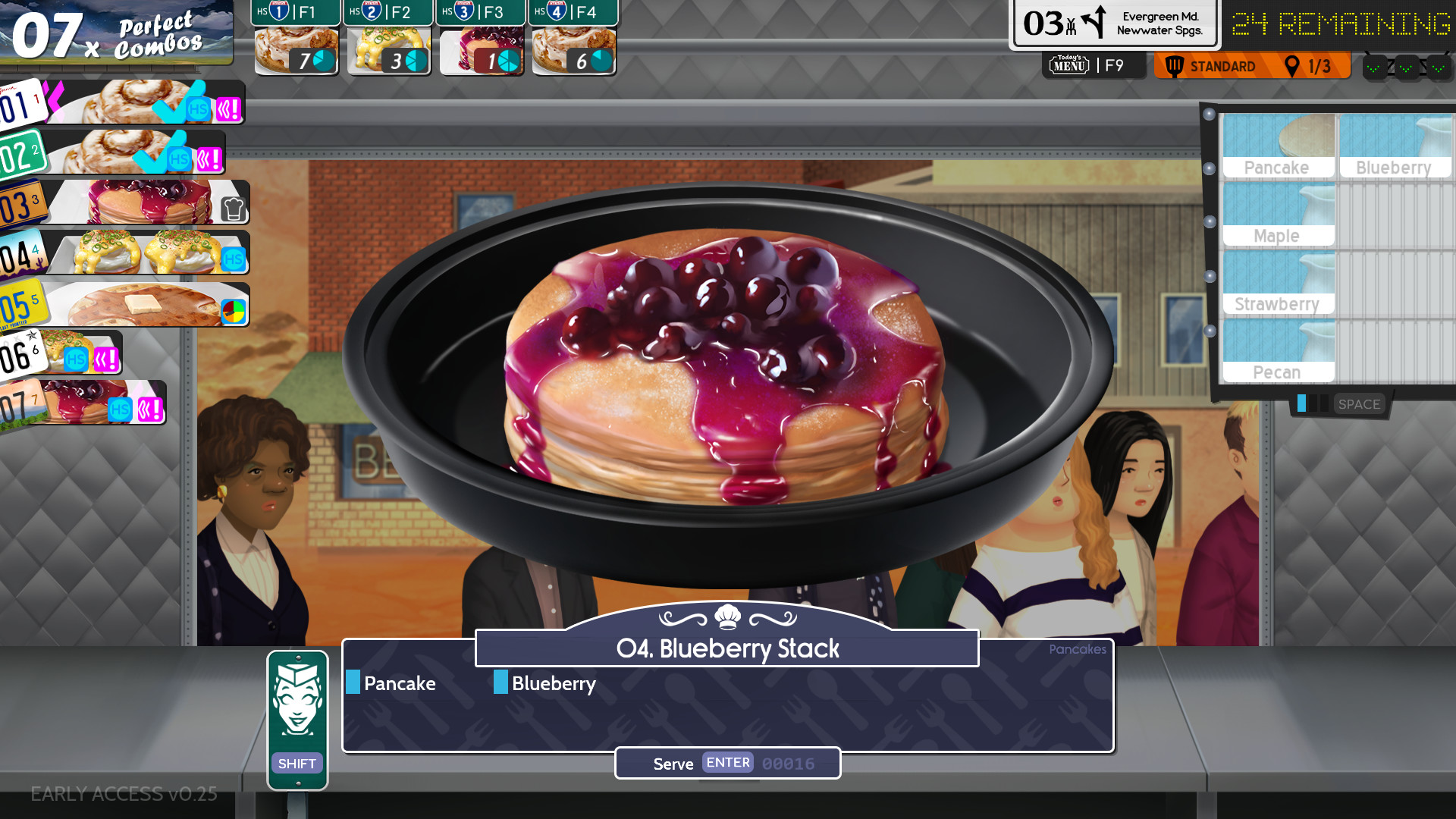
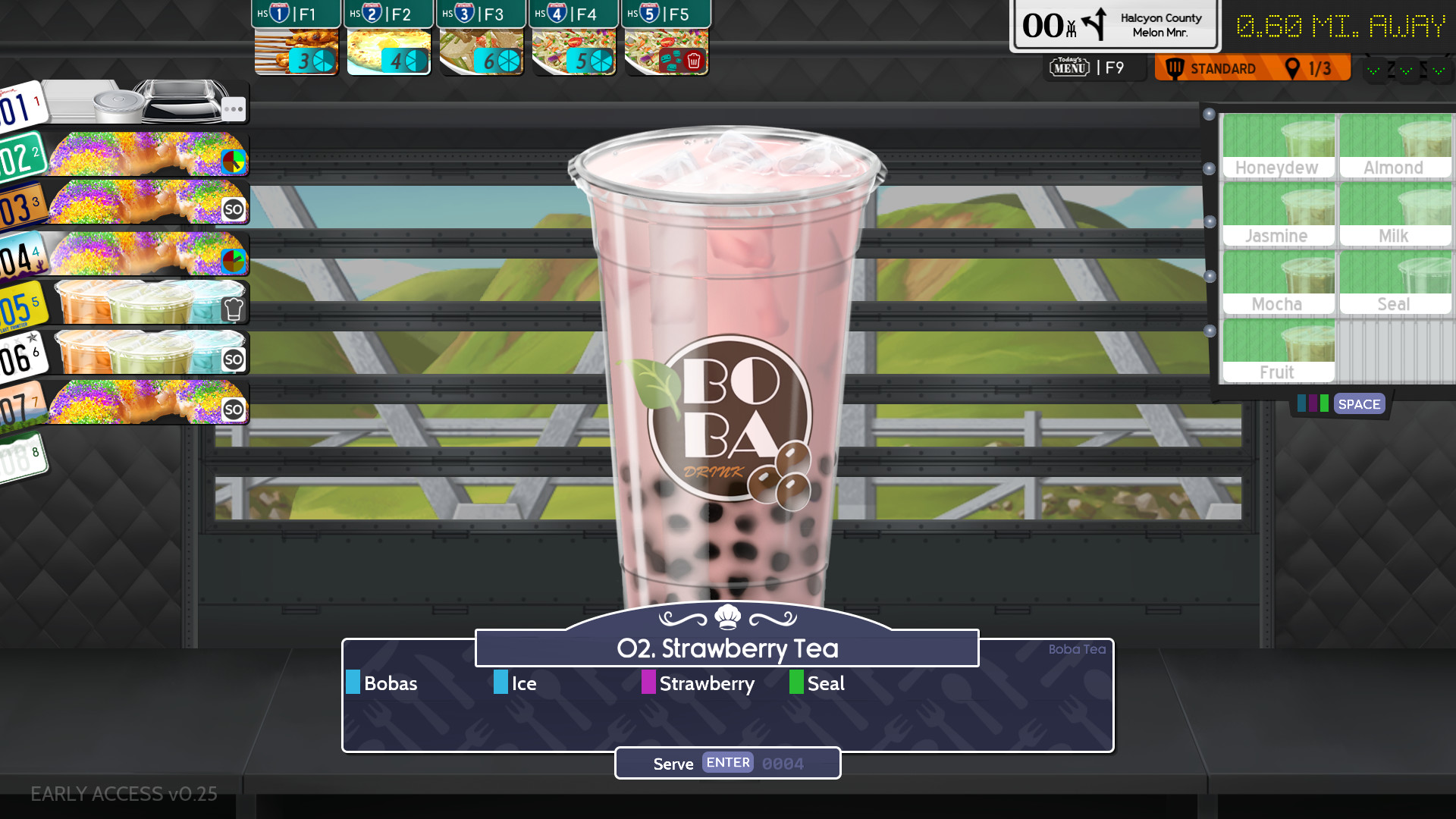
Fans of the earlier games will recognize everything that made them work: satisfying, food-art- rich dish preparation, a soundtrack that draws some of the most enthusiastic praise in this review's entire sample, and a road-trip framing device populated by voiced robot companions that add genuine comic relief between service rushes. Difficulty customization remains a real strength too — sliders and toggles let players tune pace and complexity, and several reviewers specifically credit this flexibility with letting them find a version of the game that worked for them even when the default experience didn't.
A wall that arrives immediately, not gradually
The complaint that dominates critical reviews is specific and consistent: unlike the first two games, which built difficulty gradually as players leveled up their restaurant and their own skills, CSD3 throws real chaos at players from the very first stop. Multiple longtime fans describe this as the single biggest departure from what made the earlier entries approachable, and the frustration isn't about the game being hard in the abstract — it's about the absence of the on-ramp the series used to provide.
Global achievement data confirms this at a scale beyond what individual reviews alone could show. Even the single most commonly earned achievement in the entire game clears only around a third of all owners, and the overwhelming majority of the achievement list sits under 5% completion — an unusually steep curve even among difficult games on this list. That's consistent with, though not an exact match for, one reviewer's specific claim that barely one in ten players ever reach the game's third town; this review can confirm the broader shape of that claim directly from Steam's own data even without verifying the precise figure.
Specific, fixable frustrations layered on top
Beyond the core difficulty complaint, several concrete quality-of-life gaps recur across reviews: no way to discard a dish mid-preparation when a mistake is made, no error log explaining what went wrong on a failed order, and abbreviated food and ingredient labels that become genuinely hard to parse at speed, especially combined with small on-screen text. Controller support, an advertised feature, is separately reported as broken in at least some chapters. None of these are difficulty complaints in disguise — they're specific, fixable interface gaps that reviewers say compound the challenge rather than test skill in an interesting way.
A franchise that keeps showing up for its players
Whatever the difficulty debate, Vertigo Gaming's track record since launch backs up reviewer descriptions of the studio as unusually dedicated. Steam Deck verification, continued hotfixes years after release, a tenth-anniversary celebration for the series as a whole, and a further spin-off title that has since reached its own 1.0 release all point to a developer still actively invested in this world rather than one that shipped and moved on.
How this entry sits against its own predecessors
Longtime players consistently frame their reaction to CSD3 in direct comparison to the first two games, and that context matters for anyone deciding whether to start here. The original Cook, Serve, Delicious! built progression around unlocking upgrades that gradually made service more manageable as a restaurant leveled up; the sequel restructured that system while keeping a comparable sense of building toward mastery. Reviewers describe CSD3 as breaking that pattern more sharply than either predecessor changed the formula from the game before it — several say this is the first entry where the core progression loop itself, not just the difficulty tuning, feels like it works against a new player's ability to learn at their own pace. That's a more specific and severe critique than simple difficulty preference, and it's worth understanding before assuming this entry offers a similar experience to whichever earlier game hooked you.
Finding your own difficulty inside a hard game
The community's practical response to the steep curve has been to lean hard on the customization sliders from the very first stop rather than treating them as an assist mode to fall back on later. Reviewers who found a version of the game that worked for them consistently describe deliberately tuning speed, order complexity and time pressure down well below the defaults, then gradually raising those settings as their own typing speed and pattern recognition improved — treating the sliders as the actual entry point to the game rather than a concession. That approach doesn't resolve the underlying complaint that the default experience undersells how much tuning is required, but it is the most consistently recommended fix reviewers themselves have converged on.
Verdict
Cook, Serve, Delicious! 3?! keeps the series' best qualities — its music, its charm, its genuinely inventive typing-based chaos — while removing the gentler on-ramp that made its predecessors approachable to a wider range of players. Steam's own achievement data confirms what a large share of reviewers already say: this is the hardest entry in the series by a wide margin, and most owners never see very far past its opening stretch. Go in leaning on the difficulty sliders from minute one, not as a fallback but as the intended way to play.
Pros and cons
Pros
- The soundtrack draws some of the most enthusiastic, specific praise in the whole review sample, repeatedly singled out as a series and genre highlight
- Difficulty customization options give players real control over pace and challenge, and several reviewers specifically credit this flexibility with making an otherwise brutal game approachable on their own terms
- The post-apocalyptic road-trip framing and voiced robot companion characters add genuine personality and humor that reviewers say elevates the game beyond a pure mechanical exercise
- Vertigo Gaming has supported the game for years after launch, including Steam Deck verification, continued patches, and franchise anniversary content, backing up reviewer descriptions of the studio as unusually diligent
- Food and restaurant art design remains a series strength, rendering dozens of dishes with enough visual charm to make the chaos genuinely appealing to look at even under pressure
Cons
- A large, detailed and independently corroborated body of reviews reports the difficulty ramps up dramatically faster than in the first two games, with chaos hitting hard from the very first stop rather than building gradually as players learn the systems
- Global achievement data shows an unusually steep completion curve even by this list's standards: the single most-earned achievement clears only around 35% of owners, and the large majority of achievements sit under 5%, consistent with reviewers' reports that very few players progress far into the game's later chapters
- Several reviewers report missing quality-of-life features they specifically wanted carried over or added, including no way to discard a dish being prepared and no error log explaining what went wrong on a failed order
- Abbreviated food and ingredient names, combined with small on-screen text, are reported as a genuine readability problem during the game's fastest sequences rather than a minor cosmetic quirk
- Controller support is reported as broken in at least some chapters despite being an advertised feature, a specific and concrete technical gap independent of the difficulty debate
Screenshots
-
Cook, Serve, Delicious! 3?!Image: Vertigo Gaming Inc. via Steam -
Cook, Serve, Delicious! 3?!Image: Vertigo Gaming Inc. via Steam -
Cook, Serve, Delicious! 3?!Image: Vertigo Gaming Inc. via Steam -
How the review scores each part of the gameWanderer Editorial -

At a glanceWanderer Editorial -
The short versionWanderer Editorial