Game review
Clover's Quadrants
8.5 / 10
- Developer
- Two-Headed Deer
- Publisher
- Two-Headed Deer
- Released
- 26 June 2026
- Platforms
- Windows, Linux
- Genre
- Indie
- Monetisation
- paid
- Players
- false
The short version
Biggest strengths
- An ingenious, genuinely novel core mechanic binding movement directions to inventory slots, with deep emergent interactions between item types
- A gorgeous, distinctive oil-painting-style visual identity that reviewers repeatedly singled out for praise
- A thoughtfully designed, layered hint system that gives meaningful nudges without simply solving puzzles for the player
Biggest weaknesses
- Genuinely tough difficulty that several reviewers found frustrating even while praising the design, especially in the game's later levels
- No traditional tutorial, meaning some mechanics require real trial and error to fully understand at first
- A short, snack-sized runtime that some value-focused buyers may want to weigh against the asking price
Who it's for: Sokoban and logic-puzzle fans who enjoy Patrick's Parabox-style ingenuity and don't mind a genuinely tough, hint-assisted difficulty curve
Our recommendation: recommended
8.5 / 10
Clover's Quadrants released on Steam on June 26, 2026, from developer Two-Headed Deer, a sokoban-style puzzle game built around a single, novel hook: each of the four cardinal movement directions is bound to its own inventory slot, and the items a player picks up along the way fundamentally change how movement in that direction behaves. Its 30-review English pool is unanimously Positive (30 up, 0 down, 100%), and the reviews are detailed and consistent enough that the perfect score reads as a genuine reflection of design quality rather than a small-sample fluke.
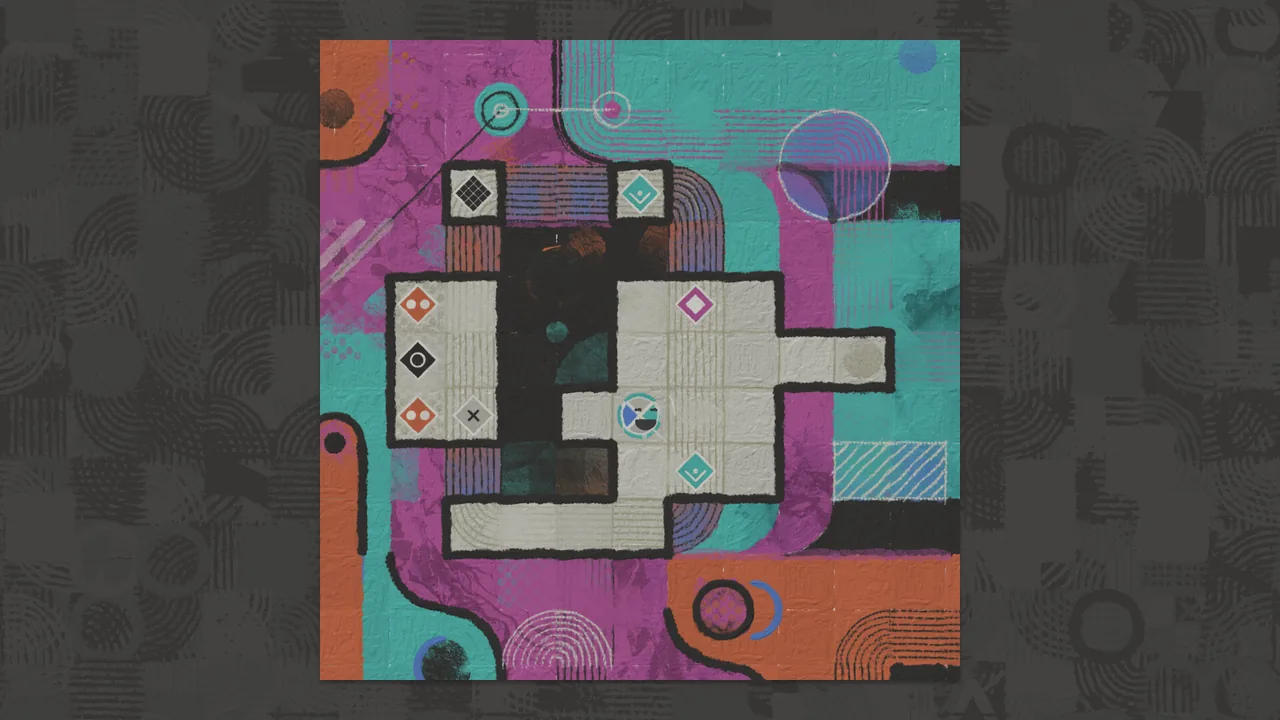
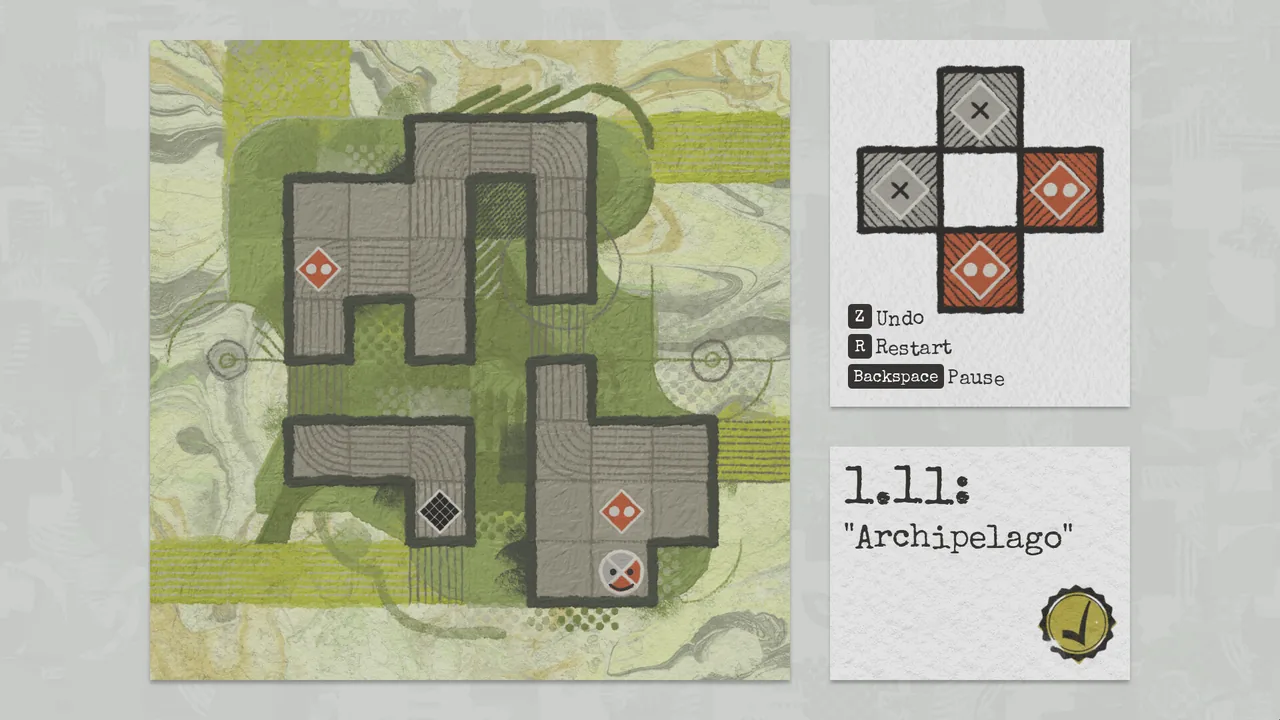
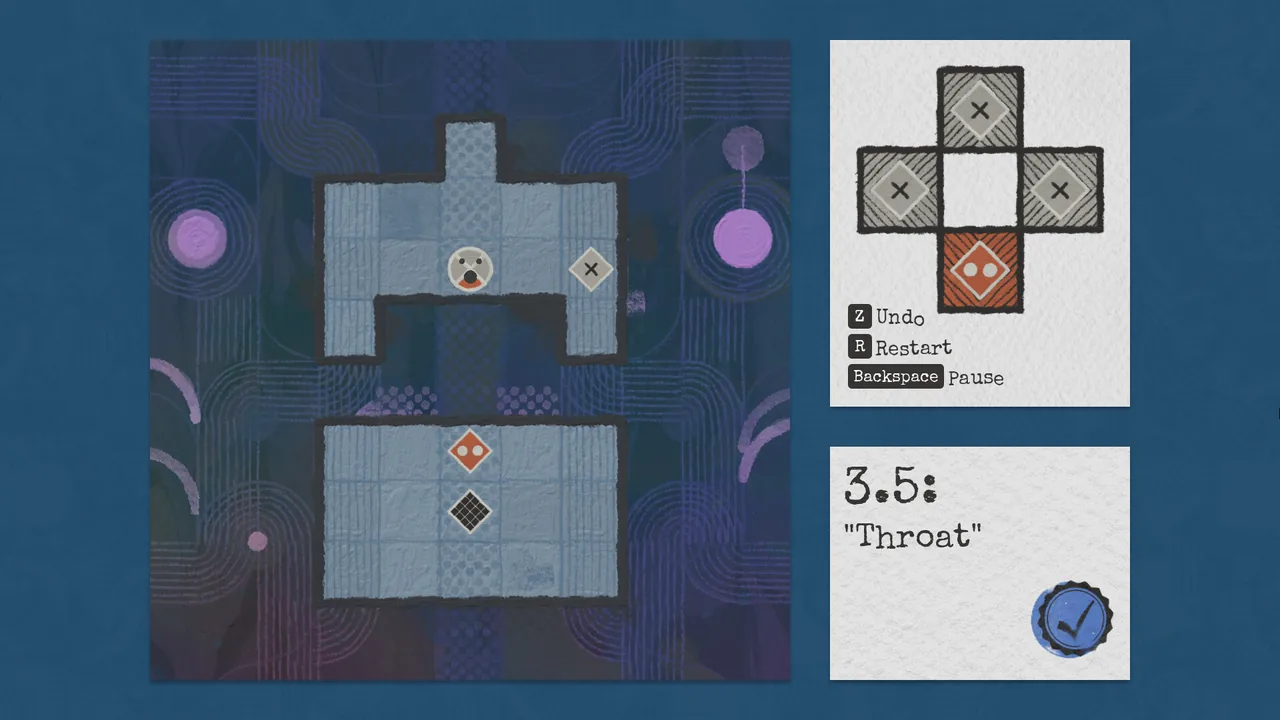
The core mechanic itself draws the pool's most detailed technical praise, with several reviewers walking through exactly how its systems interlock. One especially thorough review, written for the Thinky Games curation database, explained the fundamentals precisely: "each of the four directions is bound to an inventory slot that can be occupied by an item picked up in the course of the level, activating a specific ability when moving in the corresponding direction," citing an example item that makes a player "jump over one tile" when moving in its assigned direction, "useful for jumping across gaps" but also a frequent source of softlocks if mismanaged. Another reviewer described the resulting puzzle-solving process as almost purely cerebral: "because the rules stay the same and the challenge comes from the level layout and symbol placements... you can solve every level in your head before you even start moving, which is a lot of fun and eliminates any trial & error. It's all braincells and no guessing." A third reviewer, who called the game "excellent," specifically praised the emergent complexity that develops once several item types interact, singling out one mechanic they nicknamed the "'baby bird' tile" for how it "absorbs a tile and then barfs it out in a different direction."
Presentation earns praise nearly as consistent and specific as the puzzle design, with reviewers repeatedly describing the visual style in similar, admiring terms. One reviewer called the backgrounds "physical brush strokes on the screen, wonderful colors and abstract composition that fuses with the layout of the levels," while another described the overall aesthetic as having "a kind of dreamlike quality, especially when switching between levels." The Thinky Games review situated that art direction in context, noting the game grew from a two-year-old game jam submission called UDLR_Modify, with the finished release adding "a vast collection of unique backgrounds which feel like a blend of dreamy oil paintings and stylized schematics," alongside a reworked, expanded soundtrack of "contemplative ambient samples." Several reviewers specifically praised how the music and sound design change from chapter to chapter while staying tonally consistent with each area's visual identity.
Difficulty is the pool's most consistent point of tension, though notably one that reviewers frame as a feature they respect rather than a design failure. One reviewer wrote candidly, "very challenging, great art and music, simple rules... a great Sokoban-like game, although often very frustrating due to the high difficulty," while another described repeatedly getting "stuck on basically every level" but framed that as "a mark of a great puzzle game" once the solution eventually clicked after patient thought. A detailed review specifically praised how the game's hint system softens that difficulty without removing the challenge entirely, explaining it "gives you a snapshot of the locations of everything that serves as a stepping stone to the final solution," calling the implementation "brilliant" for nudging stuck players "down the right path" without simply solving the puzzle for them.
The absence of a traditional tutorial is a smaller, more divisive point among reviewers. One detailed review noted "there is no tutorial to hold your hand (might be a bad thing for others), so you have to figure the [mechanics] out" through direct experimentation, a design choice several other reviewers explicitly enjoyed, with one describing the recommended approach of "diving into the game with the suggested ethos of experimentation, trying to break stuff, building hunches around interactions and getting to see them pay off." That said, the same reviewer who flagged the missing tutorial was careful to note it as a genuine trade-off rather than an oversight, since the compact, consistent rule set the game builds around makes pure experimentation a viable path to understanding for most players.
A couple of smaller, more personal notes round out the pool's feedback. One reviewer described disabling the game's animated reactions to failed moves because watching the protagonist, Clover, visibly upset by accidental wall-bumps "made me feel bad," comparing the feeling to "the dentist girl from Finding Nemo," a small but telling sign of how much personality the game's minimal character design carries even in a mechanically-focused puzzle game. Another reviewer specifically praised the game's accessibility features around session length, calling it "the perfect puzzle game for quick 15-minute sessions" thanks to clearly highlighted mechanic-teaching levels that make it easy to refresh understanding after a break.
Given its genuinely inventive core mechanic, gorgeous and distinctive presentation, and a difficulty curve reviewers consistently described as tough but fair, Clover's Quadrants is an easy recommendation for sokoban and logic-puzzle fans, particularly anyone who enjoyed the rule-bending ingenuity of games like Patrick's Parabox. Players who want a gentler introduction or a longer campaign for the asking price should be aware of the real challenge and snack-sized scope reviewers describe, but for the specific pleasure of untangling an elegant, tightly-designed puzzle system, this is close to a standout release for the genre in 2026.
Pros and cons
Pros
- An ingenious, genuinely novel core mechanic binding movement directions to inventory slots, with deep emergent interactions between item types
- A gorgeous, distinctive oil-painting-style visual identity that reviewers repeatedly singled out for praise
- A thoughtfully designed, layered hint system that gives meaningful nudges without simply solving puzzles for the player
- An ambient, contemplative soundtrack that reviewers said perfectly complements the game's meditative puzzle-solving flow
Cons
- Genuinely tough difficulty that several reviewers found frustrating even while praising the design, especially in the game's later levels
- No traditional tutorial, meaning some mechanics require real trial and error to fully understand at first
- A short, snack-sized runtime that some value-focused buyers may want to weigh against the asking price
- Character reactions to failed moves upset at least one reviewer enough to disable the feature entirely
Screenshots
-
Clover's QuadrantsImage: Two-Headed Deer via Steam -
Clover's QuadrantsImage: Two-Headed Deer via Steam -
Clover's QuadrantsImage: Two-Headed Deer via Steam