Game review
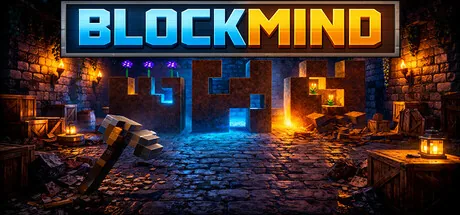
Blockmind
6 / 10
- Developer
- Quacky Games
- Publisher
- Quacky Games
- Released
- 17 June 2026
- Platforms
- Windows
- Genre
- Casual, Indie, Puzzle
- Monetisation
- paid
- Players
- false
The short version
Biggest strengths
- Genuinely relaxing, timer-free pacing that lets players work through 3D spatial puzzles at their own pace without pressure
- Clean, minimalist voxel art style that reviewers consistently describe as calming and stylish
- Puzzles progress from simple teaching examples into genuinely mind-bending spatial challenges, rewarding patient, careful thinking
Biggest weaknesses
- Multiple reviewers describe the campaign as very short, with one reporting finishing the entire thing in around five minutes
- Several critical reviewers compare the voxel aesthetic unfavorably to Minecraft, calling the game a thin "parody" that doesn't deliver the depth the comparison implies
- At least one reviewer reported control issues alongside "tedious" puzzle design that undercut the game's promising premise
Who it's for: Fans of quiet, timer-free spatial-logic puzzle games who want a short, meditative voxel-building experience at an impulse-buy price, and who don't need a long campaign or deep mechanical variety to feel satisfied
Our recommendation: recommended with caveats
6 / 10
Puzzles with no clock ticking
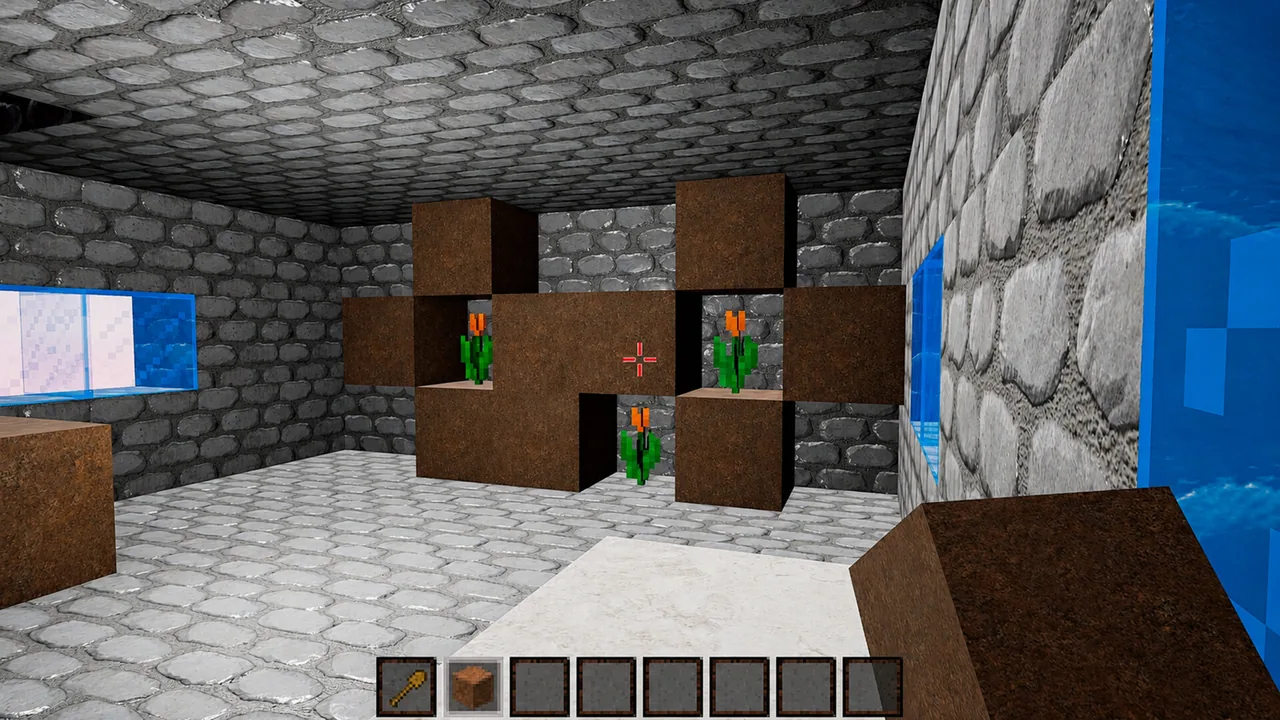
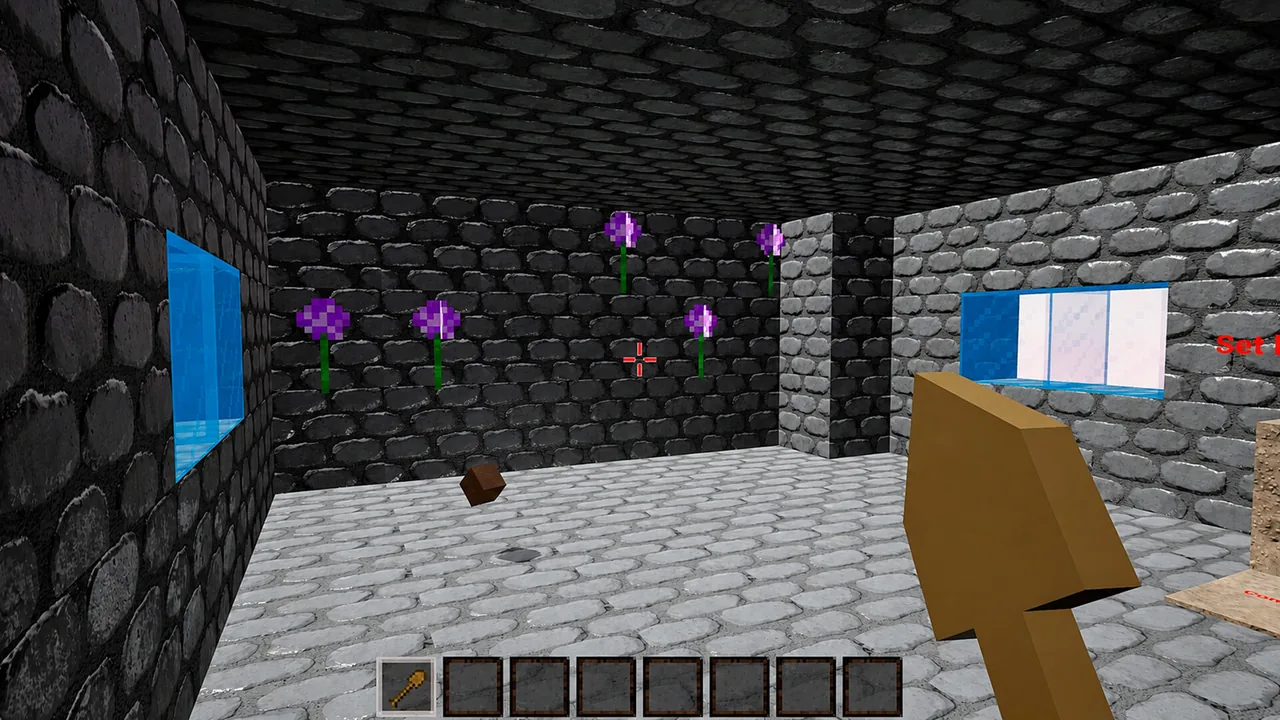
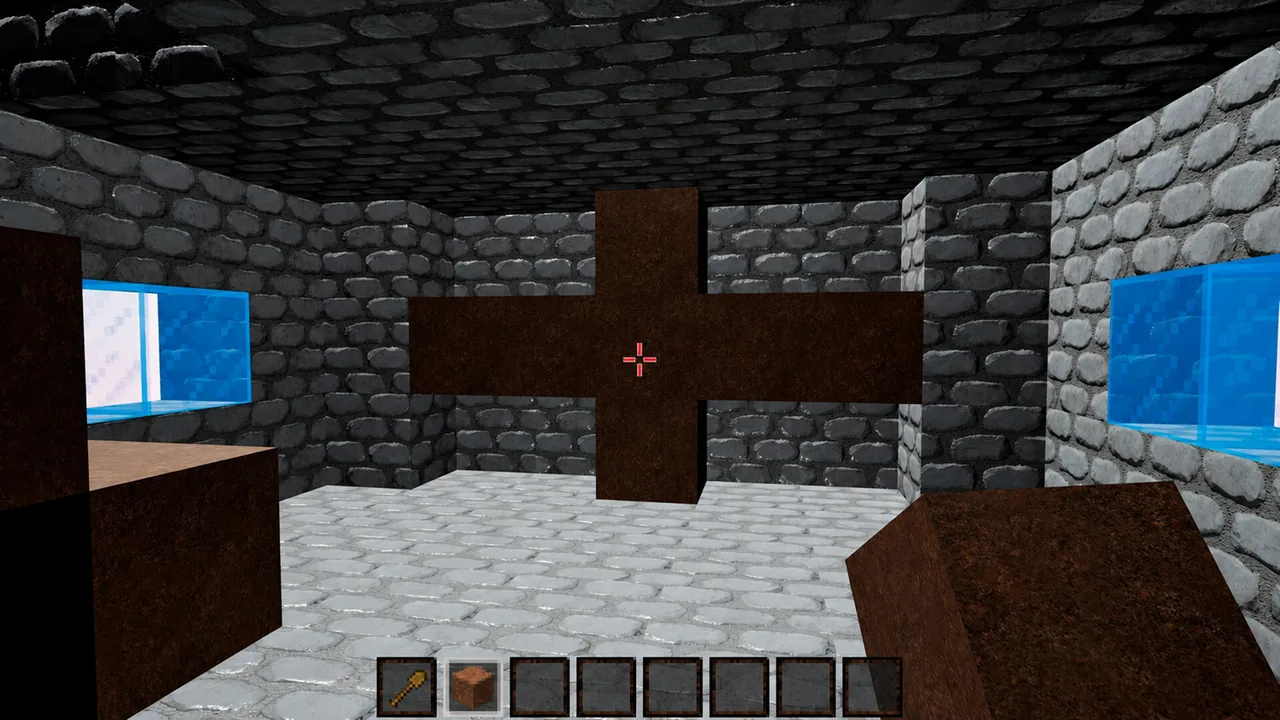
Blockmind's pitch is simple: reconstruct target shapes out of scattered voxel blocks, with no timer, no score pressure, and no penalty for taking your time to work out the spatial logic. Reviewers who connected with that premise describe it as an unusually calming take on a genre that often leans on stress and speed to generate tension. One reviewer called it "a perfectly cozy brain-teaser," writing that "rebuilding shapes and figuring out how they perfectly fit together has been incredibly satisfying," while another framed the appeal even more directly: "the lack of timers allows you to complete levels at a comfortable, meditative pace." A third reviewer described the puzzles as forcing genuine "3D thinking and planning ahead," praising the "minimalist voxel style" for looking "clean and stylish" alongside the low-pressure design.
A puzzle curve that earns its difficulty
Multiple reviewers specifically praised how the game paces its own escalation, starting with simple teaching puzzles before layering on real spatial complexity. One wrote that "the puzzles start easy to teach you the basics, then twist your mind in new ways," calling it "a game that rewards patience and clear thinking." Another reviewer, initially skeptical, reported getting genuinely hooked: "I thought it would be lame, but it turned out to be a blast. My brain was frying at times, but I really enjoyed it." That's a meaningful signal for a puzzle game specifically, since a curve that ramps up too slowly or too abruptly is one of the more common ways the genre loses players partway through.
Too short for some, exactly right for others
The most consistent critical complaint concerns the campaign's length. One reviewer reported finishing the entire game in around five minutes, writing bluntly that "there's nothing more to do, all there is is a couple of stupid tasks to complete and nothing else is possible." Another confirmed the same concern in less extreme terms, calling the game "insanely short" while still noting "some of the puzzles are annoying." That runs directly counter to the positive reviews that praised the escalating puzzle curve, suggesting the amount of content on offer right now, even if well-designed, simply isn't enough to satisfy every buyer, particularly given this is still an early Early Access build with room to grow.
The Minecraft comparison cuts both ways
Blockmind's voxel-block art style invites an obvious visual comparison to Minecraft, and several critical reviewers leaned into that comparison unfavorably. One dismissed it outright as "some kind of unsuccessful parody of Minecraft, heavily cut down," while another wrote it off as "an empty shell from Early Access. No interesting mechanics, just moving cubes back and forth." That reaction seems to stem from expecting a sandbox-building experience rather than the tightly scoped spatial-logic puzzler Blockmind is actually trying to be; reviewers who approached it on its own terms as a puzzle game rather than a Minecraft-adjacent sandbox consistently reported a much more positive experience, which suggests some of the negative reception is a mismatch of expectations rather than a flaw in the execution itself.
Rough edges reviewers flag alongside the short runtime
Beyond length and genre-comparison complaints, a smaller number of reviewers reported more concrete friction. One cited "bad controls" alongside "tedious riddles," concluding that "the hyped potential is lost," while another simply stated the game "didn't live up to my expectations" without further detail. These are a minority position relative to the broader Very Positive score, but worth flagging as a real, if less common, experience for buyers sensitive to control feel in a genre that depends on precise spatial manipulation.
An early, unproven Early Access state
Unlike several other Early Access titles reviewed this cycle, Blockmind currently has no published patch notes or developer news posts at all, meaning its Early Access roadmap is effectively unproven so far. One reviewer specifically credited the developer's community engagement as a reason for optimism, writing that "the devs are transparent about the Early Access process and actively seek community feedback to polish mechanics and balance," and calling it "a solid choice at this price" while acknowledging it's still evolving. That's a reasonable read of a $1.99 puzzle game still finding its footing, but buyers frustrated by the current short length should treat any expansion as a hoped-for outcome rather than a confirmed one until the developer actually ships something.
A small, focused entry in a genre full of bigger promises
Spatial-logic puzzlers rarely chase mass-market attention the way sandbox or action games do, and Blockmind's low price and small scope reflect that reality honestly rather than overselling itself with feature lists it can't yet back up. Compared to bigger, more established 3D puzzle franchises that build entire worlds and story campaigns around their mechanics, Blockmind reads as a much narrower, more disciplined proposition: one core idea, executed cleanly, sold cheaply, without padding. That's a reasonable strategy for a first Early Access release from a small team, even if it means the current criticism about thin content is, at least for now, a fair reflection of exactly how much game currently exists rather than a symptom of poor design.
Verdict
Blockmind delivers a genuinely relaxing, well-paced spatial-logic puzzle experience for the hours it lasts, with a clean voxel aesthetic and a puzzle curve that several reviewers found satisfying to climb. Its problems are mostly about scope rather than execution: a short campaign that at least one reviewer burned through in minutes, a Minecraft comparison that sets up unfair expectations for buyers expecting a sandbox rather than a tightly designed puzzler, and an Early Access roadmap that's currently unproven by any actual patch history. Worth the low asking price for puzzle fans who want a short, calm, timer-free brain-teaser and are comfortable buying into an early-stage Early Access title on potential; those who need a substantial campaign or a guarantee of near-term content updates should wait and watch for its first real patch before buying in.
Pros and cons
Pros
- Genuinely relaxing, timer-free pacing that lets players work through 3D spatial puzzles at their own pace without pressure
- Clean, minimalist voxel art style that reviewers consistently describe as calming and stylish
- Puzzles progress from simple teaching examples into genuinely mind-bending spatial challenges, rewarding patient, careful thinking
- A very low, impulse-buy price point, and a developer reviewers describe as transparent and actively soliciting community feedback during Early Access
Cons
- Multiple reviewers describe the campaign as very short, with one reporting finishing the entire thing in around five minutes
- Several critical reviewers compare the voxel aesthetic unfavorably to Minecraft, calling the game a thin "parody" that doesn't deliver the depth the comparison implies
- At least one reviewer reported control issues alongside "tedious" puzzle design that undercut the game's promising premise
- Very early Early Access state with no news updates yet, meaning the promised post-launch content and balance passes are still entirely unproven
Screenshots
-
BlockmindImage: Quacky Games via Steam -
BlockmindImage: Quacky Games via Steam -
BlockmindImage: Quacky Games via Steam