
Game review
Cat Squeeze
7.5 / 10
- Developer
- Cattery Studio
- Publisher
- Pone Games
- Released
- 30 June 2026
- Platforms
- Windows, macOS, Linux
- Genre
- Adventure, Casual, Indie, Strategy
- Monetisation
- paid
- Players
- false
The short version
Biggest strengths
- A clever core mechanic that puts a genuine, distinctive spin on classic Sokoban box-pushing puzzles, expanded steadily through new gadgets across different zones
- A well-calibrated difficulty curve that reviewers repeatedly praised as intuitive to learn without ever feeling too easy or punishingly hard
- A charming, characterful protagonist and cute hand-drawn presentation matched by a relaxing soundtrack
Biggest weaknesses
- The undo function reportedly doesn't work after a full level reset, a minor but specifically flagged quality-of-life gap
- A reported frame-rate dip specifically during the game's opening cutscene, even on capable PC hardware
- A very small review pool at launch, meaning broader consensus on the game's weaknesses is still limited
Who it's for: Sokoban and box-pushing puzzle fans looking for a well-calibrated difficulty curve and a charming, cat-themed presentation, especially those who enjoyed the free demo
Our recommendation: recommended
7.5 / 10
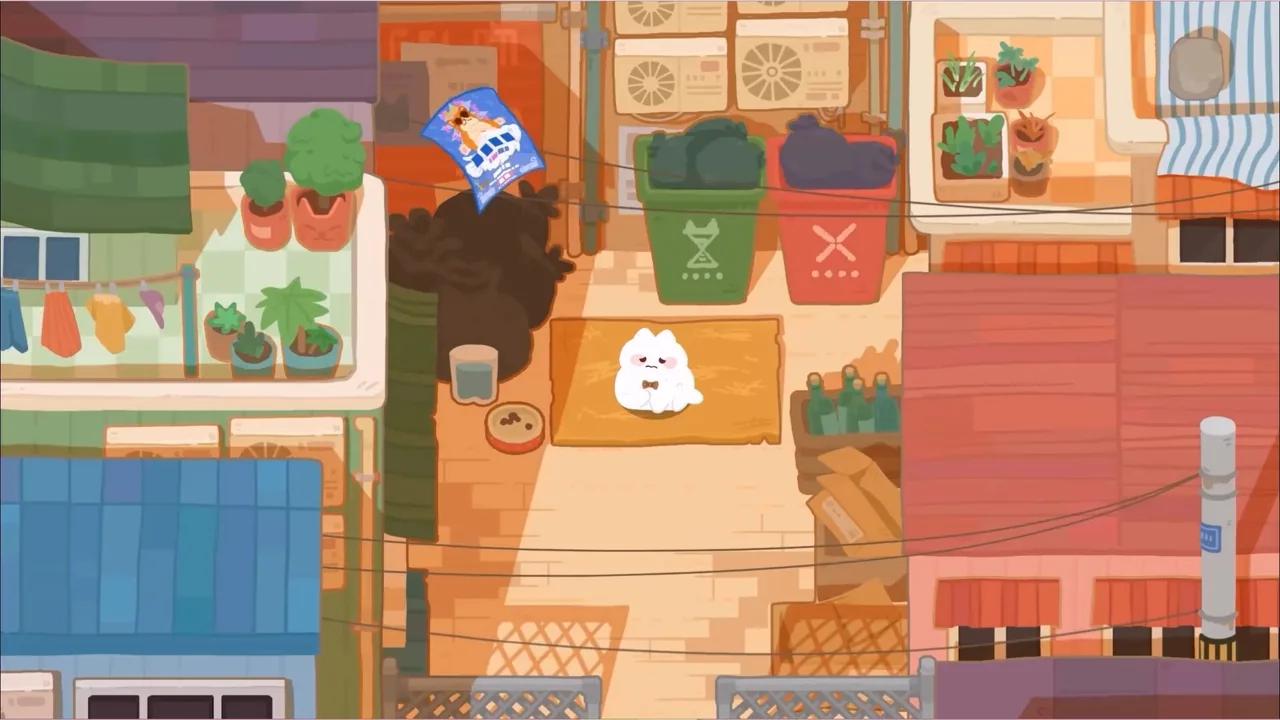
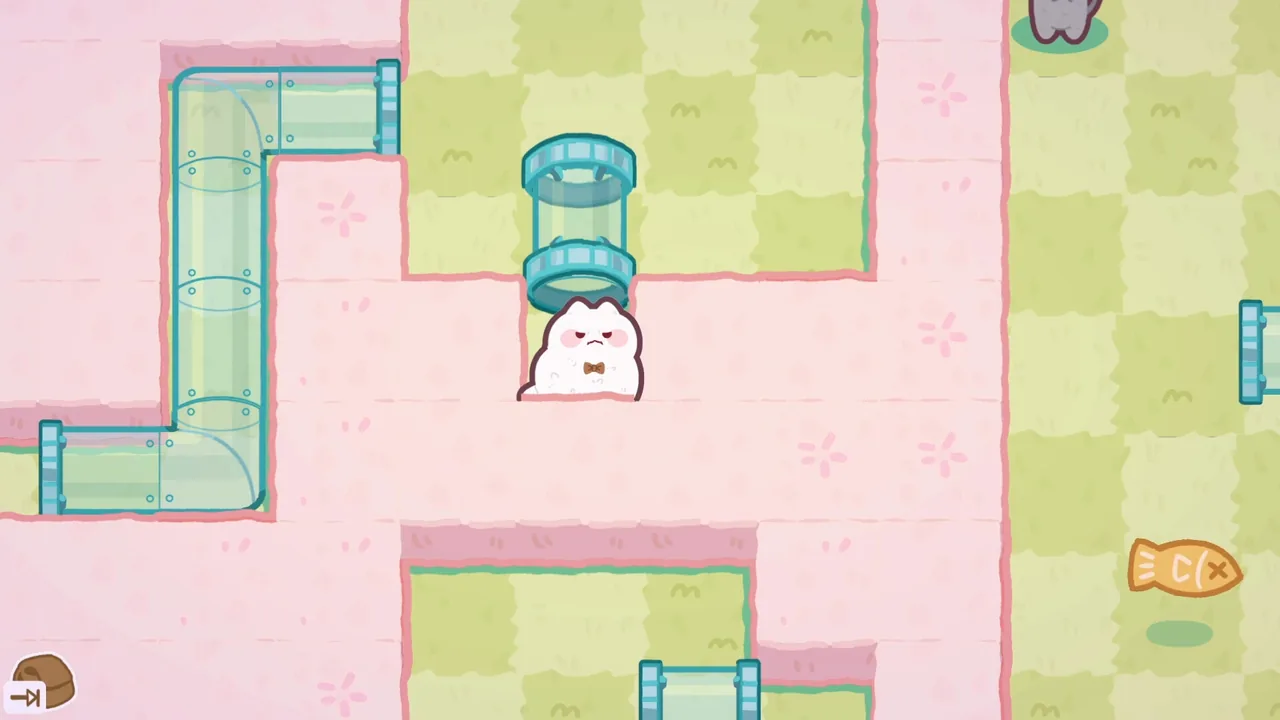
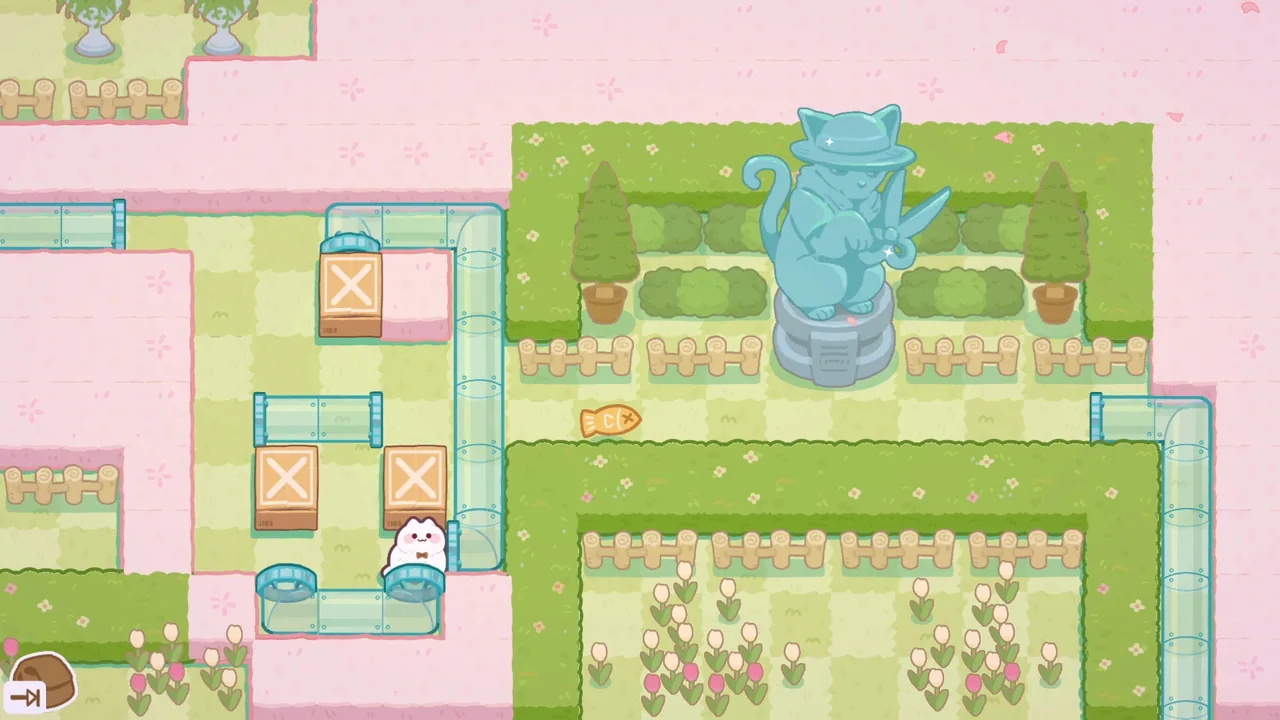
Cat Squeeze released on Steam on June 30, 2026, from developer Cattery Studio and publisher Pone Games, a cozy, hand-drawn puzzle game that puts a cat-themed spin on classic Sokoban box-pushing mechanics: guide kitten Coco through the "Cat God Trial," pushing boxes, slinking through pipes, and blasting through maze walls to collect endless dried fish, with a tiny mouse companion squeaking tips along the way. Its English review pool is small at just 9 reviews, all positive, but the reviews themselves are detailed enough, including two substantial long-form write-ups, to offer a genuinely useful picture of the game's strengths and rough edges.
The core mechanic draws the pool's most specific praise, with reviewers consistently framing it as a real, distinctive twist on a well-worn puzzle genre rather than a simple reskin. One detailed review put it directly: "the premise is funny and allows for a clever core mechanic that puts its own spin on the base sokoban style gameplay," praising how "additional gadgets" are introduced steadily across different areas to keep the puzzle logic expanding rather than repeating. Another reviewer went further, calling it "a truly amazing puzzle game" and specifically praising how "the puzzles and new mechanics are graded in such a way as to make learning them feel intuitive," a difficulty-curve compliment echoed by a third reviewer who said the puzzles sit at "the perfect level of difficulty," neither "too easy" nor hard enough to "squeeze your brain cells until they explode."
Presentation and tone earned similarly consistent, if shorter, praise across the pool. One reviewer summarized it simply: "it's cute. It's got cats. It's got a relaxing soundtrack. It's got plenty of interesting puzzles," while another specifically called out protagonist Coco as "surprisingly characterful," a notable compliment for a game built around a fairly simple box-pushing loop. A separate reviewer praised the collectible dried fish reward structure as a genuinely motivating hook, specifically highlighting a backtrack-moves feature as "super helpful for when you almost figured it out but not quite," a quality-of-life touch that made experimentation feel low-risk rather than punishing.
The pool's most detailed review also offers the clearest sense of the game's actual content volume and the closest thing to a substantive critique available in this small sample. That reviewer reported rolling credits and reaching a 57% completion rate after 8.3 hours of play, including previously trying the game's demo, describing the mandatory story puzzles as appropriately challenging with "more optional hard levels" available beyond them, giving the game real staying power for a $9.99 indie puzzler. Their specific criticism was narrow but concrete: "undo should work on resets too," flagged as a minor gap in an otherwise well-designed set of quality-of-life features, alongside a reported frame-rate dip specifically during the game's opening cutscene that didn't recur during actual gameplay, even on capable PC hardware. That reviewer gave the game a 4-out-of-5 verdict, calling it "mostly flawless in what it sets out to achieve."
It's worth being transparent about what a nine-review pool can and can't tell us. This is a small enough sample that broader disagreements or edge-case frustrations simply haven't had the chance to surface yet the way they have on titles with larger audiences, and the complete absence of negative reviews should be read as an early, encouraging signal rather than a guarantee that every player's experience will be this smooth. That said, the consistency and specificity across even this small pool, several independent reviewers converging on the same praise for the difficulty curve, the core mechanic's originality, and the game's charm, is a meaningfully stronger signal than the same review count would carry for a less detailed, more reflexively positive sample.
It's also worth noting the range of hardware reviewers reported playing on, since it speaks to the game's technical approachability beyond a standard desktop setup. One reviewer specifically mentioned completing the game on a Meta Quest 3 headset using GameNative, an Android-compatibility layer that lets certain PC games run on standalone VR hardware, and reported the experience ran smoothly outside of that isolated opening-cutscene frame-rate dip. That's not an officially supported platform, and prospective buyers shouldn't expect guaranteed compatibility through unofficial tools like that, but it's a useful data point suggesting the game's relatively simple 3D presentation is lightweight enough to run comfortably across a wider range of hardware than a typical $9.99 puzzle release, which should translate into a stable, hitch-free experience for players on conventional Windows, macOS, or Linux desktops as well.
It's also worth situating Cat Squeeze against the broader wave of cozy, animal-themed indie puzzle games that have become common on Steam over the past few years. Plenty of titles in that space lean almost entirely on their aesthetic, cute character art and a soothing soundtrack layered over puzzle mechanics borrowed wholesale from decades-old genre templates, with little attention paid to whether the puzzles themselves are actually well constructed. What distinguishes Cat Squeeze from that crowd, based on the pool available here, is that reviewers specifically praised the puzzle design itself rather than just the coat of paint on top of it: the steady introduction of new gadgets, the deliberate difficulty pacing, and the backtrack-moves quality-of-life feature all point to a developer who treated the Sokoban mechanics as the actual product rather than as a vehicle for cute character art. That's a meaningfully different proposition than a game that's merely pleasant to look at, and it's the reason this small review pool reads as more credible than a similarly sized pool for a less mechanically ambitious cozy title would.
At $9.99, Cat Squeeze looks like a well-crafted, thoughtfully designed puzzle game that delivers real substance for its price, with a distinctive mechanical hook and a difficulty curve reviewers repeatedly singled out as exactly right for the genre. Existing Sokoban fans and anyone who enjoyed the game's demo are the clearest audience here, and the reported issues, a narrow undo gap and an isolated cutscene frame-rate dip, are minor enough that they shouldn't factor heavily into a purchase decision. As the review pool grows, it will be worth revisiting whether this early, uniformly positive reception holds, but for now, this is an easy recommendation for puzzle fans drawn to its premise.
Pros and cons
Pros
- A clever core mechanic that puts a genuine, distinctive spin on classic Sokoban box-pushing puzzles, expanded steadily through new gadgets across different zones
- A well-calibrated difficulty curve that reviewers repeatedly praised as intuitive to learn without ever feeling too easy or punishingly hard
- A charming, characterful protagonist and cute hand-drawn presentation matched by a relaxing soundtrack
- Substantial content for a small indie puzzle game, with mandatory story puzzles plus additional optional hard levels for completionists
Cons
- The undo function reportedly doesn't work after a full level reset, a minor but specifically flagged quality-of-life gap
- A reported frame-rate dip specifically during the game's opening cutscene, even on capable PC hardware
- A very small review pool at launch, meaning broader consensus on the game's weaknesses is still limited
- Niche puzzle-genre appeal that may not draw in players without existing interest in Sokoban-style mechanics
Screenshots
-
Cat SqueezeImage: Pone Games via Steam -
Cat SqueezeImage: Pone Games via Steam -
Cat SqueezeImage: Pone Games via Steam