
Game review
All That Time
6.5 / 10
- Developer
- Ouzzie
- Publisher
- Ouzzie
- Released
- 10 June 2026
- Platforms
- Windows
- Genre
- Adventure, Casual, Indie
- Monetisation
- paid
- Players
- false
The short version
Biggest strengths
- A genuinely distinctive, striking Frutiger Aero visual identity that multiple reviewers said they hadn't seen recreated in any other game
- A soothing, surreal soundtrack that reviewers repeatedly praised for matching the dreamlike, liminal atmosphere
- Environmental puzzles that reward careful exploration of each space rather than punishing players for missing details
Biggest weaknesses
- No save system at all, forcing players who quit mid-session to restart the entire game from the beginning
- Deliberately slow default movement speed that a large share of reviewers found tedious rather than atmospheric
- A poorly implemented French translation that multiple reviewers said broke puzzle logic and immersion
Who it's for: Fans of liminal spaces and Frutiger Aero nostalgia who can tolerate slow movement, rough translations, and a total lack of save points in a solo-developed debut
Our recommendation: recommended
6.5 / 10
All That Time released on Steam on June 10, 2026, from solo developer Ouzzie, a psychological horror experience that sends players wandering through unstable dreamlike memories, solving environmental puzzles across a series of disconnected liminal-space levels to piece together fragmented lives inside what the store page calls "a collapsing liminal system." Its 27-review English pool lands at Positive (22 up, 5 down, 81%), and the reviews are unusually consistent about both the game's genuine visual achievement and a cluster of rough, first-release-quality problems that repeatedly cost it higher scores.
The single most consistent point of praise, raised independently across nearly every review regardless of overall verdict, is the game's Frutiger Aero aesthetic, a early-2000s tech-optimism visual style rarely attempted in games at all. One reviewer wrote plainly, "I felt like a kid again. I was literally feeling the same thing when I first saw these themes on Windows XP and 7," while another called it "the first game that I've played that has a similar aesthetic," adding that "it's kind of crazy that Frutiger Aero is now 'retro.'" A third reviewer, writing in Italian, described the experience as "davvero molto immersivo e stupendo" ("really very immersive and wonderful"), specifically praising how the liminal environment felt almost suffocating in an effective way, and expressed real optimism for the developer's future given this was Ouzzie's first game. Even one of the pool's more critical reviewers, who ultimately recommended against the game, still conceded it delivered "views and levels" that are "breath taking."
Beyond pure visuals, several reviewers praised the puzzle and exploration design specifically for rewarding attentiveness rather than punishing it. One reviewer, writing a cautious recommendation, said they "especially liked the puzzles at the end of the first two stages, because you have to pay attention to your surroundings," calling it "an interesting short game" that felt "impressive" for a solo developer, while flagging that the third stage "feels more like a walking simulator and features no puzzles" and that the disconnected stages made the whole feel "a bit disconnected." A longer, detailed review agreed that the puzzles "encourage the player to thoroughly explore each space, which ensured I didn't miss any of the cool details," while a third called the game's difficulty and story "perfectly difficult" and "flawless" in an enthusiastic short review. The soundtrack draws its own specific, repeated praise, with reviewers describing it as "really nice and soothing" and crediting the "airport soundtrack, lighting, and vibe" for making the game's surreal atmosphere land.
Where the pool turns sharply and repeatedly critical is on the total absence of a save system, the single most damaging and widely reported flaw across both positive and negative reviews. One reviewer's entire critical review centered on this: "graphically impressive and good potential with the Inception-esque story but painfully slow movement combined with no save points makes it impossible - avoid until this is patched imo." Another wrote in frustration, "it's amazing game but i am not able to save my game, everytime i play and have to leave the game in between, i get to the starting point. please add a save game feature too." Even reviewers who ultimately recommended the game flagged this as a serious problem rather than a minor inconvenience, with one noting bluntly, "remember that game progress does not save on exit, so if you quit your game halfway through the story, you will have to try again," describing having lost nearly-complete progress this way themselves.
Movement speed is the pool's second major, closely related complaint, compounding the save-system problem by making any forced restart genuinely punishing rather than a minor setback. One detailed review argued "the sprinting needs to be faster, and there NEEDS to be a sprint-toggle," explaining that "in these kinds of games, its kinda unacceptable to expect people to hold shift for 99% of the gameplay," while another simply advised the developer to "MAKE FASTER SPRINTING," calling the pace "painfully slow" and "just annoying." A third, more critical reviewer connected the two complaints directly, describing how "painfully slow sprinting and lack of emersion" eventually caused them to quit before finishing, despite otherwise praising the game's visuals as "stunning." Notably, at least one detailed reviewer acknowledged a June 11 update had already improved movement speed and added an FOV option relative to an earlier build, evidence the developer is actively responding to this exact criticism.
Translation quality forms a third, more localized but still serious complaint thread, concentrated among the pool's non-English-speaking reviewers. One reviewer, writing a lengthy and detailed critical review, reported that "the french translation is poor, I guess machine generated," giving a specific example where a French end-of-level question asking what puzzle the player experienced was mistranslated into something closer to "what difficulties have you met," concluding that mistranslation could make a level "impossible to beat" since it broke the expected quiz logic entirely. That same reviewer also reported the game defaulting to French-language text even when the English option was selected, requiring players to toggle languages back and forth to fix it, and noted settings failing to persist between sessions as a separate, compounding annoyance.
A smaller number of reviewers raised more minor but still notable technical rough edges: one flagged the game wasn't optimized for widescreen monitors, producing persistent black bars and text rendering glitches; another reported a UI bug where a collected item's reference sheet and the pause menu became stuck on-screen simultaneously, requiring a level restart to fix; and one reviewer noted that a handful of the game's readable in-game notes "felt slightly AI-generated in tone," a criticism offered as constructive feedback on writing quality rather than a broader accusation, and paired in the same review with an enthusiastic overall recommendation.
Weighing all of this together, what stands out most about the All That Time review pool is how consistently reviewers on both sides of the recommendation line describe the same underlying tension: a genuinely striking, distinctive visual and atmospheric achievement undercut by exactly the kind of rough edges expected from a debut solo project, an absent save system chief among them. Several reviewers explicitly extended patience on this basis, framing their criticism as constructive feedback for a developer they wanted to see succeed rather than a dismissal of the work itself, and the documented June 11 patch addressing movement speed suggests that goodwill is being rewarded with active support. For players drawn specifically to liminal-space horror and Frutiger Aero nostalgia who can tolerate a short runtime and are willing to play in a single sitting given the lack of saves, All That Time is a worthwhile, if imperfect, recommendation; players who need basic quality-of-life features like save points and adjustable pacing should wait for further patches before diving in.
Pros and cons
Pros
- A genuinely distinctive, striking Frutiger Aero visual identity that multiple reviewers said they hadn't seen recreated in any other game
- A soothing, surreal soundtrack that reviewers repeatedly praised for matching the dreamlike, liminal atmosphere
- Environmental puzzles that reward careful exploration of each space rather than punishing players for missing details
- An unusually accomplished, ambitious debut for a solo developer, with an active post-launch update already addressing some early complaints
Cons
- No save system at all, forcing players who quit mid-session to restart the entire game from the beginning
- Deliberately slow default movement speed that a large share of reviewers found tedious rather than atmospheric
- A poorly implemented French translation that multiple reviewers said broke puzzle logic and immersion
- Settings such as FOV, sensitivity, and resolution reportedly do not persist between play sessions
Screenshots
-

All That TimeImage: Ouzzie via Steam -
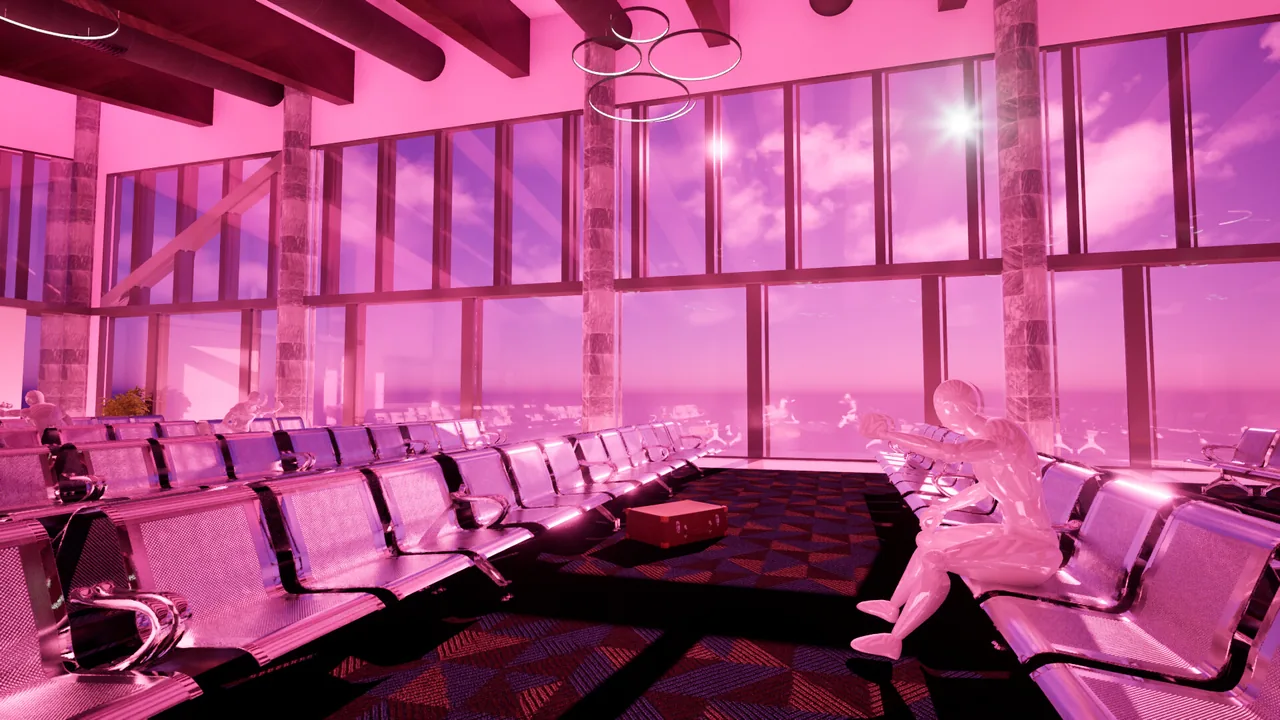
All That TimeImage: Ouzzie via Steam -

All That TimeImage: Ouzzie via Steam