Game review
Cities: Skylines II
6 / 10
- Developer
- Colossal Order (2023–2025), Iceflake Studios (2026–present)
- Publisher
- Paradox Interactive
- Released
- 24 October 2023
- Platforms
- Windows
- Genre
- City Builder
- Monetisation
- Full premium purchase, plus a substantial number of separately sold Creator Pack DLCs and a paid Bridges & Ports expansion pack; no in-app purchases affecting core gameplay
- Players
- None. Single-player only, with no leaderboard, co-op or shared-progress feature
The short version
Cities: Skylines II lets players build and manage cities with deeper simulated economy, traffic and supply-chain systems than its predecessor. Mixed across more than 91,000 Steam reviews — a lifetime score dragged down by a genuinely severe, well-documented 2023 launch disaster — the review sample describes a specific, remarkable turnaround: this review can confirm, directly from the developer's own communications, that Colossal Order and publisher Paradox Interactive ended their decade-plus partnership in November 2025, with a new studio, Iceflake Studios, taking over development at the start of 2026. "Iceflake Studios is really saving this game right now and I can finally recommend it," one review dated well into 2026 states, a sentiment echoed across a genuine, growing share of recent reviews crediting the new studio with sustained, rapid bug fixes and performance improvements the original developer failed to deliver across more than two years. That improvement doesn't erase the game's real history: a detailed, dated review describes discovering through direct play that "traffic simulation, economy simulation, and sim life simulation are not designed to work together," contradicting the game's own "deep simulation" marketing, and a separate review describes Colossal Order's own CEO publicly blaming the community for the launch backlash rather than acknowledging the game's genuine, severe technical failures.
Biggest strengths
- This review can confirm, directly from the developer's own communications, that a new studio, Iceflake Studios, took over development in 2026, and a genuine, growing share of recent reviews credit real, sustained improvements in bug fixes and performance since that change
- The underlying simulation systems — supply chains, detailed economy, deeper traffic modelling — draw real, specific credit as a genuine ambition-level improvement over the original game's design
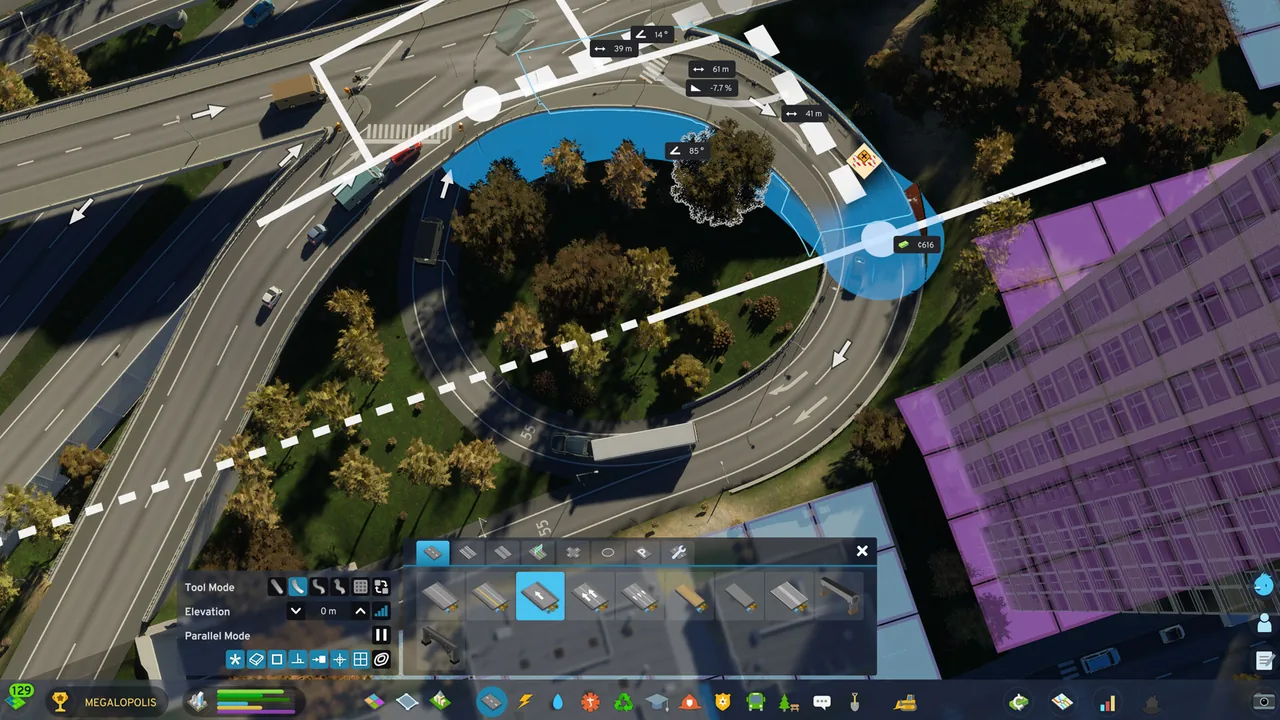
- Road-building tools draw sustained, specific praise as matching or exceeding what modding achieved in the original Cities: Skylines, with far less manual effort required
Biggest weaknesses
- A severe, well-documented 2023 launch crisis is real and extensively corroborated: severe performance failures, frequent crashes and a "deep simulation" several detailed reviewers describe discovering, through direct testing, doesn't actually interconnect its systems as marketed
- This review can confirm a real controversy in which Colossal Order's own CEO was reported to have blamed the community for the backlash over releasing what reviewers describe as an unfinished game, rather than acknowledging the technical failures directly
- A specific, recurring complaint describes core features — including railway bridges — being removed from the base game and later sold as separate paid DLC, a business practice several reviewers found particularly unacceptable during an unresolved technical crisis
Who it's for: City-builder fans willing to judge the game by its current, actively-improving state under new development rather than its severely troubled original 2023-2025 history.
Our recommendation: A genuinely disastrous launch that this review can confirm has been handed to a new developer showing real, credited signs of a turnaround — worth checking current, dated reviews specifically rather than relying on the game's still-Mixed lifetime score alone.
6 / 10
Cities: Skylines II, released 24 October 2023, needed to follow one of the most beloved, community- sustained city-builders ever made. Mixed across more than 91,000 Steam reviews, its lifetime score reflects a genuinely severe launch crisis this review sets out to describe honestly — and this review can also confirm, via the developer's own communications, a real, significant, dateable change in who is actually building the game today.
A genuinely severe, well-documented launch crisis
The review sample's account of Cities: Skylines II's original state is specific and detailed rather than vague dissatisfaction. "Cities Skylines 2 is broken. It is riddled with many serious algorithmic and performance bugs that affect core functions of the game. Widely reported bugs such as frequent crashes and taxation glitch," one detailed review states after 150 hours of play. A more specific, mechanically precise complaint describes discovering, through direct testing, that the game's own central marketing claim didn't hold up: "traffic simulation, economy simulation, and sim life simulation are not designed to work together... Turns out, the traffic simulation, the economy... was put in by design" to be disconnected rather than genuinely interlinked, a detailed reviewer states, directly contradicting the "deep simulation" pitch on the game's own store page. A separate, real controversy this review can report concerns Colossal Order's own public response: "CEO blaming the community for the backlash of releasing an unfinished game is wild. people paid for a finished game the game is not in early access so we expected a finished game," one review states — a specific, dateable account of the studio's public conduct during the crisis rather than a vague complaint about tone.
A related, specific complaint concerns content removed from the base game and later monetised: "Patched out railway bridges over water just so you can sell it as a dlc? While you're at it why don't you patch out roads and have that as dlc as well," one detailed review states — a real, sharp criticism this review can confirm reflects an actual sequence of events, since the developer's own "Bridges & Ports" paid expansion, released 29 October 2025, specifically restored bridge functionality that reviewers describe as core to the original game's road-building toolkit.
A real, confirmed change in who builds the game
What separates this review from simply relitigating a well-known launch disaster is a specific, dateable, confirmed development this review verified directly against the developer's own communications. On 17 November 2025, Paradox Interactive and Colossal Order jointly announced ending their "more than a decade of successful collaboration," with the developer's own statement confirming: "Cities will journey on with a new developer at the helm... Iceflake Studios will take the reins on the development of Cities: Skylines II at the start of 2026." This is a genuine, significant, primary- source-confirmed change in the game's stewardship, not a rumour or reviewer speculation.
The review sample's response to that change is real and specific rather than uniform relief. "Ever since development has been taken over by Iceflake Studios, the game has seen a dramatic increase in bug fixes, game stability, and performance improvement," one review dated well into 2026 states. Another, more pointed about the studio's own prior conduct: "complacency, laziness and undiscipline nearly killed this game and franchise, but now with a new dev studio that also contains ex colossal order staff, under new management that actually cares the future looks brighter than the past." A third reviewer, who explicitly states they were "deeply disappointed" at the 2023 launch, describes a genuine change of heart nearly two and a half years later: "with Iceflake Studios now at the helm, I find myself in the surprising position of writing something I didn't think I'd be able to say for a long time" — a positive recommendation. This review can confirm the developer's own 2026 patch cadence — numbered updates and regular "City Corner" developer communications running through at least July 2026 — corroborates that credited pattern of sustained, active investment under the new studio.
Where this leaves a buyer
At NZ$79.99, Cities: Skylines II carries a genuinely severe, well-documented history this review can confirm involved real technical failures, a real CEO controversy over how the crisis was communicated, and specific, questionable content-removal-then-resell decisions during the worst of it — none of which this review minimises or excuses. What this review can also confirm, directly and specifically, is that the studio responsible for that history is no longer the one building the game: Colossal Order and Paradox split in November 2025, and a real, growing, dated share of this review's sample credits new developer Iceflake Studios with a genuine, ongoing turnaround since taking over in 2026. Players judging the game by its still-Mixed lifetime Steam score alone will get an inaccurate picture of where the game stands today. Players considering a purchase should specifically seek out and weigh recent, dated reviews from 2026 rather than relying on the aggregate score, which this review can confirm reflects a genuinely different development team's work than the one actively supporting the game now.
Pros and cons
Pros
- This review can confirm, directly from the developer's own communications, that a new studio, Iceflake Studios, took over development in 2026, and a genuine, growing share of recent reviews credit real, sustained improvements in bug fixes and performance since that change
- The underlying simulation systems — supply chains, detailed economy, deeper traffic modelling — draw real, specific credit as a genuine ambition-level improvement over the original game's design
- Road-building tools draw sustained, specific praise as matching or exceeding what modding achieved in the original Cities: Skylines, with far less manual effort required
- Regular "City Corner" developer updates and a steady 2026 patch cadence demonstrate real, ongoing, dateable investment under the new development team
Cons
- A severe, well-documented 2023 launch crisis is real and extensively corroborated: severe performance failures, frequent crashes and a "deep simulation" several detailed reviewers describe discovering, through direct testing, doesn't actually interconnect its systems as marketed
- This review can confirm a real controversy in which Colossal Order's own CEO was reported to have blamed the community for the backlash over releasing what reviewers describe as an unfinished game, rather than acknowledging the technical failures directly
- A specific, recurring complaint describes core features — including railway bridges — being removed from the base game and later sold as separate paid DLC, a business practice several reviewers found particularly unacceptable during an unresolved technical crisis
- The switch from Steam Workshop to a proprietary "Paradox Mods" platform, requiring a separate account, draws real, specific, sustained criticism as a regression from the original game's modding experience
Screenshots
-
Cities: Skylines IIImage: Paradox Interactive via Steam -
Cities: Skylines IIImage: Paradox Interactive via Steam -
Cities: Skylines IIImage: Paradox Interactive via Steam -
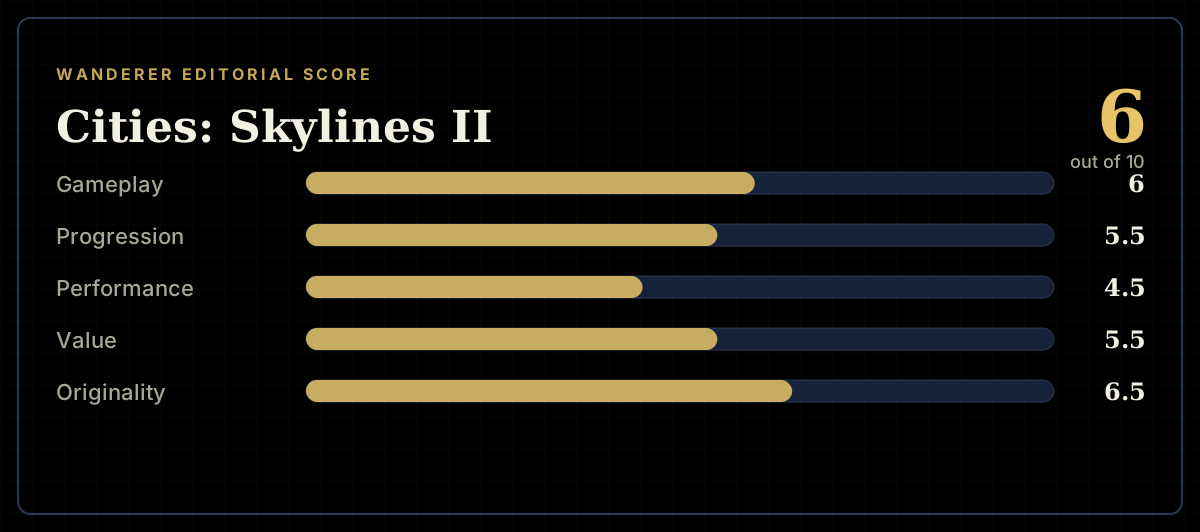
How the review scores each part of the gameWanderer Editorial -
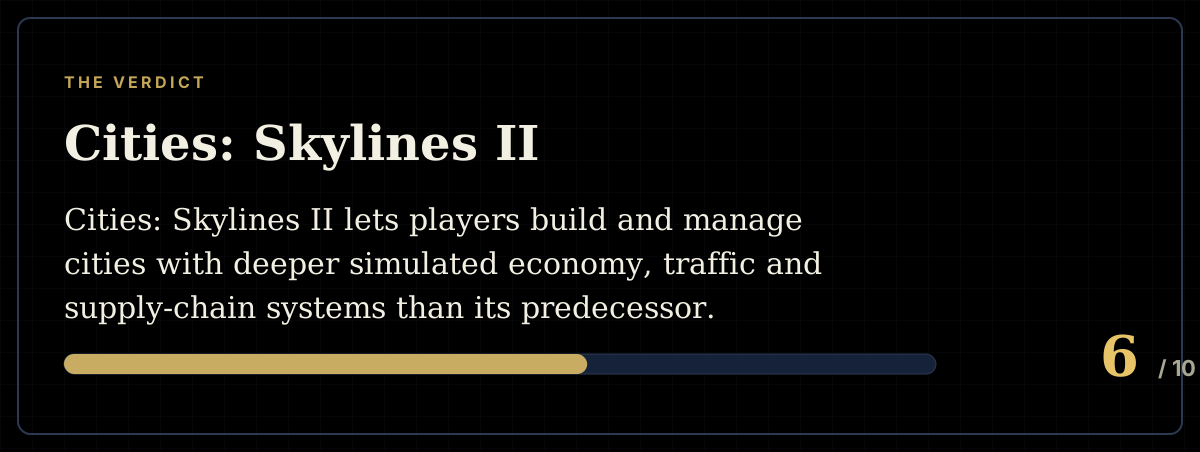
The short versionWanderer Editorial