
Game review
Cheater's Table
7 / 10
- Developer
- Lagari
- Publisher
- Lagari
- Released
- 2 June 2026
- Platforms
- Windows
- Genre
- Casual, Indie, Simulation, Strategy, Early Access
- Monetisation
- paid
- Players
- true
The short version
Biggest strengths
- An inventive cheating mechanic, secretly slipping illegal cards into play while bluffing your way past accusations, that reviewers consistently called the game's defining hook
- Multiple modes, including a Classic mode without cheating and a highly customizable Lab mode, that reviewers said gives groups real control over the experience
- A noir-styled first-person presentation that reviewers said reinforces the game's tension and paranoia well
Biggest weaknesses
- Placeholder AI-generated voice performances, disclosed by the developer as temporary, that drew pointed criticism from a small but vocal minority of reviewers
- Content some reviewers felt thinned out after repeated sessions, with one describing losing interest "after a few rounds" despite enjoying the initial novelty
- Best experienced with a full, willing group, offering less for players without a regular friend circle to play with
Who it's for: Groups of two to four friends looking for a UNO-adjacent party card game built around bluffing and accusation, who don't mind an Early Access build with some placeholder production elements
Our recommendation: recommended
7 / 10
A card game about the players, not just the cards
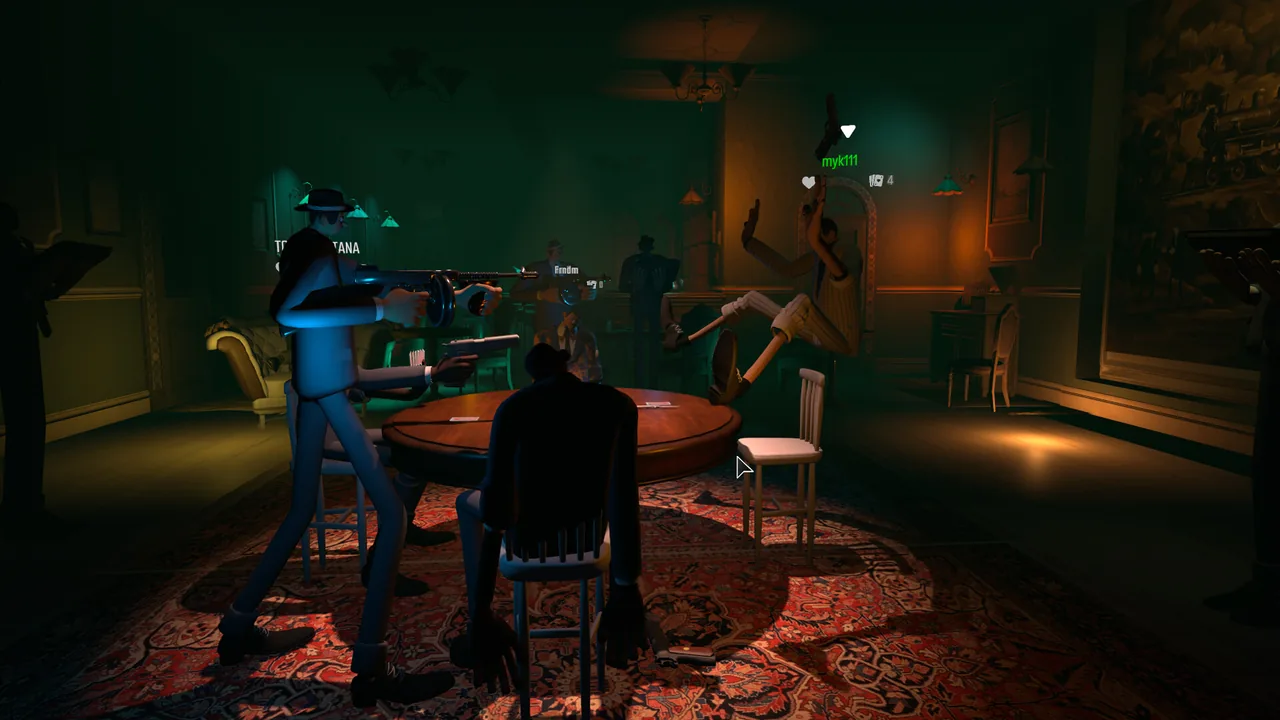
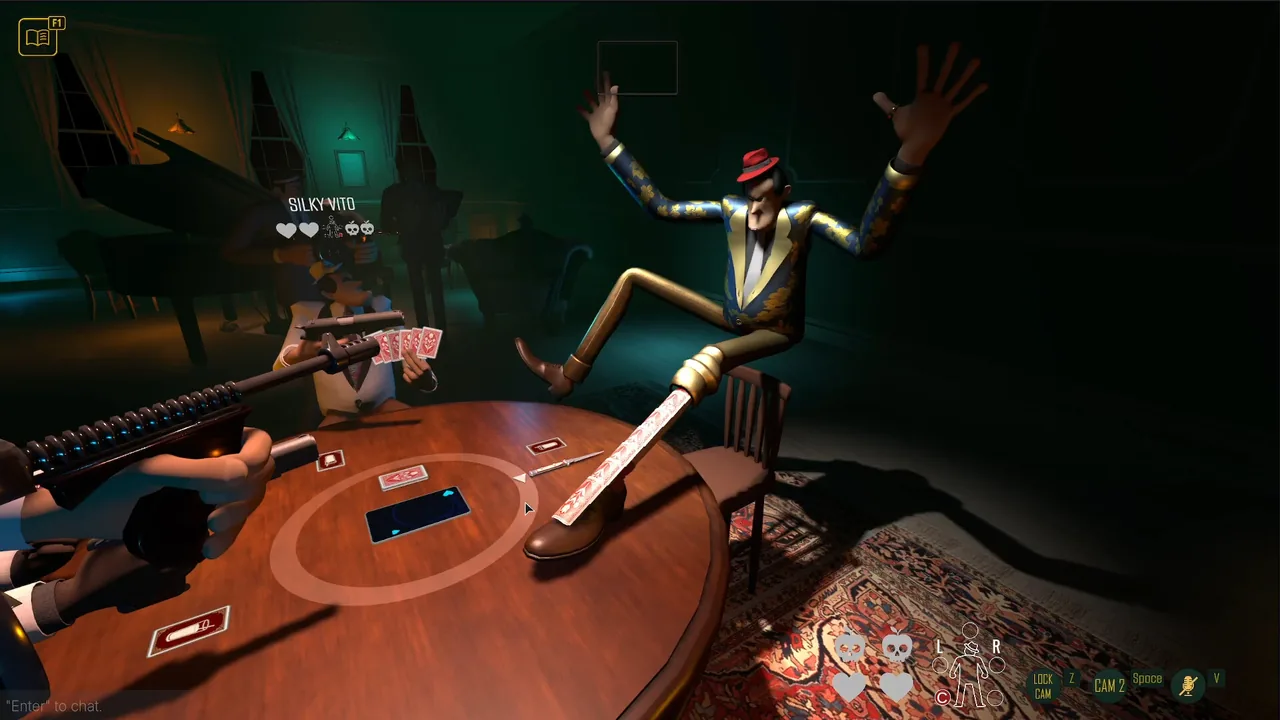
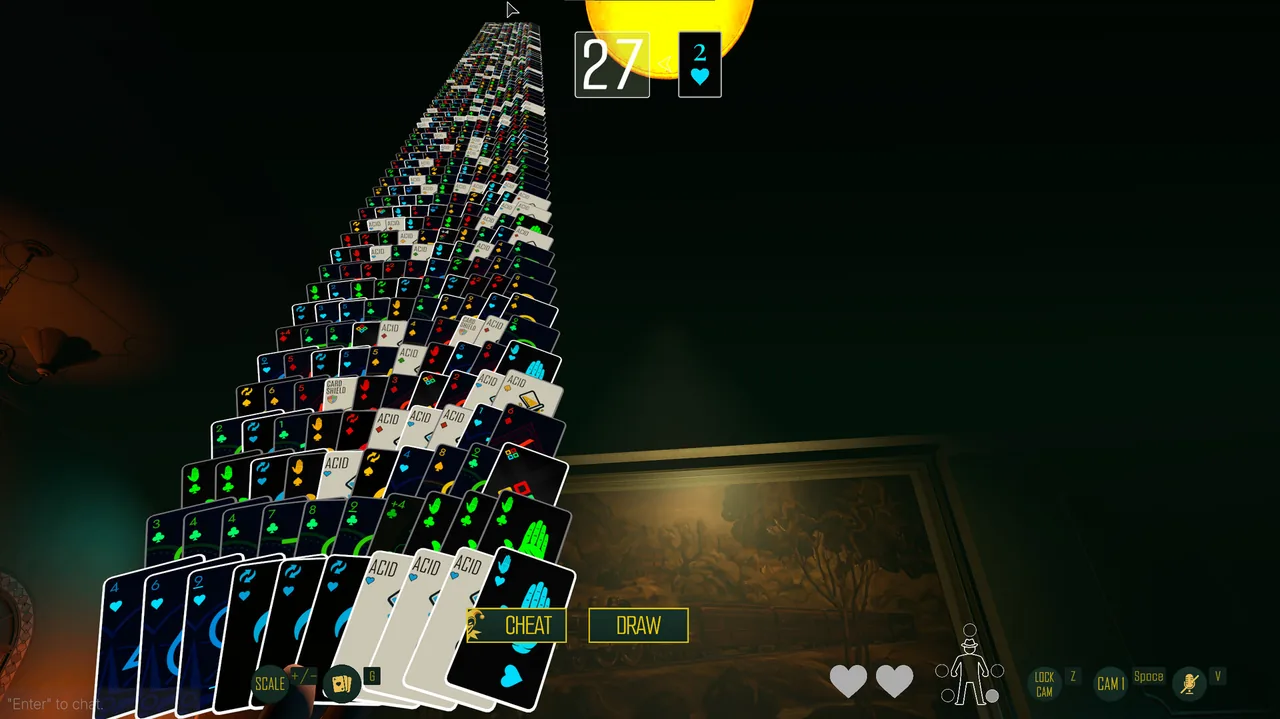
Cheater's Table dresses up a familiar hand-matching card game in noir styling and builds its entire identity around a single idea: players secretly try to sneak illegal cards into play while everyone else tries to catch them. One detailed reviewer summarized the appeal: "The feature that truly defines Cheater's Table is its innovative cheating mechanic. Players secretly store cheat cards in concealed locations and attempt to slip them into play without attracting attention from opponents. Since every movement around the table could indicate an illegal play, participants are encouraged to closely observe each other's actions while deciding whether to accuse someone of cheating. False accusations can be costly thanks to trap cards such as the Bad Apple, making reckless suspicion just as dangerous as overlooking actual rule-breaking." Several shorter reviews echoed the same core delight in simpler terms. One wrote, "A fresh and hilarious twist on card games. The cheating mechanic creates constant tension, and every match turns into a mix of strategy, bluffing, and chaos. Playing with friends is incredibly fun because nobody trusts anyone after a few rounds."
Built for a table full of friends
Nearly every review in the pool frames the game explicitly around group play, with reviewers repeatedly describing sessions devolving into genuine arguments and laughter. One wrote, "This game is insanely fun with friends. Every match turns into arguments, accusations, and pure chaos. We bought it for a few laughs and ended up playing for hours. Definitely one of those games that gets everyone shouting at each other in the best way." Another compared it directly to a genre touchstone: "Cheater's Table is an amazing fun twist of UNO, A fun filled exciting experience along with friends. One of the best new games for under $10 in 2026. Highly recommended for lovers of the card game UNO." A specific recurring detail, a novelty prop called the Cadillac, came up in multiple independent reviews as a standout comedic moment: "Every time the Cadillac landed on someone's head, our whole group laughed."
Modes that let groups tune the chaos
Beyond the core loop, reviewers appreciated the range of ways the game lets different groups adjust how central the cheating mechanic is to their sessions. One detailed review laid out the options: "Players seeking a familiar card game experience can enjoy Classic Mode, which removes the cheating mechanics entirely. Those wanting the full intended experience can dive into the standard Cheater's Table mode, where deception becomes the heart of every match. For groups that enjoy experimentation, Lab Mode offers extensive customization options, allowing hosts to adjust numerous gameplay rules including lives, cheat frequency, trap availability, match flow, and various other settings." That same reviewer praised the presentation choices reinforcing the theme: "Its noir-inspired aesthetic creates an atmosphere of secrecy and distrust that perfectly complements the central gameplay mechanics. Viewing the action from a first-person perspective enhances immersion by making players feel as though they are physically seated at the table."
Placeholder AI voice work draws real pushback
The pool's clearest point of contention concerns a specific, developer-disclosed production choice. The same detailed positive review noted it directly: "As an Early Access title, some production elements remain unfinished, including placeholder AI-generated voice performances that the developer intends to replace with professional recordings as development continues." Not every reviewer was willing to look past that even as a temporary measure. Both of the pool's negative reviews are brief but pointed: one simply reads, "This is Ai garbage do not buy," and another, "AI garbage." A more measured, otherwise-positive reviewer expressed the same discomfort at greater length: "on another note i know the AI is temporary but i dont really like the use of AI in games so yknow," despite still landing on an overall favorable impression of the core gameplay. That reviewer also flagged a separate, more conventional concern about depth: "i didn't really care too much for this game after a few rounds, was fun during those few rounds though."
A responsive developer, reviewers say
Several reviewers specifically credited the developer's communication and update cadence as a reason for optimism about the Early Access build's trajectory. One wrote, in a bilingual review, "It's a really fun game to play with friends or alone, with several modes and constant updates to fix bugs or add new features. Something else worth highlighting is that the developers are always open to listening to the community." Another framed the current state as already strong for an unfinished product: "Cheater's Table feels surprisingly complete for an Early Access game. The balance between chaos, bluffing, and strategy works really well. It does not take itself too seriously, and that is exactly why it is so fun."
Verdict
Cheater's Table takes a familiar card-game skeleton and turns it into something genuinely distinct by making bluffing and suspicion the actual point, and the reviewers who played it with a full group consistently describe exactly the kind of chaotic, memorable social fun it's clearly aiming for. Its Early Access rough edges are real but limited in scope, mostly centered on disclosed placeholder AI voice work that a vocal minority found off-putting on principle, alongside the usual early-build concerns about long-term content depth. For groups with two to four players ready to sit down together, it's an easy, inexpensive recommendation; solo players without a regular group will get far less out of it.
Pros and cons
Pros
- An inventive cheating mechanic, secretly slipping illegal cards into play while bluffing your way past accusations, that reviewers consistently called the game's defining hook
- Multiple modes, including a Classic mode without cheating and a highly customizable Lab mode, that reviewers said gives groups real control over the experience
- A noir-styled first-person presentation that reviewers said reinforces the game's tension and paranoia well
- Frequent updates and a developer reviewers described as genuinely responsive to community feedback
Cons
- Placeholder AI-generated voice performances, disclosed by the developer as temporary, that drew pointed criticism from a small but vocal minority of reviewers
- Content some reviewers felt thinned out after repeated sessions, with one describing losing interest "after a few rounds" despite enjoying the initial novelty
- Best experienced with a full, willing group, offering less for players without a regular friend circle to play with
- Still early in its Early Access cycle, with reviewers noting some production elements remain unfinished
Screenshots
-
Cheater's TableImage: Lagari via Steam -
Cheater's TableImage: Lagari via Steam -
Cheater's TableImage: Lagari via Steam