Game review
CD-ROM
7 / 10
- Developer
- monoclelord
- Publisher
- monoclelord
- Released
- 9 May 2026
- Platforms
- Windows
- Genre
- Puzzle
- Monetisation
- Paid, one-time purchase.
- Players
- Single-player only.
The short version
CD-ROM is a steganography puzzle game from solo developer monoclelord, built around ten nostalgic, fully interactive virtual CDs that hide eight-digit passwords in images, audio, and files. Its Very Positive rating across a rich English review sample reflects genuine praise for its 90s computing nostalgia and creative, varied puzzle design, with this review finding fair, widely repeated complaints about tedious clue management and a lack of accessibility options for colour-based puzzles and motion sickness.
Biggest strengths
- Praised extensively for its 90s CD-ROM nostalgia, with multiple reviewers specifically crediting the UI and period-accurate audio for nailing the era's computing experience.
- Praised repeatedly for creative, varied puzzle design, with several reviewers specifically enjoying cross-referencing clues across images, audio, and installed programs.
- Praised for being made with evident care by a solo developer, with multiple reviewers specifically noting the developer's responsiveness and the game's obvious love of craft.
Biggest weaknesses
- A fair, widely repeated complaint reports the game is tedious to navigate, requiring constant swapping between CDs and programs to track scattered, often unnecessary clues.
- A fair, specific complaint reports a lack of accessibility options, including no way to adjust numerous colour-based puzzles for colourblind players or disable head-bobbing during elevator sequences for players prone to motion sickness.
- A fair complaint from one detailed reviewer reports the puzzle substance feels thin relative to its presentation, with many ciphers and mechanics used only once and never revisited.
Who it's for: Fans of escape-room and ARG-style puzzle games who enjoy cross-referencing scattered clues and a strong sense of retro atmosphere; players who are colourblind, motion-sensitive, or who want a tightly organised note-taking system should temper expectations.
Our recommendation: A creative, lovingly crafted retro puzzle game let down by tedious clue-juggling and missing accessibility options.
7 / 10
Praised extensively for its 90s computing nostalgia
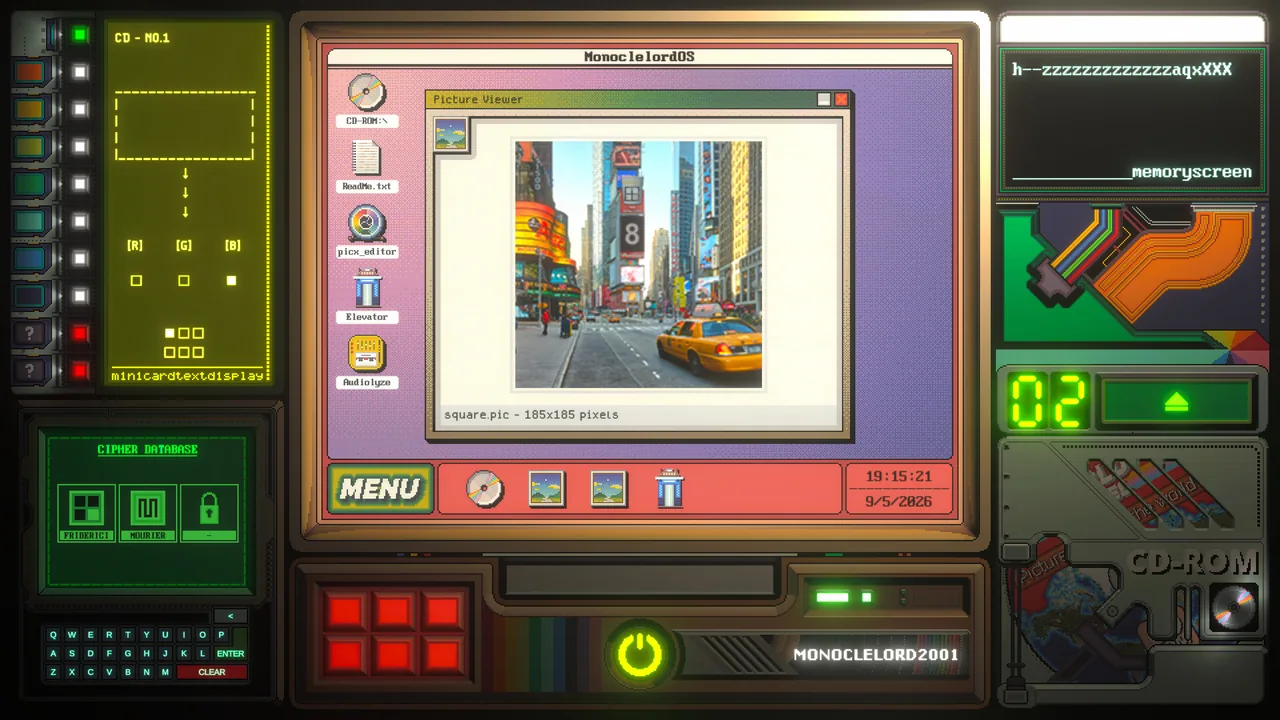
CD-ROM earns its Very Positive rating first through consistent praise for its period recreation. "This game has so much soul, the dev nailed the 90s OS experience, both the UI and the audio of old hardware too," reads one detailed review. A separate reviewer describes a more personal reaction: "It's funny to feel this much nostalgia after playing a game like this. My childhood, full of weird CDs attached to magazines, feels like yesterday." This review treats that praise as fair: reviewers across the sample consistently single out the same specific craft, an accurate recreation of a retro operating system's look, feel, and sound, which is a strong, credible signal of focused presentation work rather than generic "retro" branding.
Praised for creative, varied puzzle design
Beyond its presentation, this review found reviewers repeatedly praising the substance of the puzzles themselves. "Really enjoyed playing this, beautiful retro 90's OS computer art and enough puzzles to make you scratch your head for a while," reads one review. A separate, more detailed reviewer describes the loop in more depth: "At its core, gameplay boils down to figuring out passwords to proceed... Every disc revolves around uncovering an eight-digit password that unlocks the next stage, creating a steady sense of progression while encouraging players to examine every detail they encounter." This review treats that praise as fair: a puzzle structure that consistently rewards careful cross-referencing across images, audio, and installed tools is a genuine, specific design strength independently confirmed across multiple reviews.
Praised for evident care and craft
This review also found reviewers repeatedly crediting the solo developer directly. "This game is so fun and the dev is so nice! it was worth the wait," reads one review. A separate reviewer adds: "Developer put a lot of love into this and it shows... thanks to the hints in the Community Hub, that helps." This review treats that praise as fair: reviewers independently praising both the finished product and the developer's ongoing engagement with the community is a meaningful signal of a project built with genuine care, not just polish applied after the fact.
A fair, widely repeated complaint about tedious clue management
Set against that praise, this review found a fair and widely repeated complaint about how the game organises its puzzles. "I found it pretty tedious to be constantly swapping between programs and CDs depending on which clues you needed... every code you solve gives you 5 new clues, only 1 or 2 are actually needed to solve the next puzzle you need to work on," reads one detailed critical review. A separate reviewer describes a similar frustration even while enjoying the art: "The lack of guideness and explanation made me not wanting to progress further because it's really tiring, I'm constantly confused about which solved which." This review treats that complaint as fair and significant: a puzzle game that deliberately withholds a built-in way to organise scattered, mostly-irrelevant clues is placing real friction between players and the design it's otherwise praised for.
A fair, specific complaint about missing accessibility options
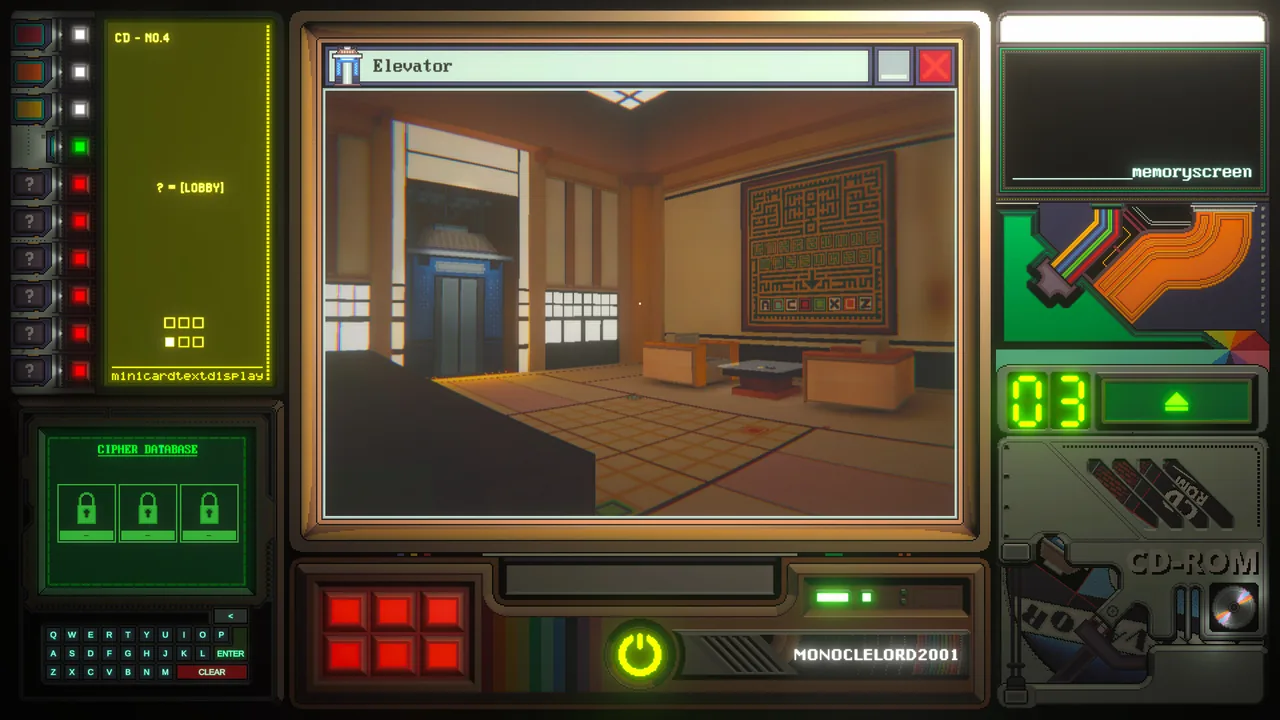
This review also found a fair, specific complaint about accessibility. "NOT recommended to colorblind people due to the numerous color-based puzzles with no accessibility settings," reads one detailed review. A separate reviewer flags an unrelated but similarly overlooked issue: "there are no settings to change the head bobbing for the elevator levels, which made me a little motion sick in the labyrinth." This review treats both as fair: a puzzle game built substantially around colour-matching mechanics, and a first-person sequence with head-bob motion, are exactly the kinds of design choices that call for accessibility toggles, and their absence is a legitimate, specific gap rather than a nitpick.
A fair complaint about thin puzzle substance and a blocking bug
This review also found a fair complaint about the game's depth from one of its more measured reviews. "It looks very good, it's all sauce but not much substance. A fair amount of the puzzles, and even ciphers are used once and then never again," reads that review, which nonetheless recommends the game overall. Separately, this review found a fair, more serious report of a technical issue: "I had fun until a bug in level 4 meant no more progress for me," reads one negative review specifically describing being blocked at the fourth CD. This review treats both as fair: mechanics and ciphers that appear once without being built upon limit how much depth the puzzle design ultimately offers, and a specific, named progression-blocking bug is a genuine launch-quality concern distinct from difficulty complaints.
Achievement data corroborates a level-four bottleneck
This review's own check of Steam's global achievement data shows a sharp drop right where that bug report points: 82.8% of players clear the third CD, but only 56.4% clear the fourth, the single steepest fall in the entire ten-CD curve. After that point the curve flattens out considerably, settling around 40% for the final CD, meaning most players who get past CD four go on to finish the game. That pattern is consistent with a genuine, specific obstacle at CD four, whether a difficulty spike or the reported bug, rather than a gradual loss of interest across the whole experience.
Final verdict
CD-ROM is a creative, lovingly crafted puzzle game that earns its Very Positive rating through consistently credible praise for its 90s computing nostalgia, varied puzzle design, and evident solo-developer care. Its clearest weaknesses are a fair, widely repeated complaint about tedious, disorganised clue management and a fair, specific complaint about missing accessibility options for colourblind and motion-sensitive players, compounded by a fourth-CD bottleneck this review's own achievement data corroborates. For fans of escape-room and ARG-style puzzle games with a strong sense of atmosphere, this is a worthwhile, if imperfect, pickup.
Pros and cons
Pros
- Praised extensively for its 90s CD-ROM nostalgia, with multiple reviewers specifically crediting the UI and period-accurate audio for nailing the era's computing experience.
- Praised repeatedly for creative, varied puzzle design, with several reviewers specifically enjoying cross-referencing clues across images, audio, and installed programs.
- Praised for being made with evident care by a solo developer, with multiple reviewers specifically noting the developer's responsiveness and the game's obvious love of craft.
- This review's own check of achievement data shows a strong initial completion rate, with the large majority of players clearing the first several CDs.
Cons
- A fair, widely repeated complaint reports the game is tedious to navigate, requiring constant swapping between CDs and programs to track scattered, often unnecessary clues.
- A fair, specific complaint reports a lack of accessibility options, including no way to adjust numerous colour-based puzzles for colourblind players or disable head-bobbing during elevator sequences for players prone to motion sickness.
- A fair complaint from one detailed reviewer reports the puzzle substance feels thin relative to its presentation, with many ciphers and mechanics used only once and never revisited.
- A fair, specific complaint reports a bug in the fourth CD blocked at least one reviewer from progressing further, a report this review's own achievement data corroborates with a sharp completion drop at the same point.
Screenshots
-
CD-ROMImage: monoclelord via Steam -
CD-ROMImage: monoclelord via Steam -
CD-ROMImage: monoclelord via Steam -
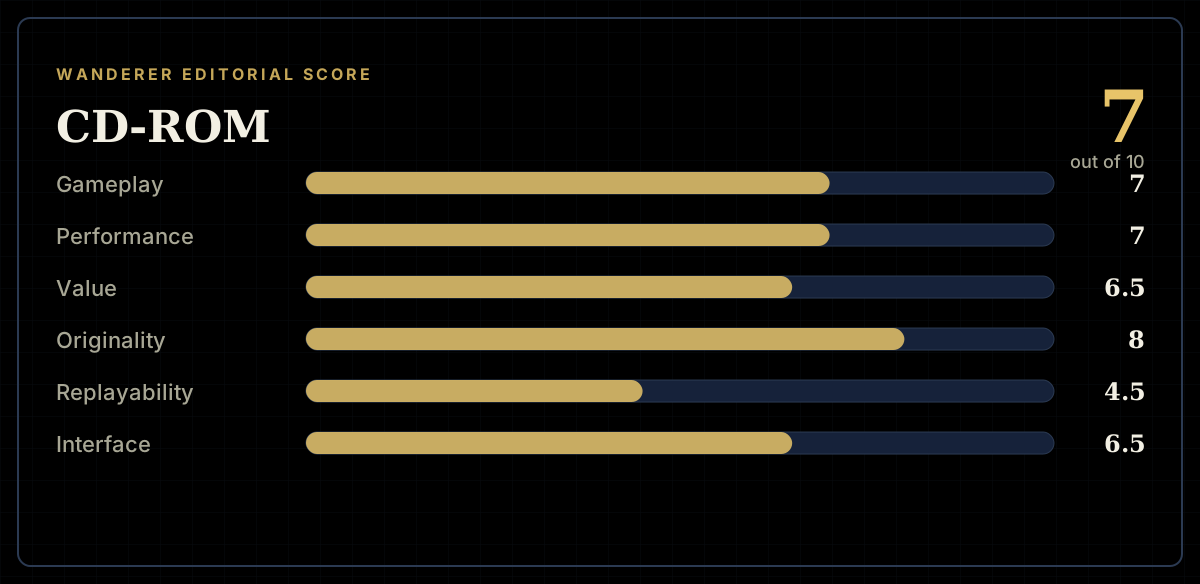
How the review scores each part of the gameWanderer Editorial -
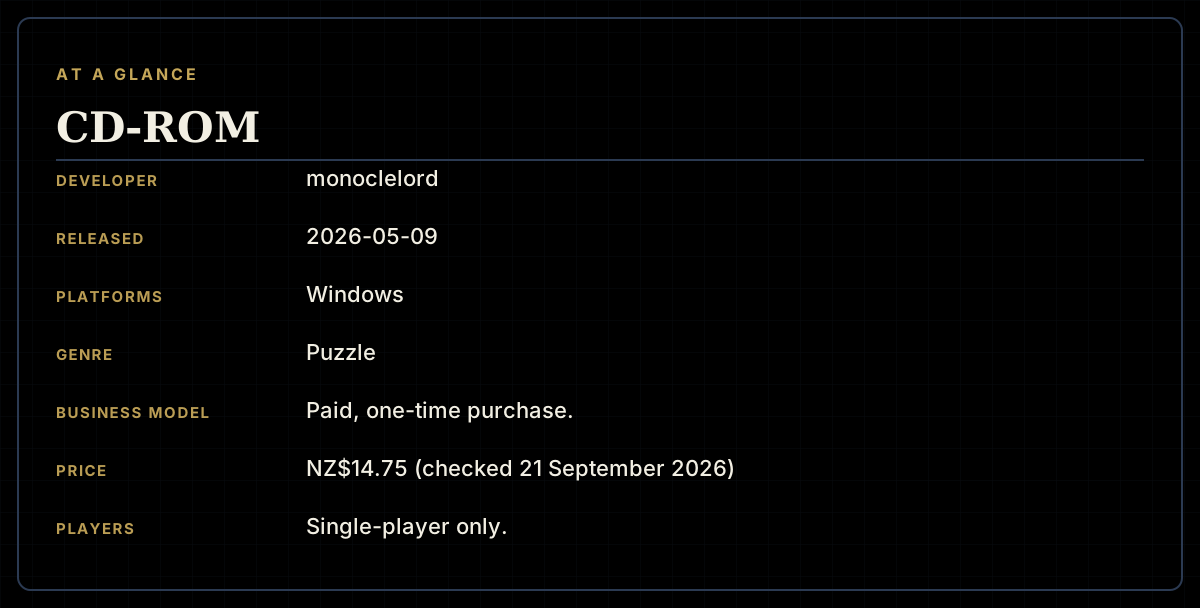
The specs at a glanceWanderer Editorial -
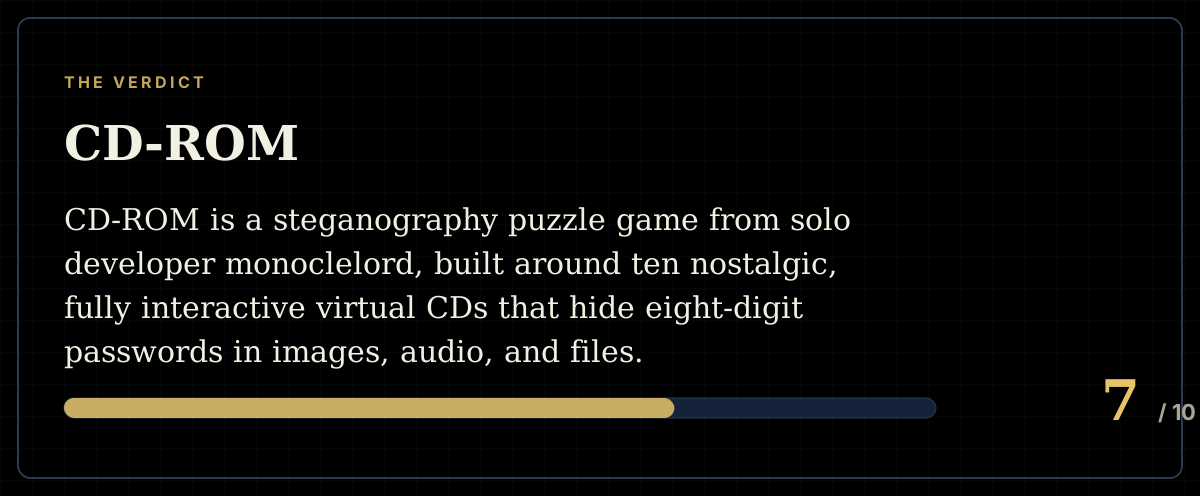
The short versionWanderer Editorial