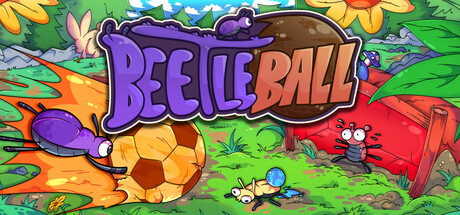
Game review
Beetleball
6.9 / 10
- Developer
- Bugfight Studio
- Publisher
- Bugfight Studio
- Released
- 3 September 2026
- Platforms
- Windows, macOS, Linux
- Genre
- Sports, Action
- Monetisation
- Paid
- Players
- Online multiplayer (up to 12 players, cross-platform, ranked and custom lobbies)
The short version
Beetleball takes a genuinely odd premise — team-based dung beetle soccer with hero-shooter abilities — and turns it into a tight, well-optimised multiplayer brawler that plays better than its pitch has any right to. The mechanics are the whole show, and they mostly deliver, but a thin population at launch means the good time on offer depends heavily on who else shows up.
Biggest strengths
- Distinct, ability-driven classes give matches real tactical variety beyond just chasing the ball
- Movement and physics are tight enough that several reviewers compare it favourably to Rocket League
- Runs well even on modest hardware, with a surprising amount of polish and humour in the menus for a small team's first release
Biggest weaknesses
- Player numbers are low enough at launch that ranked queues can mean facing the same opponents repeatedly
- Progression and cosmetic systems are thin compared to the depth of the core gameplay
- Some players report intermittent ping and connection issues in casual and ranked matches
Who it's for: Players who enjoy Rocket League's momentum-based ball physics or Overwatch-style class abilities and want something scrappier and less polished-corporate, especially with a group of friends.
Our recommendation: Recommended, with the caveat that this is a multiplayer game living or dying on population — check the current player count before buying if you plan to play solo queue.
6.9 / 10
Dung Balls and Deadlines
Beetleball's pitch sounds like a joke that got out of hand: up to twelve players roll giant balls of dung around an arena, trying to shove them into a goal, while playing as beetles with distinct combat-style abilities. It is, in fact, exactly that — and it works far better than it has any right to. Bugfight Studio launched the game out of a public playtest and demo period into a 1.0 release on September 3, 2026, and the finished product carries the unmistakable fingerprints of a team that spent a long time listening to the people actually playing it.
The premise borrows its skeleton from Rocket League — ball-based team sport, momentum-driven physics, satisfying mid-air contact — and grafts on a layer of Overwatch-style class design, where each beetle has a kit of cooldown abilities rather than a single universal moveset. It is not a subtle combination, and it does not pretend to be. What it is, going by the response from players in the weeks since launch, is a genuinely distinct sports brawler rather than a reskin of something else.
A New Take on Team Sports
The class system is where Beetleball earns its keep. Rather than every beetle handling identically, each has its own ability set — stuns, dashes, ball-manipulation tricks, and other cooldown-based tools that reward reading a match and picking the right moment to commit. One reviewer, after finishing the demo-to-release arc, called the variety "so many unique ways to play the game," and that tracks with how differently matches can play out depending on team composition. This is not a game where you find the best class and never touch another; the abilities are specifically built to counter and complement each other, which pushes toward actual team coordination rather than everyone independently chasing the ball.
The core ball physics carry a lot of the weight, and by most accounts they hold up. Multiple players draw direct comparisons to Rocket League's sense of momentum and contact, with one describing the movement simply as "amazing," and another calling the whole thing "a masterclass in the genre of class based beetle soccer sports games" — a genre that, before this release, arguably had exactly one entry. The comparison isn't hyperbole so much as the most obvious shorthand available: if you've played a physics-based ball sport with skill expression built around movement, Beetleball will feel immediately legible, even while the ability layer gives it its own identity.
Technically, the game is in noticeably good shape for a small studio's first full release. Several players specifically call out performance on weaker hardware — one running a GTX 1060 with 12GB of RAM reports the game running "flawlessly," with no complaints about frame pacing or stutter. That's a meaningful thing to get right in a fast, physics-heavy multiplayer game where a dropped frame at the wrong moment can cost a goal.
Small Community, Big Heart
The most consistent thread running through player feedback, both good and bad, is population. Beetleball launched into a genre it essentially invented, which means there was no existing audience to draw from, and reviewers are candid about the consequence: queue times can be long, and in ranked specifically, a small pool of players means running into the same opponents over and over. One review put it plainly — "the player base is currently a bit small" — while framing it as a temporary problem rather than a fundamental flaw, contingent on whether the developers can get more attention for the game.
That's a fair read, but it's also a real cost to weigh before buying. A physics-based team sport is only as good as the matches it can actually generate, and if ranked queues are pulling from a shallow pool, the promised depth of class match-ups won't show up consistently. Casual and custom lobbies fare better for players with a group of friends to bring along — several reviews explicitly recommend playing with others rather than solo-queuing into ranked, both for the social experience and because low population makes solo ranked a grindier proposition than it should be.
A handful of players also mention intermittent ping and connection issues, though this isn't universal — plenty of others report clean, low-latency matches. It reads less like a systemic netcode problem and more like the kind of matchmaking inconsistency you'd expect from a population that isn't yet large or geographically distributed enough to guarantee consistently local server assignment.
Not every review is glowing. Among the sample pulled for this piece, one recommendation arrived with nothing but a blunt dismissal and no elaboration — a reminder that "recommended" on Steam covers a wide range of enthusiasm, and that a vocal, devoted community doesn't mean universal satisfaction.
Cosmetics and Progression
Beetleball's structure outside of a match is comparatively light. There's a ranked ladder for players chasing competitive standing, casual queues, and custom lobbies for private groups, alongside a cosmetics economy — skins that can be bought, sold, and traded, judging by at least one player's account of grinding cosmetic sales to afford the base game itself before playtest access ended. There's also apparent scope for community content: one reviewer describes contributing to an in-game location called Atlas, suggesting Bugfight Studio is, at least in some capacity, folding community ideas directly into the game's world.
What's less evident from the outside is a deep meta-progression system — battle passes, unlock trees, or long-term goals beyond climbing rank and collecting cosmetics. For a game this early into its lifecycle that's a reasonable state to be in, but it does mean the moment-to-moment ability play is carrying almost the entire weight of Beetleball's appeal. Players who need a long unlock ladder to stay engaged may find the current structure thin; players who are here purely for the class-based ball sport itself are unlikely to notice the gap.
The menu design gets specific, repeated praise for its humour and attention to detail — Easter eggs and a clear sense of personality that stands out in a genre where menus are usually purely functional. It's a small thing, but it's consistent with the overall impression of a team punching above the scope you'd expect from the size of the release.
Verdict
Beetleball is a genuinely successful execution of an idea that could easily have been a one-joke Steam curiosity: a beetle-soccer hero-brawler that plays with real mechanical depth, runs cleanly even on modest hardware, and has clearly benefited from an extended playtest-to-demo-to-release cycle that let the developers refine the feel before launch. The class-based ability layer gives it staying power beyond its premise, and the community response so far is unusually warm and engaged for a debut multiplayer title.
The open question is entirely about population. A team sport lives or dies on having enough people to fill the roster, and Beetleball's numbers at launch are modest enough that ranked queues can feel repetitive and casual play is best approached with a group already in tow. If Bugfight Studio can keep growing the audience, there's a strong foundation here for a lasting niche multiplayer game. Buy it now and you're betting on that growth as much as on the mechanics — which, fortunately, are good enough to make the bet feel reasonable.
Pros and cons
Pros
- Distinct, ability-driven classes give matches real tactical variety beyond just chasing the ball
- Movement and physics are tight enough that several reviewers compare it favourably to Rocket League
- Runs well even on modest hardware, with a surprising amount of polish and humour in the menus for a small team's first release
- Genuinely enthusiastic, tight-knit community with visible developer involvement
Cons
- Player numbers are low enough at launch that ranked queues can mean facing the same opponents repeatedly
- Progression and cosmetic systems are thin compared to the depth of the core gameplay
- Some players report intermittent ping and connection issues in casual and ranked matches
- Very little single-player content or onboarding for players without a group to jump in with
Screenshots
-
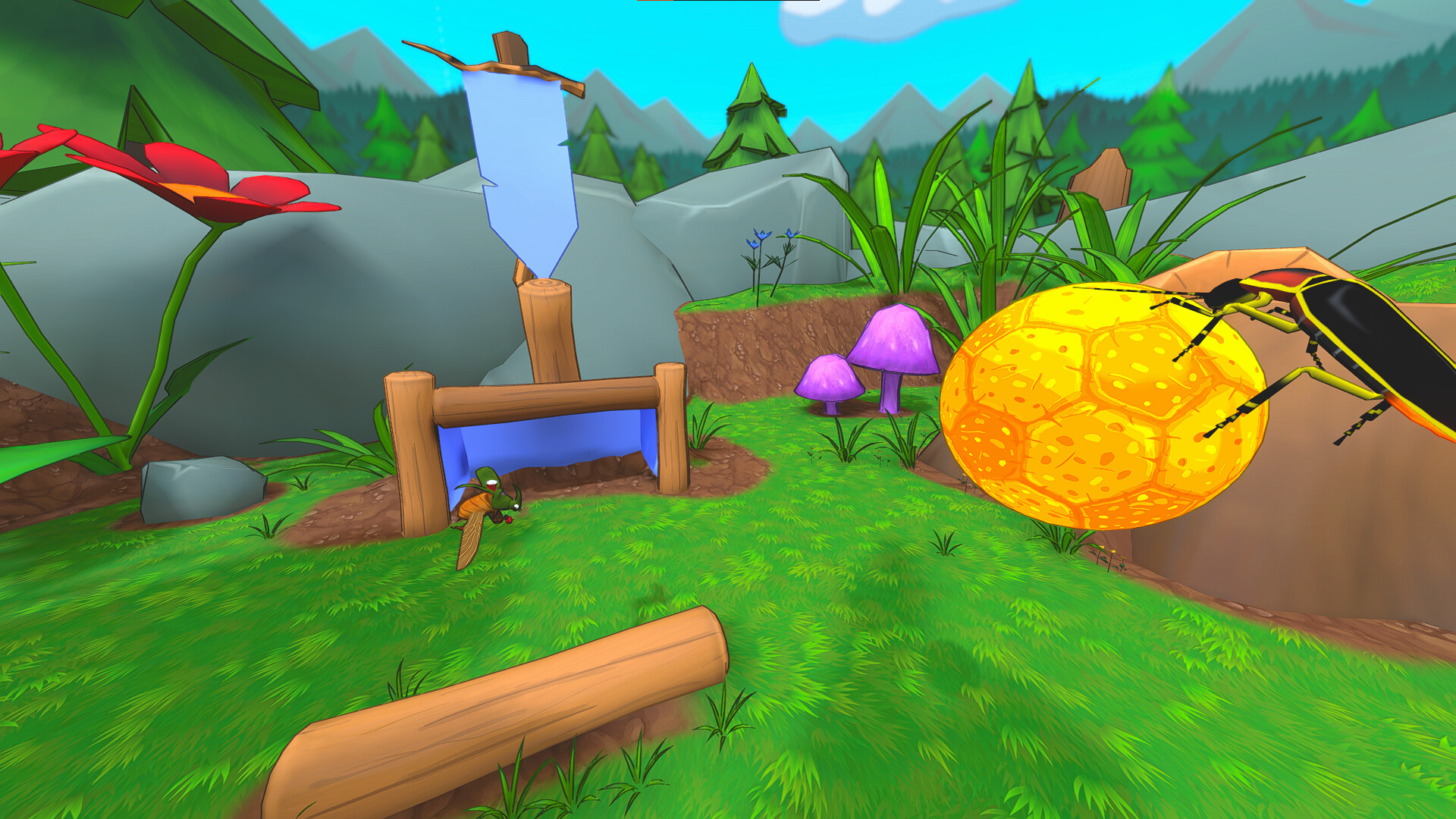
One of the forest arenas, where the class-based ability play comes together around the goalBugfight Studio -
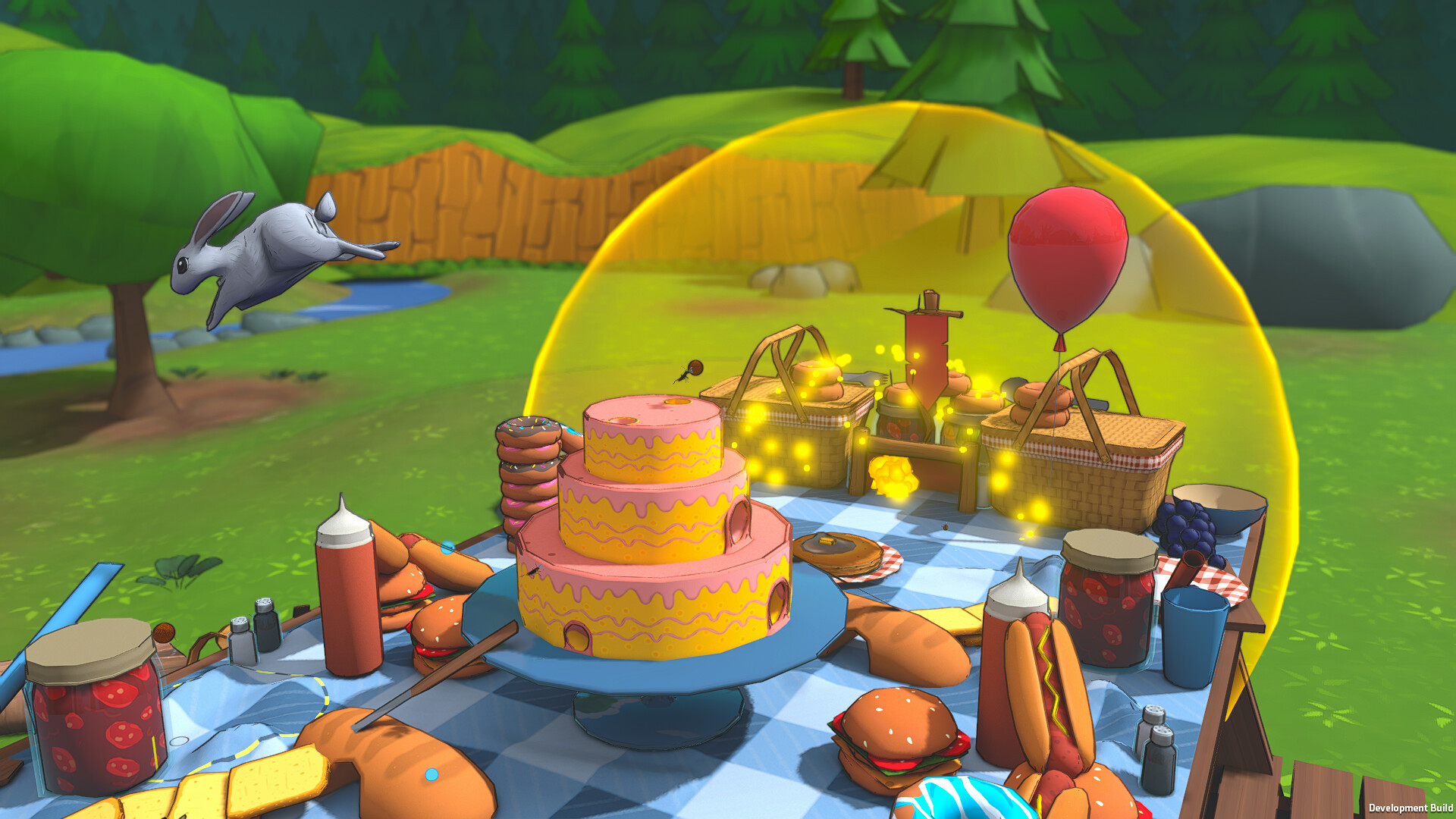
The picnic-table map trades pyramids and forests for a backyard-scale food fightBugfight Studio -
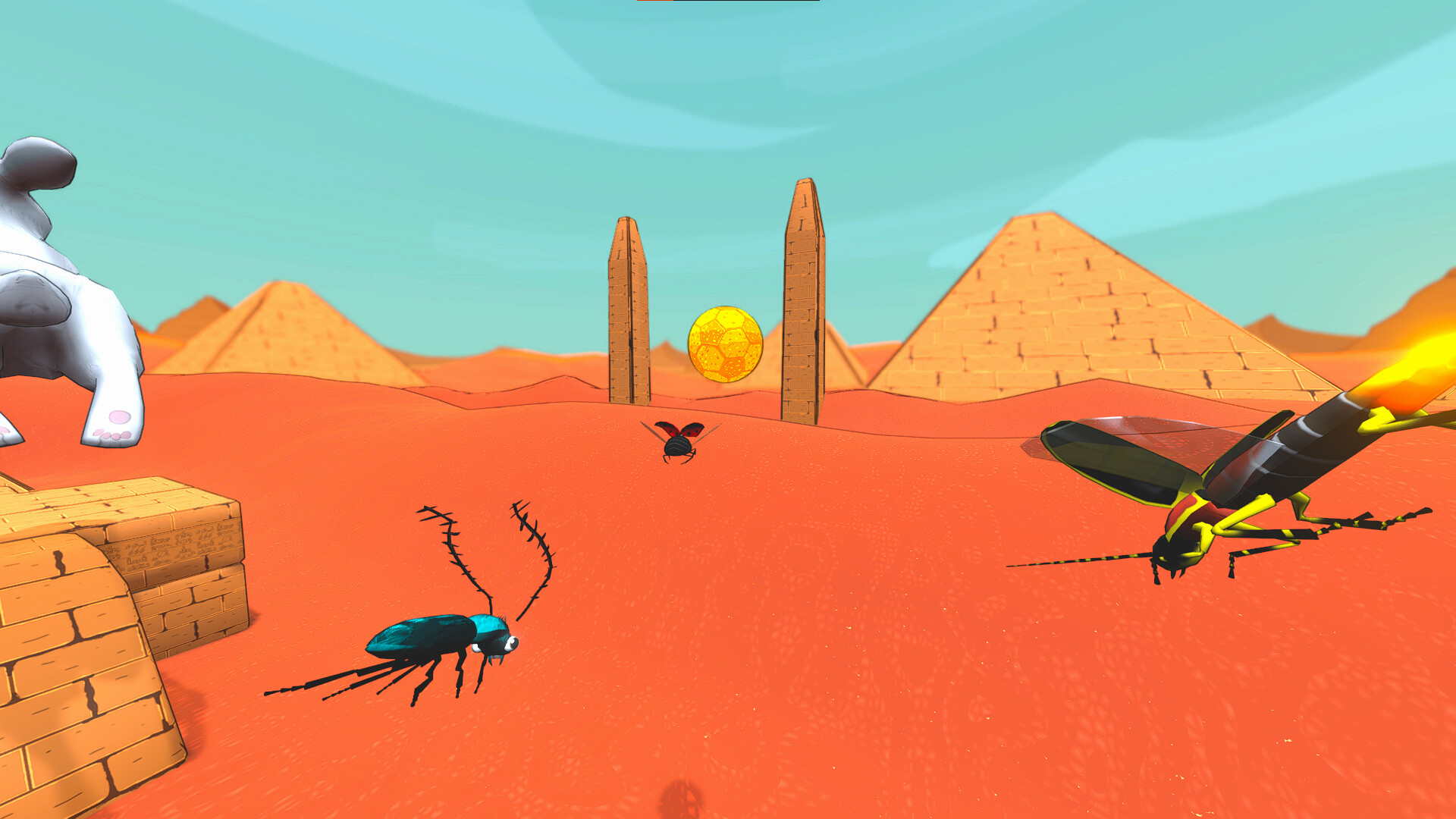
The Egypt map, referenced by more than one reviewer's last-second goal storyBugfight Studio -
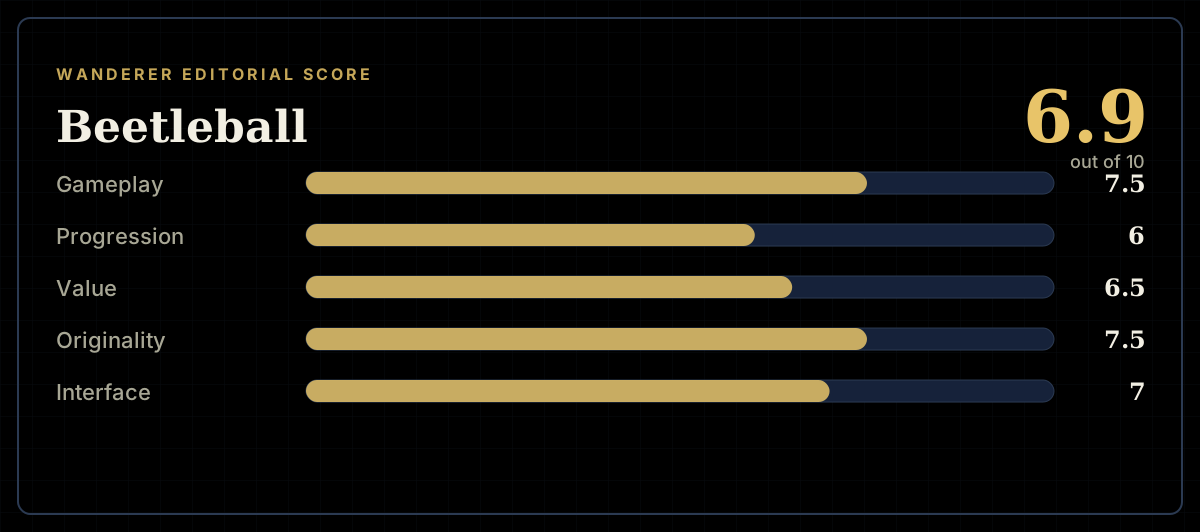
How the review scores each part of the gameWanderer Editorial -
The short versionWanderer Editorial