
Game review
Beauties and the Stranded
4.6 / 10
- Developer
- storytaco
- Publisher
- storytaco
- Released
- 14 June 2026
- Platforms
- PC, Mac, Linux
- Genre
- Visual Novel, Dating Sim, FMV
- Monetisation
- Premium (one-time purchase)
- Players
- false
The short version
Beauties and the Stranded has the cast, the setting, and the production values to be another strong entry in Storytaco's FMV dating-sim catalogue, but the beastkin mystery at its centre never earns the payoff it's clearly aiming for, and the "suspicion" mechanic meant to drive that mystery barely registers. Fans of the studio's earlier work will find enough of what they came for to get by, but this is a step down from the titles that built its reputation.
Biggest strengths
- Strong casting and character design; the cast's chemistry keeps scenes watchable even when the plot falters
- Sexiness and fan service play as warm and character-driven rather than exploitative, a distinction several reviewers explicitly credit the writing for
- A handful of genuinely well-executed hidden/secret endings reward players who dig into the suspicion mechanic properly
Biggest weaknesses
- The central "suspicion" mechanic that's supposed to drive the mystery is widely reported as inconsequential or confusing
- Noticeably shorter and more linear than the studio's previous releases, with rushed, thin endings
- The player protagonist is repeatedly criticised as passive, weak-willed, and hard to invest in
Who it's for: Existing fans of Storytaco's FMV dating sims and players who enjoy live-action visual novels, but a poor entry point for anyone new to the studio.
Our recommendation: Recommended only for genre fans already invested in Storytaco's catalogue, and best picked up on a discount rather than at full price.
4.6 / 10
A Bunker, Five Women, and a Mystery That Never Quite Lands
Beauties and the Stranded opens on a familiar Storytaco setup dressed in new clothes: you wake in a ruined bunker surrounded by five striking women whose beauty and composure feel deeply out of place for a post-apocalyptic wasteland. The pitch is a mystery-tinged dating sim — figure out who, or what, these women actually are, while deciding whether to trust them, hunt them, or fall for them. It's the same "attractive cast plus a hidden secret" scaffolding that's worked for the studio before, this time wrapped in a beastkin-hunter premise where the protagonist is nominally employed to track down exactly the kind of creature his housemates turn out to be.
On paper, that's a strong hook, and reviewers who came in cold about the premise generally enjoyed the initial setup. The trouble, echoed across nearly every substantial review in the sample, is that the mystery the game spends its opening hours building never really pays off. One detailed review lays out the core disappointment plainly: "every girl around you is secretly a beastkin (the exact creatures you are supposed to be hunting)... the in-game 'suspicion' mechanic is entirely pointless, characters make their true identities painfully obvious." What should be a slow-burn reveal instead reads as an open secret from very early on, and several reviewers describe losing interest once the "twist" stops feeling like one.
Storytaco's Own Fans Are the Toughest Critics Here
What makes the criticism land harder than it might for a generic dating sim is how directly it's framed against the studio's own back catalogue. Storytaco built a following on titles like Five Hearts Under One Roof, and reviewer after reviewer measures Beauties and the Stranded against that standard and finds it wanting. "It felt like an unfinished project or was heavily underbudgeted," reads one early review, while another calls it bluntly "arguably their worst release to date." A third, more measured review still lands on the same conclusion after a full playthrough: "it's roughly half the length of typical Storytaco titles, and the narrative flow isn't nearly as smart or complex as usual."
That comparison cuts both ways, though — it's also the thing softening a lot of the criticism into something closer to disappointment than dismissal. Several Not Recommended reviews go out of their way to note continued goodwill toward the studio even while marking the game down, and one recommends buyers "just play a different Storytaco game" rather than writing the studio off entirely. It's a pattern that suggests Beauties and the Stranded is being judged less on its own merits and more as a below-par entry from a developer whose prior work set an unusually high bar — which is a genuinely different problem than a studio putting out consistently mediocre work, even if the end result for a buyer's wallet looks similar.
The Cast Carries What the Story Can't
Where the game keeps its footing is in the fundamentals that don't depend on the mystery landing: casting, character design, and the chemistry between the protagonist and the cast in individual scenes. Reviewers across both the positive and negative camps single this out consistently — "the casting choice was great. Every single character design was attractive," reads one two-star review, and a Recommended review opens flatly with "the girls are beautiful." One especially thoughtful review credits the writing specifically for how it handles the game's fan service: "sexiness felt authentic rather than sexualising or degrading which as a woman I always appreciate." That's not a small thing for the genre, and it's one of the more consistent threads of praise regardless of how a given reviewer felt about the plot around it.
The protagonist doesn't fare nearly as well. Multiple reviews single him out specifically as a structural weak point rather than just a matter of taste — "the male protagonist is stupid, cowardly and weak which was making story feel unrealistic," reads one, and another questions outright "how can someone like that be a beastskin hunter?" When the mystery isn't providing tension and the lead character isn't providing a reason to care about the choices on offer, what's left leaning on the cast to do all the emotional work, and by most accounts, they mostly manage it.
A Mechanic That Promises More Than It Delivers
The "suspicion" system is meant to be the game's signature addition — a way to interrogate your housemates and steer toward hidden content depending on how much you push. In practice, opinion on it splits sharply, and not in a way that suggests it's simply misunderstood. One reviewer insists "it does [make a difference] — it unlocks secret endings if done right... it's not a detective game, it's the dynamic between you and the girls," and points specifically to Soseo's hidden ending as a highlight of the whole experience. Set against that is a chorus of reviewers who found it either functionally invisible or actively confusing, with one describing it as existing "just to pad out the route requirements," and a detailed critical review breaking down its actual mechanical function — accumulate four suspicion points with a character by repeatedly voting for them at the chapter-select screen — and concluding that "making all of this pointless" once the process is transparent.
That gap between the two readings is telling. A mechanic that rewards players who dig into it but reads as decorative to everyone else is a design and communication failure more than a taste dispute, and it leaves the game's most distinctive systemic idea landing as an afterthought for the majority of the sample rather than the hook it was clearly meant to be.
Rough Edges: Navigation, Audio, and a Delayed Launch
Beyond the writing, a handful of specific technical and structural complaints recur often enough to be worth flagging on their own. Chapter navigation is repeatedly called out as a genuine frustration — one review describes being "unable to select parts I needed and was forced to replay more than it was necessary," a real problem in a branching visual novel where revisiting specific choices is part of the appeal. A more technical review flags an audio-mixing issue where background music and the protagonist's voice track appear to share the same audio channel, meaning turning off his voice (a common preference in the genre) silences ambient music during otherwise-silent scenes as an apparent side effect rather than a deliberate choice.
The game's launch was also delayed, which multiple reviewers noted with cautious approval — "despite being delayed many times but an improvement," reads one terse but positive review — framing the extra development time as evidence the team was actively trying to fix problems rather than shipping on a fixed schedule regardless of state. It's worth noting in fairness to the studio: one review explicitly flags that AI-generated footage was used for a brief driving point-of-view shot involving a background wolf appearance, as disclosed in the game's own description. The reviewer's complaint wasn't with the disclosure itself but with what its presence implied about the production's budget and polish relative to the studio's other releases — a fair point of comparison given how consistently "underbudgeted" and "rushed" come up across the wider sample.
Verdict: A Recognisable Formula, Missing Its Usual Spark
Beauties and the Stranded has most of the pieces that have made Storytaco's FMV dating sims popular — a striking cast, warm and non-exploitative fan service, full voice-acted production, and a handful of endings genuinely worth chasing down. What it's missing is the sharper writing and mystery payoff that made the studio's earlier hits memorable rather than just pleasant to look at. The beastkin premise is a good idea that the game never quite follows through on, the suspicion mechanic meant to carry that mystery works only for players willing to dig past its opaque surface, and the shorter, more linear structure leaves less room for the cast to develop the way returning fans will expect.
None of that makes it a bad game outright — the 73% approval rating across 120 reviews reflects a title that's landing fine with a meaningful slice of its audience, and several critical reviewers still recommend it "on a discount" rather than writing it off entirely. But for a studio whose reputation was built on outdoing itself release after release, this is the first entry in the sample that reviewers consistently describe as a step backward rather than forward, and newcomers to Storytaco's catalogue would be better served starting with one of the earlier, more fully realised titles instead.
Pros and cons
Pros
- Strong casting and character design; the cast's chemistry keeps scenes watchable even when the plot falters
- Sexiness and fan service play as warm and character-driven rather than exploitative, a distinction several reviewers explicitly credit the writing for
- A handful of genuinely well-executed hidden/secret endings reward players who dig into the suspicion mechanic properly
- Fully voiced FMV production with the same technical polish Storytaco is known for
Cons
- The central "suspicion" mechanic that's supposed to drive the mystery is widely reported as inconsequential or confusing
- Noticeably shorter and more linear than the studio's previous releases, with rushed, thin endings
- The player protagonist is repeatedly criticised as passive, weak-willed, and hard to invest in
- Chapter navigation makes it difficult to revisit or skip to specific story branches
Screenshots
-
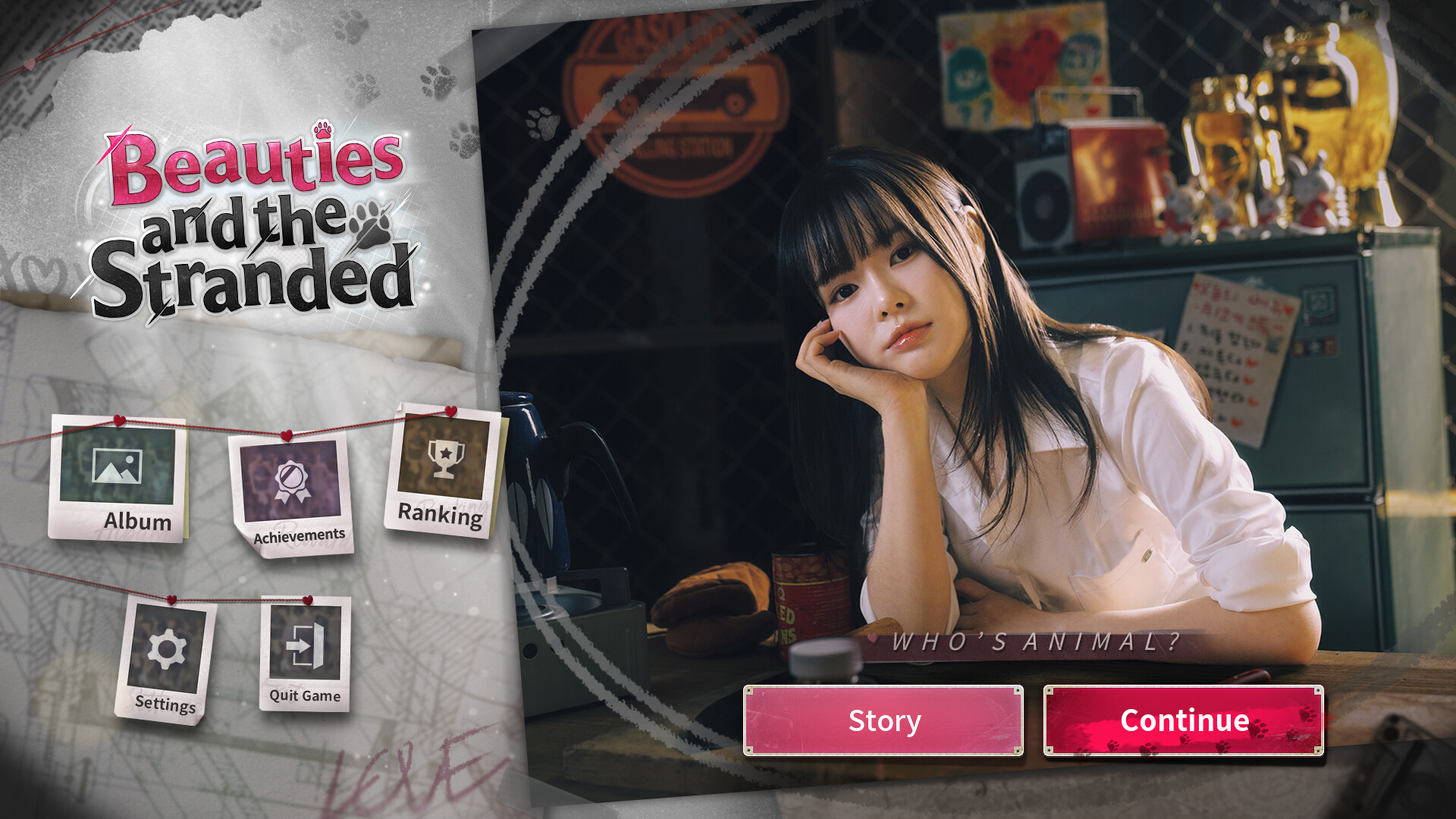
The bunker setting is meant to hide a mystery, but reviewers say the "who's the beastkin" reveal comes too early to build real tension.storytaco -

Reviewers consistently praised the cast's chemistry and character design even when the surrounding story fell flat.storytaco -

FMV production values remain a strength, even in what several longtime fans call the studio's weakest release to date.storytaco -
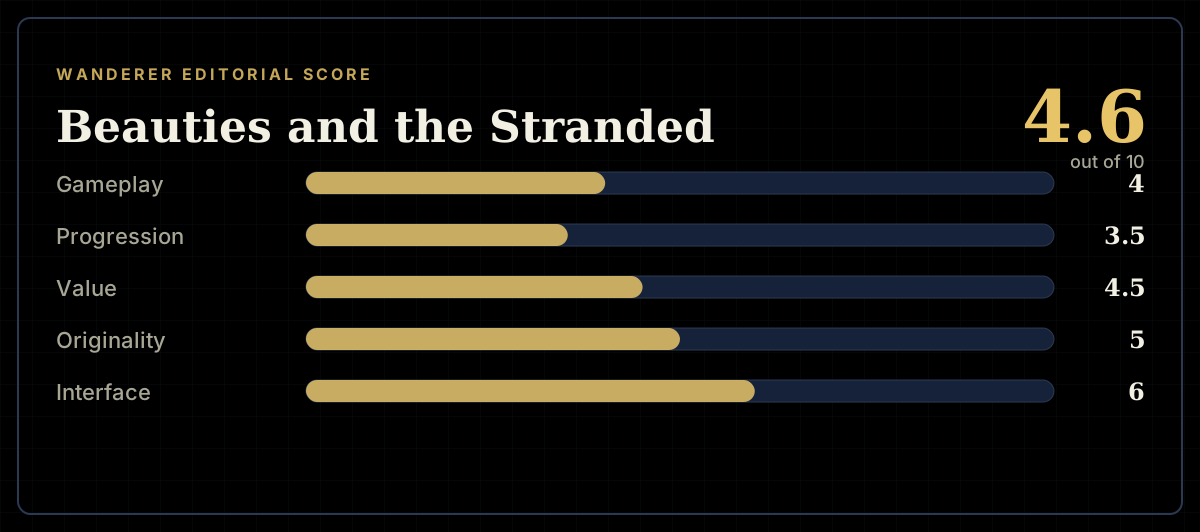
How the review scores each part of the gameWanderer Editorial -
The short versionWanderer Editorial